For many women and families within Serbian communities across Kosovo, discussing violence remains a significant challenge. Fear, social pressure and long-standing silence often prevent individuals from seeking information, asking questions or accessing support. These barriers are particularly pronounced in rural areas, where limited access to information on rights, safety and digital risks has contributed to isolation and vulnerability.
This reality began to shift when dialogue was initiated through direct, face-to-face engagement within people’s own homes.
Through intensive door-to-door outreach, Ženski Inkluzivni Centar (ŽEC) engaged women, men and families who had rarely, if ever, been included in discussions on gender-based violence (GBV) and technology-facilitated gender-based violence (TFGBV). These visits created safe, respectful and culturally sensitive spaces that enabled community members to speak openly about experiences, concerns and risks related to violence.
For many women, gaining information about protection mechanisms brought both reassurance and a renewed sense of confidence. As one single mother from Shterpce explained:
“Now I know who I can turn to and how to protect myself and my child.”
Another participant highlighted how access to information influenced her readiness to respond to violence:
“The information I received gave me the courage to respond if the violence happens again.”
Participants from rural areas emphasised that the outreach approach itself was essential, as it addressed structural and social barriers to women’s access to information. One woman noted:
“This is a very good way to educate women in rural areas about digital violence and violence in general. Because of geographic barriers, women are often deprived of education in this field, especially since patriarchal attitudes still dominate.”
Men also reported significant shifts in perspective as a result of the discussions. A 30-year-old participant from Brezovica reflected:
“As a man, I had never thought about how exposed women are to violence on social media. Every photo they post can become a reason for offensive comments, from men and even from other women.”
For some participants, the experience of being approached and included in such conversations was meaningful in itself. One woman shared:
“This is the first time someone has come to talk to me about this topic, so I am not even sure how to react.”
Through respectful dialogue, cultural sensitivity and sustained presence within the community, the outreach helped break silence, build trust and equip individuals with knowledge that supports safer decision-making and more informed responses to violence.
ŽEC has successfully completed the initiative “Addressing Gender-based Violence in Serbian Neighbourhoods”, contributing to the empowerment and support of ethnic Serbian women, girls, men and boys across Kosovo, with a particular focus on northern and rural areas, in preventing and responding to GBV and TFGBV.
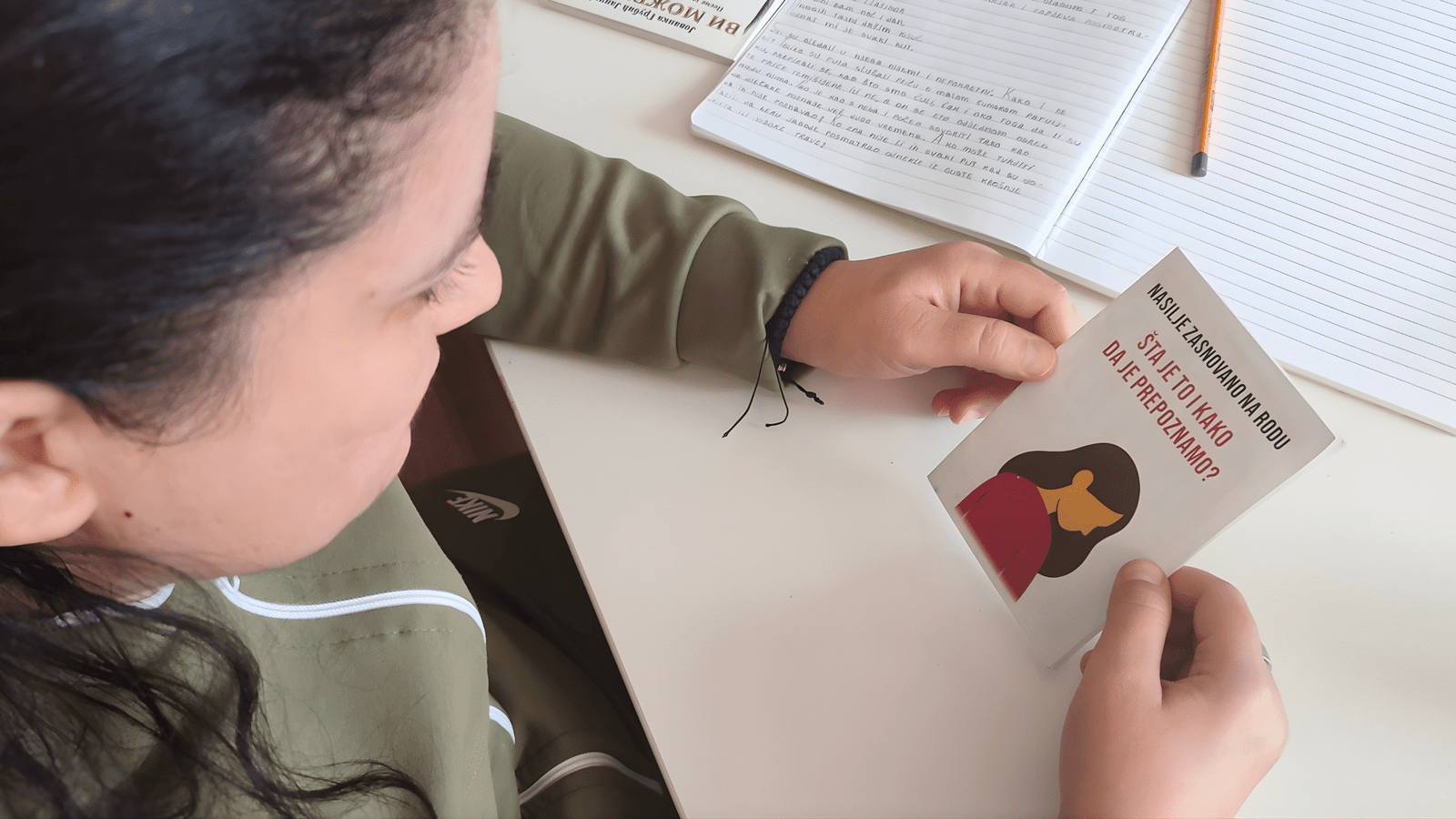
Through intensive door-to-door engagement, a total of 3,054 individuals were reached, including 2,087 people in rural areas and 38 persons with disabilities, across the municipalities of Novoberda, Gracanica, North Mitrovica, Zvecan, Partesh/Pasjane, Gjilan, Ranilug, Shterpce, Zubin Potok and Leposavic. These interactions created safe spaces for dialogue, awareness-raising and trust-building. Educational leaflets and materials were distributed in Albanian, Serbian, Bosnian and Romani, ensuring that information on GBV and TFGBV was understandable and accessible, particularly for the most marginalised.
In addition to field-based activities, the initiative achieved notable impact in the digital space. Online content related to the initiative reached 202,000 views, contributing to increased awareness of digital violence and greater willingness to seek information and support.
The initiative was implemented by ŽEC within the framework of a project implemented by the East-West Management Institute (EWMI) and the Kosovo Women’s Network (KWN), illustrating how strategic collaboration can foster meaningful and sustainable change within minority communities in Kosovo.