On 29 January in Pristina, stakeholders from Kosovo’s security sector, civil society and the international community convened to engage in a roundtable dialogue on the Women, Peace and Security (WPS) Agenda.
Organised by the Geneva Centre for Security Sector Governance (DCAF), the Parliamentary Commissioner for the Kosovo Security Force Remzie Zeqiraj and the Kosovo Women’s Network (KWN) with support from the Luxembourg Directorate of Defence, the discussion focused on how better oversight, coordination and accountability can support Kosovo’s implementation of the WPS Agenda, while also providing space for participants to reflect on progress made and challenges remaining.
The event was opened by Remzie Zeqiraj, followed by remarks from Erik Dietz, Chargé d’Affaires at the Embassy of Luxembourg in Kosovo, and Antje Fritz, Head of DCAF’s Assistance Programme in Kosovo. Fritz reaffirmed DCAF’s strong commitment to the WPS Agenda in Kosovo and globally, and Dietz underscored the importance of women’s meaningful participation in security sector reform.
“We firmly believe that peace and security can only be sustained when women are included in shaping and overseeing security”, said Dietz. He emphasised that inclusive peace and security require engagement from government and civil society, which play complementary roles in these processes.
Key contributions were delivered by Edi Gusia, Chief Executive Officer of the Agency for Gender Equality in the Office of the Prime Minister of the Republic of Kosovo, Remzie Zeqiraj and Igballe Rogova, KWN Executive Director.
Gusia highlighted Kosovo’s progress on WPS, describing the country as a “success story”: one of the first countries to adopt a standalone WPS Action Plan, only a few years after declaring its independence. “Resolution 1325 has a special story in Kosovo … as a new democracy”, she said, pointing out that attention to the WPS Agenda has been embedded in Kosovo’s state-building process from its earliest stages. While acknowledging achievements to date, she called for continued support for women in politics, women judges and women diplomats, as well as for a stronger role of the Assembly of Kosovo in monitoring WPS implementation.
Rogova contributed feminist perspectives rooted in decades of engagement with women’s rights, focusing on the specific role of women’s rights organisations in furthering peace in Kosovo and across borders, including together with Women in Black Serbia. Even though women’s rights activists often were ignored by international actors and left out of official peace processes, they mobilised time and time again to make women’s voices heard:
“Don’t be angry. Organise!” she said.
This has been the continued motto of women’s rights activists. Rogova called for women’s increased engagement in peace processes, including the Pristina-Belgrade Dialogue, as well as for support for women’s rights groups’ efforts to further peace. She called on the government and international actors to take women’s activists’ voices seriously and to utilise their expertise.
Several of the speakers’ points were echoed by Eva Tabbasam, Director of Gender Action for Peace and Security in the United Kingdom, who presented key findings from a recently conducted draft status report on WPS in Kosovo. She stressed that limited progress on WPS is not due to a lack of commitment, but rather gaps in implementation and coordination. Key recommendations from the report include adopting a new WPS Action Plan within the forthcoming new Kosovo Program for Gender Equality; allocating sufficient domestic resources for WPS to reduce reliance on external donors; strengthening institutional coordination mechanisms that include civil society and international partners as observers; and enhancing parliamentary oversight.
The draft report will now be revised based on input received during the workshop, and DCAF welcomes further input in writing.
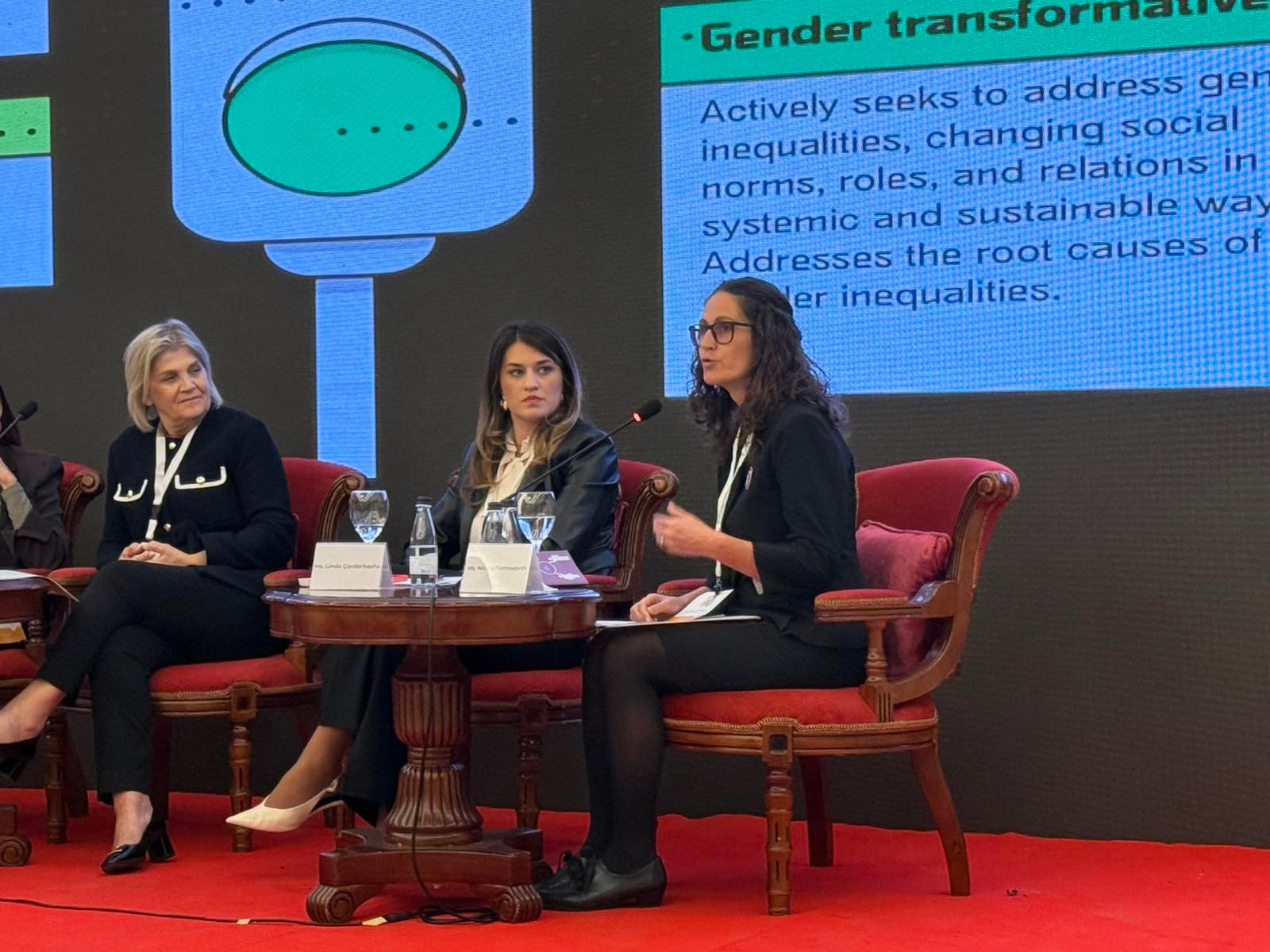
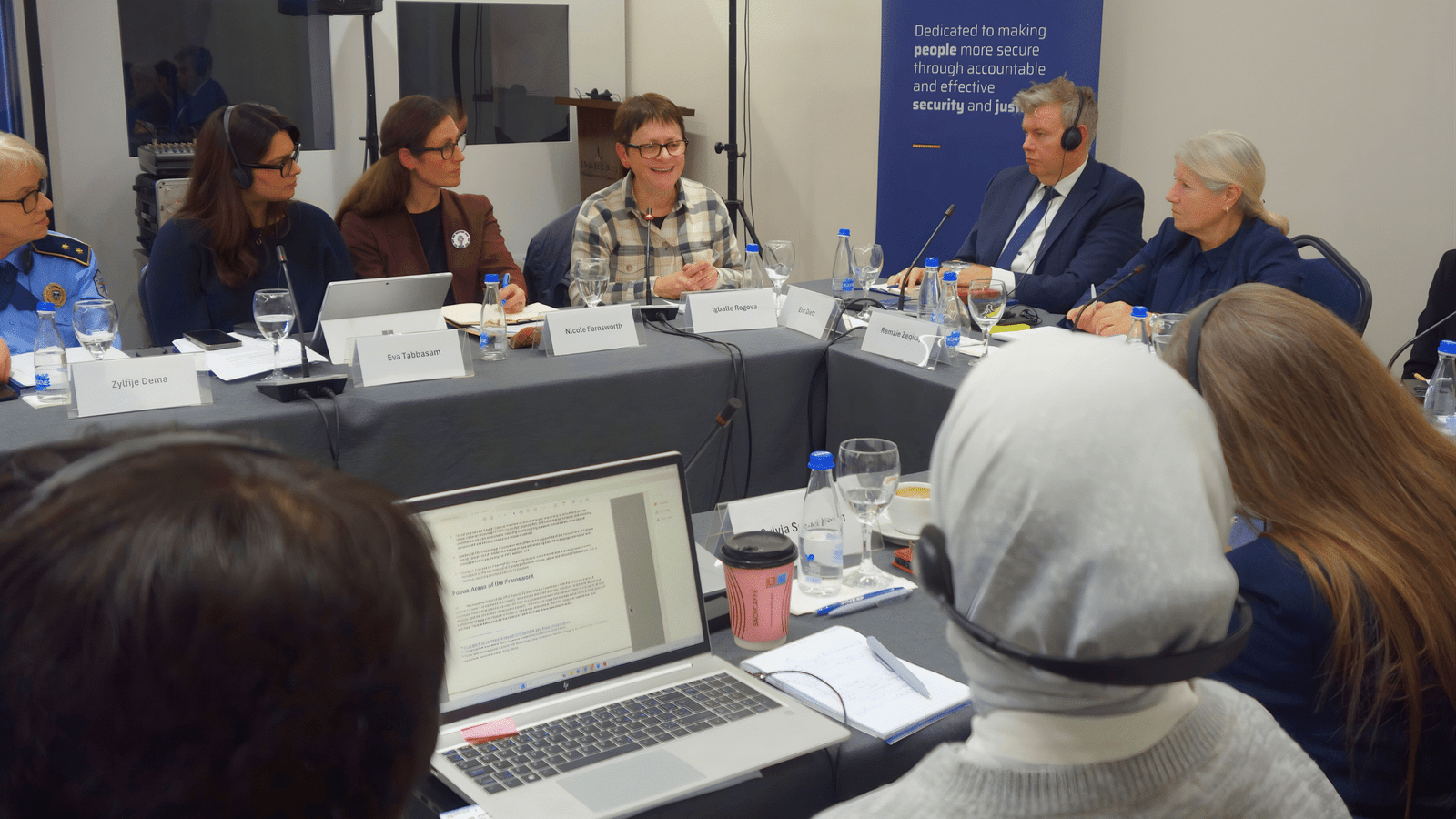
The event included a roundtable discussion co-moderated by KWN Deputy Director Nicole Farnsworth and Eva Tabbasam, during which participants further explored how executive action, parliamentary oversight and coordination mechanisms can more effectively support WPS implementation. The roundtable involved Remzie Zeqiraj; Edi Gusia; Vlora Citaku, Member of the Assembly of Kosovo; Lieutenant Colonel Zylfije Dema, Association of Women of the Kosovo Police; Solène Brabant, Gender and Security expert, DCAF; Dania Hadi, Representative, National Defence and Canadian Armed Forces Ombudsman; and Sylvia Schär Hahn, Independent Confidence Centre for Members of the Swiss Armed Forces.
The roundtable echoed several of the key findings in KWN’s recently published “Peace and Security in Kosovo: A Gender Analysis”, prepared for the European Union Office in Kosovo, which highlights both important advances and shortcomings in translating WPS commitments into practice.