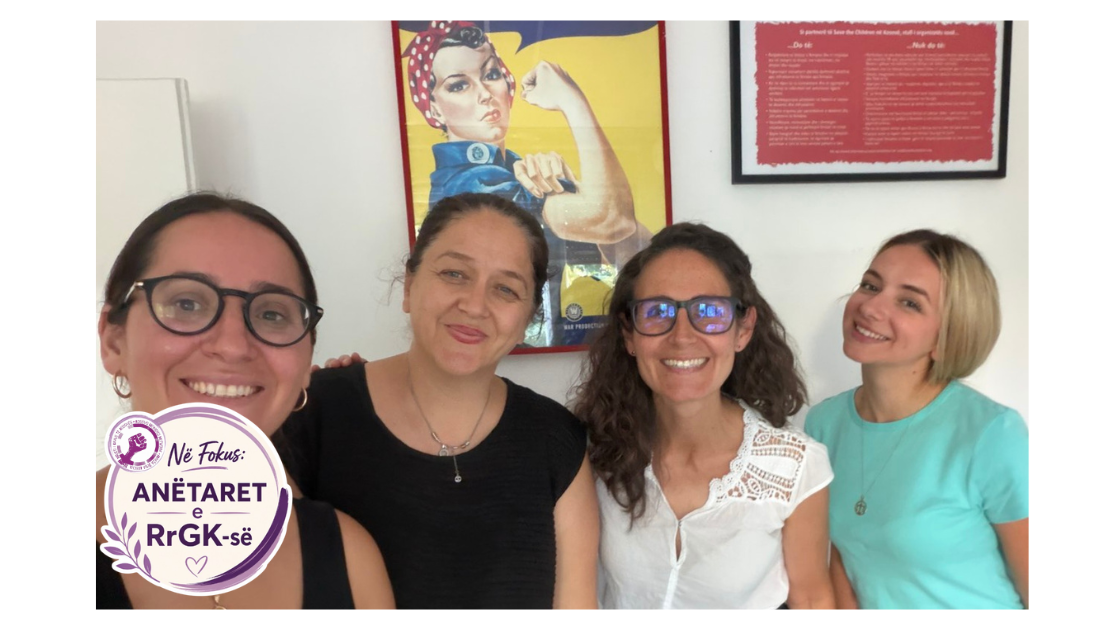
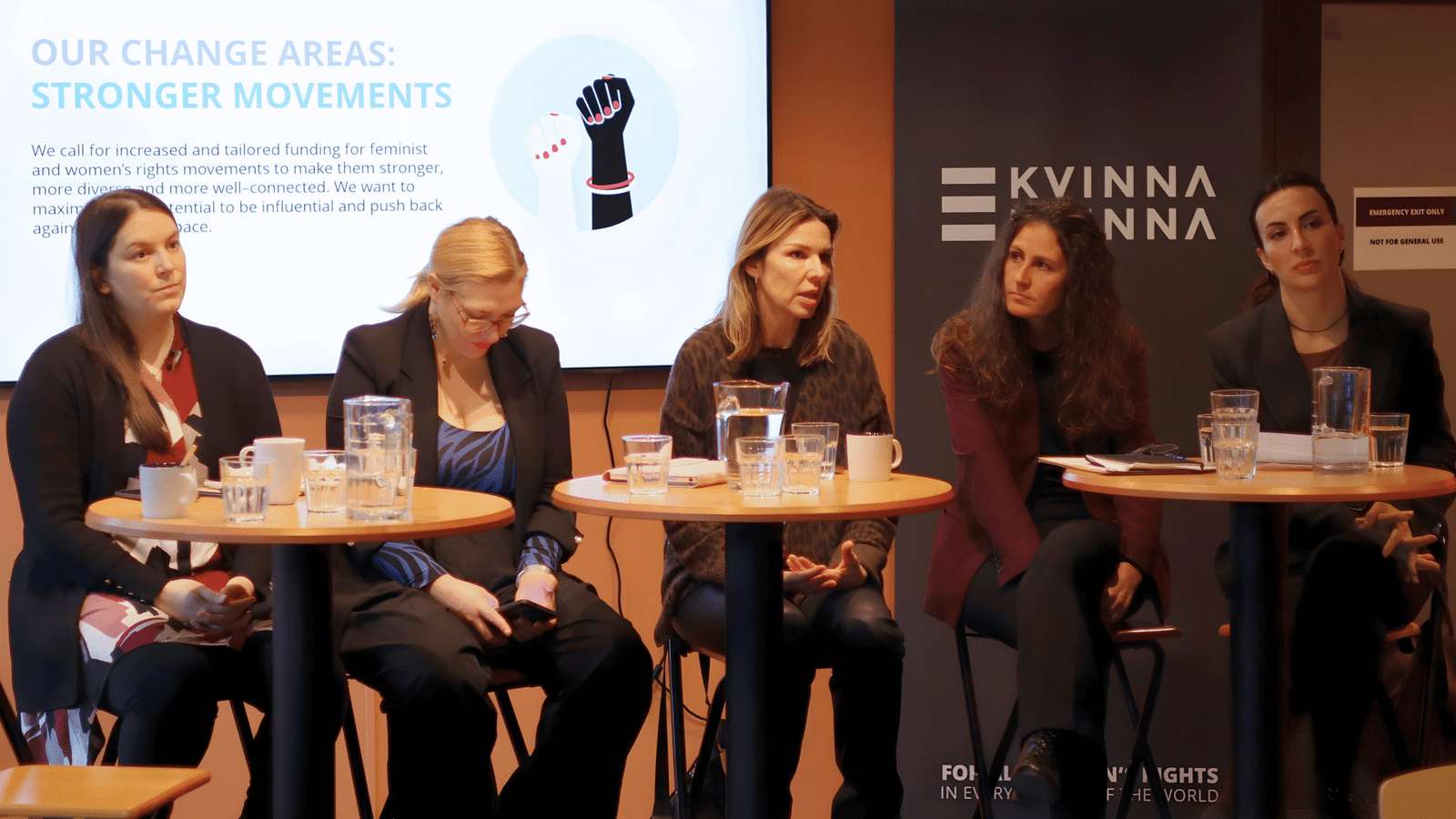
Who will hold governments accountable when support for independent watchdogs is cut? This was the question Kosovo Women’s Network (KWN) Deputy Director Nicole Farnsworth and partner women’s rights organisations from the Western Balkans brought to Swedish officials earlier this week in Stockholm. The visit came in response to the Swedish government’s recent, sudden decision to end regional development cooperation financial support to the Western Balkans, a move that has directly affected Kvinna till Kvinna’s regional program to support democracy, resilience and integrating attention to diverse women and men’s needs in the European Union (EU) Accession process.
This program provided vital core support to KWN and financed 14 other women’s rights groups in the region. It enabled women’s rights groups to monitor the quality of reforms related to EU Accession; provide evidence and expertise to inform the EU’s annual Enlargement Package; engage diverse women in democratic processes related to reforms; hold governments accountable; further rule of law; and raise public awareness about and support for EU Accession, particularly important amid growing Euroscepticism. In some countries, funding cuts have placed crucial services for women at risk, such as legal representation for survivors of violence, which has furthered access to justice and informed women’s rights groups’ advocacy for improved rule of law, considering domestic violence is among the most prevalent criminal offences in the region.
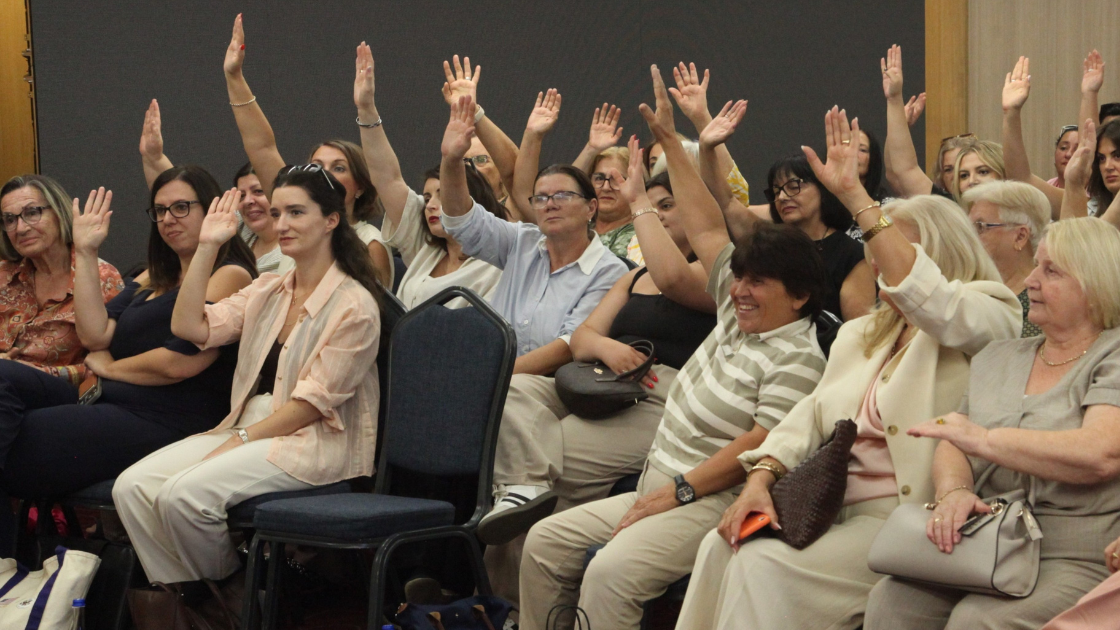
During the trip, Farnsworth and other activists met with members of the Swedish Parliamentary Committee on Foreign Affairs, the Ministry of Foreign Affairs and representatives of the Swedish International Development Cooperation Agency (Sida). Activists shared information about the concerning situation in the region, which is at risk of insecurity and backsliding amid anti-democratic and anti-human rights forces from within and abroad.
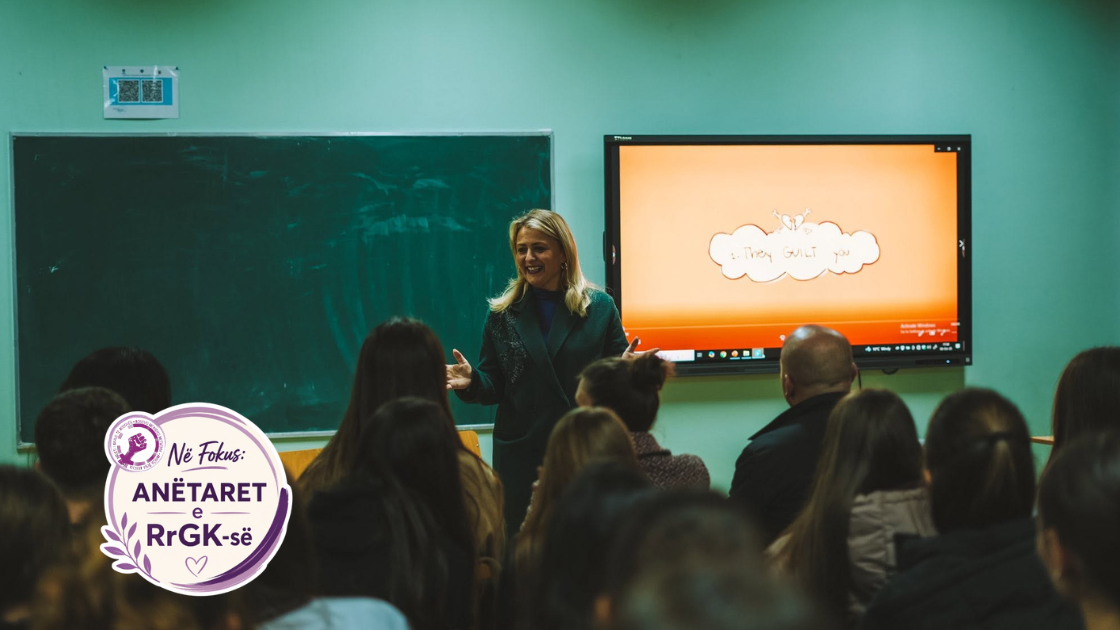
Farnsworth emphasised the crucial role KWN plays as a network of 103 diverse civil society organisations, as well as a “think and do” tank that monitors democratic processes, rule of law and EU Accession. “We bring the voices of women and men of all ethnicities, across urban and rural areas, including people with disabilities, into reform processes,” she explained. “We ensure that governments are accountable, democracy is strengthened and reforms reflect the needs of the people.”
Swedish support through Kvinna till Kvinna has enabled KWN to engage thousands of diverse women in decision-making processes, sometimes for the first time. Further, it has provided KWN with resources to review and comment on hundreds of draft laws and policies at municipal and national levels, reflecting diverse women and men’s needs. In more than two-thirds of these laws and policies, the government has accepted KWN’s input, utilising KWN’s expertise. Kosovo should soon establish a new government that is expected to pass more than 30 new laws related to EU Accession in a very short time. As funding cuts have forced KWN to lay-off staff members engaged in reviewing laws and consulting diverse women to inform them, KWN is concerned how well diverse women will be engaged in these processes and who will monitor the quality of reforms from an equality perspective.
Meanwhile, governments across the Western Balkans must implement EU growth plans as part of receiving EU financial support for the EU Accession process, but these do not attend sufficiently to diverse women and men’s needs, including in Kosovo. It is critical that we continue to monitor the quality of reforms to ensure that diverse women and men’s needs are addressed and that future growth plans related to the next EU Multiannual Financial Framework incorporate these perspectives,” Farnsworth said. Funding cuts put women’s rights organisations’ active engagement in monitoring reforms at risk.
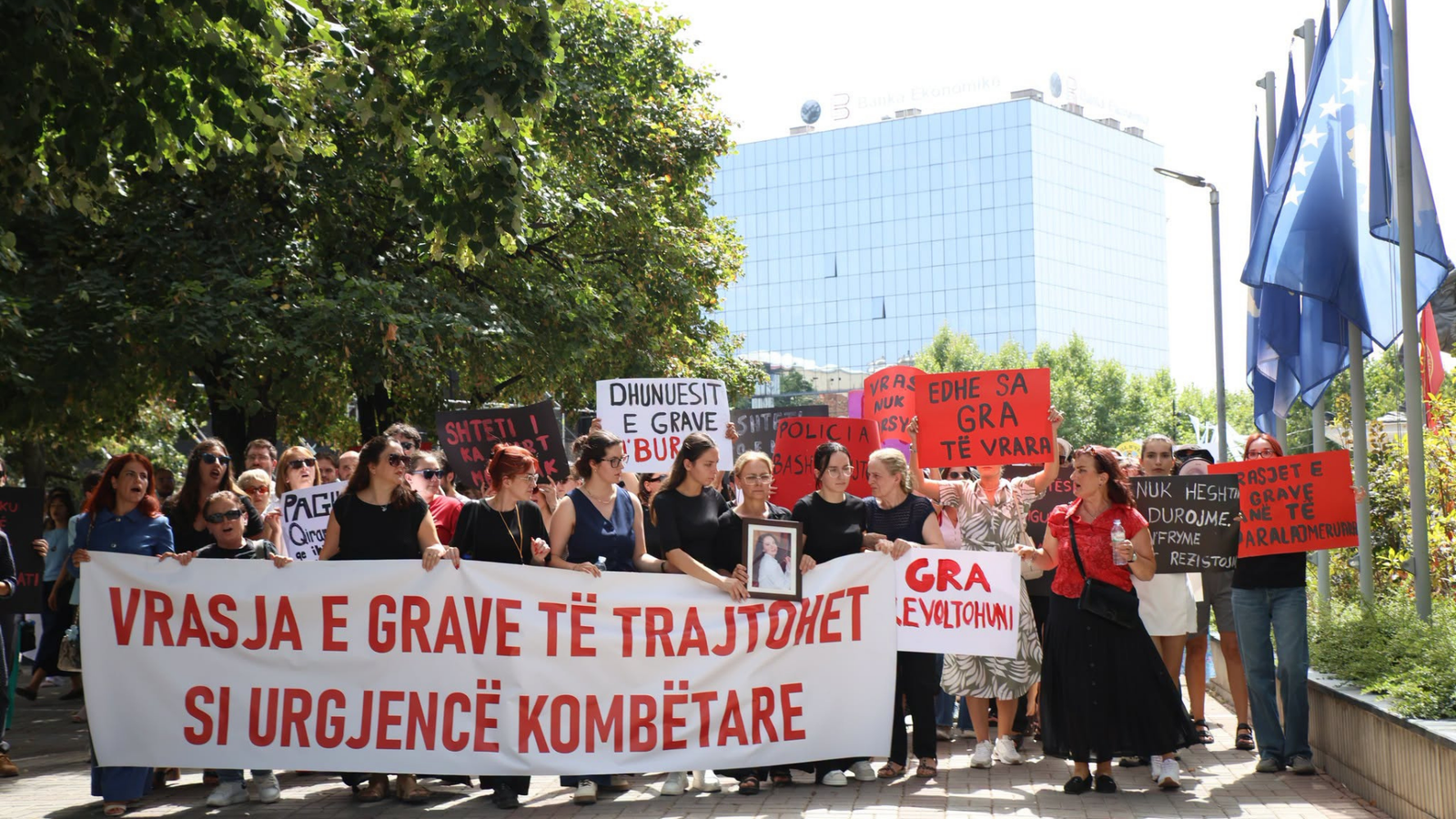
Historically, women’s rights groups have led efforts towards furthering peace and security in Kosovo and the region. They have advocated women’s engagement in peace processes and brought women’s voices into these processes when governments and international actors failed, including during negotiations and the Dialogue between Belgrade and Pristina. Conflict in Kosovo has not been resolved and very real insecurities persist for diverse women and men. The Women, Peace and Security Agenda has observed and emphasised that women’s engagement is crucial to lasting peace. Yet, funding cuts are placing women’s rights organisations’ important work at risk, undermining implementation of the Women, Peace and Security Agenda.
Farnsworth noted that women’s rights groups in the region have lost more than €2 million euros in the past year alone. KWN’s recent survey of women’s rights organisations found that more than 40% have lost funds in the last two years and 9% do not have any funds secured for 2027 and beyond. “We are deeply concerned about how this will impact both service provision and civil society’s ability to uphold good governance, advance democracy, and continue supporting EU-aligned reforms,” Farnsworth said.
For more than 15 years, KWN has supported and mentored EU institutions, member states and WB governments to advance an inclusive EU accession process. “We are your partners,” Farnsworth emphasised to Swedish decision-makers, “and we hope to continue building on the progress we’ve made together, towards upholding our shared values.”
Women’s rights organisations also met with Kvinna till Kvinna Foundation staff to reflect on the substantial impact achieved together over the last 20 years, to discuss the current situation and opportunities for the way forward. The delegation also met with the Embassy of Ireland in Sweden in the context of Ireland’s vocal support for upholding human rights, new representations in Belgrade and Sarajevo and forthcoming leadership role in the EU Presidency in fall 2026.
Through this visit, women’s rights organisations reinforced their longstanding message: sustainable reforms, democratic progress, good governance, rule of law, economic growth, fundamental rights and meaningful EU integration require the continuous engagement of civil society, particularly women’s rights organisations.
“We must ask: what kind of member states does the EU want,” said Ines Leskaj from the Albanian Women’s Empowerment Network (AWEN). “If fundamental rights are implemented properly, the rest will follow naturally.”
If you want to support KWN, its members and our important work during these difficult times, you can make a donation here.