On 28 April, the Kosovo Women’s Network (KWN), together with its partners Organisation of Persons with Muscular Dystrophy (OPDMK) and Ruka Ruci, launched the policy paper “Unpaid and Unprotected: Personal Assistants Carry the Weight of Care for Persons with Disabilities”, within the framework of the EU-funded project “Improving Civil Society Capacities to Enhance Access to Quality Social Protection for Diverse Women and Men”.
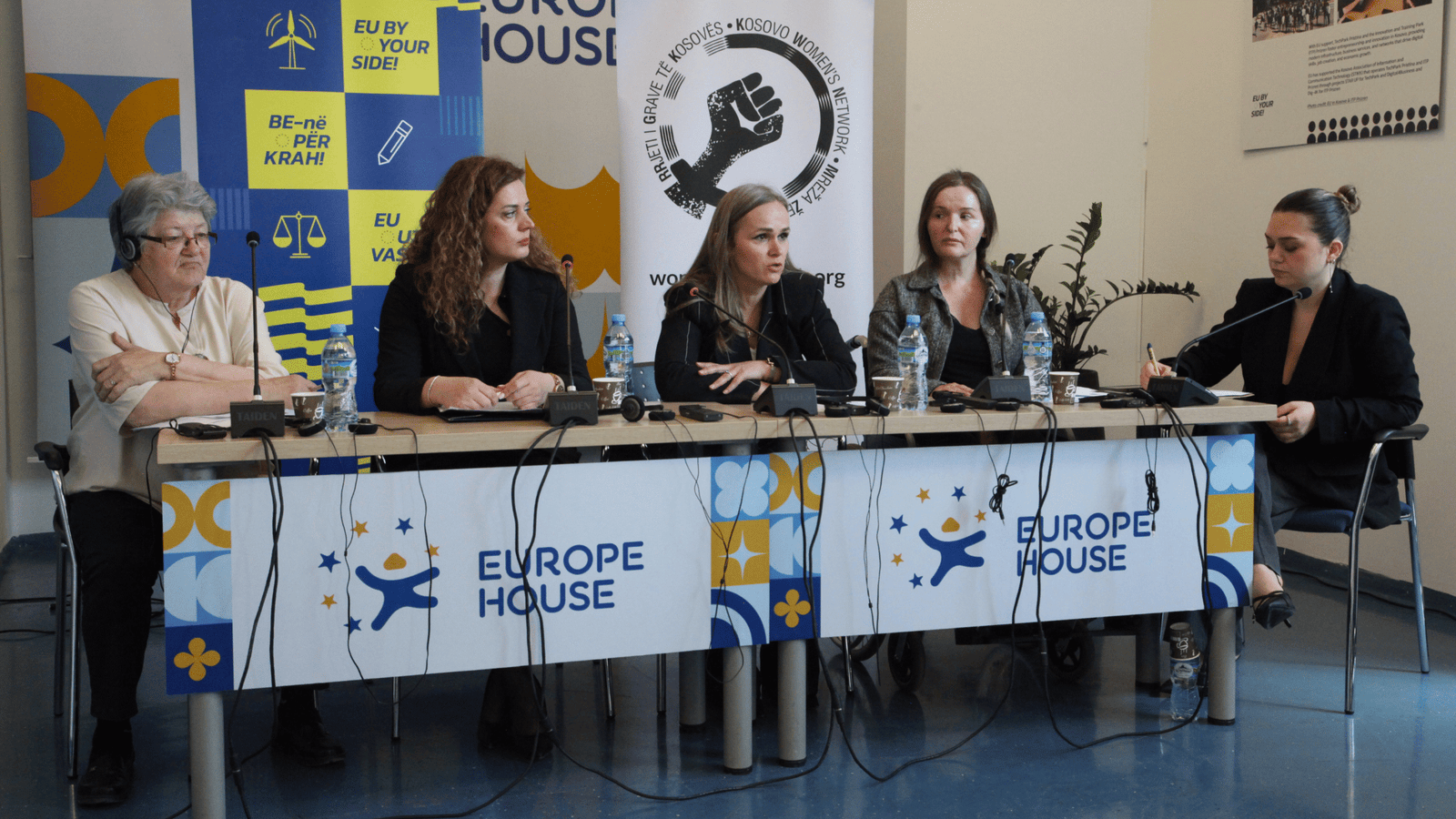
The launch event, held at Europe House, marked the World Day for Safety and Health at Work, drawing attention to the often overlooked and unregulated working conditions of personal assistants who provide essential care for persons with disabilities.
The policy paper presents key findings from research conducted with a wide range of stakeholders, including personal assistants, organisations of persons with disabilities and institutional representatives. The research ensured the inclusion of diverse communities, including the Serbian community through partnership with Ruka Ruci, as well as Roma, Ashkali and Egyptian communities through cooperation with Network of Roma, Ashkali and Egyptian Women’s Organisations of Kosovo (RROGRAEK).
Opening the event, Ms. Reyes Charle Cuellar, Gender Adviser at the EU in Kosovo, emphasised the importance of inclusive and gender-responsive social protection systems, underlining the EU’s continued support for strengthening civil society engagement in policy development and implementation.
“The European Care Strategy pushes for care work to be valued, properly supported and fairly rewarded. The work of women – because the large majority are women – who care for men, women and children with disabilities should be recognised and regulated. This should be a key element within the inclusive social protection system that the European Union is assisting Kosovo to develop”, said Ms. Reyes Charle Cuellar.
“Unpaid care work by women sustains our societies, yet it remains largely invisible and undervalued. Recognising and supporting caregivers of persons with disabilities is not only a matter of gender equality, but of building a more just society for all”, said Maria Berishaj, Board Member of KWN.
KWN Researcher Ms. Mirjeta Ademi presented the key findings, highlighting significant gaps in legal recognition, working conditions and access to social protection for personal assistants in Kosovo, along with key recommendations from the policy paper. These include:
- Ensuring that the forthcoming Inclusive law clearly recognises personal assistants as formal employees, requiring mandatory written contracts, pension contributions, health insurance, regulated working hours and protection for overtime.
- Increasing financial support for personal assistants within the Medium-Term Expenditure Framework, aligning compensation at least with the minimum wage level of €425 per month, with a total cost of €53 million in 2026, €23 million in 2027 and €77 million in 2028.
- Establishing a nationally accredited program for the training and certification of all personal assistants, providing free training on disability-specific care.
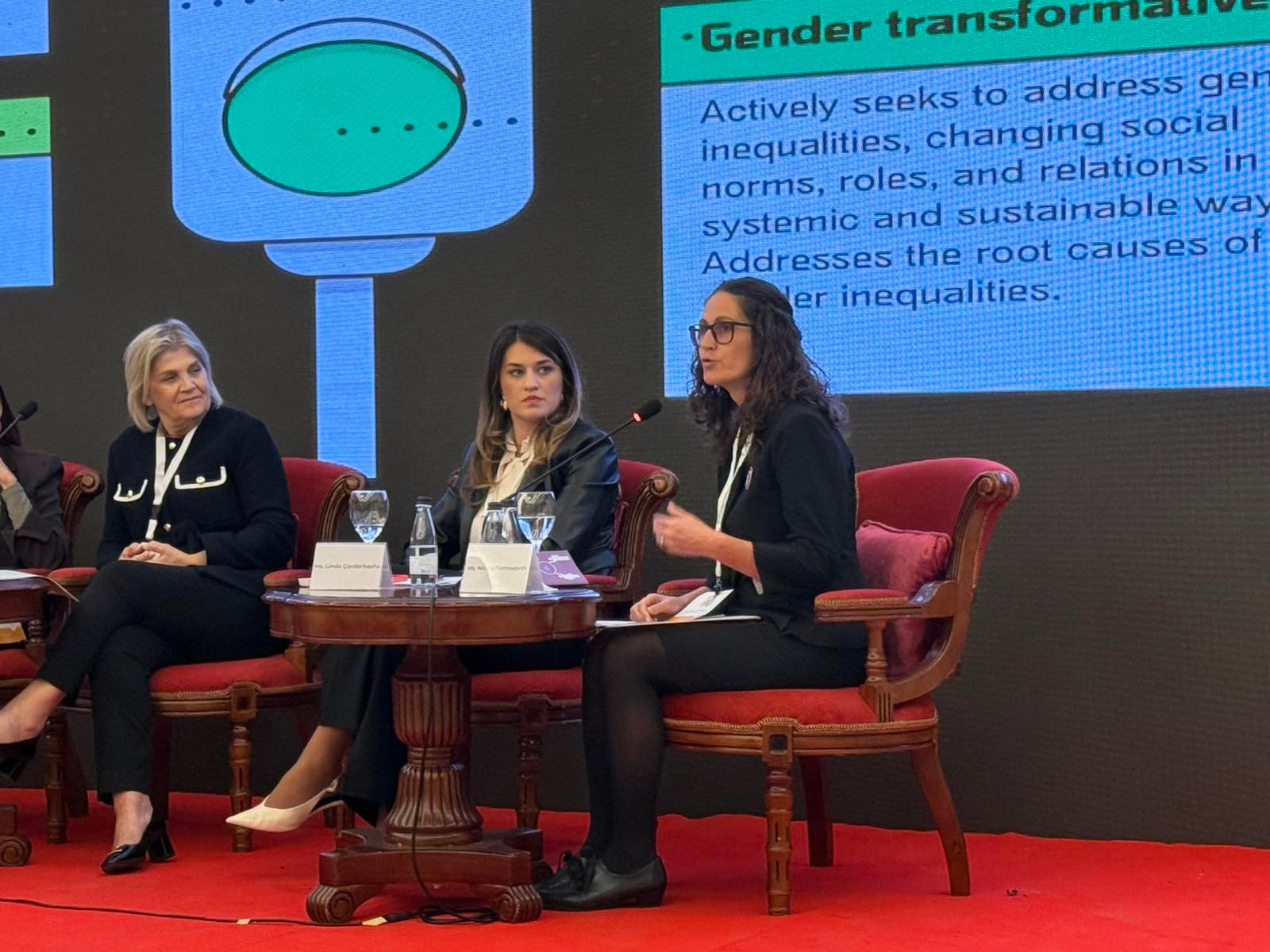
The event also featured a panel discussion bringing together representatives from institutions, civil society and organisations of persons with disabilities, who discussed the feasibility and practical steps needed to implement the policy recommendations. Participants stressed the importance of formalising the role of personal assistants, ensuring fair working conditions, and improving access to quality services for persons with disabilities.
“Personal assistance is not a luxury; it is a necessity for independent living. For many persons with disabilities, support is needed 24 hours a day, yet current financing is far from sufficient to ensure dignified and adequate care”, said Resmije Rrahmani from the Organisation of Persons with Muscular Dystrophy of Kosovo (OPDMK), drawing on her own lived experience as a person with a disability.
Moreover, Ms. Nevenka Rikallo, representative of partner organization Ruka Ruci, stressed: “Personal assistance requires not only legal recognition, but investment in training, psychosocial support, and dedicated budget lines to ensure quality support for persons with disabilities and those who provide care.”
This initiative contributes to broader efforts to enhance access to quality social protection services and to ensure that care work is recognised, valued and protected in line with international standards.