The Municipality of Pristina recently adopted the Regulation on the Allocation of Subsidies, which sets the rules for distributing municipal subsidies across areas including education, economic development, agriculture, social welfare, health, culture, youth and sports. During the public consultation process, the Kosovo Women’s Network (KWN) submitted comments to strengthen the Regulation’s gender perspective, improve transparency and accountability, and ensure that municipal subsidies better respond to the needs of women, girls and other underrepresented groups.
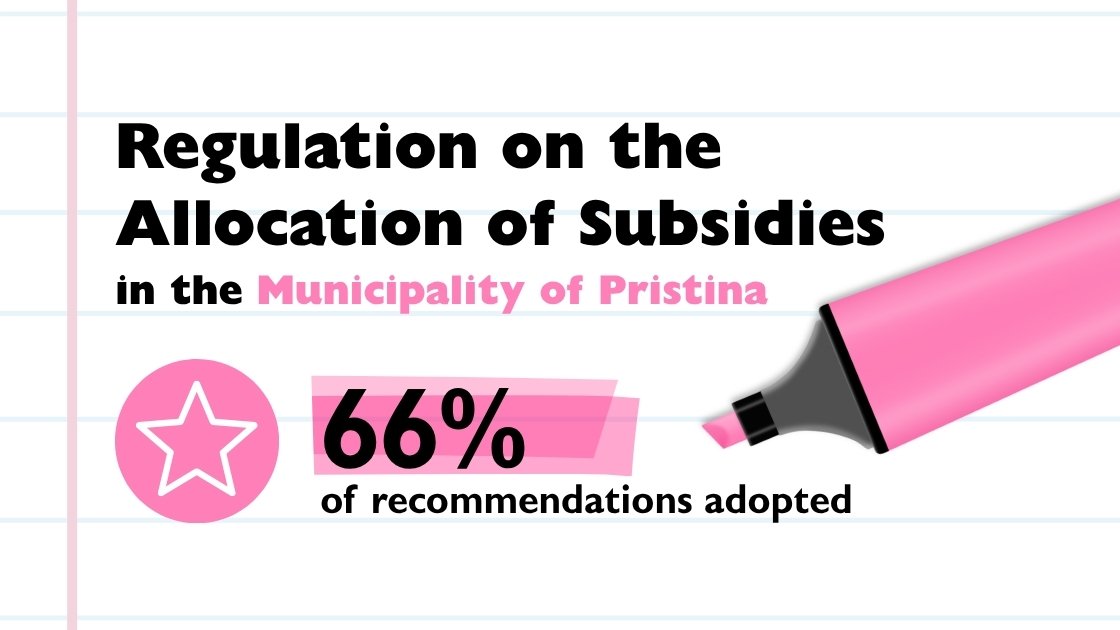
Approximately 66% of KWN’s recommendations were reflected in the final Regulation, making it more gender-responsive and inclusive.
One of KWN’s key recommendations was to integrate gender-responsive budgeting into the Regulation. KWN proposed that education subsidies be allocated based on gender analysis to identify whether women or men face greater barriers in accessing opportunities. This recommendation was fully incorporated into the final Regulation, which now requires education subsidies to be allocated according to identified gender inequalities. This is an important step towards ensuring that public funds help reduce gender inequalities rather than reinforcing them.
KWN also recommended stronger measures to promote equal opportunities in economic development. As a result, the final Regulation introduced a new provision encouraging sustainable employment for the underrepresented gender in the economic sector. This recognises that women and men do not have equal opportunities across all areas of the labour market and that municipal subsidies can help address these gaps.
Another important improvement relates to transparency and monitoring. KWN recommended that beneficiaries report data disaggregated by gender, age, ethnicity and disability after implementing subsidised activities. The Municipality accepted this recommendation, and the final Regulation now requires this information to be collected. It also requires the Municipality to publish aggregated data on beneficiaries, making it easier to monitor who benefits from public funding and improve transparency.
KWN also proposed stronger gender equality provisions throughout the Regulation. These recommendations were reflected in the final version, including requirements for gender-balanced evaluation and appeals commissions, equal distribution of cultural subsidies between women and men artists, and priority support for women entrepreneurs, women-headed households and survivors of domestic violence in relevant subsidy schemes.
In addition, KWN advocated for greater recognition of survivors of domestic violence and other vulnerable groups. The final Regulation expands eligibility and priority criteria for housing subsidies and social support by explicitly recognising people who have experienced or are at risk of domestic violence, helping ensure that municipal support reaches those who need it most.
By incorporating the majority of KWN’s recommendations, the final Regulation reflects a stronger commitment to gender equality, social inclusion and transparent decision-making than the initial draft. It also demonstrates the important role that civil society plays in improving public policies and ensuring that municipal funding responds to the diverse needs of Pristina’s residents.
KWN looks forward to continuing its cooperation with local institutions to promote gender-responsive governance and ensure that public policies and budgets create equal opportunities for women and men, girls and boys, and all members of society.