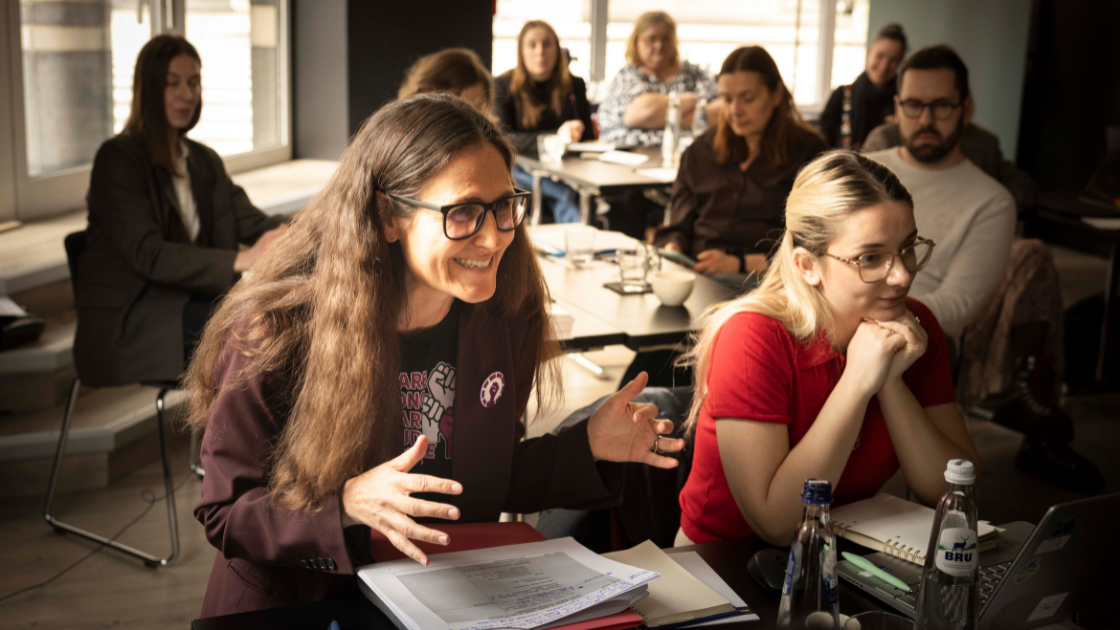

This question was posed during the “In Between East and West” event, hosted by the Bulgarian Fund for Women (BFW) and European Women’s Lobby (EWL).
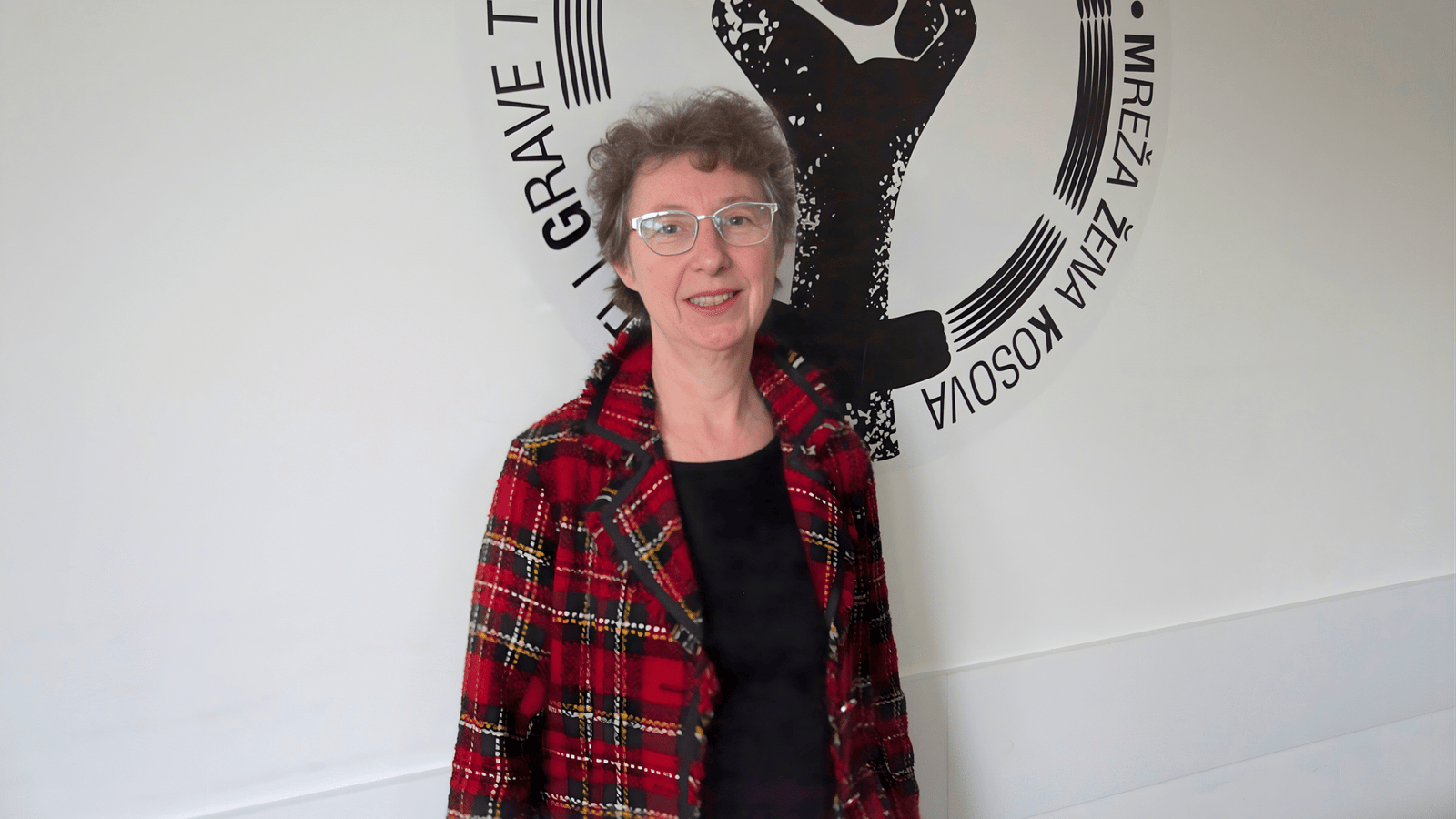
“We have, and we continue to try,” said Kosovo Women’s Network (KWN) Deputy Director and Lead Researcher, Nicole Farnsworth.
She shared how Kosovar women’s rights activists have joined forces with other women’s rights organisations in the Western Balkans (WB) for more than 15 years, largely supported by the Kvinna till Kvinna Foundation and Sweden, to monitor the European Union (EU) Accession process from a gender perspective and to advocate for improved attention to diverse women and men’s needs in these processes. Successes have included the EU shifting its approach to begin treating gender equality as a Rule of Law issue relevant to judges and prosecutors, and not solely as a gender equality issue, in Enlargement Package reports; and increasing attention to issues of importance to diverse women and men across more chapters of these reports. KWN has also supported more, diverse women’s rights groups to better understand the EU Accession process, engage in this process and monitor progress at a local level, towards accountability and progress.
“We believe strongly in networking,” Farnsworth explained. “We realised long ago that things happening on an EU and global level affect us and our work, but we cannot influence these policies alone. We need to work together with other networks and alliances to bring about changes.” She explained how women’s rights organisations, including as part of the EQUAPRO Coalition, have utilised the EU Accession process to encourage WB governments to make progress towards furthering women’s rights as human rights.
Farnsworth was in Brussels all last week on behalf of KWN, the Gender Budget Watchdog Network and the European Gender Budget Network, for advocacy related to the EU’s Multiannual Financial Framework (MFF), the EU’s budget for 2028-2034. Currently being negotiated by the European Commission, European Parliament, and European Council, the MFF and accompanying regulations will shape the financing available for furthering gender equality, safeguarding civil society, and supporting women’s rights organisations in the future.
Knowing the power of networks and coalitions, KWN has joined forces with the Gender Budget Watchdog Network, European Gender Budget Network and European Women’s Lobby to advocate for gender equality to be more explicitly included in the MFF as an outcome with clear indicators and budget allocations.
Towards collaborating with other coalitions, KWN also met with the Civil Society Europe Working Group on Funding, Concord, European Peacebuilding Liaison Office, Alliance for Gender Equality in Europe, ODI Europe “Walking the Talk” Initiative, Friends of Europe, and Prospera to discuss opportunities for potential collaboration towards shared aims.
KWN also met with members of the European Parliament Alexandra Geese, Tomas Waitz and Ilhan Kyuchyuk, seeking their support in gender mainstreaming the EU budget.
While in Brussels, KWN also met with representatives of the European Commission (EC) regarding the Enlargement Package, asking for gender-responsive budgeting to be implemented as part of Reform Agendas across the WB, including in the EC’s direct budget support to governments. This would be in line with the rule of law, given WB governments’ commitments to implementing gender-responsive budgeting as part of the Sustainable Development Goals, among other legal commitments. KWN also shared key recommendations from KWN’s Commentary on the Kosovo 2025 Report, gender analyses on Peace and Security, informality, and digitalisation, as well as key findings from KWN’s forthcoming gender analysis on transportation and analysis of the institutional response to gender-based violence in Kosovo.
KWN met with EC Civil Society Facility representatives to advocate for financing in support of women’s rights organisations, currently under threat. EC representatives stated that most financing related to gender equality for civil society would be delivered through UNDP and UN Women’s ongoing EC-funded Action on women’s economic empowerment and to address gender-based violence, particularly technology-facilitate violence. Some funds will also be distributed by the WB Fund via the soon-to-be established Gender Equality Fund (which resulted from women’s rights groups’ advocacy during the Berlin Process for such a Fund to be established). In the future, most funding will be delivered via strategic partnerships with EU member states. KWN asked that the EC ensure that all implementers co-create their programs and calls for proposals with women’s rights organisations to ensure that financing meets current needs and builds on pre-existing efforts, expertise, and networks in the region.
Additionally, all future financial support for civil society is set to be tied to Reform Agendas. Opportunities exist in 2026 to advocate for governments and the EC to better gender mainstream these Agendas and for monitoring their implementation from a gender perspective. Meanwhile, based on prior research by KWN and AWID, among others, KWN emphasised the importance of flexible, core support to CSOs, particularly in the current climate. EU financing for “Operational Grants” will only be provided at the national level, and CSOs have been encouraged to demonstrate why this form of support is needed, lest it be removed in the future. Meanwhile, the EC is set to develop guidance for gender mainstreaming actions, including gender analysis to inform design and enforcement of commitments in implementation.
On 4 Dec., KWN attended the annual WB Summit hosted by Friends of Europe. The summit focused on geopolitical trends, deliberating over the merit-based versus political process of EU Accession, economic growth, and rule of law. Related to economic growth, Farnsworth emphasised that growth cannot happen without women, as only two in ten women are in the labour force in Kosovo. “If we really want to see growth, we need to get women there [in the labour force]”, said Farnsworth. She called for addressing root causes of low participation, identified by KWN’s and other research, including by transforming unpaid labour into paid labour by addressing informality, establishing care services, and improving transportation.
Related to the rule of law, she highlighted the crucial role that women’s rights organisations play in monitoring justice institutions and holding them accountable for treating gender-based violence cases. She emphasised that women’s rights organisations currently face a funding crisis that could hinder their ability to continue to be the EU’s partner in pushing forward rule of law reforms, calling for the EU to ensure that the Civil Society Facility and Growth Plans earmark funds for women’s rights organisations’ continued contribution to the EU Accession process.
“If we want to enable growth, if we want to enable a rule of law environment, we have to support civil society,” agreed MEP Thomas Waitz, emphasising that a majority within the European Parliament shares this commitment.