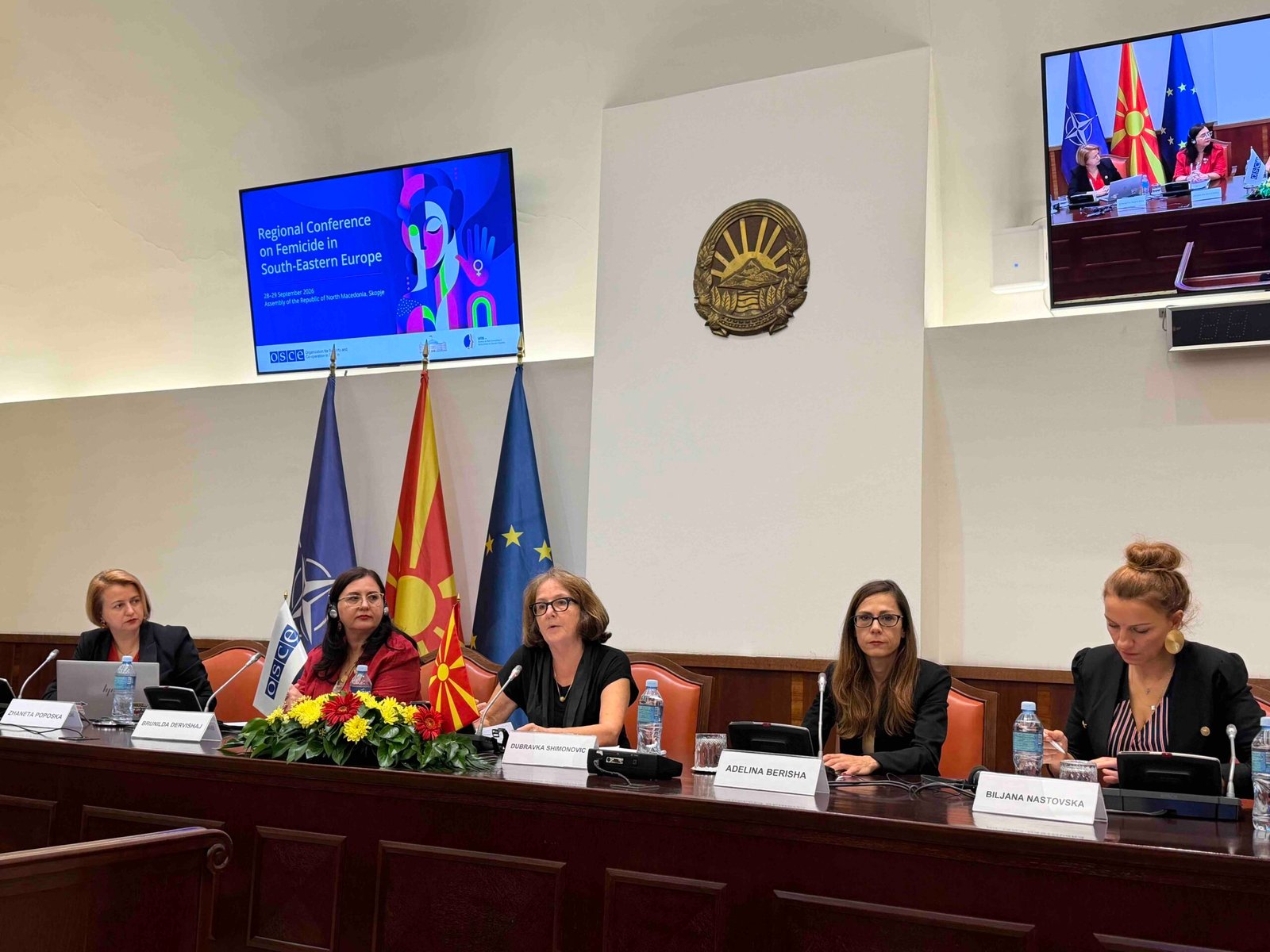
As part of the OSCE regional conference on preventing and combating femicide in South-Eastern Europe, Adelina Berisha, Director of the Gender-Based Violence Programme at the Kosovo Women’s Network (KWN), participated in the panel “Operational Standards for Data Collection on Femicide,” alongside experts and representatives from Albania, North Macedonia, and international organisations.
Berisha highlighted the indispensable role of civil society, particularly women’s rights organisations, in documenting cases of femicide and the trajectory of violence that precedes them.
She emphasised that women’s organisations are often among the actors with the most direct access to the stories of women, families, and individual cases. They bring to light not only statistical data, but also histories of violence, previous reports, interactions with institutions, and missed opportunities for intervention.
At the same time, institutions and research institutes hold separate and more specific sets of data, collected according to their respective mandates and needs. According to Berisha, only by bringing these different sources together can a comprehensive picture of femicide cases be developed, while patterns and risk factors can be better identified.
She particularly stressed the need for improved risk assessment and systematic cross-sectoral cooperation, so that information collected by the police, justice system, social services, healthcare institutions, and civil society does not remain fragmented, but is instead used to enable early intervention and help prevent the loss of lives.