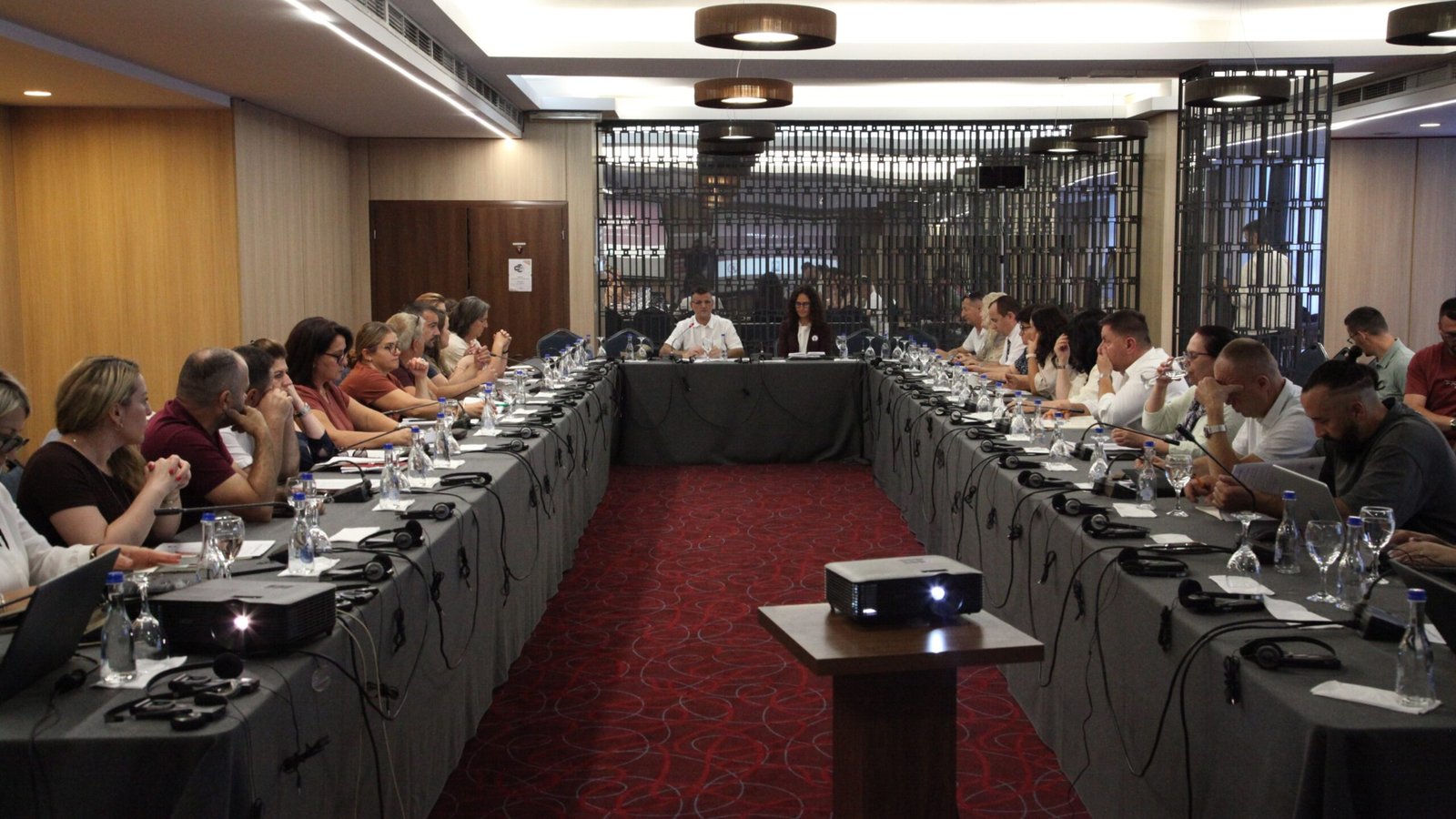
On 23 July, the Association of Kosovo Municipalities (AKM) and the Kosovo Women’s Network (KWN) met with Directors of Directorates of Health and Social Welfare, representatives from Centres for Social Work and Gender Equality Officers to discuss challenges and opportunities for strengthening gender-responsive budgeting for social services at the local level, particularly services for survivors of gender-based violence.
In his opening remarks, Gani Berisha, Programme Manager at AKM, said that “the Association of Kosovo Municipalities attaches particular importance to social services.” “We have consistently participated in forums and discussions, advocating for social services to be delivered at an appropriate standard and to better respond to citizens’ needs.”
Berisha highlighted how AKM has long lobbied for the establishment of a dedicated grant for social services, similar to the grants that exist for education and healthcare, as well as for amendments to the Law on Local Government Finance, which is vital for the functioning of municipalities and the provision of public services. Yet, these longstanding priorities remain unaddressed.
KWN Executive Director Nicole Farnsworth emphasised that municipal budgets must respond to the diverse needs of all citizens, including survivors of gender-based violence and that cooperation among municipalities, ministries and civil society is essential.
“Our aim is to discuss what we can do together to secure sufficient budget for quality social services,” she said.
KWN Programme Manager Besarta Breznica summarised key challenges to budgeting adequately for social services, drawing from KWN’s meetings with several municipal officials and existing research by KOMF. These and other challenges discussed with participants included:
- Insufficient funding for social services, including gender-based violence case management;
- No dedicated Specific Grant or budget code for social services and Centres for Social Work;
- Understaffing in Centres for Social Work due to poor planning and the lack of a mandatory staffing formula;
- Insufficient resources to recruit additional specialised social workers;
- The financial burden of the collective agreement, which places additional pressure on municipal budgets, limiting resources available for social services; and
- The lack of investment in affordable and accessible care services, which also limits women’s participation in the labour force.
Blerim Shabani, Director of the Department for Social and Family Services Policy at the Ministry of Labour, Family and the Values of the Kosovo Liberation War, addressed some of the budgetary challenges affecting social services and provided insightful suggestions on how Centres for Social Work could address these issues.
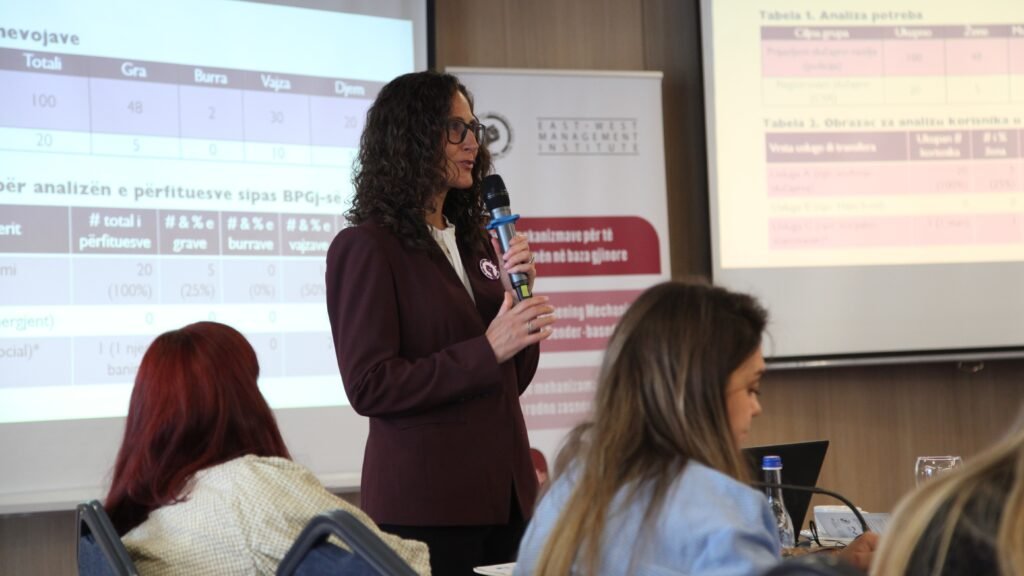
In the afternoon, Farnsworth presented a proposed model for gender-responsive planning and budgeting of social services, based on Kosovo’s budget circular and the Kosovo Institute for Public Administration’s manual for gender-responsive budgeting.
Gender-responsive budgeting is required by the Law on Gender Equality and annual budget circulars, which call for municipalities to submit annexes explaining how their budgets will contribute to gender equality.
During her presentation, Farnsworth debunked the myth that gender-responsive budgeting is only for women – rather, it requires an analysis of the needs of different women and men to inform actions and budgets. She also emphasised that it does not necessarily require more budget, but better-informed allocations of existing budgets.
Municipal officials provided feedback on the proposal, discussing how it could be adapted for use in their municipalities.
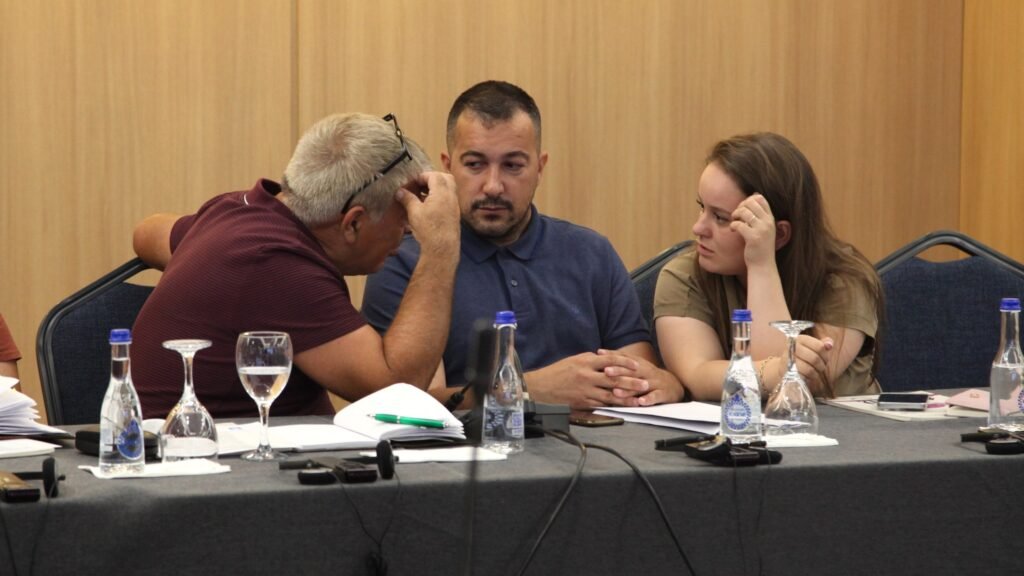
In conclusion, participants agreed on the need for continued cooperation among municipalities, Centres for Social Work, responsible ministries and civil society to improve access to quality, adequately financed and sustainable social services for all those in need.
This initiative was implemented in partnership with the East-West Management Institute.