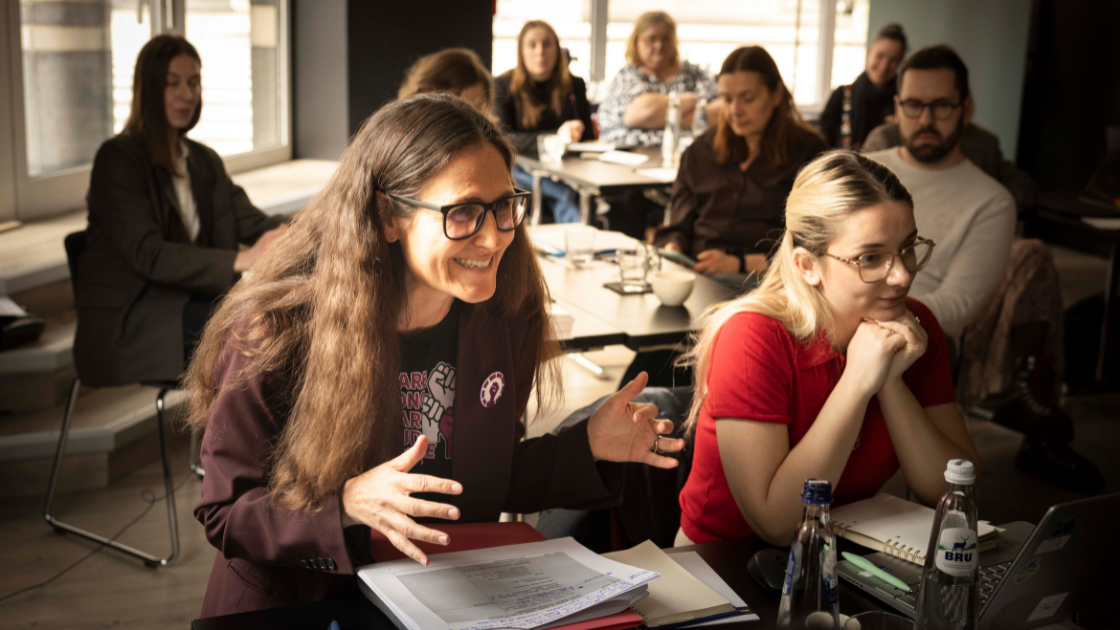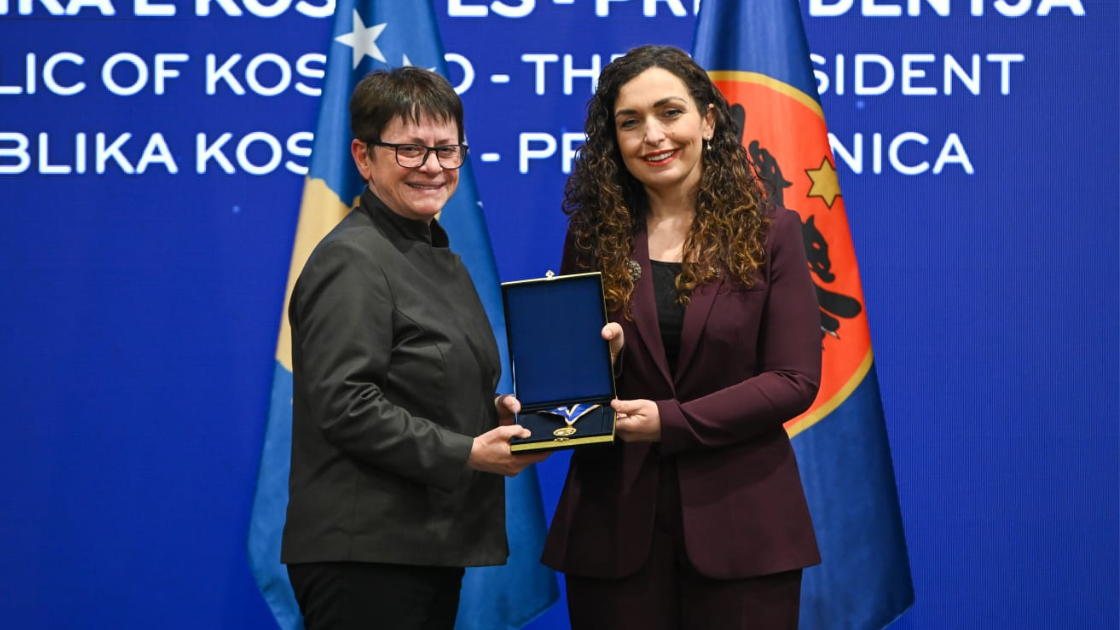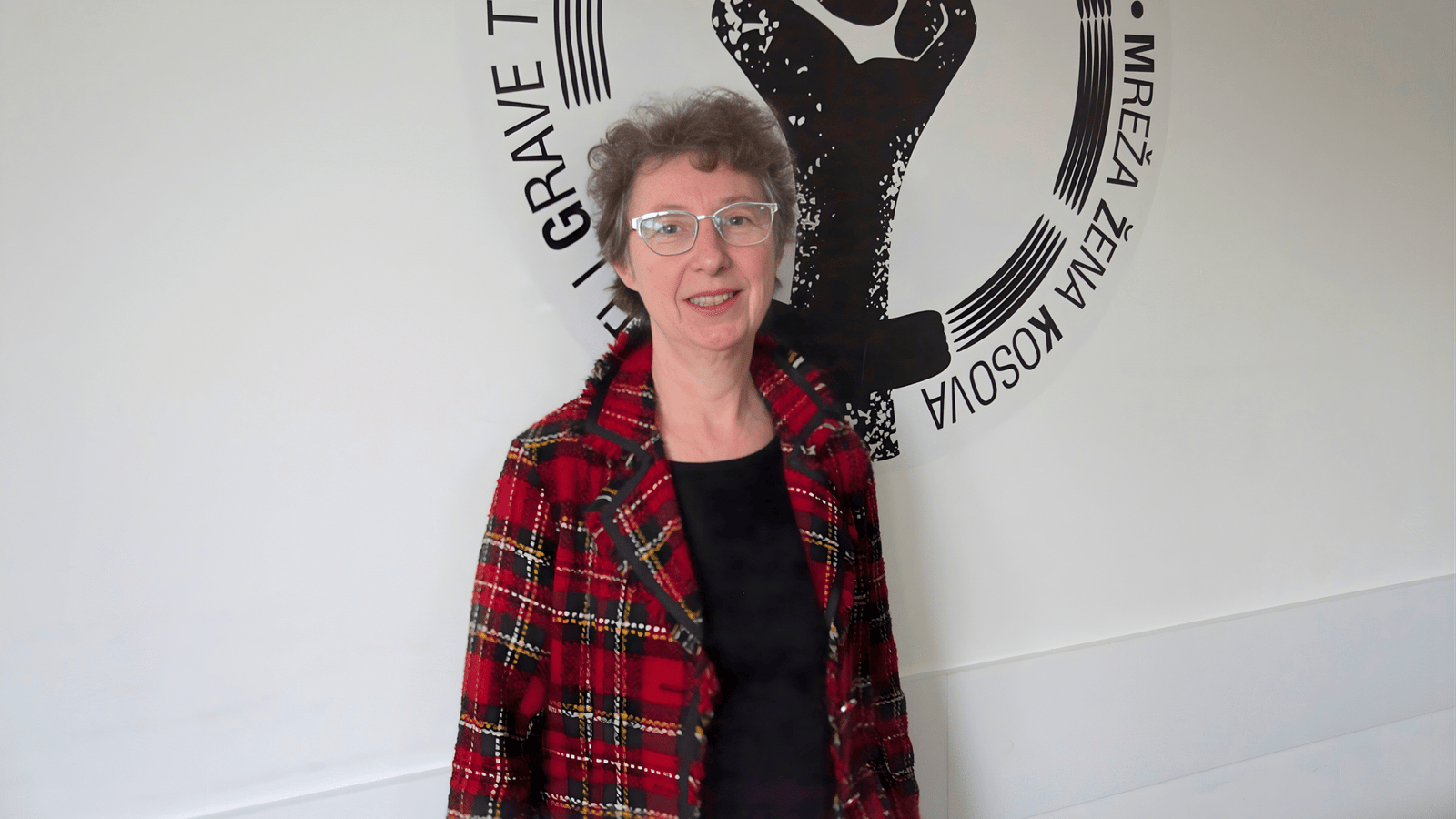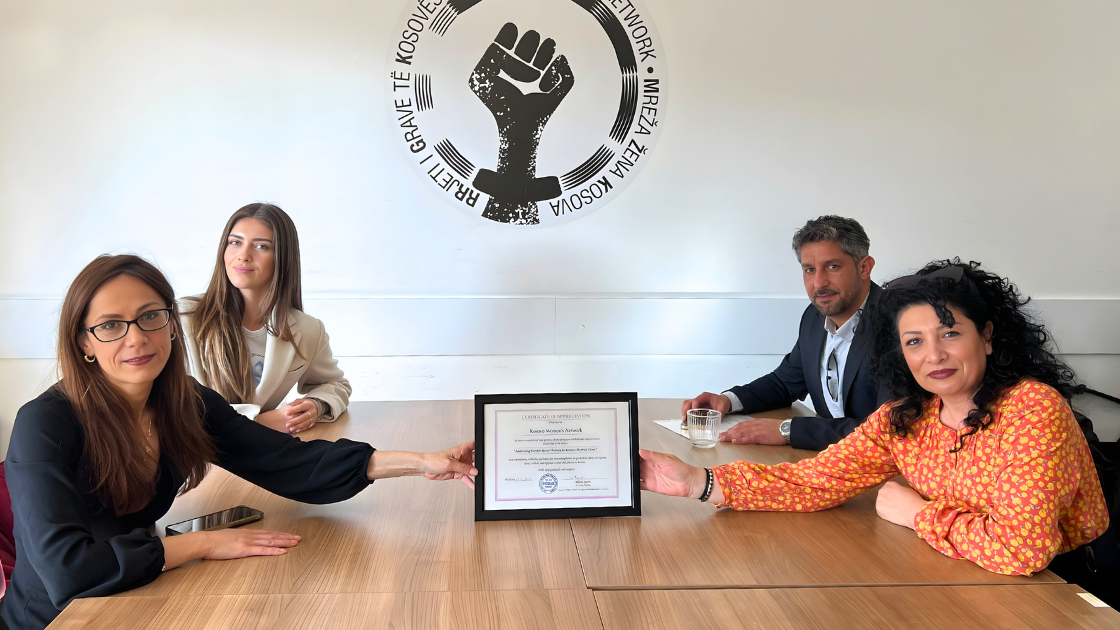

A delegation from Kosovo participated in the Gender Responsive Budgeting (GRB) Forum “Going Glocal 2.0: Sustainable Gender-responsive Futures”, held in Skopje on 10–11 December, together with more than 90 participants from across Europe. The forum brought together government representatives, gender-equality practitioners, and civil society leaders to discuss how GRB can strengthen accountability, transparency and sustainability in public finance.
The Kosovo delegation included members of the Kosovo Women’s Network (KWN) and the Gender Budget Watchdog Network (GBWN), namely Magbule Hyseni, Executive Director of EcoKosWomen; Vesna Stajić, Executive Director of the Zensi Inkluzivni Center; and Olivera Milošević, Executive Director of the Undruženje Poslovnih Žena WBA. The delegation also included Shpresa Sheremeti Smakiqi, Coordinator of the Unit for Human Rights and Gender Equality at the Ministry of Environment, Spatial Planning and Infrastructure; Premtime Preniqi, Gender Equality Officer at the Municipality of Prishtina; Lindita Piraj, Gender Equality Officer at the Municipality of Dragash; and Donjeta Morina, an independent gender expert.
Shpresa Sheremeti Smakiqi, Coordinator of the Unit for Human Rights and Gender Equality, spoke on gender-responsive budgeting and climate finance. She highlighted Kosovo’s strong institutional setup, including gender equality officers across public institutions and a functional Agency for Gender Equality. She also pointed to challenges such as fragmented gender-disaggregated data and limited institutional capacities, stressing the importance of cooperation with civil society and evidence-based tools such as the KWN analysis “Budgeting for a Better Environment”.
Magbule Hyseni, Executive Director of EcoKosWomen, presented the research “Empowering Sustainable Agriculture: Gender Perspectives in the Circular Economy”, supported by KWN and financed by ADA and Sida through GBWN. She highlighted barriers women face in accessing green jobs and sustainable agriculture and co-facilitated a World Café on Gender and the Circular Economy, focusing on gender-responsive municipal and urban solutions.
Elirjeta Beka, Officer for Women’s Economic Empowerment and Gender-responsive Budgeting, spoke on inclusive transport solutions. She highlighted the underreporting of sexual harassment in public transport, the lack of location-based police data and insufficient staff training. She emphasised the need for sustainable, institutional reporting mechanisms and noted that fragmented legislation often leads to misunderstandings of GRB as a “budget for women”, rather than as a tool for addressing diverse community needs.
Donjeta Morina presented a watchdog GRB analysis of the Special Climate Change Fund in the Western Balkans and Moldova. She also co-facilitated a workshop on gender analysis in climate financing projects, focusing on civil society oversight and ensuring that climate funds deliver inclusive and equitable results.
The discussions reaffirmed the importance of strong collaboration between civil society organisations and public institutions in Kosovo. Sustainable and gender-responsive policies require joint efforts where institutions provide commitment and resources, and civil society contributes evidence, monitoring and community voices. Strengthening this partnership is essential to ensure that public budgets respond to real needs, promote equality, and deliver long-term social and environmental impact.
Following the GRB Forum, the GBWN held its annual Network Meeting, where discussions focused on advocacy for gender-responsive climate finance, shaping the future of GBWN, and participating in a hands-on Skills Lab on fundraising and sustainability. Together, we reflected on our achievements to date and mapped the way forward.
The GRB Forum was supported by the Austrian Development Agency (ADA), the Swedish International Development Cooperation Agency (Sida) and Central European Initiative (CEI).