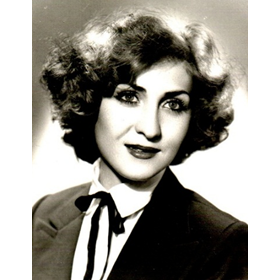
One oral history narrative documents the life of human rights activist and pediatrician Vjosa Dobruna. Graduating in Pediatrics in Zagreb, Croatia in 1981, her story is one of success and mobility in the former Yugoslavia, followed by activism and resistance to Serbian government oppression during the 1990s.

Women’s, Men’s Life Stories Enrich Kosovo’s History

The Oral History Initiative seeks to broaden the narrow understanding(s) of history in Kosovo by providing details about Kosovars’ everyday lives before, during and after the war. The initiative has recorded stories of everything from Turkish bath-houses to favourite childhood haunts to whirling dervishes to peaceful resistance to oppression during the 1990s. Such memories, captured on film, transcribed and translated, play a crucial role in preserving Kosovo’s modern-day history.

The Oral History Initiative is a joint venture by KWN and The New School in New York. Since it was established in 2012, the Initiative has documented the personal life histories of 11 courageous figures, including Naxhije Buçinca, Vjosa Dobruna, Marte Prenkpalaj, Drita Vukshinaj, Safete Rogova, Shqipe Malushi, Sevdije Ahmeti, Nazlije Bala, Vehap Shita, Pajazit Nushi and Antonella Giorgioni. This fall, theirs and others’ stories will be made publicly available via a searchable, interactive, multi-media website. The website will contain raw footage of their interviews, transcripts in Albanian and English, historical photographs and eventually short films. 
    
The Initiative is led by an Oral History Collective involving KWN, Dr. Anna Di Lellio and her students from The New School and several independent researchers, academics, filmmakers and interns. We would like to thank Catherine McGahan, Jung Chao, Kaltrina Krasniqi, Eda Shehu, Donjeta Berisha, Emine Berisha and Erla Gjinishi for volunteering their time this summer to build the Oral History archive.
    
If you would like to support this unique initiative, donations can be made through our fiscal sponsor, East-West Management Institute in New York, where individuals living in the U.S. can now make tax-deductible donations by check (info here) or credit card (just mention in the notes line “for KWN Oral History Initiative”). A generous anonymous supporter has agreed to match dollar-for-dollar every donation made to this Initiative. Therefore, your donation will be worth double! No extra cash but you want to help out? We are still seeking filmmakers, film editors, interviewers (in Albanian) and translators who want to volunteer part-time or full-time. If you are interested in becoming involved in the Oral History Initiative as a volunteer, please email us at: info@womensnetwork.org.
 

Members and supporters of NGO Gruaja Hyjnore in Gjilan gather at the official opening of their office, provided free of charge by the Municipality of Gjilan.

Municipality Supports Gruaja Hyjnore to Empower Women

The Municipality of Gjilan has provided NGO Gruaja Hyjnore (Divine Women) with a free venue for their activities. Cooperation with the Municipality has enabled Gruaja Hyjnore to cut back on operational costs, contributing substantially to the organization’s sustainability.

“The Municipality of Gjilan is trying to pay a lot of attention to women’s rights and interests, as we know that the role of women in society is indisputable,” said Omer Daku, Deputy Major of the Municipality of Gjilan. “We, as the Municipality, are trying to create more space for women to act and undertake more activities.”

Gruaja Hyjnore has used their new space to empower women economically. With support from the KWN Kosovo Women’s Fund, they have held workshops on gender equality, women’s rights to property inheritance and advanced techniques in the art of handmade crafts.

“The NGO’s activities have helped me, as a woman with no higher education, get out of my daily routine; meet other women; exchange experiences; attend trainings about new techniques for handmade products; receive certificates; showcase my work in different exhibitions; and, above all, feel more valuable,” said Alije Ajeti, a participant. “Another very important thing is that I’ve been able to sell my handmade crafts. In this way, I have supported my family economically. Now, even my husband’s support has grown stronger.”

1100 global leaders from around 70 countries discuss “Creating New Economies” at the Global Summit of Women 2013, on Jun. 6-8 in Kuala Lumpur, Malaysia.

1100 Leaders Discuss Women’s Economic Empowerment

A delegation led by President of the Republic of Kosova Atifete Jahjaga represented Kosovo at the Global Summit of Women 2013. The delegation also included KWN representative Mirlinda Kusari-Purrini, Executive Director of SHE-ERA, and Afërdita Saraqini Kelemndi, President of the Women’sEconomicChamberofKosovo. The summit, held in Kuala Lumpur, Malaysia on Jun. 6-8, gathered approximately 1100 global leaders from around 70 countries to discuss the theme: Creating New Economies. The event served to create linkages between public, privateand non-profit sectors.

“We had the opportunity to meet and share experiences with women leaders from governments and businesses,” said Mrs. Kusari-Purrini. “We also learned about the statusof women globally.”
The Summit aimed to promote and inform women entrepreneurs through anannual forum, research, roundtables and other programs.

CSO representatives deliver a petition requesting amendment of the Law on Amnesty to President of Kosova Atifete Jahjaga on Jul. 19.

12,764 Citizens, CSOs Petition against Kosovo Amnesty Law

The Draft Law on Amnesty in Kosovo derived from the agreement for the normalization of relations between Kosovo and Serbia. It was intended to support the integration of Serbs in Kosovo’s north by providing protection from legal action following Serb resistance to Kosovo’s Constitution since the declaration of independence in 2008. However, the initial draft law, according to some parliamentarians, “exceeds the amnesty deal and tries to provide amnesty for ordinary crimes that have been committed throughout the territory of Kosovo.”

Despite concerns, the parliament used an accelerated procedure without any public discussion, holding the first reading of the Draft Law on Jul. 4.
 
KWN reacted against the Draft Law on Amnesty and urged parliamentarians not to vote for it because it would provide amnesty for numerous criminal offenses, including violence against women. Diverse citizens also protested outside the parliament, dispersing only after the Draft Law did not pass. On its first reading, the Draft Law received only 70 votes in favour, falling short of the necessary 80 votes.
    
Concerns over the controversial Article 3 led the Government to add a clause stating that offenses resulting from murder or bodily harm would not be subject to amnesty.
 
When the second reading of the Draft Law was announced for Jul. 11, Kosovo citizens organized another protest in front of the parliament. It lasted six days and five nights. Protestors made clear that they did not represent any institution or political party. Further, in addition to several individual reactions, 34 civil society organizations (CSOs) wrote a joint letter to the EU Office in Kosovo, EULEX and Quint Embassies demanding that the Amnesty Draft Law be reconsidered. They also initiated a citizens’ petition, requesting amendment of the law. Citizens protested again outside as the parliament held its second reading of the law.
    
Despite citizens’ protests, on Jul. 11 the Law on Amnesty passed with 91 votes in favour and 17 against.
Citizens continued protesting through Jul. 19 by signing the aforementioned petition. In total, CSOs gathered 12,764 signatures. The Kosovar Institute for Policy Research and Development, Group for Legal and Political Studies, KWN, Community Building Mitrovica, Syri i Vizionit, EC Ma Ndryshe and INPO submitted the petition to the Presidency, requesting that the Draft Law be returned to the Assembly (see their letter).
 
President Jahjaga praised civil society’s commitment and role in Kosovo’s democratization. “Communication between institutions and civil society is needed and contributes to the overall improvement of processes,” she said.
    
As the Law has been held up by the Constitutional Court prior to the President’s signature, KWN and other CSOs continue advocating for its revision.


Qendra për Promovimin e të Drejtave të Grave (The Centre for Promotion of Women’s Rights)

Survivors of sexual violence perpetrated during the 1999 war in Kosovo have not received sufficient attention from Kosovo’s political leaders. The issue of sexual violence has not been raised in negotiations between Kosovo and Serbia. There has never been an official apology for the crimes committed against women, let alone a single court conviction or reparations.

By and large, society has ostracized and failed to support women who suffered this terrible crime. As a result, many women have attempted to continue their lives without ever learning how to psychologically deal with their pain. This often has in various health repercussions, including trauma, phobia, and untreated physical injuries. Identifying women who have suffered such crimes is crucial for providing them with much-needed assistance in developing coping mechanisms that will enable them to live their lives.

The Centre for Promotion of Women’s Rights began efforts to reach out to women who had suffered sexual violence during the war in 2012. With support from the Kosovo Women’s Fund, they referred the 37 women that they found in 13 villages of Drenas region to organizations specializing in offering psychological and medical rehabilitation.

Further, the Centre gathered women together to identify and deliver eight demands on behalf of women survivors to the President of Kosovo, Atifete Jahjaga.
Their effort was so successful that they received additional support from the Kosovo Women’s Fund in 2013 (€2,707), which enabled them to build on last year’s accomplishments by reaching out to women in 15 additional villages. In total, since 2012, they have reached 69 women.
“The silence has been broken,” said Kadire Tahiraj from the Centre. “We have worked with great willpower, and we appreciate the help and support that we have received from the Kosovo Women’s Network.”

Beyond providing women with psychological support and medical assistance, the Centre has encouraged and supported women in expressing their needs to public institutions. This has included the unique opportunity for women to meet with the President of Kosovo, Atifete Jahjaga, in order to verbalize their concerns and request institutional support. Following the receipt of their eight demands last year,

President Jahjaga visited the women in 2013 and discussed how the government could better support them.
“The key to our lives has been opened,” a woman receiving support from the Centre said. “The hope to continue living life has been born. I feel stronger, and I won’t stop until justice has been served.”

Rona

Several women from Dragash possess unique skills in manufacturing traditional handmade clothes. However, since they live high in the mountains, few women can access markets in order to sell their products. With support from the Kosovo Women’s Fund (€2,800) and the Municipal Assembly of Prishtina, NGO Rona helped women from Dragash access a new market in Prishtina.

Women’s colourful handmade products decorated Mother Teresa Boulevard for eight days in October. Nineteen women’s organizations from throughout Kosovo, including Dragash, averaged more than €500 in sales per organization (totalling approximately €9,500).
“This project was very helpful, especially for women from Opoja in Dragash,” said Serbeze Sylejmani, Director of Rona. “They didn’t have the chance to sell their products before.”

The initiative had the added benefit of enabling women from other organizations throughout Kosovo to sell their products, as well, she said.
“Fairs are always good,” said Xhejrane Lokaj, a women’s rights activist also working in Dragash. “I am very thankful also to the Kosovo Women’s Network for supporting Rona in organizing this fair. In addition to securing some financial profit for women, we are preserving the culture of handmade work.”

Foleja (The nest)

In Prizren, many Roma, Ashkali, and Egyptian girls drop out of school before completing compulsory education, often due to early marriage. NGO Foleja decided to organize discussions in order to inform mothers, families, and young women about the importance of education, as well as to provide healthcare information, which they may not have had access to previously.

Foleja invited a doctor to visit Roma, Ashkali, and Egyptian women in their neighbourhoods. During a series of intimate discussions, she provided information about sexually transmitted diseases and how to avoid unwanted pregnancies. Mothers also received brochures with tips for caring for their infants.
“This project is very important for educating young women about how to create a family and basic things that they need to know in order to raise their infants,” said Gjyzel Shaljani, Foleja’s Director.

During the interactive lectures, participants could ask her and the doctor questions and receive guidance in addressing the challenges they face.
“I am very happy with the work that Gjyzel and the doctor are doing,” said Lindita Qylangji, a participant. “We are learning a lot.”

More than 400 women have received information through Foleja’s Kosovo Women’s Fund-supported initiative (€2,740).

Rikotta

The new “Women’s Piazza” on Mother Teresa Boulevard in Prishtina innovatively sells women’s products and simultaneously organizes street events to raise awareness about women’s rights.

Starting in summer 2013, the Women’s Piazza, managed by NGO Rikotta, began selling women’s baked goods every day on this busy pedestrian square, located next to the Ministry of Culture, Youth, and Sports. This summer, six women took home profits from sales. One hardworking woman earned up to €780 per month during the three summer months thanks to this initiative.

In addition to helping their women members earn some extra income, Rikotta used this public space to organize three street campaigns on topics including: women who suffered domestic violence and trafficking; children with Down syndrome; and children with Autism.
Rikotta opened the Piazza because they were concerned by the lack of citizen initiatives for furthering women’s rights and participation in public life.
“Citizens’ initiatives are very good tools for promoting solidarity among women’s organizations, as well as gender equality,” said Pranvera Bullaku, Rikotta’s Executive Director.

The Women’s Piazza is a collaborative initiative undertaken with the Municipality of Prishtina, which provided the venue free of charge. Agim Gashi, the Head of the Public Services Department at the Municipality of Prishtina, officially opened the “Women’s Piazza” on 12 August.
“We intend to support all positive initiatives of Prishtina citizens, particularly those focusing on supporting women’s rights and women’s hard work,” said Agim Gashi.

This initiative also received support from the KWN Kosovo Women’s Fund, from which Rikotta received a grant for €2,990 in July 2013.
Building on their positive collaboration with the Mayor, the Women’s Piazza will be able to apply again in June 2014 for a free space on Mother Teresa Square for the summer months.

The publicity and media coverage received by the Women’s Piazza has attracted the attention of other women who are interested in joining this initiative. In 2014 four additional women will become part of the Women’s Piazza’s team.

Even though the Women’s Piazza will not be situated on the square during the winter months, women are committed to continuing their work. To learn more about their initiative and/or to purchase products made by women, you can call +377 (0)44 429 432.

Komiteti i Grave të Verbëra të Kosovës (The Committee of Blind Women of Kosova)

Although blind children have the right to attend public schools, sometimes schools lack sufficient conditions for accepting them or they are not accepted socially due to false impressions regarding their capacities to learn.

The Committee of Blind Women has involved youth in raising awareness among school directors, teachers, and pupils about the challenges that blind students face, their needs, and the importance of using the Braille alphabet in schools.
“I need you to get good grades at school and set an example of excellence for other students in order to convince people to help us achieve our aim,” the Committee’s Director, Bajramshahe Jetullahu, told blind youth who had gathered in September to learn about and join the initiative.

The Committee of Blind Women sought to encourage and empower youth to advocate for their right to education, supported by the Kosovo Women’s Fund (€2,878).
“Our greatest need is to have the understanding of citizens,” said a young woman participant. “They need to understand that you can never know what life will bring you. Maybe one day they will become [blind] like us, and they will need somebody to help them.”

In close cooperation with two school directors, the Committee has introduced Braille tables in two primary schools in Prishtina. The nearly life size tables are used to explain the Braille alphabet to pupils within public schools. Thus, introducing the tables also has involved organizing lectures for approximately 140 pupils and teachers about Braille, as well as sharing information about the particular needs that blind pupils have.

Pupils actively took part in these discussions, curiously asking questions. Some students scribbled down information about the Braille tables in their notebooks with fascination.
“Can I be excused for two minutes,” a student said. “I just need to go get my notebook because I want to write down these explanations and share them with my family and friends.”

Beyond introducing Braille in school, the initiative educated students and their families about the challenges faced by blind people and the support that society can provide. The Committee of Blind Women believes that such awareness-raising initiatives can contribute to implementing the Law on Pre-university Education, which gives every child the right to attend public schools and receive basic education.

In the future, the Committee plans to advocate for the Ministry of Education, Science, and Technology to use this as an example for installing similar Braille tables in other primary schools throughout Kosovo.

Bliri

Premarital sex is a taboo topic in many rural areas throughout Kosovo. Few parents discuss sex with their children, especially their daughters. Nor does the public school system provide sufficient sexual education.

Therefore, between August and November, NGO Bliri took the initiative to invite doctors who could explain to girls how to protect themselves from early pregnancy, among other reproductive health issues. Altogether 740 mothers and daughters participated actively in these discussions. Few had had the opportunity to discuss these topics together previously.
“We raised the awareness of women who never went to school and who never attended these trainings before,” said Mahije Ismajli, Bliri’s Director. She thus considered the initiative a success.

During these meetings, women also learned how to conduct their own self-exams towards identifying breast cancer early on.
“Life is a gamble,” one participant said. “One can never know whether or not one might get breast cancer. Therefore, it’s very good that I now know how to examine my own breasts to see whether I might have breast cancer.”

Bliri plans to research women’s and girls’ health situation and needs in their region. They will use the research to inform recommendations for institutions and other actors.

Bliri’s initiative has received support from the Kosovo Women’s Fund (€2,500).