Lulishtja Informs Businesses on EU Directive on Work-Life Balance

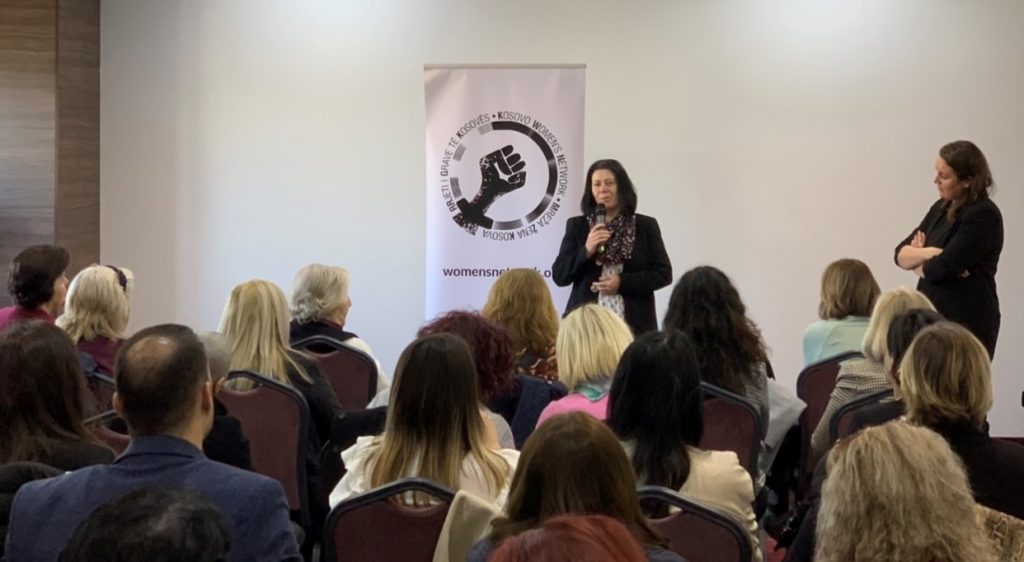
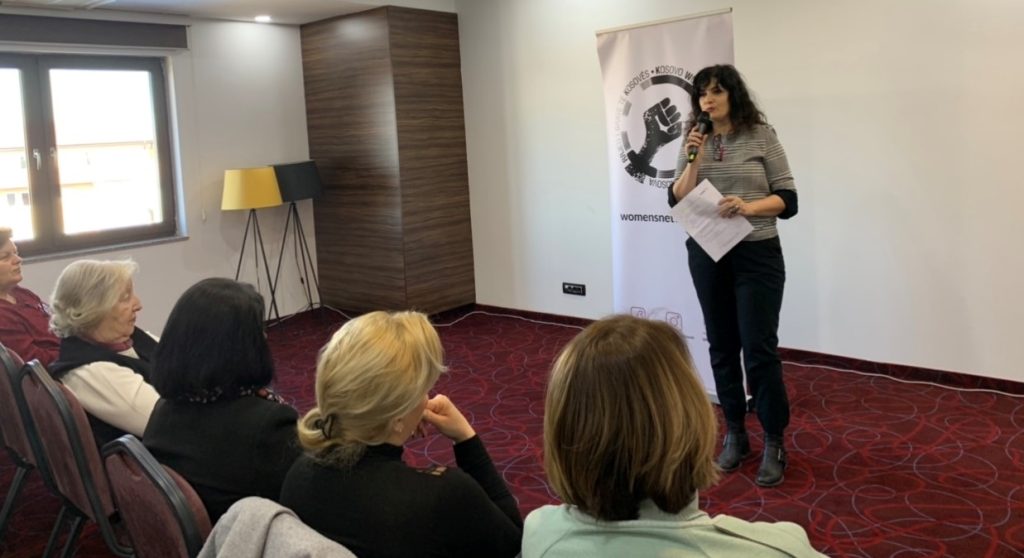
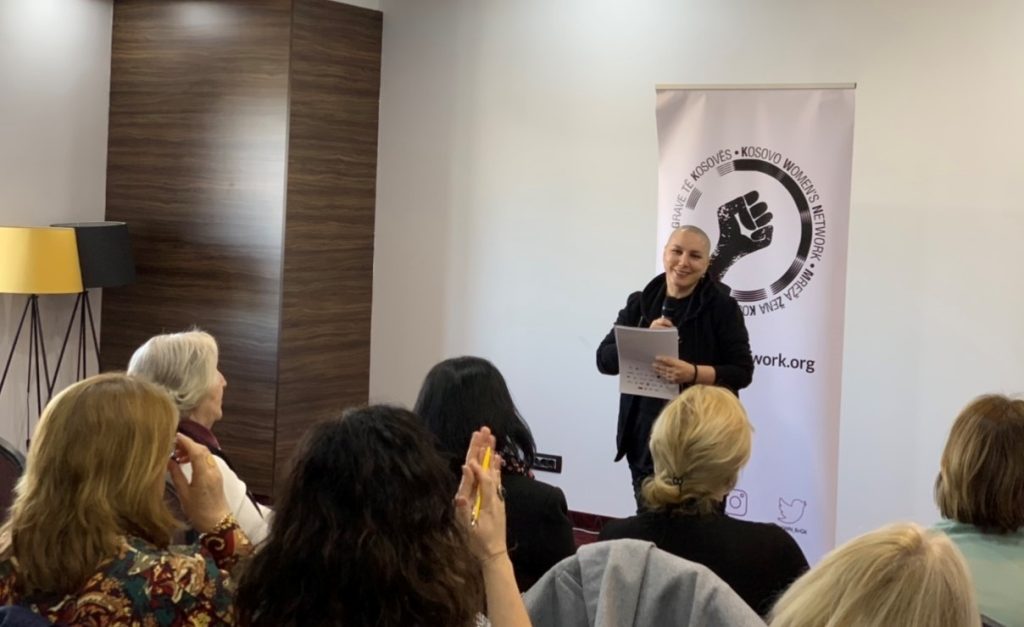
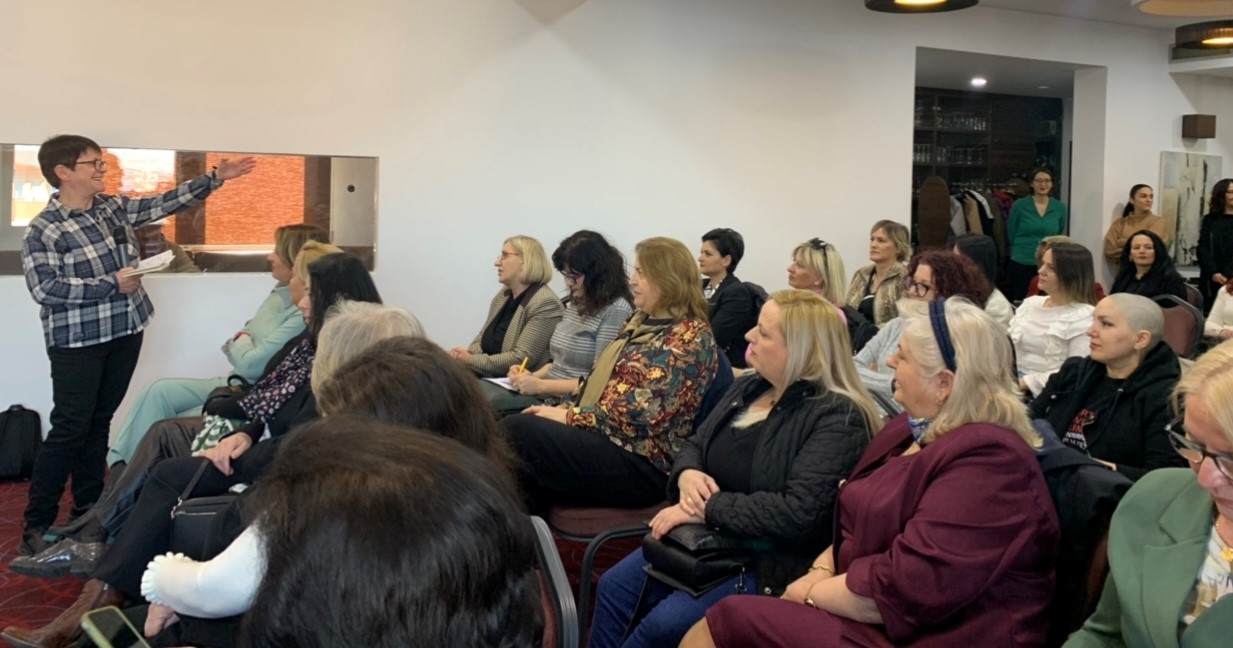
The beneficiary organization of the 17th Round Lulishtja has started a cycle of sessions to inform businesses about the European Union Directive on Work-Life Balance.

NGO Lulishtja is implementing the project “Economic empowerment of women after the COVID-19 pandemic, through the creation of family-friendly jobs” and during these trainings, special attention was paid to parental leave and leave for caregivers.

One of the participating businesses that visited France realized that according to the labor law, paternity leave was 30 working days. In addition, the trainer spoke about eight benefits of businesses, if the latter would implement the practices of family-friendly countries.

This image has an empty alt attribute; its file name is lulishtja2-1024x768.jpg

“Businesses are already struggling to find workers, but flexible workplaces motivate workers to remain loyal to the business and to be more productive.”

There was compliance and a desire to implement family-friendly places from all businesses. One business said, “we were already introduced to this model and we have to reflect and implement these rules in our businesses”.

NGO Lulishtja carried out this activity as a beneficiary of the grant from the 17th Round of the Kosovo Women’s Fund, through the initiative of the KWN “Enhancing the Capacities and Resilience of CSO’s: Furthering Gender Equality Amid the COVID-19 Pandemic,” which is financed by the Office of the European Union in Kosovo.

WCSOs Call for the Inclusion of a Gender Perspective in the Berlin Process

Download File

KWN joins other WCSOs in the region in calling for more women’s rights activists to take part in the Berlin Process and for it to better reflect attention to gender equality in all sectors.

The Berlin process is a platform for high-level cooperation between official representatives of
the Western Balkan Six (WB6), consisting of Albania, Bosnia and Herzegovina, Kosovo,
Montenegro, North Macedonia and Serbia, and their peers in Berlin Process host countries1
It aims to improve and intensify regional integration as well as accelerate the entire region’s
closer alignment with the European Union (EU).

Its main areas of focus are infrastructure development and connectivity, business, regional youth exchanges, reconciliation, and science. These areas were discussed through individual working papers during the digital preparatory workshop of the Berlin Process Civil Society and Think Tank Forum 2022 on October 19-20. The workshop sought to bring civil society voices and expertise into the Berlin
Process by preparing joint recommendations in these areas.

At least seven women’s rights civil society organisations (WCSOs) attended the preparatory
workshop and provided several recommendations on how attention to gender equality could
be integrated into the consolidated civil society recommendations. However, the resulting
draft recommendations that were shared lacked sufficient attention to gender equality.

“SHE for SHE” Helps Women Affected by Breast Cancer

During October, as breast cancer awareness month, SHE Wine, within the SHE for SHE project, organized a charity evening to help women suffering from this disease. SHE Wine, in collaboration with Kreativ Keramika, has collected funds for the Oncology Clinic.

The participants in the evening, institutional officials, representatives of NGOs, various embassies, businessmen, and other influencers in culture and society, have contributed towards this cause in two ways: by buying a bottle of “SHE Rose” wine or simply donating a lot of money according to their wishes. In an interview with the Kosovo Women’s Network (KWN), Malda Susuri, creative director of SHE for Wine, tells about the achieved results.

“Both we and our partner Kreativ Keramika are initially very satisfied with the number of participants (to tell you the truth, we did not expect that there would be so much interest and that so many people would come), as well as with donations resulting from this evening. However this is not a lot of contribution for those who suffer from the disease, we believe and hope that it will help those affected by breast cancer in Kosovo and ease their pain a little at this difficult stage of their lives. The collected funds will be delivered to the Oncology clinic, then they will decide how they will share them,” Susuri said.

The former president of Kosovo Atifete Jahjaga, the executive director of the Kosovo Women’s Network, Igballe Rogova and the oncologist Arben Bislimi gave a speech on the occasion.

Malda Susuri mendon se falë organizatave, projekteve, dhe kampanjave të ndryshme, është ngritur shumë informimi rreth kancerit te gjirit. Por, ka ende shumë punë për t’u bërë.

“Sa i përket ndërgjegjësimit apo vetëdijesimit të popullatës, mendoj se duhet punuar shumë për t’i shuar disa tabu qe ende fatkeqësisht janë të pranishme në shoqërinë tonë e të cilat kushtojnë me jetë. Për shembull, për fat të keq ende ka raste kur shume persona i konsiderojnë vizitat mjekësore si të turpshme apo ‘jo të ndershme’ për nje grua, dhe hezitojnë qe te vizitohen.”

Vizitat e hershme janë shumë të rëndësishme sepse mund te rezultojnë në zbulim të hershëm të kancerit të gjirit, i cili ka më shumë mundësi të shërimit sesa zbulimi i tij në një fazë më të vonshme.

As MWAHR Marks 10th Anniversary, it Continues to Empower Women in Decision-Making

The Mitrovica Women’s Association for Human Rights (MWAHR) has marked the tenth anniversary of its establishment by achieving progress in women’s participation in decision-making and peace processes. This member organization of the Kosovo Women’s Network (KWN) is committed to building good neighborly communication, creating peace with special emphasis among women and young people of the Albanian and Serbian communities.

“As early as 2013, when the local elections were organized for the first time in the northern municipalities of the Mitrovica region, we actively started advocating for the increase of women’s participation in politics and in decision-making positions. Through our activities in raising the capacities of women in politics, we managed to bring Albanian and Serbian women municipality councilors as early as 2014. Since then, they have created friendship among themselves,” Vetone Veliu Executive Director of this organization told KWN.

This cooperation of good neighborliness has managed to cross borders through cross-border projects between the women of the region of Mitrovica, Kosovo, and the district of Rasin, Serbia, said Veliu, citing the projects: ” Belgrade – Pristina Negotiations from Women’s Perspective”, “Women for Pace and Security- Towards good neighborly relations between Serbia and Kosovo”, – funded by European Commission in projects for Civil Society and Media Program 2018-2019 activity.

Regarding the economic empowerment of women, Veliu said that the position of women in decision-making is based on the quota of 30 percent. In Mitrovica, out of 13 directorates, four are headed by women. For the first time, the municipal assembly is also headed by a woman.

“Even in the northern municipalities, it can be said that the position of women is not good, their voice is not heard, they get the position of councilors directly with the nomination of the party, not by their own votes,” she said. Through the projects supported by the Kosovo Women’s Fund of KWN: “I deserve the leadership position,” 2015, “Women leaders” – 2016, “Gender perspective for sustainable economic planning” – 2021, it has been achieved to empower women directly in politics. Five young women who have been trained on the empowerment of women in politics, have managed to become members of the municipal assemblies: two in the municipal assembly of southern Mitrovica, two in the municipal assembly of Zvecan and one in Leposavic.

KWN strongly condemns the derogatory language towards Mrs. Luljeta Plakolli Kasumi

The debate held on the 24th of November instigated by Enver Hasani was directed against the personal image of a woman, the professor of the University of Pristina, Mrs. Luljeta Plakolli Kasumi, who was appointed as an acting rector of the University of Pristina. This language is an example of a misogynistic and bullying approach toward women as leaders in Kosovo.

The Kosovo Women’s Network (KWN) does not intend to interfere in the developments that are happening at the University of Pristina. Still, it cannot remain silent when the debates turn into misogynistic insults and blackmails against Mrs. Plakolli Kasumi only because she is a woman.

Such tendencies create the impression that Kosovo still lives under the power of a handful of men who have the ‘authority’ to destroy the name of any woman who dares to exercise high decision-making positions.

KWN strongly condemns the derogatory and blackmail language towards Mrs. Luljeta Plakolli Kasumi and any other woman. Enver Hasani’s insults and slander must be rejected as a trend for the continuation of the abusive and hateful mentality towards women that has existed at the University of Pristina for decades.

We will no longer allow the existing rule in Kosovo “Defeat a woman today, to defeat others in the future.“

More than 300 Women and Girls Discussed the Priorities that Reflect the Budget Planning for 2023

The Kosovo Women’s Network (KWN) has continued the initiative to increase the number of participation of women and girls in public hearings with several member organizations in municipalities such as: Vushtrri, Viti, Ferizaj, Novobërde, Skenderaj, Drenas, Gjakovë, Mitrovica, Kllokot and Istog.

Ten member organizations have organized over 25 meetings in September. About 300 women and girls have participated to discuss closely their different needs and priorities and to reflect them in the budget planning for 2023.

Furthermore, more than 15 meetings were organized with municipal officials to address the recommendations resulting from the meetings, which include: better funding in several lines of the municipal budget for gender equality, economic empowerment of women, addressing gender-based violence, equal quality education and health care.

KWN has long been committed to ensure that gender-responsive budgeting is part of the budget allocation in every municipality. It is extremely important that budget planning is done by addressing the different needs and priorities that women and men have.

Law No. 05/L-020 on Gender Equality makes gender responsive budgeting mandatory for public institutions in Kosovo, including municipalities, ministries and other budget organizations.

This activity has been supported through the four-year initiative “Strengthening Women’s Participation in Politics” by the European Union (EU) Office in Kosovo.

KWN Launches 1325 Facts and Fables at President’s Forum

The Kosovo Women’s Network (KWN) launched on Saturday (22 October) our new book 1325 Facts & Fables during the Women, Peace and Security Forum, an initiative of the President of the Republic of Kosovo, H.E. Dr. Vjosa Osmani Sadriu.

The book includes “facts”, that is, statistics, data, and names, and “fables”: stories of how people perceive the implementation of the Resolution from 2000 to 2020. As KWN Executive Director Igballe Rogova summarised when KWN first began writing this book in 2011:

“I want this publication to be seen not as a report, but more like something that makes you smile and say, ‘How can that happen?’ And I want to bring attention to the fact that 1325 is important, not just its sister resolutions.”

The book’s stories walk readers through the many challenges, successes and victories that women activists have faced in their struggles, calling for the UN, EU, NATO, and Kosovo officials to implement the Resolution. The stories will surprise you, make you smile, cry, or become angry… We also hope that they will inspire. 

Launching this book during the President’s prestigious Forum offers us the opportunity to share stories from Kosovo with leaders, activists and actors from around the world. We hope our stories and experiences will support others in furthering the Resolution’s implementation in conflict and post-conflict areas elsewhere.

Although there are several “characters” in the book, this launching event involved only a few voices from local women’s rights activists, who shared their stories from the book.

Feride Rushiti, Executive Director of the Kosovo Rehabilitation Centre for Torture Victims (KRCT), also recalled the initial struggle to ensure funding for survivors:

” The news went viral that day, making the day unforgettable!… I remember a phone call I received from one of the survivors. When I picked up the phone, the first thing I heard was music in the background. … for the first time, she had that much money in her hands. “I left those big bags of flour in the middle of the living room, to let everyone know that I can also contribute for our home,” she said, literally. It was very emotional! The women’s spirit was kept alive by the organisations, but the recognition from institutions was very important because their status in the family changes, as they become empowered and supported.

Tijana Simić LaValley, from Women’s Rights recalled talked about her experience with UNMIK and EU representatives who failed meet the women’s right organisations in Mitrovica. She said they always met “the same organizations led by three men. She said that the EU representatvies as well as (the EU envoy for Kosovo-Serbia talks Miroslav) Lajcak should be in this event and learn from the book’s stories. She said that the failure of these representatives to hear the women’s right activists today, might be included in the next edition of this book after 10 years.

Ariana Qosaj Mustafa, women’s rights activist and KWN Advisory Board Member said that overall, there is lack of government and political willingness. “Even though they have AGE, they don’t mainstream [but rather] side stream gender,” she said

The storytelling was followed by an open discussion. Nicole Farnsworth, KWN Program Director and Lead Researcher, and the book’s editor, moderated the event.

The electronic version of the book is available on KWN’s website. Hard copies are available at KWN’s office or can be ordered online, by noting “1325 Facts & Fables” in the comments section.

United Nations Security Council Resolution 1325 on Women, Peace and Security was adopted in 2000, just as the war had ended in Kosovo and as several insecurities continued. Since its adoption, women’s rights activists in Kosovo have used the Resolution to call for their right to participate in decision-making, peace processes, security forces and economic recovery programs, as well as to seek justice and support for women who have suffered sexual violence during the war. Resolution 1325 calls on states and international missions to ensure women’s participation at all levels of decision-making, ensure protection of women in conflict and post-conflict situations, to prevent violence and to ensure access to relief and recovery. For more than two decades KWN has advocated for and monitored the implementation of Resolution 1325.

KWN Activists Share Kosovo’s Experience Using Resolution 1325 on Women, Peace and Security

This weekend, the President of the Republic of Kosovo, H.E. Dr. Vjosa Osmani Sadriu and her team gathered more than 500 leaders from Kosovo and the world at the Women, Peace and Security Forum in Pristina.

Among the distinguished personalities speaking the first day, Kosovar women’s rights civil society activist Igballe Rogova from the Kosovo Women’s Network (KWN) spoke on a high-level panel: “22 years after 1325: what have we (not) achieved?”

“We activists do not give speeches; we tell stories,” she began…

She proceeded to share the history of women’s leadership and peace activism in Kosovo during the 1990s. “We did not carry guns, but we brought bread,” she explained, recalling the infamous Bread March that sought to peacefully break Serbia’s siege of Drenica. This was one among several massive peaceful protests that women organised, in an effort to bring international attention to Serbian oppression under the Milosevic regime and to call for peace.

When the United Nations Mission in Kosovo (UNMIK) came to administer Kosovo after the war, she said that activists were excited and hopeful that UNMIK would bring with it protections for human rights, as well as the recently adopted UN Security Council Resolution 1325 on Women, Peace and Security, which would ensure women’s participation in Kosovo’s state-building and peace processes.

“I wish we did not get so excited,” Rogova said. Rather than ensuring women’s inclusion, UNMIK ignored women leaders. “But we immediately used Resolution 1325 to be heard!”

Even when UN Security Council delegations visited Kosovo (“with 12 men and one woman”), their agendas never initially included consultations with any women from politics or civil society, Rogova recalled. “We used the Resolution to push for them to include us on the agenda,” she said. Even then, they only met women leaders late at night, and requested to talk about “violence against women” and “women’s issues”. In response, women’s rights activists cited Resolution 1325, demanding that they had the right to speak about political issues as well. Shockingly, the delegation said that they already spoke to (male) political party leaders about political issues. Women activists cited Resolution 1325, demanding their right to speak about politics.

Rogova also shared stories of peacebuilding among women in Kosovo and Serbia. In 2006, Women in Black Network activists from Serbia apologised for “crimes committed in their names” by the Serbian government. This was the first publicly apology ever made to Kosovar Albanians, and it was captured on media, RTV21, deeply touching thousands. “For two hours nobody could speak, we were only crying,” Rogova recalled. “We needed that time and space to heal.”

Afterwards, together they formed the Women’s Peace Coalition, writing joint letters parallel to the Ahtisaari-led negotiations between Kosovo and Serbia, where women once again had been excluded; together they made Kosovar and Serbian women’s voices heard.

Rogova emphasised that Kosovo has several women leaders who have pushed for peace and security since the 1990s, including Edita Tahiri, Afёrdita Saraini-Kelmendi, Edi Shukriu, Flora Brovina, Igballe Rogova, Melihate Termkolli, Luljeta Pula, Naxhije Buinca, Safete Rogova, Sevdije Ahmeti, Vjosa Dobruna, and Xheraldina Vula. Many of them, among others, established the Kosovo Women’s Lobby to demand women’s participation in politics and decision-making in post-war Kosovo, including also Argjentina Grazhdani, Arjeta Rexhaj, Belgjyzare Muharremi, Fetije Kёpuska, Flora Macula, Igballe Rexha-Jashari, Kaqusha Jashari, Luljeta Vuniqi, Minire Zuna, Mirlinda  Kusari, Sala Ahmeti, Sebahate Grajevci, Valbona Salihu, and Vjosa Nimani (as documented by the Kosovar Gender Studies Centre in History is Herstory, too). She emphasised that men have also been allies in furthering the Resolution’s implementation, particularly Behar Selimi and Besim M. Kajtazi.

Several other women’s rights activists who represent KWN member organisations are participating in the Forum, sharing their experiences in contributing to implementing Resolution 1325, including: Ariana Qosaj-Mustafa; Feride Rushiti, Executive Director of the Kosovo Rehabilitation Centre for Torture Victims; Luljeta Demolli, Executive Director of Kosovar Gender Studies Centre; Tijana Simic LaValley from Women’s Rights; and Zana Hoxha, Executive Director of Artpolis.

Kosovo women’s rights activists have extensive knowledge and experience utilising Resolution 1325 and furthering its implementation. In sharing our experiences, we hope to share lessons learned, best practices, and strategies that other women’s rights activists, political leaders, and development actors can use in furthering the Resolution’s implementation in conflict and post-conflict areas elsewhere.

For more stories, read our new book, the second edition of 1325 Facts & Fables: A Collection of Stories about the implementation of United Nations Security Council Resolution 1325 on Women, Peace and Security in Kosovo from 2000 to 2020. #WPSRKS2022

KWN: Advocacy Letter for Budget Line for Centers for Social Work

On 20 October, Kosovo Women’s Network sent a letter to Government to advocate for a sufficient budget to cover all expenses necessary for shelters and Centers for Social Work dealing with the protection of women and children who have suffered violence.

See the letter below:

Honorable Prime Minister of the Republic of Kosovo, Mr. Albin Kurti,

Honorable Minister of Finance, Labor, and Transfers, Mr. Hekuran Murati,

Honorable Dear Minister of Justice, Mrs. Albulena Haxhiu,

Honorable Director of the Department for Social and Family Work, Mr. Mentor Morina,

There is an increase in the reports of cases of violence against women and girls, especially sexual violence. According to the Institute of Forensic Medicine, 85% of victims of sexual violence from 2019-2021 were minors.

The current government of Kosovo has repeated several times that social welfare is one of its main priorities and this has been included in the governing program.

Meanwhile, social services, namely local coordinating mechanisms for the protection and treatment of victims of gender-based violence, continue to operate under challenging conditions.

KWN seeks to strengthen local coordinating mechanisms for the protection and treatment of victims of gender-based violence, specifically, Centers for Social Work, based on the Government’s obligations derived from the Constitution, in favor of the implementation of The Istanbul Convention on preventing and combating violence against women and domestic violence, the National Strategy for Protection from Domestic Violence and Violence against Women,  the Law on Protection from Domestic Violence, and the Gender Equality Program.

According to Law No. 02 L-17 for Social and Family Services, the Center for Social Work (SCW) as a public institution at the municipal level is competent for the protection of all citizens in need of social services. In this aspect, the SCWs are responsible for the protection of children, and consequently also for the protection of women and girls from all forms of violence until their reintegration into society. SCWs have an essential role in the prevention, protection, and re-integration of victims of violence, especially girls. However, based on the research of KWN From Words to Action, SCWs do not have sufficient budget or capacity to conduct their duties, as defined by the legal framework of Kosovo.

As a consequence:

  • SCWs lack the human resources to manage all the cases assigned to them;
  • Since they lack human resources, the management of cases by social workers is weak, at the same time women and children are often pushed to return to environments of violence;
  • Poor infrastructure makes it impossible to monitor the well-being of children and provide a safe environment to help victims;
  • SCWs lack sufficient space and access to reliable transport, to reach victims, court hearings, or to carry out visits in accordance with their duties.

Since the budget for SCWs is executed according to the budget requirements of the municipalities, the Ministry of Finance, Labor and Transfers also plays a very important role in the funds for these institutions. According to Law No. 08/L-066 on Budget Allocations for the Budget of the Republic of Kosovo for 2022, there is no specific line for the financing of SCWs, but there is a line for Social Policies and Social Services for each budget organization at the local level from which the SCWs are also financed.

The total budget allocated for social services by all municipalities is €8,013,787 with an average of €222,605 and a median of €95,600. From this budget, €2,785,522 are allocated to the budget category ‘Wages and Allowances’. Considering that there are about 464 employees in the municipalities for social services (an average of 13 per municipality), the employment of at least two more workers in each municipality, specifically for handling cases of gender-based violence, including sexual violence and domestic violence per family, it would cost a total of about €444,000 more per year for the Government of Kosovo. Ideally, the largest municipality in the territory of Kosovo, Prishtina, needs twice the amount, which would be about €12,000 more per year.

To ensure the dignified treatment of victims of gender-based violence, in accordance with the legal framework, the KWN has these requests:

  • The Ministry of Finance, Labor and Transfers should increase the budget allocated to the SCWs, in coordination with the municipalities, in order to raise their capacities by making the centers functional as defined in the relevant legal framework and the government program; further, these changes should be reflected in the planned amendments to the Law on Local Government Finances;
  • To increase the budget allocated for SCWs in the Salary and Allowance category (about €456,000) in order to employ at least two more social workers in each municipality, and to focus only on handling cases of gender-based violence ;
  • To create emergency funds in the Kosovo Police and in the SCWs in order to meet the emergency needs of victims during the treatment of cases of violence.
  • We also call for the continued inclusion of the budget line, especially for shelters, as licensed service providers providing services required by the Istanbul Convention.

We hope that these requests will be translated into concrete actions aimed at protecting women and girls in Kosovo.

We are ready to meet to discuss these recommendations in detail.

Sincerely,

Igballe Rogova

Executive director

Kosovo Women’s Network

Together stronger! KWN and AWEN deepen cooperation 

“Together stronger!” This message has been conveyed after the meetings between the Kosovo Women’s Network (KWN) and the Women’s Empowerment Network in Albania (AWEN).

The AWEN delegation stayed in Kosovo from 12-13 October. During this time KWN and AWEN representatives exchanged information about activism in the field of protecting women’s rights both in Kosovo and Albania.

They have talked about the history of both networks, current programs, lobbying and advocacy strategies, and fundraising strategies.

On the first day of the visit, the Executive Director of KWN Igballe Rogova informed the guests about the history of KWN, noting that from 27 organizations at the beginning, the network now has 190 members.

However, Rogova pointed out the importance of cooperation with the Albanian network.

“That’s why I think that both networks should deepen the cooperation in the future,” she said, informing them of the special programs of KWN.

Ines Leskaj, director of AWEN, said she is very satisfied with the meeting and called for the deepening of the cooperation.

“For us as a network of women’s empowerment in Albania, this visit has been very important as it has brought to our attention the power of being together and cooperation between activist organizations between Kosovo and Albania. Kosovo for us in terms of social activism, especially in terms of social activism and especially in terms of gender equality, has been a model and I think it was a visit that inspired us and will lead us to the path of cooperation to be activists together “, she said.

Feride Rushiti from the Kosova Rehabilitation Centre for Torture Victims (KRCT), said that the KWN has been a strong voice since the beginning of its work.

“I think that the network itself has managed to have civil activism due to the fact that it has within it 200 organizations that have managed to influence state policies in the sense of legislation and despite the political movements that Kosovo has, the network has always been neutral and has not been influenced by daily politics. It has been a powerful voice. I think that the network’s independence, professionalism, and impartiality made it have such a powerful voice”.

On the second day of the visit to Pristina, AWEN stayed at the KWN office where the staff informed them in detail about KWN’s programs.