KWN Raises Issue of the Need for World Bank Consultation with Civil Society Organizations

Adelina Tërshani, KWN, during her stay in Washington DC where she participated in the Annual Meeting of the World Bank (WB) and International Monetary Fund, held meetings with key actors of the WB in Kosovo. She met with the Country Manager for Kosovo and for North Macedonia, in the Europe and Central Asia Region of the World Bank, Massimiliano Paolucci, as well as the Advisor to the Executive Director of the WB Group, Hajdar Korbi.

During the meeting, Tërshani presented KWN’s recommendations to the World Bank, focusing on the need for the Bank to continuously consult women’s rights organizations in Kosovo before and during the development of their activities, with the aim of improving the impact of these interventions on women and girls life in Kosovo.

Meanwhile, Paolucci expressed his readiness for a wider cooperation with organizations active for women’s rights in Kosovo, especially with regard to the development of initiatives that directly affect women and girls in Kosovo. He emphasized that the need for consultation with organizations will increase especially during the consultations on the drafting of the Strategy on Gender Equality within the World Bank next year. “The door of the World Bank in Kosovo is open for organizations for women’s rights”, he concluded. Tërshani represented KWN in many other discussion panels within the civil society agenda during the Annual Meeting of the World Bank, where she also publicly raised the issue of the need for WB consultation with civil society organizations.

The Annual Meetings of the Boards of Governors of the International Monetary Fund and the World Bank Group brings together central bankers, ministers of finance and development, parliamentarians, private sector executives, representatives from civil society organizations and academics to discuss issues of global concern, including the world economic outlook, poverty eradication, economic development, and aid effectiveness. Also featured are seminars, regional briefings, press conferences, and many other events focused on the global economy, international development, and the world’s financial system. This year’s event took place in Washington, D.C., in October 10-16, 2022.

Medica Kosova signed a Memorandum of Cooperation with Directorate of Education on Gjakova students’ wellbeing

The Kosovo Women’s Network (KWN) member organization has signed a Memorandum of Cooperation with the Directorate of Education in Gjakova to improve the quality of education and the well-being of students in the schools of the Municipality of Gjakova. The memorandum foresees the employment of several psychologists for schools in this municipality.

They signed the memorandum at the time when Medica was implementing the initiative “Capacity building in the primary education system in Gjakova for treating children/students who are victims of violence, abuse or who suffer from the consequences of COVID-19”.

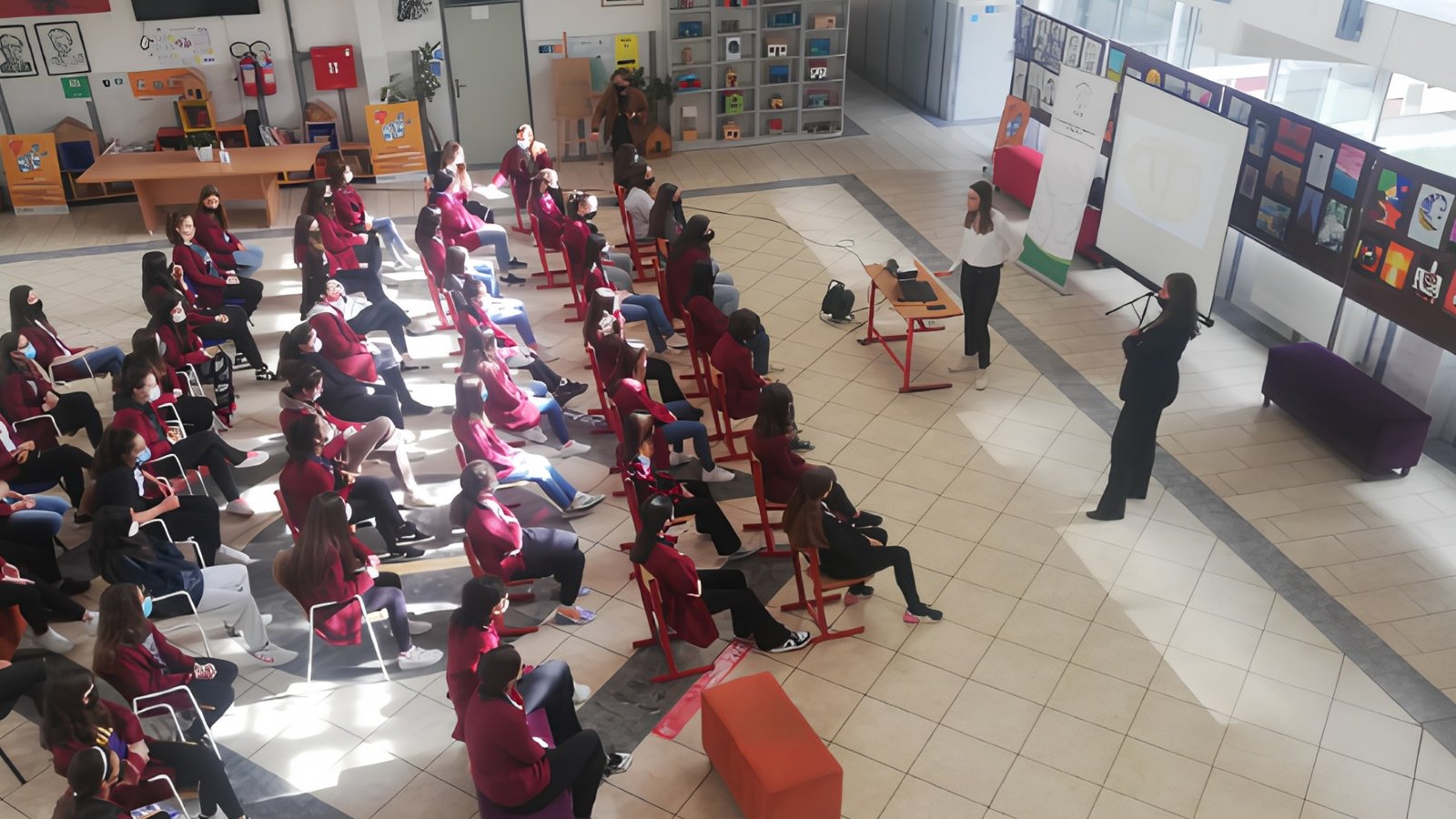
On 30 September, Medica continued the next phase of training on building positive teacher-student relationships. Their representatives held lectures in different schools of the Municipality of Gjakova, to raise the capacities of teachers about the consequences of violence on children who may be witnesses or who experienced violence.  

Medica’s psychologist, Emirjeta Kumnova, spoke to teachers about the consequences of violence among children, but also the ways in which teachers can identify children who suffer from violence.

Kumnova said that “to reduce the consequences of violence and traumatic events in children, one should build positive relationships with an adult.” According to her, teachers can be those people who know the emotional needs of children.

“So the first phase dealt with children’s trauma as a result of violence, but above all, children who grow up in families that do not recognize their emotions,” she said.

She said that sometimes children cannot explain their traumatic experiences through language, but through negative behavior and disobedience in class and school.

This initiative has received support from the Kosovo Women’s Fund, financed by the European Union Office in Kosovo through KWN initiative: “Enhancing the Capacities and Resilience of CSOs: Furthering Gender Equality amid the COVID-19 Pandemic”.

If you want to support KWN and its member organisations’ future work, including to support children who have suffered violence, improve the educational system’s ability to support children and KWN’s general work to improve teaching so that it transforms traditional gender norms and relations within schools, you can donate to KWN at https://womensnetwork.org/donate/.

KWN Welcomes Approval of Draft Law on Supplementing and Amending Criminal Code and Criminal Procedure Code

The Kosovo Women’s Network (KWN) through this press release expresses gratitude for the
commitment of the Ministry of Justice in addressing gender-based violence through the Draft Law
on Supplementing and Amending the Criminal Code and Criminal Procedure.

Violence against women and domestic violence must not be tolerated and the punishment
measures for the perpetrators of the criminal acts of rape, sexual violence and domestic violence
must be as severe as possible.

KWN has continuously advocated for maximum punishments for perpetrators of criminal acts of
gender-based violence, which will affect the reduction of such cases based also on the detailed
analysis “From Words to Action” of how the institutions in Kosovo handled these cases.
Therefore we welcome the fact that with this amendment it is foreseen that in cases of criminal
offenses of rape, sexual assault and domestic violence, the limits of mitigation of punishments will
not be applied.

The work being done by the Ministry of Justice and the Working Group is to be congratulated.
KWN also supports the classification of Virginity Testing as a new criminal offense, considering that
this medical test violates basic human rights.
Furthermore, KWN also welcomes the initiative for the planned changes to the Law on Social and
Family Services, which is expected to regulate adequate housing for victims of gender-based
violence and domestic violence.

New Policy Brief Costs Maternity, Paternity, and Parental Leave Provisions for Proposed Labour Law

A new policy brief launched today examines how much proposed reforms to the Labour Law would cost the Kosovo Budget. The policy brief, “Costing Maternity, Paternity, and Parental Leave Provisions in the Law on Labour”, was prepared by economist Dita Dobranja for the Kosovo Women’s Network (KWN).

This brief assesses the costs to the Kosovo budget should Kosovo harmonise its Labour Law with the European Union (EU) Directive on Work-Life Balance (2019). This EU Directive has important implications for furthering gender equality in Kosovo, towards enabling women and men to spend quality time with their children.

The Women’s Economic Forum, a consortium of organisations, has proposed a model for the Labour Law that would better meet the needs of mothers, fathers, and children, while balancing compensation between the government and employers. The total estimated cost to the Budget of Kosovo would be around €11 million. The brief also proposes ways to pay for these changes.


The total duration of the proposed leave remains similar to the current one. The proposed changes to the Labour Law include that the first six months of leave be considered as Maternity Leave, offered to mothers.

During this period, fathers would be entitled to one month of Paternity Leave.  Both maternity and paternity leave would be paid by the government at 70% of the salary.

The second six months would be offered as parental leave, to be used by mothers or fathers, of which three would be paid by the employer at 70% of salary; of these three, at least one month would be non-transferrable leave for fathers.

The last three months would be unpaid, as they are currently, and one of these months also would be for the father and non-transferrable.

This model distributes childcare more equally between parents and improves the current provisions that are contributing to discrimination in hiring, as shown by KWN’s prior research.

Moreover, they would contribute to men being able to spend more time with their children.

“The proposal model improves the currently unequal distribution of the financial burden between employers and the government [and] reduces discrimination against women”, explained Dita Dobranja.

“This would also contribute to increased revenues from personal income tax and contribute to formalization of employment”, she said.

Following the presentation of findings, a group of experts discussed the extent to which these recommendations could be implemented. 

“We should also consider the cost on the society as a whole because half of the population are not active in the labour market”, said Syzana Bytyqi Jagxhiu, Official for Policy, Education, Social Policy and Employment at the EU Office in Kosovo. “The proposals given here are very justified proposals”, she concluded.

Lulzim Rafuna, Chair of the Chamber of Commerce of Kosovo, agreed that the analysis is very useful. “If we change the policies, it will be an extra motivation for businesses to hire women”, he said.

Besa Luzha, Program Coordinator from the Office of the Friedrich-Ebert-Stiftung (FES) in Pristina, said that civil society has been working towards amending the Labour Law for a very long time and that it is time that civil society’s evidence-based recommendations be taken into account.

“We said all that can be said from civil society. The ball is with the government now, and we are here to help every step of the process in order for the economic situation in Kosovo to be improved”, said Luzha.

The panellists agreed that businesses, civil society and international actors need to collaborate to strongly encourage the government to expedite the passage of the Labour Law and the accompanying budget reforms, recommended in this policy brief.

Sandra Horina, Head of the Austrian Development Agency in Kosovo said, “Now we need actions, and we encourage the government to take those actions [and] to undertake those reforms.”

KWN Executive Director Igballe Rogova emphasised that “it is time for us all to come together and push forward the approval of the Labour Law”.

As Visare Mujko Nimani from UNFPA observed in her opening remarks, “with these policies, we want to change the situation and women can freely pursue their career and at the same time dedicate their time to family.”

KWN wrote this report with financial support from the Austrian Development Agency, the operational unit of the Austrian Development Cooperation. 

The Women’s Economic Forum is a coalition of civil society organizations: Riinvest Institute; Kosovo Women’s Network; Democracy for Development Institute (D4D); Kosovo Center for Gender Studies; Network of Roma, Ashkali and Egyptian Women’s Organizations of Kosovo; Kosovo – Women 4 Women; and the GAP Institute.

Please find the full report published on the KWN website, in Albanian, English and Serbian.

New Policy Brief Costs Maternity, Paternity, and Parental Leave Provisions for Proposed Labour Law

Download File

Pristina, 07 October 2022

A new policy brief launched today examines how much proposed reforms to the Labour Law would cost the Kosovo Budget. The policy brief, “Costing Maternity, Paternity, and Parental Leave Provisions in the Law on Labour”, was prepared by economist Dita Dobranja for the Kosovo Women’s Network (KWN).

This brief assesses the costs to the Kosovo budget should Kosovo harmonise its Labour Law with the European Union (EU) Directive on Work-Life Balance (2019). This EU Directive has important implications for furthering gender equality in Kosovo, towards enabling women and men to spend quality time with their children.

The Women’s Economic Forum, a consortium of organisations, has proposed a model for the Labour Law that would better meet the needs of mothers, fathers, and children, while balancing compensation between the government and employers. The total estimated cost to the Budget of Kosovo would be around €11 million. The brief also proposes ways to pay for these changes.


The total duration of the proposed leave remains similar to the current one. The proposed changes to the Labour Law include that the first six months of leave be considered as Maternity Leave, offered to mothers.

During this period, fathers would be entitled to one month of Paternity Leave.  Both maternity and paternity leave would be paid by the government at 70% of the salary.

The second six months would be offered as parental leave, to be used by mothers or fathers, of which three would be paid by the employer at 70% of salary; of these three, at least one month would be non-transferrable leave for fathers.

The last three months would be unpaid, as they are currently, and one of these months also would be for the father and non-transferrable.

This model distributes childcare more equally between parents and improves the current provisions that are contributing to discrimination in hiring, as shown by KWN’s prior research.

Moreover, they would contribute to men being able to spend more time with their children.

“The proposal model improves the currently unequal distribution of the financial burden between employers and the government [and] reduces discrimination against women”, explained Dita Dobranja.

“This would also contribute to increased revenues from personal income tax and contribute to formalization of employment”, she said.

Following the presentation of findings, a group of experts discussed the extent to which these recommendations could be implemented. 

“We should also consider the cost on the society as a whole because half of the population are not active in the labour market”, said Syzana Bytyqi Jagxhiu, Official for Policy, Education, Social Policy and Employment at the EU Office in Kosovo. “The proposals given here are very justified proposals”, she concluded.

Lulzim Rafuna, Chair of the Chamber of Commerce of Kosovo, agreed that the analysis is very useful. “If we change the policies, it will be an extra motivation for businesses to hire women”, he said.

Besa Luzha, Program Coordinator from the Office of the Friedrich-Ebert-Stiftung (FES) in Pristina, said that civil society has been working towards amending the Labour Law for a very long time and that it is time that civil society’s evidence-based recommendations be taken into account.

“We said all that can be said from civil society. The ball is with the government now, and we are here to help every step of the process in order for the economic situation in Kosovo to be improved”, said Luzha.

The panellists agreed that businesses, civil society and international actors need to collaborate to strongly encourage the government to expedite the passage of the Labour Law and the accompanying budget reforms, recommended in this policy brief.

Sandra Horina, Head of the Austrian Development Agency in Kosovo said, “Now we need actions, and we encourage the government to take those actions [and] to undertake those reforms.”

KWN Executive Director Igballe Rogova emphasised that “it is time for us all to come together and push forward the approval of the Labour Law”.

As Visare Mujko Nimani from UNFPA observed in her opening remarks, “with these policies, we want to change the situation and women can freely pursue their career and at the same time dedicate their time to family.”

KWN wrote this report with financial support from the Austrian Development Agency, the operational unit of the Austrian Development Cooperation. 

The Women’s Economic Forum is a coalition of civil society organizations: Riinvest Institute; Kosovo Women’s Network; Democracy for Development Institute (D4D); Kosovo Center for Gender Studies; Network of Roma, Ashkali and Egyptian Women’s Organizations of Kosovo; Kosovo – Women 4 Women; and the GAP Institute.

Please find the full report published on the KWN website, in Albanian, English and Serbian.

Women from Hani i Elezit are Being Informed on How to Tackle Socio-Economic Problems After COVID-19

Dozens of girls and women of Hani i Elezit have been informed on how to tackle the psycho-social and economic problems due to Covid-19 isolation.

On 30 September, the Kosovo Women’s Network (KWN) member organization, Institute for Dialogue and Non-Discrimination (Instituti për Dialogu dhe Mosdiskriminim) held a workshop within the initiative “Treatment of psycho-social and economic problems in women caused by the Covid-19 pandemic,” financed by the Union European and supported by KWN.

The initiative aims to inform women and contribute to a comfortable environment for a normal life for women by preventing gender-based violence and easing other consequences of COVID-19.

Rovena Tujani Klinaku head of the Institute for Dialogue and Non-Discrimination said that the project aims to raise awareness about these issues for all women throughout Kosovo.

“The first part deals with psycho-social treatment and consequences of distress, anxiety, depression. The second part is about free legal advice, which includes the categories of domestic violence advice, i.e. gender-based violence, physical, psychological, sexual and economic violence”, Tujani Klinaku said.

She said that most women don’t have so much information about “economic violence.”

“Regarding economic violence, we talked about divorce cases, inheritance. We can say a very large percentage, over 70% of women, do not have the basic information”, Tujani Klinaku emphasized.

“Some of them think that if they are not married they have no financial rights, or if there are no child heirs in their family they are not beneficiaries.”

Elma Myftari, a clinical neuropsychologist, said that during the pandemic a lot of disinformation happened during the pandemic. 

“Information related to COVID-19 was mainly obtained from inaccurate sources of information. This led to the complication of the situation for treatment, for rehabilitation and for the post-COVID phase, which ended the pandemic as soon as possible”, she explained.

Kimete Kuka, Director of Health and Social Welfare in the Municipality of Han i Elez, said that the lack of health staff complicates the situation. There is no psychologist in the schools in Han i Elezit.

Sara Berisha said that as a student she had challenges during the pandemic and quarantine.

“It was a very good meeting that I believe we needed as women. I learned a lot about mental health, also about psychologists, psychiatrists, and I think that every person who needs it should go to be visited without hesitating or having any complexes” – said Berisha.

This project is supported by the Kosovo Women’s Fund with the support of the European Union Office in Kosovo through the initiative of the Kosovo Women’s Network “Raising capacities

and sustainability of CSOs: Advancing gender equality in the midst of a pandemic COVID-19″.

This project is supported by Kosovo Women’s Fund (KWF) within the KWN initiative, “Enhancing the Capacities and Resilience of CSO’s: Furthering Gender Equality Amid the COVID-19 Pandemic”, financed by the European Union (EU) in Kosovo.

Women’s Rights Coalition Advocates to German Government

On 19-23 Sep., the Kosovo Women’s Network (KWN) and Kosovar Gender Studies Centre (KGSC) joined a regional coalition of women’s rights organisations (WCSOs), led by the Kvinna till Kvinna Foundation, on an advocacy trip to Berlin, Germany.

During a meeting with the German Ministry of Foreign Affairs, KWN Program Director and Lead Researcher Nicole Farnsworth thanked Germany for its support of visa liberalisation and its engagement in finding a lasting, peaceful solution for Kosovo. She requested that the German government, special envoys and the German Ambassador consult WCSOs more regularly in accordance with the German government’s new Feminist Foreign Policy and UN Security Council Resolution (UNSCR) 1325 on Women, Peace and Security, towards ensuring that peace proposals and political dialogues incorporate a gender perspective. She also emphasised the importance of the German-endorsed EU Special Envoy for the Serbia-Kosovo Dialogue Miroslav Lajcak consulting with women’s rights groups, as women have been consistently left out of negotiations and dialogue processes, counter to the requirements of UNSCR 1325.

On behalf of KWN, including KGSC, she also emphasised the importance of the German government funding and monitoring the repatriation of women and men from Germany to Kosovo, particularly Roma, Ashkali, and Egyptians, as reintegration programs have not always considered the diverse needs of repatriated women, men, girls and boys. Insufficient attention to gender during this process can worsen existing vulnerabilities and even contribute to human rights abuses and discrimination without careful, well-funded programs.

Maja Raicevic from the Women’s Rights Centre in Montenegro spoke about the fact that women and particularly WCSOs have been largely left out of the Berlin process and that gender equality conclusions prepared have been diluted or removed. She requested that the German government involve WCSOs and support their recommendations through this political dialogue, incorporating attention to gender equality in the three agenda themes of energy, the green agenda, and the economy to be discussed this fall. 

The coalition also met with the Germany Ministry for Economic Cooperation, which is developing a new feminist policy on development cooperation in line with Germany’s Feminist Foreign Policy. Farnsworth shared key findings and recommendations from the regional study Where’s the Money for Women’s Rights?, based on a surveyed of 241 diverse WCSOs and 71 funders across the Western Balkans (WB) on funding trends from 2014 to 2019.

Based on this study and on behalf of the coalition of WCSOs, she recommended that:

1) the German government and EU set clear financing targets to deliver on their gender equality commitments in the EU Gender Action Plan III and Women, Peace and Security Agenda;

2) review Germany’s and specifically GIZ’s contracting modalities to facilitate long-term contracting of WCSOs as partners in change; and

3) ensure engagement of WCSOs in program planning and implementation, recognising and compensating WCSOs for their expertise. She also shared the recommendations from a policy brief a coalition of 145 WCSOs signed on Resourcing Feminist Movements on the Occasion of the Generation Equality Forum.

The delegation also met the Open Society Fund (OSF) where they discussed opportunities for potential collaboration in OSF’s new strategic areas on EU integration, regional economic cooperation in the WB, digital transformation, and energy transition and climate. 

Activists requested that OSF ensure attention to furthering gender equality is integrated in its work and observed that women’s rights groups are experts and allies for this. Regarding OSF’s support of the Open Balkan Initiative, activists observed that no known gender analysis exists for this economic initiative on exchange of goods across borders and how it may impact women and men differently.

Given that some countries like Kosovo are small, it could have detrimental effects, particularly on the most marginalised, and these effects must be assessed before pushing the initiative ahead further. The initiative also requires greater transparency in media to avoid fake news and better inform people about the initiative, activists said.

The coalition also met members of the German Parliament Committee on European Union, representatives of the Swedish Embassy in Germany and Heinrich Boll Stiftung. Other activists from Albania, Bosnia and Herzegovina, North Macedonia and Serbia also shared about the situations in their countries and the region during these meetings.

This included concerns over shrinking space for WCSOs, attacks on women human rights defenders, and needs for better integrating a gender perspective in the EU accession process, among other themes.

Anthropologist Janet Reineck published the book “An American Woman in Kosovo”

On 1 September 2022, the American anthropologist Janet Reineck published her book “An American Woman in Kosovo” at the National Library in Pristina – a book she dedicated to Albanians for, as she said, “opened a new world for her.”

Reineck lived with the Kosovo Albanians for eight years, between 1981 and 1997: first as an anthropologist doing research and later as a humanitarian aid worker.

“My understanding of Albanian life came slowly, through all my senses—dancing with village girls and sharing their secrets late into the night, sweeping the courtyard at dawn, washing my hair with a cup and bucket, pouring tea for visitors, roasting peppers and eating fli with my neighbors, and sitting crossed-legged by the fire with the old men, receiving their wisdom,” she wrote in her website dedicated to the Albanian families in Kosovo who welcomed her into their homes in the last century.

We interviewed Reineck, who lives now in Los Angeles, USA. She said that the book is intended for people outside of Kosovo who want to know more about the Albanian people and their traditions. And it is for Albanians — a chance to revisit the traditional lifestyle and learn about remote regions they may have never visited.

Reineck visited Kosovo after 20 years this week and this is how she describes her impressions. “The standards of living have been increased, and its extraordinary what Kosovars have done for 20 years. It is the combination of euphoria that came after the war. (We saw then a) mythic return.”

But she is concerned about current migration of Kosovo youth. “Now, there is a question what is Kosovo’s dream now. It was liberation, independence, but now what is Kosovo’s dream now?”

She believes Kosovo has a lot to offer to its people. According to her the women’s position has been improved, too. In this regard, she said that the women’s rights organizations contributed most.

Reineck speaks about the period when she started her work as an activist for women’s rights at the same time as the current executive director of the Kosovo Women’s Network, Igballe Rogova, back in the ‘80s.

“I grow up with Igo during 80 and 90’ties. When she started work in Has I have started to work in Vitina at the very same time. I want to say that you have in Igo an extraordinary leader in every possible way and at the same time she has trained so many women to be leaders.”

Asked why after so many years she has decided to write a book about Albanians, she said.

“I belong to Kosovo, I really do. My heart is really in Kosovo. As soon as I walked through the gates of the yard in the villages that I have visited this year, I just started crying. And I never cry. I cannot cry for one year. But, I just went crying everywhere I have been. I couldn’t help it.

It is crazy. I don’t understand but Kosovo it is my spiritual home. I am fortunate to spend eight years there. I feel as close to them as to my own family, even closer. “

IMF High-Level Delegation Visits KWN

On 21 September 2022, a high-level delegation from the International Monetary Fund (IMF) visited the Kosovo Women’s Network’s office.

The delegation was led by Deputy Managing Director Bo Li; Executive Director Daniel Palotai; Regional Representative for the Western Balkans and Responsible for the Office in Kosovo Stephanie Eble; Head of the IMF Mission for Kosovo Gabriel Di Bella; Department for Communication’s Officer David Sharrock; and Selim Thaçi, Economist at the Office of the Permanent Representative in Kosovo.

KWN Executive Director Igballe Rogova and Finance Manager Besa Shehu informed the IMF delegation about KWN’s strong commitment to achieving gender equality in Kosovo, the challenges that girls and women face and the need to empower them both politically and economically.

They also discussed the new IMF strategy, which, for the first time, includes attention to furthering gender equality. In this regard, they discussed the need to consult women rights civil society organizations, as they can provide support, expertise and be allies in furthering gender equality.

Also, KWN representatives said that the IMF should ensure that any conditionalities that the IMF puts on the Kosovo government when lending funds have undergone gender impact assessments to ensure that these will not have a negative impact on women and children (e.g., by decreasing public expenditures on key programs in an attempt to reduce budget deficits).

KWN and EULEX Deepen Cooperation

On 20 September 2022 EULEX  Head of Mission Lars-Gunnar Wigemark and Gender Advisor Chiara Taglia visited Kosovo Women’s Network (KWN)’s office.

Supporting Kosovo institutions in effectively addressing and ending impunity in sexual violence cases was the focus of the discussion between EULEX officials and KWN’s Executive Director, Igballe Rogova.

Rogova said that the increased sexual violence against girls and women in Kosovo, can only be stopped through institutional cooperation and only if the respective institutions implement all the applicable laws, such as the Criminal Code and the Istanbul Convention on preventing and combating violence against women. Thus, victims of sexual violence will be feeling safe while the courts will impose maximum prison sentence on the perpetrators as defined by the Criminal Code.

They also discussed how to follow up on EULEX’s recent report on the Kosovo judiciary’s handling of rape cases and the often too limited sentences.

Following the meeting, in a Twitter post, Wigemark praised the KWN’s work on furthering the women’s rights in Kosovo.

“Great to once again meet with Igballe Rogova at KWN. She and the Kosovo Women’s Network are trailblazers for women’s right in Kosovo. “

During the meeting it was pointed out that KWN and EULEX Mission have a strong cooperation and will continue to support each other and other relevant institutions in the fight against sexual violence.