SHEPF raise Awareness against Violence and Sexual Harassment in Schools

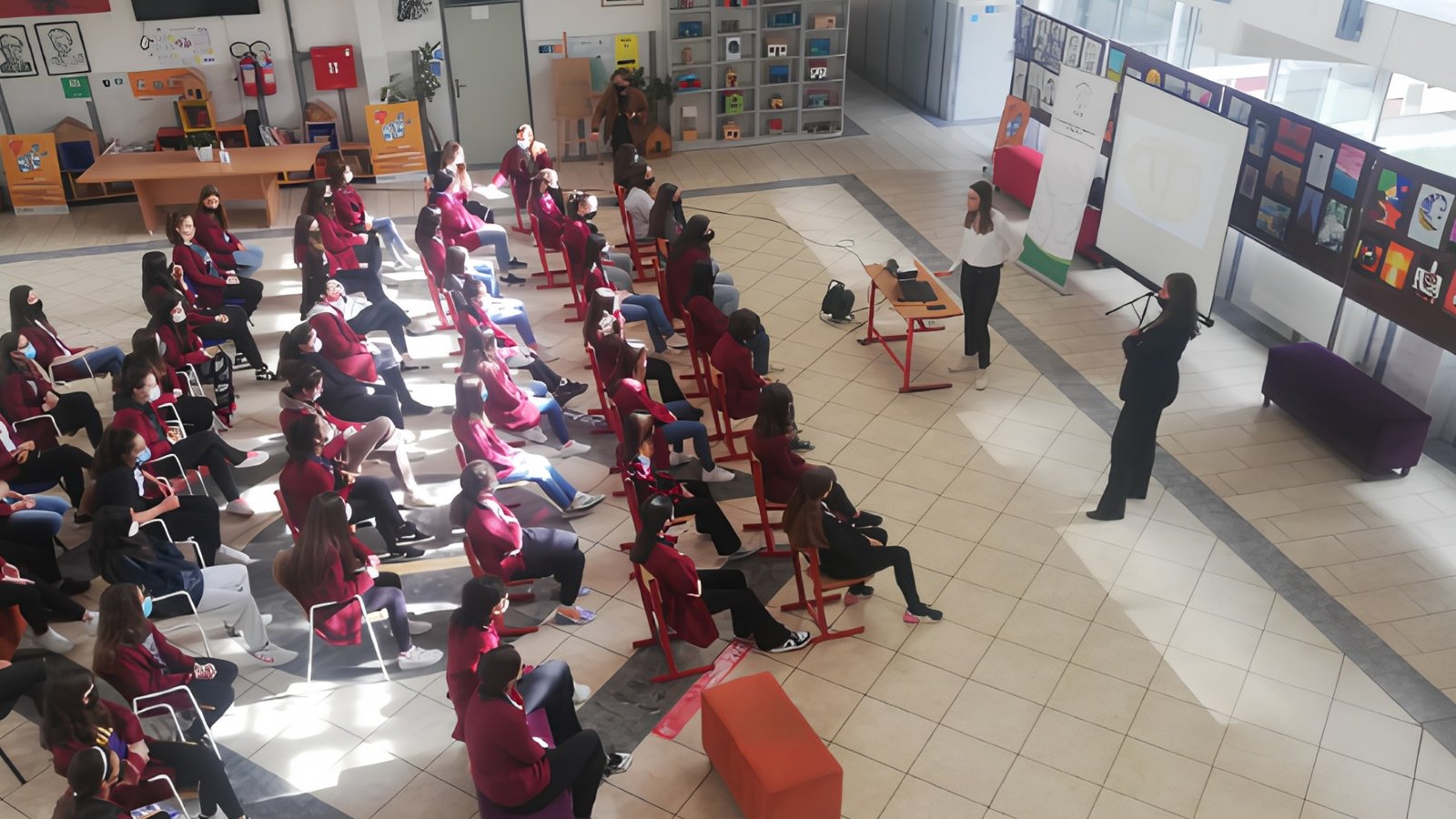
On 23 June, Kosovo Women’s Network (KWN) member organization, the Association for Education and Family Care (SHEPF), in the framework of the project “Improving knowledge and empowering young people for a life free of violence and sexual harassment” held an information session with eighth grade students of “Jan Salihu” school in the village of Molliqaj, Gjakovë.

In the meeting with 22 students, a psychologist and a lawyer from SHEPF informed the students about the domestic violence, sexual harassment and bullying.

The lawyer Edona Rudi informed the students about the different forms of violence such as: psychological, physical and sexual violence.

She told them that the sexual harassment and other forms of violence are criminal offenses. While the psychologist, Fatjona Karakushi briefed students on the serious consequences that any form of violence can have on victims and potential survivors.

She also highlighted the role of the psychologist not only in reporting sexual harassment at school, but also in overcoming the anxiety, fear and insecurity that survivors may feel.

This meeting has been implemented through the 17th Round of the Kosovo Women’s Fund (KWF) within the KWN initiative, “Enhancing the Capacities and Resilience of CSO’s: Furthering Gender Equality Amid the COVID-19 Pandemic”, financed by the European Union (EU) in Kosovo.

Students from Amsterdam Appreciate the KWN’s Activism

On Friday, 17 June, Adelina Berisha, Manager on Gender Based Violence, KWN, and Besarta Breznica, Project Coordinator on Gender Based Violence, KWN, met with students from Amsterdam University College.

During this traditional meeting Berisha spoke about the history of the women’s rights movement in Kosovo, as well as the work by KWN since its foundation, and its six key programs.

The students were interested in getting a closer look at KWN’s work and experiences of the Kosovar women’s rights activists, gender-based violence and about the victims of sexual violence during the war.

Berisha said that “we don’t believe that the abused women will be peaceful and that justice will prevail, unless the state admits what has happened.”

She said that the KWN has advocated for a gender perspective.  However according to her, the dialogue always is between men and for technical aspects. “The human aspects that concern us as women are not discussed.”

Students have been informed that the KWN’s recommendations that are in line with international best practices are being included in Kosovo legislation. Based on KWN recommendations some forms of gender-based violence such as sexual violence and sexual harassment have been criminalized.

KWN staff briefed students on the many awareness campaigns, noting that women are reporting more violence thanks to the work of NGOs.

The students appreciated the meeting by saying that it was “a valuable experience and a great opportunity to understand closely the work of KWN and the situation of women in Kosovo.”

The students pointed out that solidarity between the members of the network is motivating and show their desire to work as interns at KWN in order to learn new things and in particular about the role of women in peace building.

Over the past three years, Executive Director, Igo Rohgova, KWN has discussed with the students of this university the rights of women and their impact on the history of Kosovo and peacebuilding. 

Read more about the 2021 visit HERE.

In Time Informs and Encourages Women in Prizren for Political Participation and Decision-Making

On 15 June in Prizren, Kosovo Women’s Network (KWN) member organization, In Time held a meeting to inform and motivate women for political participation and decision-making processes. Nine beneficiaries, former candidates and assembly councilors as well as the officials from Prizren mayor’s cabinet attended the meeting. Besmire Aliu, executive director, In Time, presented the findings of an internal research of the organization regarding women’s decision-making and their participation in public consultations. According to the results, the participation of women in public consultations was very low, but women have shown interest to attend the public consultations. She said that most of them are not informed at all about such meetings.

Aliu stressed the importance of women’s participation, especially in policy-making. “Women’s voices need to be heard in policy-making because these policies affect us all,” she said.

Former candidate for Municipal Assembly, Ujana Emra, added that the patriarchal mentality prevents women’s involvement in politics. “In our country the motivation to participate in politics continues to be a problem and sometimes women do not have support even from their family or relatives,” Emra said.

The mayor’s cabinet official, Jona Hoxhaj, spoke about the new platform of the municipality and the USAID that aims at making the local councils functional. These councils are intended to better disseminate information on municipal public consultations, and consequently increase women’s participation in these meetings.

The In Time has organized similar activities in the Lipjan and Vushtrri municipalities, too.

These activities were implemented through the organizational support received from the 16th round of the Kosovo Women’s Fund (KWF), funded by the Sigrid Rausing Trust.

To read more about this organizational support and other details, click HERE.

“Gruaja Fermere” Raise Awareness Amongst Rahovec Students About Sex Education

The member organization of the Kosovo Women’s Network (KWN), “Gruaja Fermere” (in English Woman Farmer) successfully completes the initiative ” Sexual education for youth”.

From October 1, 2021 to January 31, 2022, for four months, Gruaja Fermere has held 10 activities with 263 high school students in the Municipality of Rahovec.

The young people of this municipality had the opportunity to attend the lecture of Dr. Florije Kafexhiu about reproductive health, family planning, unwanted pregnancies, and adolescent health.

The project coordinator, Muradije Shehu, said that they have chosen to address this topic because of the great need for young people to become aware of reproductive health.

“We are grateful to the Kosova Women’s Network, through which the organisation of these lectures, very useful for young people, was made possible”, she said.

Meanwhile, the lecturer Kafexhiu advised the students to be aware of the health risks that may threaten them.

“You should feel free to know more about sex education because lack of information can have many consequences, and infections are among the most common and should be treated with caution, because some of them do not show any symptoms at first”.

The student of dentistry, Anjeza Krasniqi, expressed her satisfaction with the training.

I liked the topic we discussed today because we learned a lot of things we did not know, and which we never discussed in school. This information will help us take proper care of our health,” she said.

This image has an empty alt attribute; its file name is 272196956_5100026756695625_8969997719056567735_n-1024x573.jpg

The activities of the organization “Farmer Woman” have included discussions with school principals and teachers, who have supported the idea of updating the school curriculum with the subject of sex education. In total, 40 teachers were informed about quality and gender sensitive education, respectively 10 men and 30 women.

This initiative, benefiting from the 15th round of the Kosovo Women’s Fund, is funded by the Austrian Development Agency and co-financed by the Swedish International Cooperation and Development Agency, through the Swedish Embassy in Pristina, within the KWN initiative “Advancing Further on Women’s Rights in Kosovo II”.

KWN Committed To Increasing Volunteerism Towards Gender Equality

The Kosovo Women’s Network (KWN) has been committed to supporting and promoting the rights and interests of women and girls throughout Kosovo for decades.

We already have 189 organizations with which we work closely in order to accomplish our mission. We, at KWN, work daily to further strengthen the feminist movement in Kosovo, including more activists in our quest for equality and social justice.

Over the years, KWN has made efforts to provide opportunities for volunteers from Kosovo, as well as from around the world, to engage directly in internships. Recently, among numerous programs and initiatives, KWN has developed a more specific program for volunteer engagement, which aims to establish a sustainable mechanism for volunteering in KWN, but also directly to some of our 189 member organizations across Kosovo.

The goal of this program is to include more activists on the feminist agenda. The program also provides volunteers with the opportunity to take a closer look at the work of small women’s rights organizations, their work in the community, and the needs of women at the local level. Volunteers will help raise gender equality issues and increase women’s participation in public life and decision-making processes, and beyond.

We believe that volunteering strengthens participation and cooperation, as well as engages young people in active citizenship. Volunteering can help produce a transformative effect in society by reducing social and economic inequalities. Further, it helps build solidarity and contributes to build a strong bond in the community. It is extremely important to expand the scope of engagement beyond market relations and increase appreciation for unpaid work.

Volunteers are invaluable to our organization and their work is highly respected. They enrich our projects and activities with their contribution. They help us expand the scope of our programs and improve our projects. This program gives individuals the opportunity to get involved and become stakeholders in the movement for justice and social equality. Voluntary work is done voluntarily with the desire to contribute to a common good but it should under no circumstances replace paid work.

Erin Brown shared her impression of working with KWN, appreciating the expertise and lessons learned from working with KWN.

“The opportuntiy to volunteer at KWN has given me first-hand experience on the importance of civil society and feminist activism in public advocacy.” Said Erid Brown, volunteer at KWN.

“During my time at KWN, I have worked on meaningful projects and have learned about the impact of Kosovo civil society activists throughout the country. I am forever grateful to my esteemed KWN colleagues for giving me the opportunity to learn about, and work on feminist issues in Kosovo.” she added.

Recently, KWN has conducted two successful field campaigns thanks to the contribution of volunteers. In 2019, about 200 volunteers for five days (September 25-29) met with citizens door to door in over 15 municipalities of Kosovo, including Serb municipalities, to discuss with women and men voters the importance of voting more women in the early parliamentary elections held on October 6, 2019. Whereas, in 2021, about 80 volunteers, for five days (October 11-15), talked to citizens in 23 municipalities of Kosovo, again, going door to door, to talk about the importance of equal participation and representation of women in elections.

KWN remains committed to providing as many volunteer opportunities as possible to all interseted. If you’re interested in being a part of our volunteer team, please email us at volunteers@womensnetwork.org

This important program for the engagement of volunteers has recently been supported through the four-year initiative “Strengthening Women’s Participation in Politics” by the European Union (EU) Office in Kosovo, and continues to receive support from the Austrian Development Agency ( ADA).

Humanus Vita hold information sessions on sexual harassment

Kosovo Women’s Network (KWN) member organization Humanus Vita successfully concludes the 15th round of the Kosovo Women’s Fund (KWF) beneficiary initiative “Awareness of young people about harassment and sexual assault and the importance of early reporting”.

From October 1, 2021 to February 28, 2022, for five months, Humanus Vita held information sessions with students of primary and secondary schools in the municipality of Drenas and the villages of Nekoc and Llapushnik. In total, 720 students were informed about gender-based violence including sexual harassment in schools.

Local and international legal framework; Challenging gender stereotypes; How does sexual violence and sexual harassment affect young people; Causes of low reporting; were some of the topics covered during these sessions.

The number of indirect beneficiaries (awareness raising and information sharing) has been significantly large, given that its realization was accompanied by several television appearances.

This image has an empty alt attribute; its file name is 275235116_1253254328497353_4538531514981458235_n.jpg

The first sessions were held on October 21st at the Technical High School “Fehmi Lladrovci” in Drenas, where students discussed about their perceptions of harassment and sexual assault.

Trainer Valentina Bejtullahu, explained the concepts of gender-based violence and sexual assault, and informed the participating students about the local and international legal framework that regulates this issue. Particular attention was paid to combating gender stereotypes, identified as some of the most common causes of sexual harassment.

May be an image of 11 people, people standing, people sitting and indoor

“If there were no gender stereotypes from society and the media, there would be fewer harassment cases. Therefore, young people should avoid generalisations, be open-minded, and make the fight for equality part of their daily lives,” she added.

Humannus Vita, also held two information sessions for 30 women from the community and rural areas. The topic of gender-based violence and sexual harassment was the main topic discussed in these sessions held in the village of Krajkova, in schools and in the Municipality of Drenas in community homes.

This initiative of “Humanus Vita” is supported by the Austrian Development Agency (ADA), through KWN’s “Further Advancement of Women’s Rights in Kosovo II” initiative, co-financed by the Swedish International Development Cooperation Agency (Sida), through the Swedish Embassy in Prishtina.

Businesses and Employees in Lipjan are being informed about the EU Work-Life Balance Directive

On 9 June in Lipjan, Kosovo Women’s Network (KWN) member organization, Lipjan Youth Center (LYC), distributed flyers to business owners and employees to raise awareness on family-friendly policies in the workplace, as per the EU Work-Life Balance Directive.

The volunteers distributed posters and placed them in the visible places of the business premises.

Valmire Marevci, Coordinator, LYC, says that some businesses in Lipjan offer flexible working hours for their employees as well as childcare site in the workplace.

Marevci says that “the government should apply the Directive because it improves the country’s economy and it contributes to the equal participation of women and men in the labour force.”

Isamete Krasniqi, who owns a tailoring business, welcomes the campaign to promote the EU Directive on Work-Life Balance. She said that as a businesswoman she understands the workers’ needs by allowing them to bring their children to the workplace and by offering them days off when they have to take care of family members- what is known as the carers leave by the EU Directive.

This is not the first activity that LYC conducts regarding the KWN’s awareness campaign on gender responsive family policies.

On 20 May, the organization held an information session with business representatives in Lipjan to inform them in more detail about family-friendly policies in the workplace.

The initiative “Promoting Family Friendly Policies at the Local Level” was supported by the United Nations Population Fund in Kosovo (UNFPA) via KWN’s initiative “Expanding Choices: Gender-Responsive Family Policies for the Private Sector in the Western Balkans and Moldova,” financed by the Austrian Development Agency (ADA), the operational unit of Austrian Development Cooperation.

In addition to LYC, three other organizations have benefited from UNFPA, through the 15th round of the Kosovo Women’s Fund. You can read more here.

KWN Introduces Gender Policy Recommendations for Persons with Disabilities

Download File

Today, June 10, from 10:30 to 12:30, the Kosovo Women’s Network (KWN) presented the reports “Gender-responsive Financing of Personal Assistants for Persons with Disabilities in Kosovo” and “Gender and Disability in EU Law: An Intersectional Approach to Informing Kosovo’s Legal Framework”.

“Gender-responsive Financing of Personal Assistants for Persons with Disabilities in Kosovo” is a policy brief that seeks to inform discussions surrounding important, current political and legal processes, including the forthcoming respective draft laws for Assessment, Recognition of Status, Benefits, and Services for Persons with Disabilities; for Social and Family Services; on amending and supplementing the Law No. 04/L-131 on State Funded Pension Schemes; and annual Kosovo budgets.

Whereas the report “Gender and Disability in EU Law: An Intersectional Approach to Informing Kosovo’s Legal Framework”, provides a summary of policies and analyzes the legal framework of the European Union (EU) regarding disability and gender, presenting recommendations for Kosovo and its legal framework.

In her opening remarks, the Chair of the KWN Board. Nermin Mahmuti said that “Equality means fair treatment for all, giving everyone the same opportunities.” She added: “When we talk about equality, our ultimate goal is justice. The equality is achieved only when everyone gets what they need.”

During this meeting, the main findings and recommendations of the two reports were presented. Part of the discussion were officials from the Ministry of Labor, Finance and Transfers, representatives from the ombudsman institution, representatives of the EU in Kosovo and women’s rights organizations that focus on women with disabilities.

The findings and recommendations of these analyzes were welcomed by the EU Office in Kosovo. The representative of this institution, Jarmo Helppikangas said that “Since the government should make assessments of the impact of gender equality to inform new laws and policies, these documents should provide important support in this regard.”

“The analysis and findings are very timely as they can and should be used to inform future laws that are currently being finalized by the government.” he added.

The recommendations of these two analyzes were also welcomed by the Ministry of Finance, Labor and Transfers, more precisely by the Legal Department for Labor and Social Welfare. Present at the discussion was Mrs. Minire Begaj, Head of the Legal Department for Labor and Social Welfare, MFLT, who congratulated the authors of the two analyzes and said that “These findings and recommendations will be presented to the working group which is drafting the above-mentioned draft laws.”

Key recommendations include:

–           Amend existing laws to incorporate consistent, internationally recognized definitions of disability:

•          Law No. 02/L-17 on Social and Family Services

•          Law No. 2003/23 on Disability Pensions

•          Law No. 05/L-021 on the Protection from Discrimination

•          Annual Budget Appropriations

–           Ensure these use an intersectional approach to gender, attending to intersections with ethnicity, age, and other factors that could hinder access to appropriate care services.

–           Prior to amending/adopting, ensure a Gender Equality Impact Assessment is conducted as part of the required Regulatory Impact Assessment included in the Better Regulation Strategy 2.0 for Kosovo.

–           Review the eligibility criteria for personal assistance and actual needs.

–           Specify in secondary legislation the minimum experience, expertise, and qualifications that personal assistants must have to provide qualified services, such as via obligatory training and qualification testing.

Read the full “Gender-responsive Financing of Personal Assistants for Persons with Disabilities in Kosovo” report, HERE.

Read the full “Gender and Disability in EU Law: An Intersectional Approach to Informing Kosovo’s Legal Framework” report, HERE.

These analyzes are supported by the European Union, as well as the Austrian Development Agency (ADA) and the Swedish International Development Cooperation Agency (Sida).

For media statements on this topic please contact us at media@womensnetwork.org, and ernera@womensnetwork.org.

KWN Supports The Pride Parade Under The Slogan “BOTH IN THE STATE AND IN THE FAMILY”

For the sixth year in a row in Prishtina was held the Pride Parade by the LGBTI Community (homosexual, lesbian, bisexual, transgender, intersex), activists and supporters of the rights of this community.

On June 9, hundreds of activists gathered in the “Skënderbeu” square of the capital under the slogan “BOTH IN THE STATE AND IN THE FAMILY “.

Shemsie Musa-Çerkini, mother of a gay person, said she was proud of her son and called on Kosovar society to “open its mind and heart”.

“The time has come for them to understand that everyone has the right to decide for themselves, to love whoever they want, to wear whatever they want, to marry whomever they want, to start a family with whomever they want. “, She said.

This year’s parade was held at a time when there is no support in the Assembly of Kosovo for the new Draft Civil Code, which opens the possibility of drafting a law on registration of civil communities between persons of the same sex.

The Kosovo Women’s Network (KWN) once again was part of this parade organized by the Center for the Development of Social Groups (CSGD) and the Center for Freedom and Equality (CEL).

KWN Holds the First Meeting to Draft the New Strategy

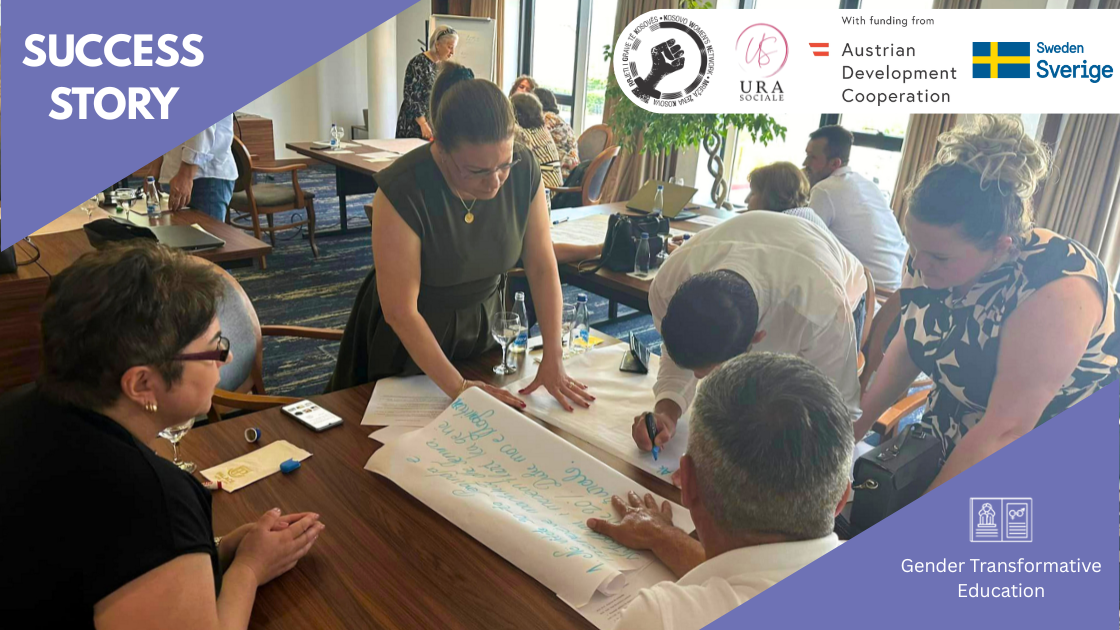
On June 6 in Pristina, close to 100 representatives of member organizations, partners and supporters of the work of the Kosovo Women’s Network (KWN), gathered for the workshop to plan the new KWN strategy 2023-2026.

The meeting was opened by Igballe Rogova, Executive Director, KWN, who noted the importance of such meetings in uniting women towards achieving gender equality and increasing solidarity.

“Today we will start building the basis of our joint work for the next four years,” said Rogova, among others.

Next, Nicole Farnsworth, Program Director and Research Leader, KWN, and Adelina Berisha, Program Manager for Gender-Based Violence, KWN, spoke to introduce the programs that KWN will prioritize in its new strategy.

This image has an empty alt attribute; its file name is IMG_4360-1024x683.jpg

The second part of the workshop continued by sharing experiences and opinions, in five working groups, divided as follows;

  • Improving gender equality through the rule of law,
  • Life without gender-based violence,
  • Economic empowerment of women,
  • Education that transforms gender norms, as well
  • Environmental protection.

After the joint discussion, the representatives of the groups presented the main problems that KWN should focus on to address in the next four years.

This image has an empty alt attribute; its file name is IMG_4198-1024x683.jpg

In November of last year, KWN members met for three consecutive days for the workshop on which KWN’s feminist strategy was planned. HERE you can read more about this workshop.

This workshop was supported by the Austrian Development Agency ADA.