KWN as a learning and inspiring experience

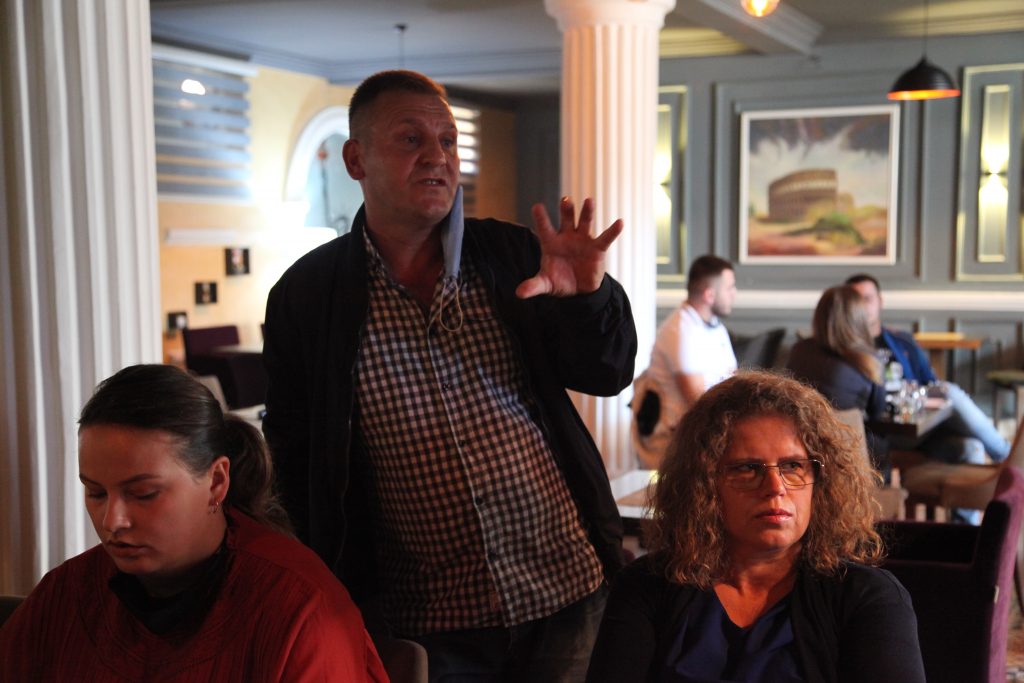
José Carpintero-Molina, 23, from Almeria, Spain joined Kosovo Women’s Network (KWN) team in order to expand his knowledge of and experience with women’s civil society organizations. He worked as a research assistant with KWN from the beginning of December 2019 until the end of June 2020. Although he is now back in Spain, he is still working remotely for KWN.  

Long before coming to Kosovo, he was aware that KWN was one of the key women’s rights organization in the Balkans region.  

“When I began, not only did KWN staff trust me, but they welcomed me into the organization as if they were my own family. Even in the most difficult moments during the pandemic, I have always felt helped and cared for.” he says.  

Carpintero-Molina, a graduate student in Political Sciences at the University of Granada, highly appreciates the team effort and the warm welcome by KWN staff members.  

“Thanks to all of them, to accepting me in this new experience, which ended up being a path full of learning and new friendships. During this period, I experienced a great change, both personally and professionally.” 

As part of an initiative “Empowering Youth for a Peaceful, Prosperous, and Sustainable Future in Kosovo”, supported by UN Women, Jose focused on Women, Peace and Security and Youth agendas. Molina worked closely with two KWN staff members, Majlinda Behrami, Project Coordinator and Besarta Brezenica, Researcher.  

He describes their cooperation as a valuable experience which helped him to better understand how women’s activism has been during the war in Kosovo.  

“Working with Majlinda and Besarta has made this project much more exciting. Even though we didn’t know each other at the beginning, I have the feeling that we managed to connect very well and we built a great team. Certainly, everything was much easier and more comfortable thanks to them.” says Molina, while adding that they, and other KWN staff, have become very good friends.  

The appreciation was mutual. Behrami asserts that Carpintero-Molina had a positive energy, strong work-ethic, and was curious to know more about the people surrounding him.  

“His professional background served as a huge contributor to our research initiative. From our discussions we realized that gender inequalities are present all around the globe, regardless of different circumstances. I am very happy that young men like him are involved in advocating for gender equality.” Behrami says. 

Along the way, he had the opportunity to learn and elaborate more about the work and activism that KWN is doing, as well as the history of the organization and the long-standing activism of the KWN Executive Director, Igballe Rogova.  

“She [Rogova] inspired me from the very moment I read about her activism”.   

Regardless of the circumstances caused due to the spread of the COVID-19 pandemic, Molina left happy, knowing that he met “these great and professional people, and that I will be able to continue working with them from the distance.” 

This experience helped him to clearly define the most important things he wants to continue to advocate for, gender equality being one of them.  

“KWN has shown me that wherever I go, I must work and speak up for what I believe in, and that is what I will continue doing from Spain.” 

Jose concludes that he is proud for being able to be part of KWN, and is convinced that this experience is exceptional.  

OPDMK Marks the Muscular Dystrophy Week

The Organization of Persons with Muscular Dystrophy (OPDMK), a member organization of Kosovo Women‘s Network (KWN), marked the Muscular Dystrophy Week 2020 with an awareness campaign video, where girls and women with disabilities shared their experiences and the difficulties they encounter on a daily basis. 

This initiative has been a great way to spread awareness around this topic, given the situation created by the spread of the pandemic. 

This video was possible under the four-year initiative, “Strengthening Women’s Participation in Politics”, in cooperation with KWN and supported by the European Union (EU) Office in Kosovo. 

Antigona Shestan, Executive Director of OPDMK spoke about the importance of this initiative in implementing the objectives of OPDMK. 

“Instead of the usual recreational and sportive activities, this year through a short clip we aimed to contribute to raising awareness among the citizens of Kosovo regarding the condition of people with muscular dystrophy. Thanks to the support received from the EU Office in Kosovo, through this awareness video and its media coverage, the voice of women with muscular dystrophy were more heard,” she said. 

Every year OPDMK has undertaken activities to improve the rights of this community. In order to address importance of the Muscular Dystrophy Week, Resmije Rrahmani, Mobilizer under this initiative from OPDMK, expressed that “marking this week has been very important for people with muscular dystrophy and their families. This highlights the difficulties and obstacles faced by people with dystrophy. I want to emphasize of how important it is to give a space for women and girls with disabilities to be heard.” 

One of the girls who gave a message in the video was Pranvera Musaj from Suhareka. 

“Taking in consideration the pandemic conditions, we still tried to do something to mark this week, to take a step forward by pushing other girls who are like us to never give up on their dreams, especially from education and employment”, says Musaj. She added that she is convinced that this initiative will affect positive changes in society. 

In the framework of this initiative, OPDMK has drafted Advocacy Strategy for Women and Girls with Disabilities. 

The full video for Muscular Dystrophy Week can be found HERE

READ ALSO: 

OPDMK Advocates for the Participation of Women with Disabilities in Politics  

OPDMK aims to Strengthen the Participation of Women with Disabilities in Politics 

This video and this initiative is supported by the European Union (EU) Office in Kosovo.

PEA Conducts Door-to-Door Medical Visits

 Albanian and Serb citizens of the villages of Gadish, Kishnapolë, Verbicë e Zhegovcit, Pidiq, Llashticë, Dazhnicë, Makresh and Parallovë, of the Gjilan Municipality recently had the opportunity to do medical examinations, free of charge.

125 field visits were undertaken by Psychotherapists in Action (PEA), a Kosovo Women’s Network (KWN) member organization, under the framework of the initiative “Advancing Palliative Care in Kosovo and Raising Public Awareness about People with Special Needs.”

A total of 158 people benefited directly from these medical visits. Some of these citizens discovered that they were suffering from ailments they had never known about. Whereas, a total of 500 other people benefited indirectly through advice and guidance.

“I am very happy that we are benefiting from this initiative. At first, I thought that I did not have any health problems, so I have never been to a doctor before. But, after visits and consultations by PEA we saw that more extensive medical check-ups should be done at Main Family Medicine Centre (MFMC), where then I started to be treated,” Those are the words of a man from Pidiq village, whose family was visited by Dr. Ramize Ahmeti-Ibrahimi and the medical team.

The PEA, in addition to citizens, acknowledged the benefits stemming from this initiative. 

“This initiative, which included medical visits at home, was very welcomed by four our organization. Thanks to these examinations required we have found had cases of when diabetes that had not has been detected before. Also, we were able to benefit many poor families benefited from this initiative.” said Sevdije Musliu, Executive Director, PEA.

During visits, various different health problems were uncovered discovered, such as; high blood pressure, diabetes, cough or cold, infertility, lethargy, urinary tract infections, nervous disorders, and epilepsy.    

 In order to collect the impressions of citizens, 60 anonymous questionnaires, as well as round table discussions were conducted. These were the recommendations suggested:

Recommendations are as following:

  • Healthcare providers are key in identifying the needs of the individual and family as well,
  • Teamwork between families, doctors and nurses need to increase in order to improve the quality of health services,
  • To continuously monitor the health promotion, education, treatment and counselling of families, 
  • To inform families of the purpose of medical examinations and the role of the medical team. Informing should be done through media, schools, mosques, in order to reach a more people,
  • To be where the individual and the family need treatment and support with a single goal in mind “family, without illness.”

The above recommendations have been submitted to the Ministry of Health (MH), which has pledged to review them when drafting advocacy and legislation for the revival of palliative care.

The activities undertaken as part of this initiative have contributed to the implementation of the KWN Strategy 2019-2022, respectively in the section “Women’s Rights in Health Care”. 

20 Organizations from Six Western Balkan Countries Hold their Strategic Planning Meeting

The Coalition against Gender-based Discrimination against Women at Work held their strategic planning meeting online from 13 until 17 July. 20 partners from six Western Balkan countries had the chance to discuss progress to date, successes, challenges and strategies for addressing gender-based discrimination at work. 

Although this meeting was planned to take place in North Macedonia, due to the pandemic it was held online. All partners were organized and divided in working groups where they planned for the upcoming months. They discussed new ideas on: advocacy, awareness raising campaigns and court monitoring and legal aid.  

“The idea of a weeklong meeting taking place online, I thought it wasn’t possible, but it actually worked great. Everything went very well and we even had the chance to divide into working groups and everything as planned,” said one of the participants.  

The Coalition partners include: Kosovo Women’s Network, Reactor Research in Action/ Реактор истражување во акција, Gender Alliance for Development Center (GADC), Helsinki Citizens’ Assembly-Vanadzor, Centar za ženska prava / Women’s Rights Center, the Kvinna till Kvinna Foundation -Sweden via its Serbia office], AWEN-Albanian Women Empowerment Network, Linja e Keshillimit per Gra dhe Vajza, Хелсиншки комитет за човекови права – Helsinki Committee for Human Rights, Гласен Текстилец, Viktimolosko Drustvo Srbije, A11 – Inicijativa za ekonomska i socijalna prava, ROZA udruženje za radna prava žena and Sindikat medija Crne Gore 

This Action is supported by European Union and co-funded by Swedish International Development Agency  (Sida). 

30 Years Since the Founding of the Association ‘Motrat Qiriazi’

The year 2020 marks three decades since the founding of the Association “Motrat Qiriazi” (MQ), by activists Safete and Igballe Rogova.

During the years of national resistance, this association conducted numerous activities for women rights and gender equality in Kosovo. During the years 1994-1995 the the association was focused in the region of Has, holding uninterrupted meetings with the women and girls of Has for their emancipation and awareness of their rights.

“Motrat Qiriazi” recently joined Facebook by creating a symbolic page as a way to mark this anniversary. You can follow weekly pieces of history, activities of activists, collaborations, successes and challenges that they overcome for these 30 years.

If you have been involved in any way with the Association for the Elimination of Illiteracy in Kosovo “Motrat Qiriazi” during the years 1990 – 1994; if you have attended anti-illiteracy courses held by the Association during those years; or if you know someone who has held them whereas, you can register on Facebook or via email motratqiriazi30@gmail.com.

Kosovo Midwife Association Demands Institutional Support to Empower the Role of Midwives in Kosovo

The closure of maternity hospitals combined with operational difficulties in some municipalities of Kosovo, such as Kamenica, Dragash, Malisheva, Kaçanik and Istog, has led many women to seek help in other nearby municipalities. It has also affected a large number of midwives’ unemployment. 

For many pregnant women, the closure of maternity hospitals has been a huge obstacle, including additional costs. 

The project” Strengthening the role of midwives’ professional service”, initiated by The Kosovo Midwives Association (KMA), contributed to improving this issue. 

With the support of the Kosovo Women’s Fund (KGF), KMA through many activities such as roundtables, meetings with institutional leaders, drafting recommendations, and mapping a request for the draft law on midwifery professional services. Their media promotion has managed to raise awareness of the importance of the midwifery to the well-being of mothers and children. 

A total of 97 people benefited from this initiative, 84 women and 13 men. The project was praised by midwives, civil society representatives and institutions. 

“Responsible institutions for many years have oppressed us, they neither have appreciated nor have invested in our profession, but the great love for the profession has made us ignore them,” said one of the midwives during a discussion. 

On 12 December, the Kosovo Midwives Association (KMA) organized the round table discussion. It was attended by the directors of Health and Social Welfare Departments from different municipalities of Kosovo, members of the Municipal Assembly of Prishtina, representatives of the Institute of Public Health and civil society organizations.  

The round table was intended to address the draft law on the midwifery professional service and midwives’ role for the health of the population. 

During the roundtable, Magbule Elezi, the President of the Kosovo Association of Midwives, called for support from the institutions present.; With their institutional and state responsibility and influence they will continue their joint commitment to this cause. 

“Through health policies, institutional support and professional development we can improve the quality of services and increase the well-being of our women and citizens, as well as improve their lives”, said Ms. Elezi. 

Besa Baftiu, the Head of the Parliamentary Committee on Health and Social Welfare, said that “As a committee, we have raised concerns about the closure of maternity hospitals and we are continuing cooperation with KMA to find a solution for midwives to take their place”. 

Some of the recommendations from the roundtable, are as it follows: 

  • Involvement of midwives in the process of drafting guidelines and clinical protocols in obstetrics, 
  • Description of work tasks, depending on the institution where midwives work, 
  • Regular vocational trainings for midwives, 
  • Representation of midwives in decision-making within institutions, 
  • Raising and strengthening teamwork, 
  • KMA to be included in debate and decision-making groups regarding all legal and sub-legal acts for the profession of midwife, 
  • Delegation of gynecologists from the Ministry of Health to all maternity hospitals, which enables faster re-functionalization of maternity hospitals, 
  • Description of work tasks and competencies. 

Another successful meeting was held with the president for accreditation of the Faculty of Medicine – Midwives Department, where the re-accreditation of this department was promised. They managed to sign a memorandum of cooperation between the Faculty of Medicine and KMA. 

KMA has also held meetings with the Association of Nurses and Midwives of Albania, where a memorandum of cooperation was signed in order for both countries to organize continuous meetings and share experiences. 

The recommendations are as follows: 

  • The Ministry of Health to ensure the participation of KMA representatives in working groups for the drafting of policies and strategies in terms of mothers and children health and reproductive health, 
  • The Ministry of Health to consult counterparts from the Republic of Croatia in order to advance the role of midwives following the Croatian law and model, 
  • The Ministry of Health to provide programs, guidelines, standards for information and capacity building for reproductive health that effect the health of mothers and children, family planning, fertility, early births, and preventable diseases, 
  • The Ministry of Health to take measures on preventing the closing of maternity hospitals in municipalities, as the lack of this service in some units has seriously endangered the health of women and children, 
  • The Ministry of Health to develop a plan of human resources for midwives and other health professionals in order to increase the number of midwives; to provide opportunities for continuous professional development for managers of health institutions and midwives, and thus strengthening basic skills and knowledge in order to providing quality and equal services for maternal and child health in all maternity units, 
  • The Ministry of Health to consider Directive no. 2005/36 / EC of the European Union (EU) on professional qualifications for midwives. 

The positive results achieved during these months contribute to the previews efforts of KWN and KMA to improve the conditions of maternity hospitals in Kosovo. 

This project is supported by the Kosovo Women’s Fund (KWF) of Kosovo Women’s Network (KWN), and funded by the Austrian Development Agency (ADA). 

“Raba Voca” Advocates in Three Municipalities for Joint Parental Leave

The current Labor Law is one of the main reasons for low participation of women in the labor market (about 12%). This is because this law does not recognize men’s parental leave. Employed men are entitled to take only two days of paid leave and two weeks of unpaid leave, which they can use at any time before the child reaches the age of three. However, employed women get 12 months of leave, including nine months paid and three months unpaid.

Thus, this law discriminates against men, not offering them equal rights to be with their children, while also reduces women’s participation in the economy.

The Center for Protection of Women and Children “Raba Voca” through their initiative “Parental leave as a future model in Kosovo”, has held information sessions, discussions with citizens and institutional representatives, has done research, and has disseminated information through the media. All these activities supported by the Kosovo Women’s Fund (KGF), were implemented in Mitrovica, Vushtrri, and Skenderaj. They aim to raise awareness and lobby for the importance of equal rights of both parents to be with their children.

Through these activities, about 330 women and 80 men became aware of promoting gender equality, and a full 3,000 citizens received more information about the involvement of fathers in childcare.

“Raba Voca” has held meetings with key actors of the Municipality of Mitrovica, Skenderaj and Vushtrri, where they discussed about the joint parental leave and the benefits that would be gained from men being granted paternity leave. There are many benefits to this practice, including paternal bonding, as well as the economic empowerment of women.

“Paternity leave would enable us [women] to return to work faster and not be separated for too long. This way we have the opportunity to reduce the risk of becoming unemployed, receiving a lower salary or a demotion after returning to work “, said a participant in one of the meetings organized by “Raba Voca”.

Hyka Imeri, Gender Equality Official in the Municipality of Skenderaj emphasized that “discrimination towards girls starts from the mother’s womb, when the sex of the baby is known. These traditions and mentality are very difficult to change.”

This advocacy initiative was not limited to the women participating in the activities. “Raba Voca” has organized meetings with students of the University of Mitrovica, in order to discuss these pressing issues. The Executive Directorate of “Raba Voca”, Fidane Hyseni has also appeared on TV Mitrovica and Radio Vicianum to inform the citizens of this initiative.

During the five months that these activities lasted, a survey was conducted in these three municipalities. From the questionnaire conducted with 150 women and men between ages of 17-90 years, it was concluded that a very small number of citizens have used the joint parental leave. When interviewed, citizens were asked that whose responsibility it was to take care of the children. Most answered that both parents equally should be responsible. A small percentage answered that it is women’s responsibility, while an even smaller percentage estimated that childcare belongs only to men.

This project is supported by the Kosovo Women’s Fund (KWF) and funded by the Austrian Development Agency (ADA).

Handikos Mitrovica Helps Mothers of the Children with Disabilities

Postnatal Depression occurs when a woman experiences a strong feeling of despondency following childbirth. The symptoms for this type of depression can include a mother’s difficulty bonding with her infant, as well as a disconnection with her family and society. Mothers tend to blame themselves, and lack the will to do things they used to enjoy.  

According to the World Health Organization, 20% of women in developed countries suffer from Postnatal Depression. In addition, American Psychological Association’s data show that as many as 1 in every 7 women are affected by this depression.  

Handikos Mitrovica was able to offer this counselling program to help women with support from the Kosovo Women’s Fund (KWF). “Depression in Mothers of Children with Disabilities and People with Disabilities” initiative, helped 47 mothers and their special-needs children.        

“Ever since I was put in contact with Handikos Mitrovica and participated in the sessions and meetings hosted by this organization, I have received a lot of help. Sometimes when I’m not in a good mood, but I cannot come to the meetings, I try to remember how we have been advised to keep calm”. These feelings were expressed by a mother who has a child with disabilities, during a group session organized by Handikos Mitrovica, in December 2018. 

Xhevahire Balaj, a psychologist for Diakone Kosovo, emphasized that Postpartum Depression is caused by hormonal changes from giving birth. The depression can get worse if the new-born baby is disabled.  

“Mothers put themselves last, giving their utmost to the child’s care they deem to see that child as the centre of everything”, stated one woman present.     

Direct beneficiaries of this initiative were the mothers of children with disabilities and the young people with disabilities. During this four-month initiative, the topics as follows were discussed: Postnatal Depression signs and symptoms and its way of manifesting, identification and expression of the emotions, embracing a positive approach for stress coping, evocation of positive life experiences and the application of relaxing techniques.   

Participants expressed their gratitude for this initiative, which took place for the first time in the Municipality of Mitrovica.   

Myrvete Hasani, Executive Director of Handikos Mitrovica highlighted that these meetings proved to be a crucial help for mothers and people with disabilities.  

The following recommendation emerged from this initiative: 

To establish counselling in health institutions, respectively in the Gynaecology Department, where others of children with disabilities will have the opportunity for counselling and support from a psychologist / social worker. This recommendation will be sent to the relevant local and central institutions. In order to advocate for the opening of counselling centres in health institutions, Hasani held several meetings with representatives of the Municipality of Mitrovica as well. 

KWN Condemns the Behaviours Toward the Speaker of the Assembly Osmani

Kosovo Women’s Network (KWN) condemns the insulting language and denigrating behaviour used during last night’s session of the Assembly against Speaker of the Assembly, Vjosa Osmani.  

The Assembly of Kosovo is a public institution where the rules and functions of each of its members must be respected. In this institution, all citizens expect their political will to be represented in the most dignified way. Actions like last night contradict the parliamentary and democratic culture of an equal society.  

KWN believes that Speaker Osmani was obstructed in the performance of her official duties in accordance with the Assembly Regulation. According to this Regulation she bears responsibility for the conduct of parliamentary sessions, including warning MPs who do not respect the rules. 

KWN once again calls for disagreements in the political sphere to be resolved through discourse and debates, never through threatening words and actions. KWN also calls for the punishment of those responsible, in accordance with the Assembly’s rules of procedure and applicable laws.  

Such attitudes towards women in politics and decision-making processes are completely unacceptable and severely undermine our aspiration for an equal society between women and men. Such treatment of women in public spaces is a worrying indicator of the treatment of women in our society, and as such should not go unpunished.  

MOU Signed for Employment of Victims of Domestic Violence and Sexual Violence During the War

 Photo Credits: Ministry of Justice, Facebook

Victims of domestic violence as well as survivors of sexual violence during the war will now find it easier to find employment.

This was made possible thanks to a Memorandum of Understanding (MOU), an initiative of UN Women, signed on 8 July, between the Ministry of Justice (MoJ), the Retail Network and the Kosovo Women’s Network (KWN).

The Minister of Justice, Selim Selimi, pledged to support these categories.

“In rare cases, institutions, government, civil society and the private sector come together to sign a good will, through which we express our readiness to be close to women who are victims of violence,” he said.

KWN Executive Director Igballe Rogova said that the economic independence of this category is key to their safety and well-being.

“I am extremely excited because it is finally being understood that the triangle must work in order to help the citizens of Kosovo. This triangle is the Government, Civil Society and the internationals,” she said.

Also, Yllka Metaj, from the Retail Network, has considered this initiative as very fruitful for the future.