KWN held its 16th Annual Membership Meeting

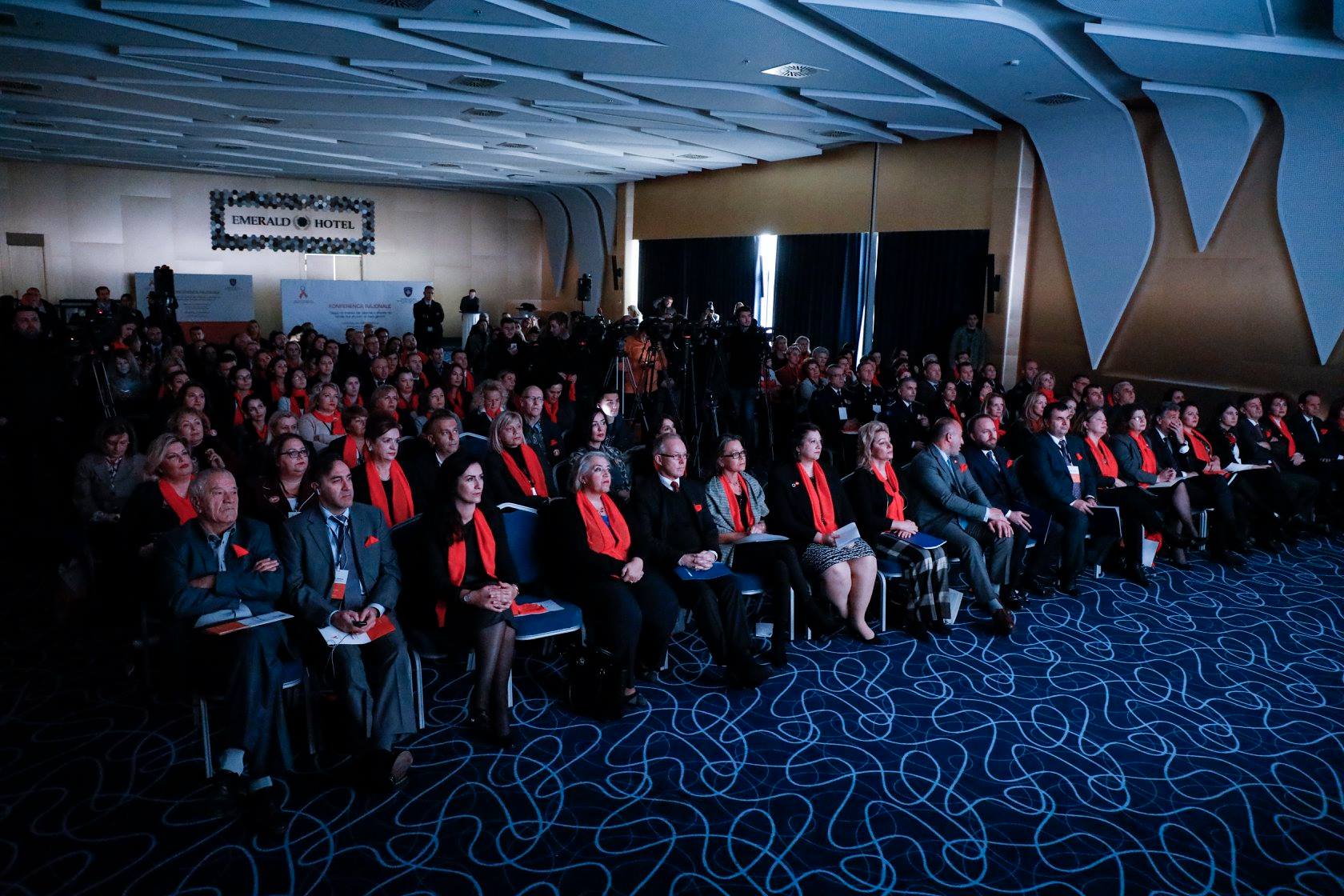
On 16 December, at the Sirius Hotel in Prishtina, the Kosovo Women’s Network (KWN) held its 16th Annual Membership Meeting, attended by members, friends, supporters, representatives of international organizations and Kosovo institutions. The KWN hosts the Annual Membership Meeting since 2003, as part of the staff members’ responsibility to report every year to the Assembly of KWN Members.

The KWN is concluding another year in which it has worked to achieve its vision for a Kosovo where women and men are equal and have equal opportunities in education, employment, participation in politics, health and live a life without violence. The KWN achieves its vision through its mission to support, protect and promote the rights and interests of women and girls throughout Kosovo, regardless of their political and religious beliefs, age, level of education, sexual orientation and abilities.

Ariana Qosaj Mustafa, chair of the KWN Board, in the opening speech of the meeting talked about the successes and challenges of the Network during 2018, and also stressed that “being part of the Kosovo Women’s Network is actually a mission and I believe that with our work and our will we demonstrate every day that we are part of a network in which we will continue to mobilize individually, but also collectively, to achieve the mission of creating an equitable society.” “This also makes our engagement an irreplaceable mission to provide opportunities to many girls and women who represent us with so much dignity around the world, to offer them the opportunity to do so in their own country,” she added.

The collaboration over the years and the successful KWN work was also appreciated by Gunther Zimmer, Head of Office, Austrian Development Agency (ADA), who stated that “it is an honor for the Austrian Development Agency to continue to support the Kosovo Women’s Network, an ADA partner since 2012. We recognize the important role played by women’s rights organizations, networks and movements in bringing about significant social change in Kosovo, the region and elsewhere.”

Annette Fath Lihic, EU Special Representative Chief Political Adviser/Executive Coordinator in Kosovo, expressed her pleasure in addressing the Network at this event, also conveying the words of praise of Ambassador Apostolova for “the wonderful work the KWN is doing”. She further stressed that “gender equality is crucial to ensure security, to establish political stability and to achieve economic development. Significant examples show that countries where women and men are equal and participate in equitable decision-making, are more developed, safer and more stable.”

Between the many emotions and poems written and recited by Safete Rogova, devoted to the work and achievements of the activist and humanist Sevdije Ahmeti, the KWN awarded for the first time the Sevdije Ahmeti annual Prize. When presenting the idea for this award that is related to the history of women activists during the ’90s, Igballe Rogova, KWN Executive Director, emphasized that in this way we hope to keep alive the name of an activist like Sevdije, and at the same time symbolically recognize the contribution of other activists. This year the prize was awarded to Naxhije Buçinca, for her continuous work and commitment to the education of girls and women. Feeling privileged and very emotional, Ms. Buçinca added that “there is no way I can’t compare Sevdije to Jean d’Arc. She fought for the rights of all women in the world. She opened the path we all walk on with our work. This award is a message and obligation to continue our work.”

Thereafter, Igballe Rogova, KNW Executive Director, and KWN staff members presented KWN’s work and engagement towards the implementation of the 2015-2018 Strategy, focusing on activities during 2018 in 5 areas: 1. KWN Capacity Building; 2. Women in Politics and Decision Making; 3. Women’s and Girls’ Health; 4. Countering Gender-Based Violence Program; and 5. Women’s Economic Empowerment.

While thanking members, the board and supporters for their continued support and trust in the KWN, Ms. Rogova stressed that “we are using this meeting to celebrate and reflect on our joint engagement and contribution towards advancing women’s rights and gender equality in Kosovo and abroad. Thank you very much for believing in the Network.” Further on she presented the new 2019 – 2022 KWN Strategy that has established the 6 programming areas of the KWN Strategy for the 2019-2022 period: I) Strengthening the Feminist Movement in Kosovo; II) Women in Politics and Decision-Making; III) Women’s Rights to Health Care; IV) Life Without Gender-based Violence; V) Women’s Economic Empowerment; and VI) Quality Equal Education, which was elaborated together with key members and actors throughout 2018.

Further on, the members adopted the annual report for 2018 and the new 2019-2022 Strategy, and after the lunch break, they re-elected Besnik Leka and Jeta Krasniqi as new members of the Board. During the filling out of the evaluation questionnaires, Adelina Tershani, also a member of the staff, recited the ‘reproaching’ poem ‘This is my lot’

The 16th Membership Meeting was supported by the Kvinna till Kvinna Foundation and the Austrian Development Agency (ADA).

Media’s Role in Reporting Domestic Violence

On 29 November, the Association of Journalists of Kosovo (AJK), supported by the Organization for Security and Cooperation in Europe (OSCE), organized a workshop on “Media’s Role in Reporting Domestic Violence”. The workshop brought together key institutions that play a role in preventing, countering and providing protection against domestic violence, as well as representatives from non-governmental organizations, including the Kosovo Women’s Network (KWN), represented by Adelina Berisha, coordinator for advocacy against gender-based violence. At the meeting were also present: the National Coordinator against Domestic Violence, Mr. Naim Qelaj, the Head of the Kosovo Police Unit Against Domestic Violence, Ms. Tahire Haxholli, reporters from various local media. The opening and welcoming remarks of this meeting were delivered by the Head of the OSCE Mission in Kosovo, Mr. Jan Braathu.

During the panel, Ms. Berisha talked about the importance of cooperation between the media and the non-governmental organizations in preventing and combating domestic violence. She stressed that: “Thanks to this cooperation, we have managed to identify domestic violence cases, which we then assisted by engaging attorneys to represent family members and victims of violence in courts. So far, we have assisted two cases, with the assistance of the Austrian Development Agency (ADA), and the purpose is not limited to providing legal support, but also in identifying violations by local institutions.”

She also emphasized the importance of the media in changing citizens’ beliefs on domestic violence, and stressed that: “The media should be beacons of mentality changes on gender violence, roles and stereotypes, (non)punishment of violence, and its prevention”. Berisha reiterated that the KWN constantly calls on local media to focus more on the perpetrators, rather than on the victims, and to be cautious in reporting such cases, ensuring that the victim’s identity is protected, and not insisting on interviewing victims, as all of this may re-traumatize and re-victimize them. In addition, she reminded local media about the tasks and activities they must undertake to implement the 2016-2020 National Strategy and Action Plan against Domestic Violence, and reiterated that the Kosovo government has a legal obligation to financially support initiatives for the conduct of activities arising from this strategy.

Students from University of York visit KWN

On 28 November, a group of students from the Department of Politics, Post War Recovery Studies, University of York, visited the Kosovo Women’s Network (KWN). This is the fourth time that various generations of students, led by Dr Rebecca E. Engel and Dr Jacob Eriksson, from this University visit KWN during their study visits to Kosovo, over the last four years.

Igballe Rogova, KWN Executive Director informed the students of the work that the network has done since its establishment. A particular focus during this meeting was put on the role the women and the civil society play in the process of dialogue, inter-ethnic reconciliation, refugee reintegration, and gender equality.

The representatives of the University of York thanked KWN for the time to welcome the students of this University, emphasizing that such meetings help them acquire a hands-on experience of the empowering best practices and the roles that women and society play in all the spheres of life.

“This is one of the best visits and most informative we had during our stay here in Kosovo”, said one of the students.

Citizens react to discrimination in the workplace

The Kosovo Women’s Network (KWN), together with five partner organizations from Albania, Macedonia, Serbia, Montenegro and Bosnia and Herzegovina, is implementing the regional project “Fighting Discrimination, Improving Women’s Rights at Work”, funded by the European Union (EU). The project aims to consolidate the regional networks of civil society organizations. The KWN is collaborating with these five partners from five countries in the region, and the project is focused on empowering various civil society organizations in Southeast Europe to hold relevant institutions accountable for implementing legislation on protection against discrimination in relation to women’s rights at work.

Within this project, apart from other activities, it is envisaged to conduct a survey on the implementation of the anti-discrimination law, particularly with regard to women’s rights at work. The data from the research will serve as an indicator of how widespread gender discrimination is in the labor market, and at the same time, will provide concrete suggestions on the required course of action. An important part of this research is the anonymous questionnaire for the citizens of the respective countries, through which each partner organization in the region will measure, among other things, how widespread is gender discrimination in the labor market.

During November, the KWN in Kosovo, the Gender Alliance for Development Center in Albania, the Kvinna Foundation in Serbia, Reactor – Research in Action in Macedonia, the Center for Women’s Rights in Montenegro, and Helsinki Citizens’ Assembly Banja Luka in Bosnia and Hercegovina, launched an online questionnaire for citizens, through which data on discrimination at work are collected, in particular on how discrimination can affect women and men differently.

Research teams are jointly working on the processing of data from interviews with relevant institutions and questionnaires. The research report is expected to be launched during the first months of 2019.

Coalition for Equality discusses Kosovo’s Feminist Government

On November 7, Kosovo Women’s Network (KWN) organized the third meeting of the Coalition for Equality “Kosovo’s Feminist Government. When?”, attended by women in politics, representatives of women-led organizations and women activists.

Igballe Rogova, the KWN Executive Director, in her introductory speech pointed out that seeing that the idea that women from all spheres should join was obvious, and seeing that women remain underrepresented in politics at municipal and central level in Kosovo, and to address this issue Coalition for Equality was born. She emphasized that “The message of this union is solidarity among women and advancement of gender equality in decision-making”.

Her support for the Coalition was reiterated by Atifete Jahjaga, President of the Republic of Kosovo (2011-2016), who said: “We need to eliminate the traditional division of gender roles that continues to affect how we feel as a society.” Meanwhile, Mexhide Mjaku-Topalli, Member of Parliament and Chairwoman of Women Caucus, said: “Gender equality is not just a human right, but a necessity for the development of our society.”

Further, Clare Hutchinson, NATO Secretary General’s Special Representative for Women, Peace and Security spoke about the implementation of UNSC Resolution 1325 in NATO and the importance of advancing the agenda for women, peace and security. “20 years after the adoption of the Resolution, we are still not where we should be,” she added.

Mrs. Karin Hernmarck Ahliny, Ambassador of the Swedish Embassy in Kosovo, spoke about how a feminist government looks like, discussing the government feminist policy and its importance. “Gender equality is not a cherry on the top of a cake, it’s the actual cake,” Ambassador Hernmarc said. She went on by quoting the Swedish Foreign Minister as saying: “No woman needs to be given a voice. Everyone has a voice. We need listening.”

Following the speeches, participants discussed the importance, challenges and solidarity that should guide the work and the commitment to achieve the goal of having a feminist government in Kosovo.

This meeting was supported by Austrian Development Agency (ADA).

Coalition for Equality was established on 22 June 2018 during the initiative “Strengthening Women Participation in Politics and Decision-Making in Kosovo”. The Coalition for Equality is a group composed of women in politics from the central and local levels, non-governmental women-led organizations and women activists who support and empower each other in improving the position of women in politics, decision-making and advancement of gender equality in Kosovo. The Coalition is committed to working towards fulfilling joint mission and vision on empowering and improving the position of women in politics and decision-making and advancing gender equality in Kosovo through mentoring, advocating, solidarity and support for each other.

KWN finalizes New 2019-2022 Strategy

On November 26, at the Sirius Hotel in Prishtina, the Kosovo Women’s Network (KWN) hosted its members, members of the Lobby for Gender Equality in Kosovo and key stakeholders to finalize the draft of the new 2019-2022 KWN Strategy.

With the support of the Kvinna till Kvinna Foundation, the journey of planning and drafting the new KWN Strategy together with the members started at the two-day meeting held in Durres on April 27-28, given that the 2015-2018 KWN Strategy would be completed at the end of this year, during which it was decided to introduce a new education program. During the year, the KWN has collected data to complete the new Strategy.

During the meeting in November were presented the long-term goals of each program and the expected results of the final draft of the new 2019-2022 KWN Strategy. Based on programming fields, participants were divided into working groups to discuss together, providing extraordinary contributions for the latest changes and suggestions in the current document, given that the document presents the relevant laws, the situation, the Network’s achievements and ultimately the expected results and the outline of the work plans for the next four years.

The Assembly of KWN members has decided that the programming areas of the 2019-2022 KWN Strategy are: 1. Strengthening the Feminist Movement in Kosovo; 2 Women in Politics and Decision Making; 3. Women’s Rights to Health Care; 4 Countering Gender-Based Violence Program; 5 Women’s Economic Empowerment; 6. Girls’ and Women’s Access to Education.

After one year of drafting, the 2019-2022 KWN Strategy will be adopted at the annual Assembly of Members that will be held on December 15 in Prishtina.

KWN participates in networking meeting of Kvinna till Kvinna Foundation

Between November 19 and 22, the Kvinna till Kvinna Foundation brought together in Prizren eight partner organizations from Kosovo, at the networking meeting to discuss the theory of change and the theory of conflict. Mirjeta Dibrani, Kosovo Women’s Fund Grant Assistant (KWF), participated as a representative of the Kosovo Women’s Network (KWN).

On the first day of the meeting, Yllka Soba, Program Officer, and Stina Magnuson Buur, Head of the Western Balkan Office of the Kvinna till Kvinna Foundation (KtK), presented the training topics as well as the items planned for discussion during these days. Further on, participants discussed the challenges that organizations have faced during this year.

In the following days, KtK representatives addressed topics related to the theory of change, the empowerment of the movement – the gap between generations, the transformation of conflict in theory and practice, as well as communication as a means of conflict resolution.

Most of the participants had never heard of these topics before, and stressed that they learned a lot, especially about the attention that should be devoted to all elements, from the writing of a project proposal to the final product.

The participants were happy with the training, pointing out that the discussed topics and group work would help them apply changes to their daily work.

At the end of the meeting, it was also recommended that KtK should organize at least twice a year networking meetings, considering the importance of empowerment through the exchange of information.

KWN shares experiences with leading women in Kachin

The Kachin Women’s Association in Thailand, between November 19-30 organized a Women’s Empowerment Training program attended by leading women from Thailand. The training included several topics, with particular focus on human rights and advocacy and peace negotiations. At the sessions, the participants were introduced to the experiences of women’s organizations in the peace processes in Kosovo and Colombia.

On November 27, Igballe Rogova, Executive Director of the Kosovo Women’s Network (KWN), conducted a mentoring session via Skype to share Kosovo’s experience and the role of women in the state-building process.

She talked about activism during the 1990s in Kosovo, the Sisters Qiriazi Association, as well as about the war period in Kosovo, when this association didn’t cease it activities to help Kosovars located in refugee camps. The participants also had the opportunity to be informed about the history of the women’s movement in Kosovo, how the first organizations for women’s rights were established in Kosovo after the war, as well as the background and work of the KWN, since its establishment in 2000 as an informal network. Among other things, Rogova also mentioned the investigative reports on gender-based violence and sexual harassment in Kosovo; the establishment of Council for Survivors of Sexual Violence in Kosovo; as well as initiatives and research related to the monitoring in Kosovo of United Nations Security Council Resolutions 1325, Resolution on Women, Peace and Security.

KWN, Members Advocate for Improved Gender Perspective in EU Accession

On Nov. 5-9, several representatives and members of the Kosovo Women’s Network (KWN), together with other women’s rights organizations from the region, went to Brussels to meet members of the European Parliament, the European Commission and the European External Action Service in order to advocate for an improved gender perspective in the EU Accession Process. Key advocacy points have included the need to: include attention to gender-based violence in the Acquis chapters related to judiciary and fundamental rights (23) and justice, freedom and security (24); to consult with women’s rights organizations as part of accession processes, in accordance with United Nations Security Council Resolution 1325 on Women, Peace and Security and the EU Gender Action Plan II; and the need to better resource women’s rights groups and movements for their work in support of informing EU accession reforms with their expertise, advocating for reforms, raising awareness, and holding their governments accountable.

More specifically, KWN and the Kosovar Gender Studies Centre met with the Desk Officer for Kosovo, Julia Mueller-Hellmann, to provide input for the Kosovo Report (formerly known as progress report), regarding critical human rights issues in Kosovo.

They also met Member of the European Parliament (MEP) Igor Soltes, Parliamentary Rapporteur on Kosovo, to discuss better reflecting a gender perspective in political dialogues between the EU and Kosovo, as well as visa liberalization.

At a luncheon with MEPs, including from the Foreign Affairs and FEMM Committees, KWN Program Director Nicole Farnsworth presented on the needs of women’s rights groups in the region. This and issues presented by other women’s rights activists related to women’s political participation and violence against women will inform a draft parliamentary resolution being prepared by MEP Biljana Borzan in the FEMM Committee regarding gender equality in Western Balkan countries.

Other meetings took place with the European Commission and EEAS, during which additional strategies for furthering women’s inclusion in the EU Accession process were discussed.

This important annual advocacy trip is supported by the Kvinna till Kvinna Foundation.