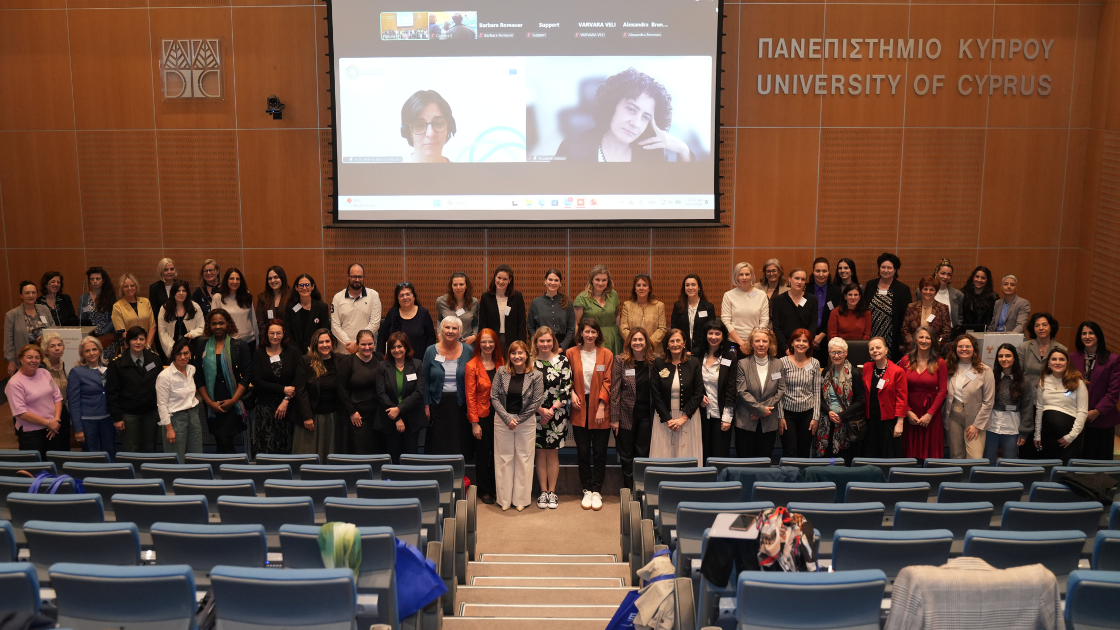
Officials from the European Union (EU), its Members States, researchers, civil society representatives and gender budgeting experts gathered in Nicosia for the international conference “Gender Budgeting in the New EU Multiannual Financial Framework [MFF]: Making Budgets Work for Gender Equality and Women’s Human Rights in Europe” on 26–28 March 2026. Hosted under the auspices of the Cypriotic Presidency, the conference focused on the EU’s forthcoming seven-year budget and the need to ensure that it reflects people’s real needs, supports gender equality and strengthens social investment. Participants emphasised that budgets are not neutral technical documents, but very political choices that shape people’s daily lives, determine access to services and influence whether public resources contribute to equality or deepen existing inequalities.
Discussants expressed concerns that current MFF proposals risk sidelining social priorities. Speakers called for budgets that are more transparent, people-centred and based on evidence of need, with stronger indicators to measure impact and clearer links between spending and gender equality outcomes.
“Budgets for everyone must work for everyone” was a recurrent theme during the conference.
This requires a shift from general commitments to concrete, measurable and adequately funded action.
Nicole Farnsworth, Lead Researcher at KWN, contributed to organising the conference as well as to the moderation and discussions as part of the Gender Budget Watchdog Network (GBWN), in collaboration with the European Gender Budget Network, European Women’s Lobby.
She spoke about gender equality in EU accession and neighbourhood countries, presenting key findings and recommendations from a regional paper on Reform Agendas in the Western Balkans and Moldova written by the Gender Budget Watchdog Network (GBWN). Together with fellow panelists from Albania, North Macedoni, and Ukraine, the discussion highlighted the need for stronger expenditure tracking, improved monitoring and sustained political and financial support for civil society, emphasising that “civil society plays a crucial role in continuous monitoring and supporting reforms”.
A key outcome of the conference was the Nicosia Declaration, which calls on EU institutions and national governments to ensure that the next EU budget prioritises gender equality, women’s rights, care and social investment, and integrates gender equality across all stages of the budget cycle. Building on this momentum, participants also launched a petition calling for an EU budget that truly delivers for equality and people’s wellbeing.
Sign the petition here.
The Declaration and petition together reinforce a shared vision for a better future for all. As participants reaffirmed throughout the event, “Invest in what matters: people.”
KWN contributed to organising the conference as well as to the moderation and discussions as part of GBWN, in collaboration with the European Gender Budget Network, Foundation Fimonoi and European Women’s Lobby, among others. They, in collaboration with other partners, plan to continue advocacy in the coming months towards implementation of the Declaration’s recommendations amid ongoing MFF negotiations.