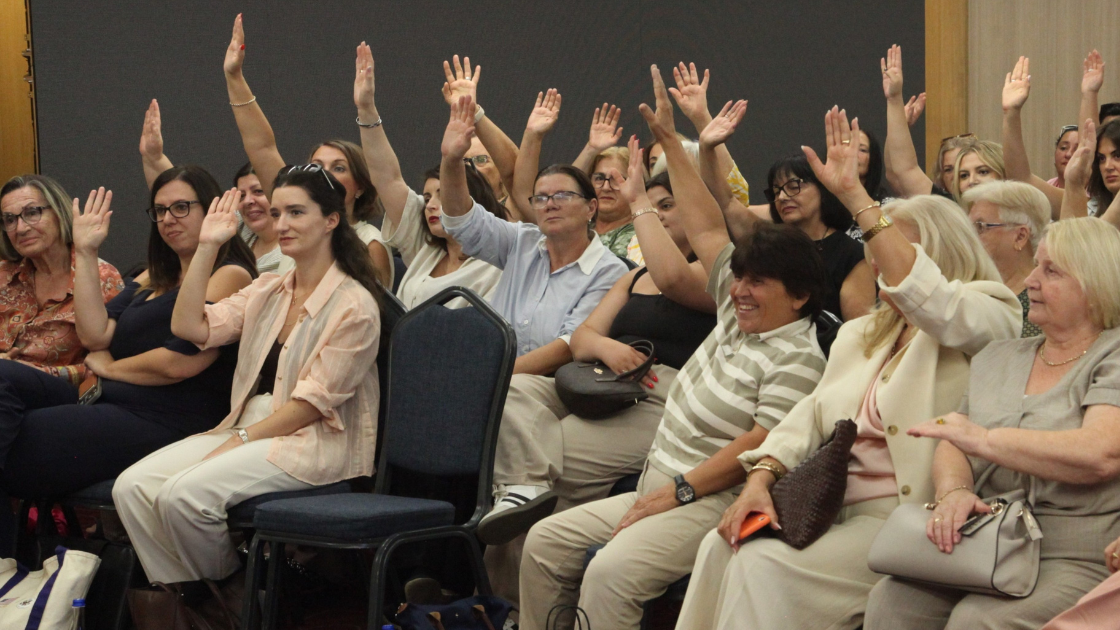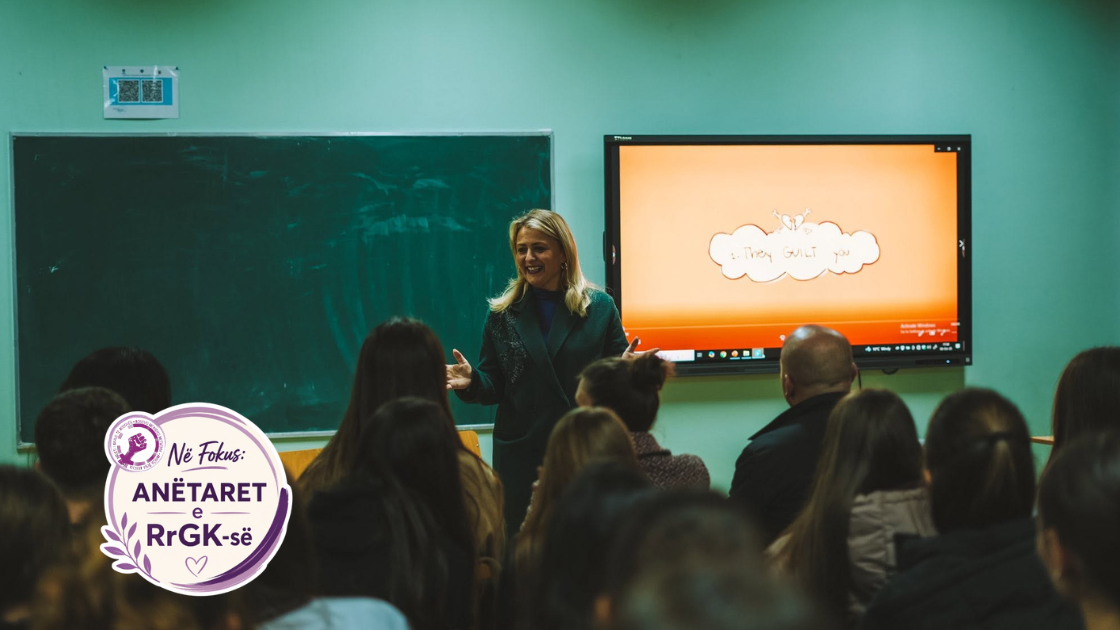
The Kosovo Women’s Network (KWN) recently launched the book “Motrat Qiriazi”: An Association for Education and Civil Resistance in Kosovo, telling the story of the Motrat Qiriazi Association and its work to advance women and girls’ education, economic empowerment and safety during and after the 1990s war.
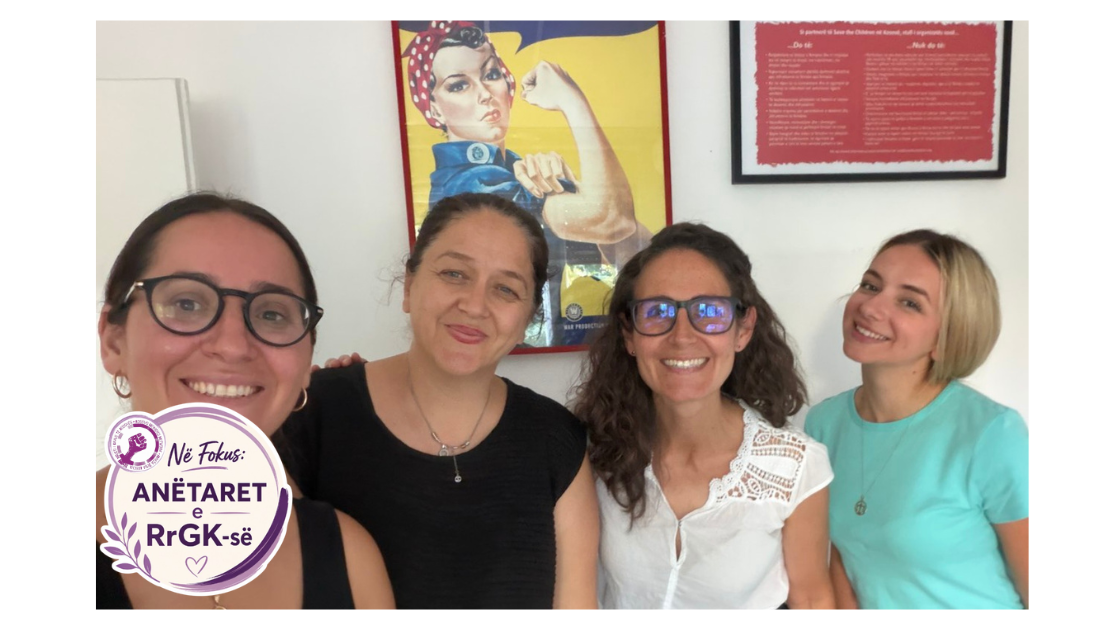
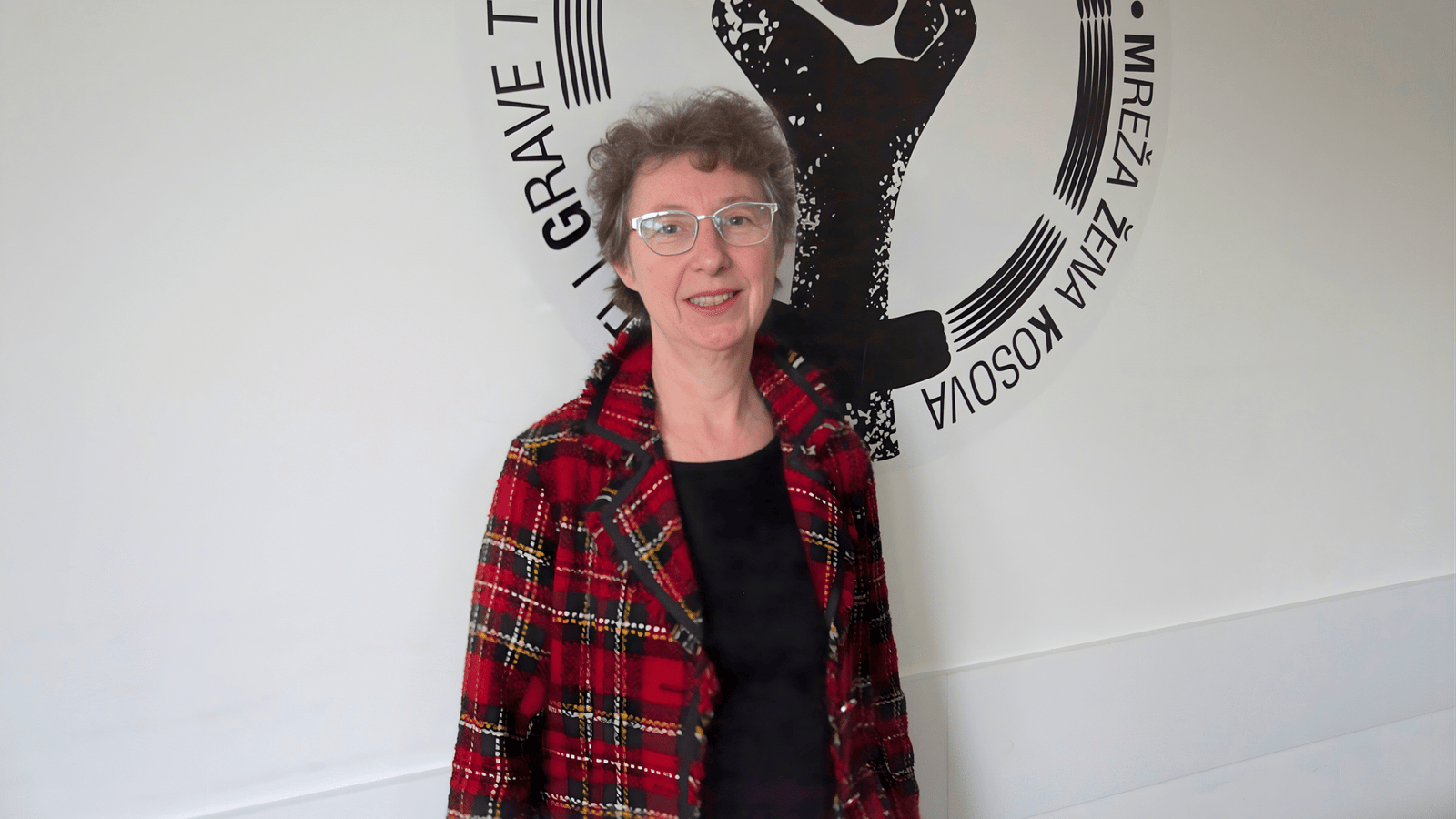
Among those present at the book launch was Rachel Wareham, who travelled to Kosovo for the occasion as well as to celebrate the 80th birthday of long-time friend and colleague Safete Rogova. Her visit also coincided with Women’s History Month. Visiting KWN’s office, Rachel reflected on the important work she once carried out alongside the women of Motrat Qiriazi.
Rachel first came to the Balkan region to volunteer in Croatia after the Bosnia war. While there, she learned about the situation in Kosovo and decided to visit Motrat Qiriazi co-founder and KWN Executive Director Igo Rogova. That visit turned into something much bigger, and Rachel ended up living in Kosovo from 1995 to 2001, working with Motrat Qiriazi during the years of Serbian repression, throughout the war, and during its aftermath.
Rachel was in charge of administrative and financial work, such as fundraising and writing project proposals. She accompanied Igo and Safete Rogova on trips to villages across Kosovo. Together, they established community Albanian-language libraries and organised educational and sports activities for women and girls. Among their initiatives was the creation of the first girls’ volleyball team in Kosovo. Rachel also delivered trainings for women’s groups in Kosovo and Macedonia. She was present during the early days of the Rural Women’s Network, which would later become KWN.
Looking back, Rachel emphasised the importance of grassroots organisations with deep ties within their communities. “Because of the way Safete, Igo and Marta organised it [community activities], it felt quite familiar to the women”, she said. “The meetings took place in somebody in the community’s home, and in some way, it was a break from the boredom”.
Under oppressive conditions, everyday life slowed to a standstill.
“There weren’t many opportunities for women to go out of the house… so I think it was very exciting in a way, both for the mothers and the daughters”. She continued, “But on the whole, the women came because they knew Marta and the other female teachers, and they respected them”.
Amid the challenges of the time, moments of solidarity carried profound meaning. Rachel recalled one particularly touching story that has stayed with her over the years, showcasing the tireless work of Motrat Qiriazi while also serving as an example of how small glimpses of hope can help you carry on:
“One of the activists from Mitrovica had a disability, one of her legs was not working… When she got married, she wanted to walk down the aisle without a crutch. So, we had an internal fundraising for her to buy a prothesis”.
No matter how wealthy you were, they decided that everyone should give 20 euros. Rachel continued, “Then the war started, and we were forced to leave and leave everything behind. That money was in an envelope in Igo’s apartment. When we came back after the war, they had completely trashed the apartment… There were papers everywhere – the office was there as well”.
But Rachel didn’t want to throw it away. “I said no, I needed to reconstitute the accounts, even though the donors didn’t demand it. I went through all the papers and sorted everything out, and I found that envelope with the money still in it”, she said smiling. “Finding that was lovely. We could finally get her her prothesis”.
When asked for her guidance on fundraising today, Rachel emphasised that the funding landscape has changed a lot. From what we have seen in recent years, with USAID shutting down and other donors cutting funding or shifting priorities, Rachel would advise women’s groups to not assume that things will stay the same, but to have some level of flexibility, with various and different types of funders. She emphasised the importance of beginning with the community itself, recognising the resources and strengths that already exist within it.
“I would say… and that’s what Motrat Qiriazi was always about – it was about the people. If you work for a community or a group, you have to maintain your roots there and not get distracted by other things”, Rachel said. She shared an example from those early years, when one international donor wanted to give Motrat Qiriazi a vehicle. The organisation declined, choosing instead to continue travelling by bus in order to stay close to the communities they served and to avoid standing out.
For Rachel, the enduring strength of organisations like KWN lies in their commitment to values: “One thing that KWN has always been very good at is having values and principles and not compromising on things that shouldn’t be compromised”.
“But I don’t think there is really anything I can teach Kosovar women”, she added. “They’re so experienced. They need to hear that they have vast experience. Their activism and what they do is remarkable”.
Rachel recalled how, when the war started, international actors negotiated with Serbia to get aid into Kosovo. “I went one time with one of those convoys into Drenica. The men in the community had taken their tractors to try and get out of Drenica to get supplies, and they had gotten nappies, period products… The international aid groups didn’t have that at the time”, she said. What moved her most was how the men approached the situation: “It was very touching to see these men, who asked the women themselves what they needed and went and got it”. The story illustrates the ethos of Motrat Qiriazi: real change starts from within the community, and its people are the ones who know best what is needed.
After leaving Kosovo in 2001, Rachel continued working for women’s rights in several countries, including Afghanistan.
“Really everything I learned, I learned from Kosovo – from women here, from Motrat Qiriazi, from activists, from Igo, Safete and Marta”, Rachel said with a smile on her face. “When I went out into the post-Kosovo, post-war world, it was always with the spirit of Motrat Qiriazi and what the community here had taught me”.
This Women’s History Month, we remember the vital work Kosovar women’s groups have and continue to carry out. We honour women such as Rachel, whose dedication and solidarity helped strengthen communities and inspire generations of activists.
The book “Motrat Qiriazi”: An Association for Education and Civil Resistance in Kosovo is published by Buzuku Publishing House and written by Nicole Farnsworth. Hard copies are available at KWN’s office.