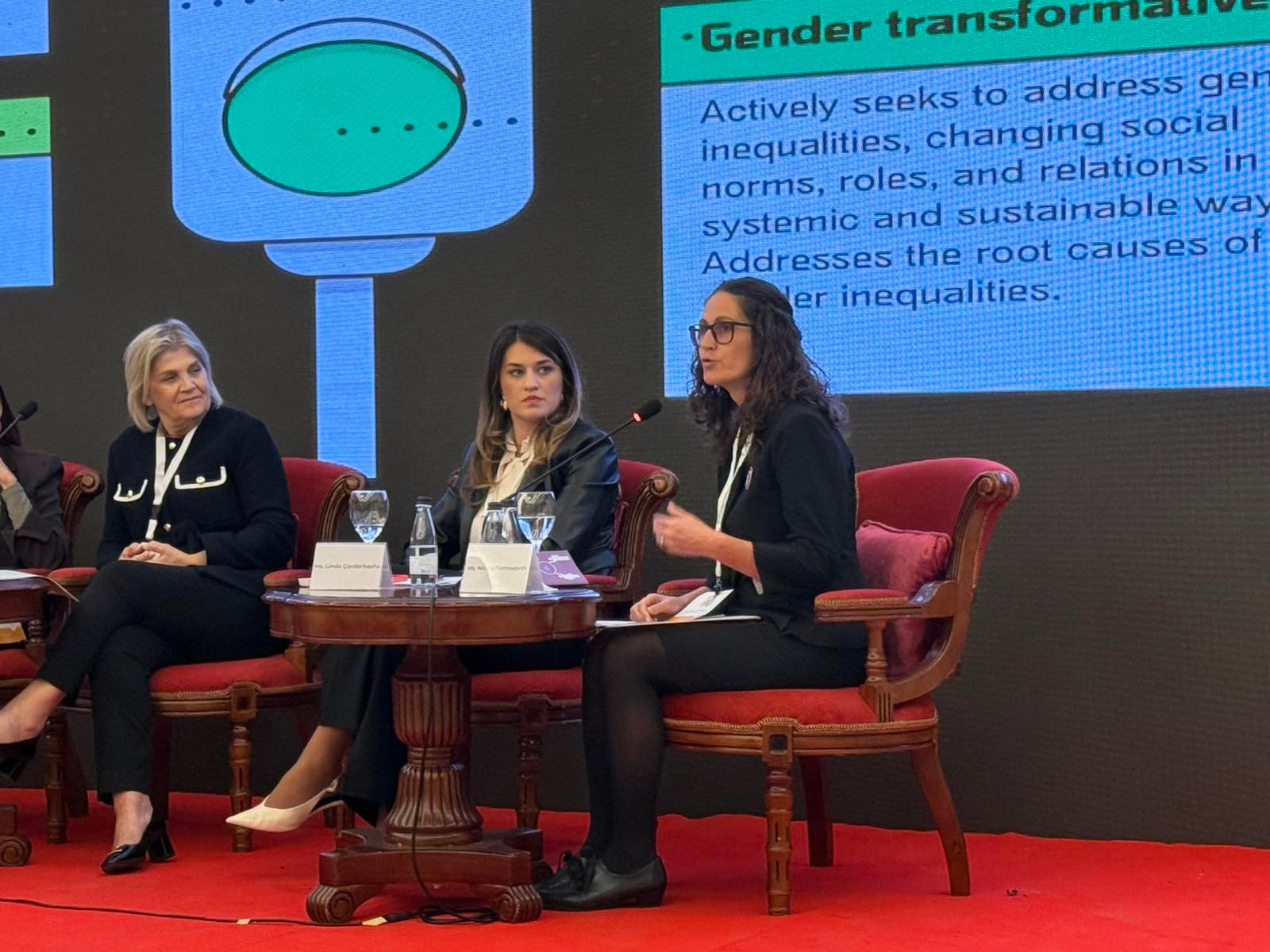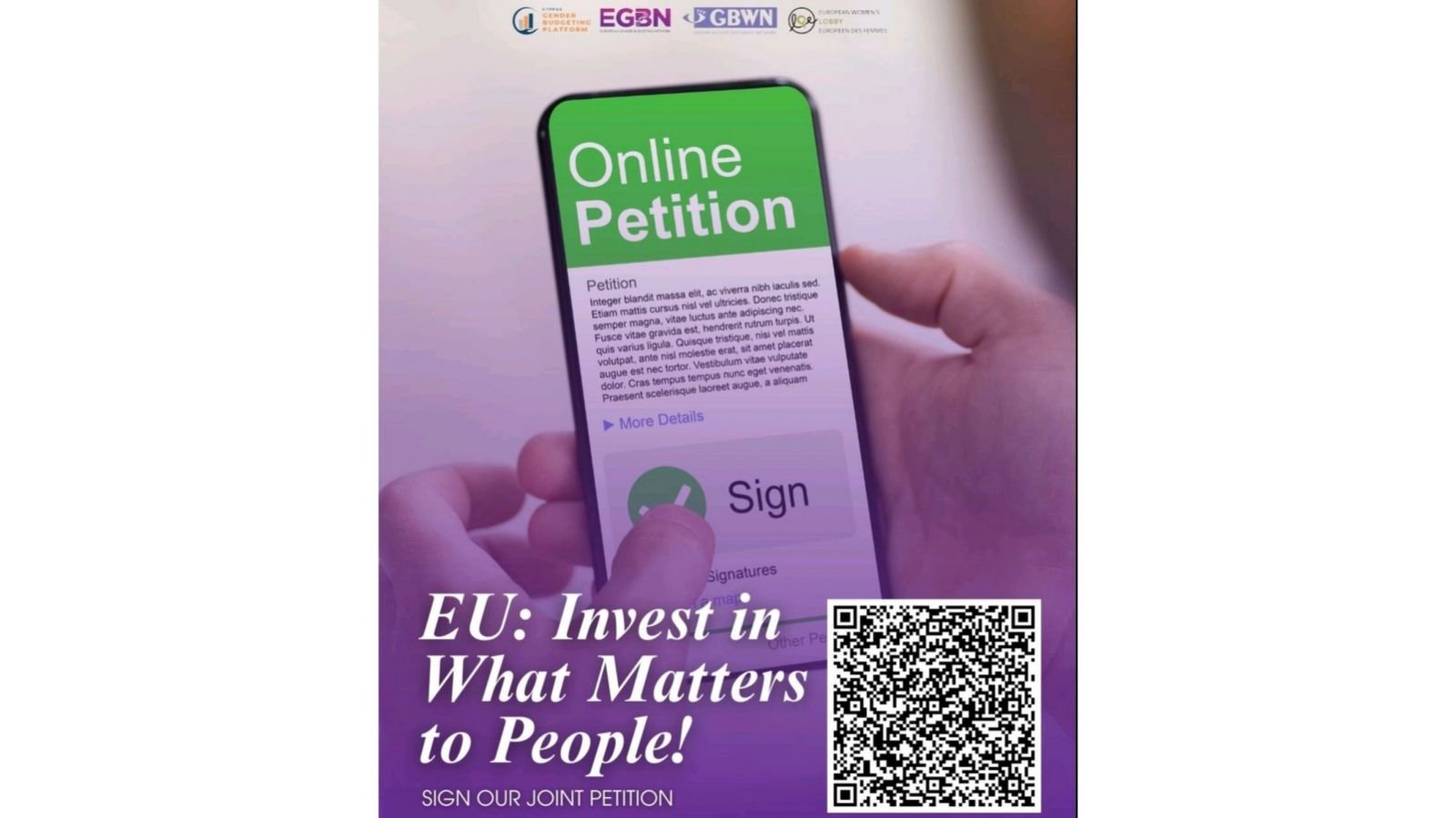
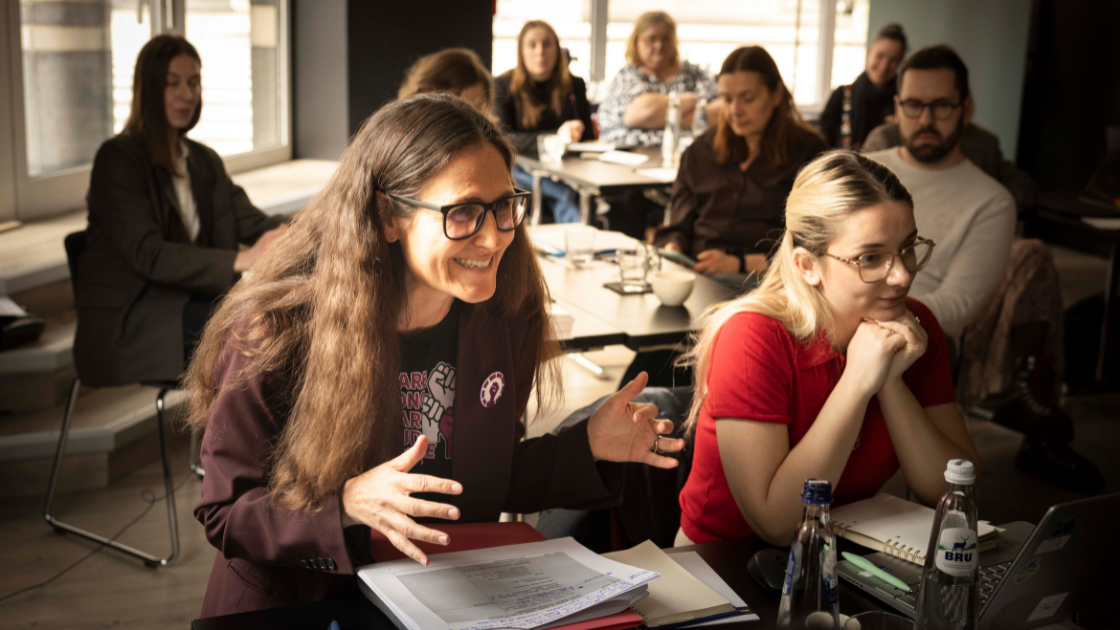
The European Union (EU) must “invest in women’s rights and gender equality like you want us to win”, said Nicole Farnsworth, the Kosovo Women’s Network’s (KWN) Deputy Director and Lead Researcher, quoting statements made by women’s rights activists during other events. This statement captures a central concern recurrently raised by women’s groups from the Western Balkans (WB) during their recent visit to Brussels: without strategic, sustained and earmarked funding, the EU’s partners, key actors in furthering the EU’s agenda, are at grave risk. The shrinking space that women’s rights organisations (WCSOs) face can undermine the furthering of EU values including good governance, democracy, rule of law, access to justice, human rights and gender equality. Activists are thus calling on the EU to earmark financing for WCSOs in line with commitments in the EU’s Women, Peace and Security Agenda.
On 22–25 March, KWN joined forces with the Kvinna till Kvinna Foundation and partner WCSOs from across the WB for a week of advocacy and collective action in Brussels. For more than 10 years, this coalition has advocated for improving attention to the needs of diverse women and men as part of the EU Accession process, including through annual trips to Brussels supported by the Kvinna till Kvinna Foundation and Sweden. This may be the last such trip amid funding cuts.
Thus, partners utilised the opportunity of being together to reflect on their shared results during a public event, “Safeguarding Democracy: Women’s Rights Organisations in the EU Accession Process”. Activists emphasised that this cooperation has strengthened long-standing partnerships, resulted in tangible results like hundreds of more inclusive and gender-responsive laws and policies and amplified equality, democracy and peace. WCSOs have contributed to EU accession processes by providing vital services legally foreseen albeit not funded by the state, such as for survivors of gender-based violence; enhancing access to justice through free legal aid and monitoring justice institutions to hold them accountable; conducting research to inform evidence-based legal and policy changes, as well as EU Enlargement Packages and regular reports; supporting progress on reforms; monitoring reforms; and enhancing democracy and good governance by expanding diverse women’s engagement in politics, decision-making, budgeting and EU accession processes at diverse levels, facilitating more inclusive and implementable reforms.
During the “Safeguarding Democracy” event, Farnsworth shared findings from KWN’s recently published report “Under Threat, and Resilient: The Situation of Women’s Organisations in Kosovo”. She affirmed that WCSOs are essential, not optional, to Kosovo’s EU accession process, highlighting how women’s groups have been the motor behind key achievements in democracy, good governance, rule of law, access to justice and human rights. Drawing on the report, which builds on face-to-face surveys with more than 100 Kosovar WCSOs, she also brought attention to the financial challenges these organisations face.
Shrinking space for women’s rights activists coupled with recent funding cuts by U.S. and traditional European funders put the crucial contributions of WCSOs to the EU Accession process at risk. The EU’s plans to distribute funds linked only to Reform Agendas and distributed through big funders (who often pass on small, short-term grants) threaten to undermine the work of WCSOs as short-term, small grants will not allow them to undertake long-term advocacy to impact laws and policies, particularly amid the political instability that exists in the WB, activists said. This can undermine progress towards achieving EU values like human rights and gender equality. Farnsworth stressed that decreased funding has led to reduced services, including for victims of gender-based violence, as well as weakened advocacy, watchdog efforts, awareness-raising, education and research. It has also contributed to activist burnout.
Farnsworth and Etleva Zeneli from the Kosovar Gender Studies Center also met with Kosovo-focused representatives of the European Commission (EC) and the European External Action Service (EEAS). Zeneli highlighted how the absence of a functioning government has slowed progress on peace processes and key legal reforms towards equality, such as amendments to the Labour Law, disability rights laws and the Civil Code. Farnsworth and Zeneli provided updates on key gender inequalities in Kosovo that should be addressed through the forthcoming Enlargement Package, including in chapters on security, good neighbourly relations and climate. While the legal framework addressing gender-based violence has improved, they noted that further protections against technology-facilitated violence must be included in the Criminal Code and more comprehensive budget allocations are needed to meet government commitments to the Istanbul Convention, particularly for Rape Crisis Centre, shelters and the SOS hotline. They also stressed that gender-responsive budgeting must be institutionalised to support more evidence-based budget allocations. Moreover, stronger institutional safeguards are needed to ensure that gender equality is systematically integrated into policymaking, including in the context of EU accession, and WCSOs must be meaningfully engaged in both EU accession and peacebuilding processes.
They also met with EC representatives focusing the Growth Plan and countries’ Reform Agendas. Recent analyses conducted by KWN and other members of the Gender Budget Watchdog Network show that Reform Agendas generally do not integrate gender-responsive budgeting; they treat gender equality as a mainstreamed principle rather than a concrete budgeting approach, and lack baselines, targets and indicators to clearly link funds to specific gender equality outcomes. This, combined with the fact that financial allocations are integrated directly into national budgets rather than earmarked for specific purposes, makes it difficult to track whether funding associated with reform measures is contributing to advancing gender equality.
The coalition also met with representatives of Ireland’s Permanent Representation to the EU, as Ireland prepares to assume the Presidency of the Council of the EU.
For more information see Kvinna till Kvinna’s “Gender analysis of the 2025 European Commission Country Reports for EU accession countries”, offering recommendations for stronger gender mainstreaming within the reports and across EU accession processes overall.