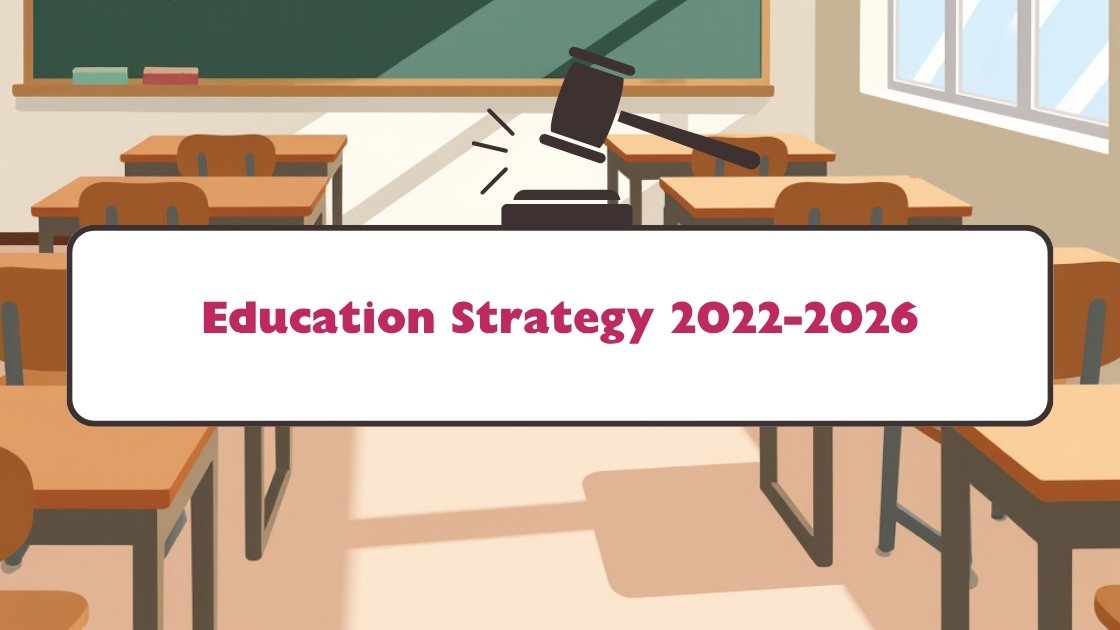
Adopted in 2022, the Education Strategy 2022–2026 represents one of Kosovo’s key policy documents for improving access to quality education at all levels. During the public consultation process, the Kosovo Women’s Network (KWN) submitted detailed comments aimed at strengthening the Strategy’s gender perspective and ensuring greater inclusion of women and marginalised communities within the education system.
KWN’s recommendations focused on improving gender-sensitive language, increasing the visibility of girls’ experiences in education and addressing barriers faced by children from vulnerable communities, particularly Roma, Ashkali and Egyptian children. Through its comments, KWN emphasised that education policies should recognise how gender roles, social norms and economic inequalities affect access to education differently for women, men, girls and boys. Approximately 50% of KWN’s comments were reflected in the final adopted version, contributing to a more inclusive Strategy.
For example, KWN recommended the use of more gender-sensitive and sociologically accurate terminology throughout the document, suggesting the use of terms such as “women/men” and “girls/boys” instead of “female/male”. This recommendation was fully incorporated into the final version of the Strategy.
KWN also highlighted the importance of collecting and presenting education data disaggregated by gender and ethnicity. In the draft Strategy, statistics regarding school dropouts from Roma, Ashkali and Egyptian communities did not clearly distinguish between girls and boys. Following KWN’s recommendation, the final Strategy specifies that among the 67 students who dropped out, 28 were girls and 39 were boys. This change helps institutions better understand how gender and social inequalities affect education outcomes differently, supporting more evidence-based policymaking.
Further, KWN suggested conducting deeper analyses regarding the inclusion of Roma, Ashkali and Egyptian children in early childhood education and identifying the economic and social factors contributing to their exclusion from the education system. The final Strategy strengthened its approach towards monitoring policies aimed at increasing the registration and inclusion of children from these communities in education, particularly in preschool education where they remain underrepresented.
While not all recommendations were incorporated, the final Education Strategy reflects stronger recognition of gender equality and social inclusion than the initial draft. The incorporation of KWN’s recommendations contributes to making education policies more responsive to the realities faced by girls and marginalised communities in Kosovo.
KWN looks forward to continuing to provide its expertise toward an education system where all children, regardless of gender, ethnicity or social background, have equal opportunities to access quality education and reach their full potential.