“Modern Woman” Involves Women More in Political Processes

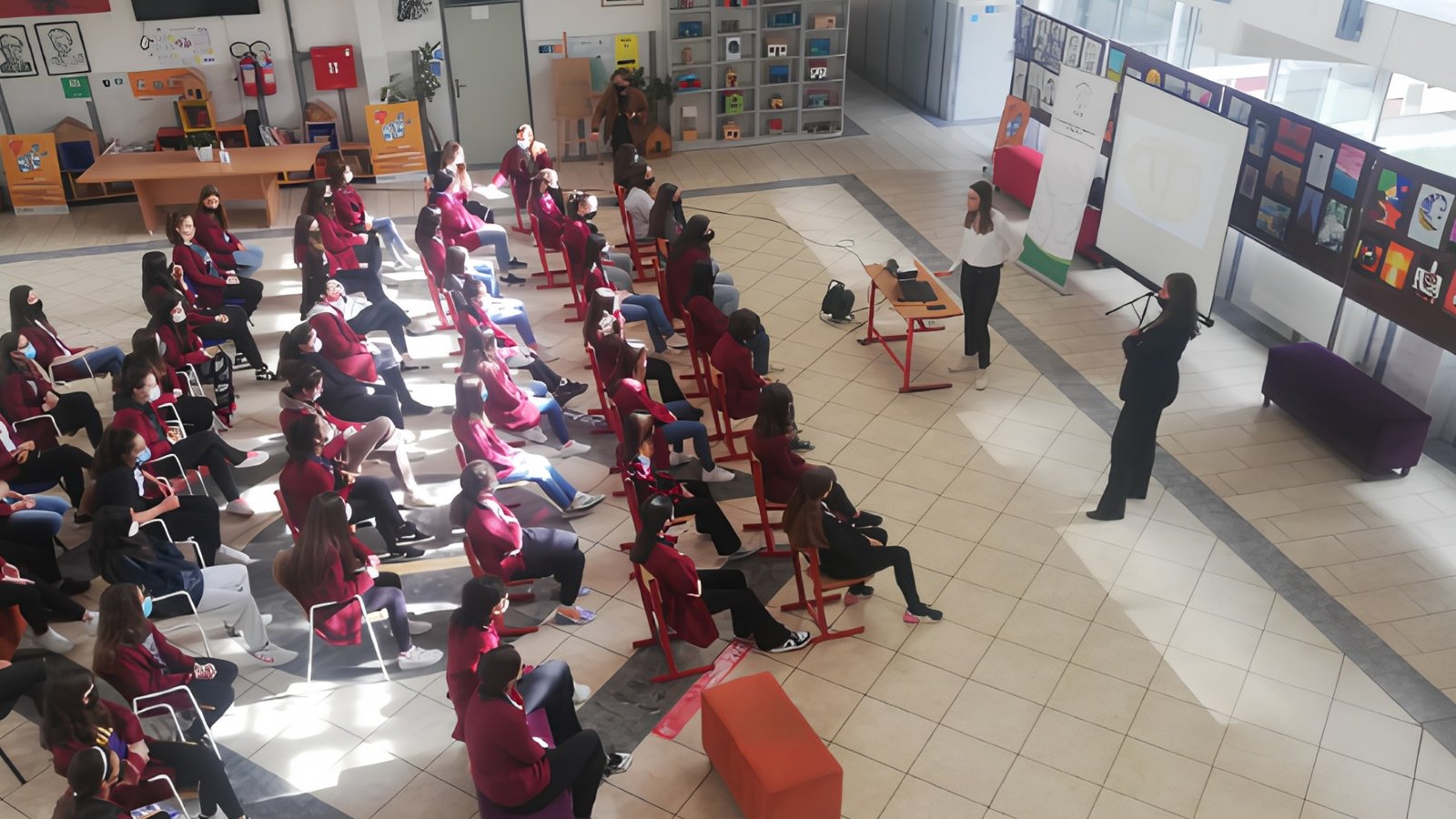
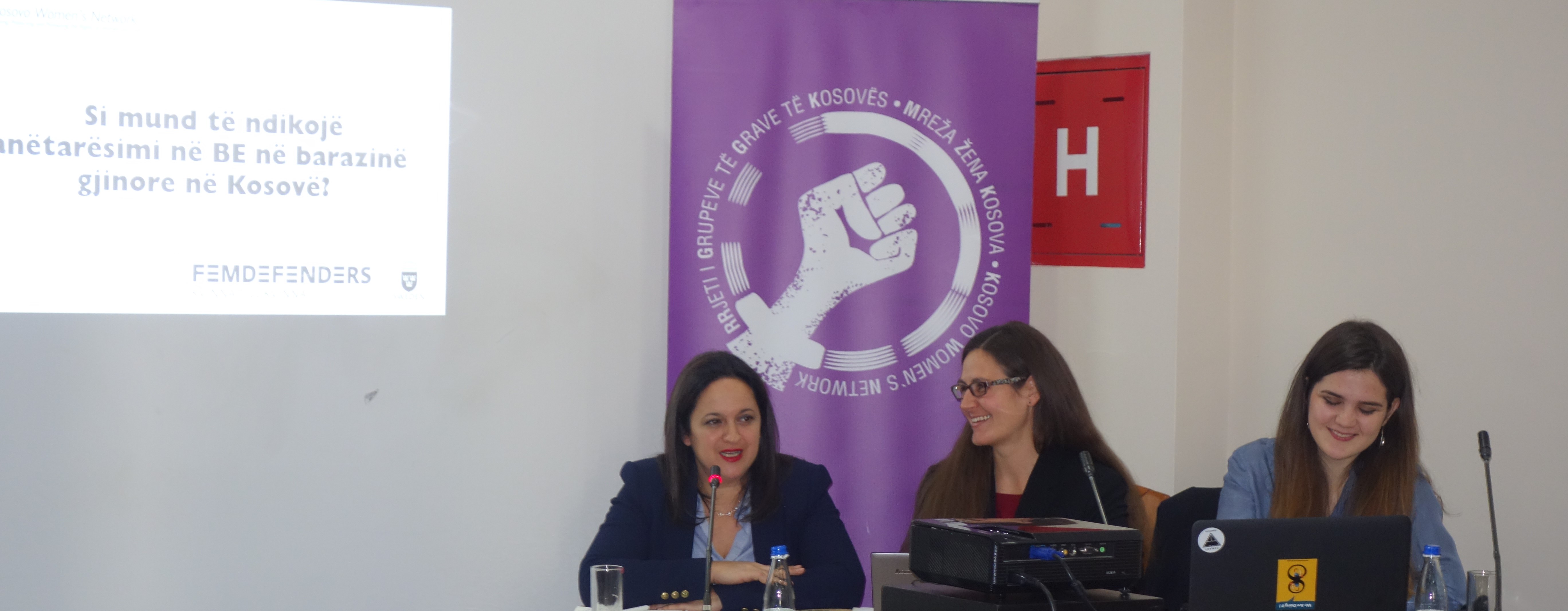
On 29 Aug. 2016, “Modern Woman” held the closing meeting of the project “Not only a number” supported by the Kosovo Women’s Network (KWN) Kosovo Women’s Fund. In this meeting, the Assembly of the Municipality of Prizren, the lecturer Bahri Zeneli from the Academy of Training and Technical Assistance (ATTA), representatives from KWN and students who have been part of the project participated.
     Young women who were interested to join politics had the opportunity to meet and discuss issues important to women and the challenges women politicians face with women assembly members.
     The meeting aimed to identify ways to increase opportunities for women and girls to become involved in politics. In this way, governance will include women who voice the needs of women and girls who are not involved in politics.
     Assembly members spoke about ways to increase the number of women in politics and why their participation is important. An assembly member noted that at the central and local level, the percentage of women in politics is quite small. Few women hold positions as directors, and those that do, are school directors. Not a single woman holds a senior post in the directorate, while out of five vice presidents at political parties all of them are men.  
     Many women are not active and do not raise their voice, an assembly member said. According to the assembly members, women are interested to participate but do not receive enough support from men. Further, according to them the lack of budget can also be one of the reasons why few women are involved. Therefore, all of their activities are undertaken on a voluntary basis.
     A student who is a political party member said that the party does not do anything for them in terms of supporting their employment or allocating resources for students. Another student asked why women do not run as independent candidates. An assembly member responded that she would run as an independent candidate, but only after she had several meetings with women who would support her.
Among the conclusions were that girls and women should be given more opportunities to enter into politics and women who are already in politics should raise their voices. Further, there should be a budget line for women’s forums.
      This project is funded by the KWN Kosovo Women’s Fund, financed by the European Union Office in Kosovo.


KWN successfully finalizes the “Hisja” series of shows

The Kosovo Women’s Network (KWN), in the framework of the project titled “Immovable property and gender equality”, supported by PPSE Swisscontact, and in cooperation with the Art and Community Center – ARTPOLIS, has successfully finalized the series of forum theatre shows titled “Hisja” (the share), with the last show in Peja. 

     The theatre show “Hisja” has been designed to be in the form of forum theatre and was performed over the course of two weeks for the Kosovo society at the main municipalities, namely in Prizren, Gjakova, Prishtina, Mitrovica, and Peja. 
     “Hisja” has shown the reality faced by Kosovar women and girls in the context of difficulties women have in realizing their property rights. Furthermore, the show aimed to raise awareness among the society about the rights that women should have regarding property issues.  
     The shows were usually opened by the director Zana Hoxha – Krasniqi and the play of actors Donikë Ahmeti, Ermal Sadiku and Kushtrim Qerimi, who through their roles transmitted the way judges behave during the proceedings for the registration and inheritance of the immovable property. They also reminded people of social dogmas and the discriminatory behavior of families towards the rights of their wife/daughter to inherit property. People showed their interest to hear about these issues, as a considerable number of citizens attended the show. Moreover, the discussions after the show focused on concrete cases, providing further details. In Mitrovica, a student of the Faculty of Law opposed the judge, calling him non-professional, and quoted the applicable structural laws on women’s right to property, such as the Law on Family, Law on Inheritance, Law on Gender Equality, and Law on Anti-Discrimination. 
     In Gjakova, a participant shared her own experience with the attendees saying: “I transferred my property to my brother; today I regret doing it. After my mother died, I still have not gone home, because my brother and his wife do not want me there”. 
     In Peja, a citizen declared: “I have three children, two sons and a daughter. I will divide my property in two parts; one part for my sons and the rest for my daughter”. 
     In the framework of the project “Immovable property and gender equality”, KWN aims at raise awareness of the importance that women should register their property as a sole owner, co-owner, or equal heir. In addition to this, this project offered financial and legal aid to women toward realizing this right.  
     Furthermore, besides the shows and legal and financial aid, this project foresees door-to-door meetings with families in all five municipalities of Kosovo, in order to raise the awareness of the society about the importance of realizing women’s property right. These meetings are organized by KWN activists in various cities of Kosovo.
     My home, my right!


EU Office in Kosovo to Implement EU Gender Action Plan

The European Union (EU) Office in Kosovo has started the process of putting in place its plan for implementing the new EU Gender Action Plan (EU GAP) for 2016-2020. The Kosovo Women’s Network (KWN) is providing technical support in this process as part of its service contract with the EU Office in Kosovo, including in the identification of objectives and indicators based on gender analysis and in consultation with stakeholders.
     On 21 Sep. 2015, the European Commission (EC) and European External Action Service (EEAS) adopted the new GAP, entitled “Gender Equality and Women’s Empowerment: Transforming the Lives of Girls and Women through EU External Relations 2016-2020.” Then, on 26 Oct. 2015, the EC endorsed it. The GAP attempts to ensure gender equality in all the EU’s external activities and relations. For the first time, the GAP applies to all EU missions in all world regions, as well as all EU policies, including development, neighborhood, trade, humanitarian aid, etc. In its endorsement conclusions, the EC emphasized that it is mandatory for all EU missions worldwide to report annually on results achieved related to objectives towards shifting institutional culture and at least one objective per each thematic area. This differs from the 2010-2015 GAP for which reporting was voluntary.
     Other differences from the prior 2010-2015 GAP is that this new GAP focuses on three different thematic areas, instead of using a “one size fits all” approach. The thematic areas include: physical and psychological integrity; economic and social rights; and voice and participation. In addition to the thematic priorities, institutional cultural change is a horizontal, mandatory priority that addresses leadership, systematic reporting, being results-focused, coherence and coordination.
     Now, EU delegations, including in Kosovo, must select indicators and identify targets for 2016 through 2020 based on local priorities and capacities. Indicators also should align with the UN Sustainable Development Goals (SDGs) and Results Framework.
      In relation to the thematic priorities, KWN carried out a gender analysis in Kosovo, drawing also from existing data sources and KWN’s long experience working towards gender equality in Kosovo. KWN used this information to draft a policy paper for the EU with recommendations regarding which of the potential objectives put forth by Brussels could be considered for implementation by the EU mission sin Kosovo. This policy paper and the potential objectives were presented during a consultation with key stakeholders and gender experts in Kosovo on 27 June. This consultation and their input contributed to selecting the final objectives for implementation in Kosovo:
  1. Girls and women free from all forms of violence against them (VAWG) both in the public and in the private sphere.
  2. Equal access for girls and women to all levels of quality education and vocational education and training (VET) free from discrimination
  3. Equal access by women to financial services, productive resources including land, trade and entrepreneurship.
  4. Equal rights and ability for women to participate in policy and governance processes at all levels.
  5. Women’s organizations and other CSOs and Human Rights Defenders working for gender equality and women’s and girls’ empowerment and rights freely able to work and protected by law.
 
     These objectives were identified based on the criteria that they should be relevant for the current political, economic, and social circumstances in Kosovo, based on existing gender analyses; and there should be sufficient baseline data to be able to monitor and evaluate progress. The objectives under institutional changes, which are mandatory and must be implemented in Kosovo as well, include:
  1. Increased coherence and coordination amongst EU institutions and with Member States.
  2. Dedicated leadership on gender equality and girls’ and women’s empowerment established in the EU institutions and Members States.
  3. Sufficient resources allocated by EU institutions and Member States to deliver on EU gender policy commitments.
  4. Robust gender evidence used to inform all EU external spending, programming and policy making.
  5. Results for women and girls measured and resources allocated to systematically track progress.
  6. Partnerships fostered between the EU and stakeholders to build national capacity for gender equality.
 
     Now, the EU Office in Kosovo, supported by KWN, working to establish specific indicators, targets, and activities for achieving these objectives via current and future programming. Another consultation will be held with all stakeholders in early September, in order to finalize the plan by mid-September, while annual reporting on its implementation will begin this year.


Mother of 7 Begins Tradition of Registering Property in Women’s Names

Nazlije Gjaravina from Gjakova is the mother of seven children, six daughters and one son. A devoted mother, she has dedicated her life to raising and educating her children. While her formal education is limited, she has worked diligently to expand her talents at making traditional clothing. The income she has generated through her work has helped her husband and children to have a better life.
     In July, Nazlije participated in meetings organized by the Kosovo Women’s Network (KWN) and its member organization Active Women of Gjakova, where she learned more about women’s rights to inheritance and property. During these meetings, activist Valbona Rizvanolli shared information that with the new Administrative Instruction on the Joint Registration of Property , couples can register their joint property free of charge throughout 2016.
     “These meetings inspired me to take the initiative to talk with my husband about registering our property in both of our names,” she said. “I began thinking that I need to register the property in my name since it is free. At first, my husband was not very happy and told me, ‘why do you need to register it?’ I told him that it is also mine, and after some discussions we agreed. With the help of KWN and the project, we went to the notary and also in the municipality.”
     Now, she and her husband are looking forward to receiving all of the final documentation.
     “Without the meetings and your help, I probably would never register the property,” she said.
     Further, knowing how important it is for women to own property, Nazlije has plans to ensure that her own daughters can realize their rights in the future.
     “Now, I will try to divide the property in the same way between my daughters and son,” she said.
   The Property Registration Project is being implemented by KWN and its member organizations with support from Swisscontact Promoting Private Sector Employment project funded by the Swiss Government. It aims at raising awareness about woman’s rights to immovable property and inheritance. KWN and its members are providing technical assistance to families in which women are seeking to register their property or claim their inheritance.
     KWN activists are working in Prishtina, Prizren, Gjakova, Peja and Mitrovica. If you or someone you know is seeking to register property or claim inheritance in women’s names, and you need assistance, please contact us at info@womensnetwork.org. We will try our best to help!


     My house, my right.

Global Health Student Contributes to KWN Health Research

Rina Dula currently is finishing her bachelor degree in Global Health and Nutrition specializing in Public Health in Copenhagen. She volunteered this summer as an intern at the Kosovo Women’s Network (KWN), working as part of the research team examining women’s access to healthcare.
     Rina volunteered at KWN for the last three months because she sought to “contribute to something good in the homeland of her parents,” she said.
     Given her long-term involvement in the research process, she played an important role in supporting enumerators during the national household survey, surveying Kosovar women, preparing contracts for researchers, coordinating meetings, conducting interviews, coding qualitative interviews, transcribing interviews and translation.
“It was a truly amazing experience,” Rina said. “I am going to take all this new knowledge and experience with me and use it in the future.”
     Apart from gaining professional experience, Rina said that this was a remarkable experience because she also collaborated with a wonderful research team through which she met people from around the world. 
     Although she completed her internship in Kosovo last week, Rina plans to stay in touch with her colleagues and continue contributing to the finalization of the report from Copenhagen.
 

Kosovar-American Student Shares “Passion” to Address Inequalities, Interning at KWN

This summer the Kosovo Women’s Network (KWN) welcomed interns from various European countries and the United States to contribute to research on women’s access to healthcare. Among them is Natyra Hertica, who at age 2 immigrated to the U.S. together with her family.
     Natyra is a third year undergraduate student at the University of Washington. She is studying Public Health, Medical Anthropology and Global Health. Natyra has worked with the KWN research team voluntarily for the last couple months. During this time, she has had the opportunity to participate in various trainings related to interviewing and research methods. Together with other interns, she has conducted interviews related to the research in municipalities such as Prizren, Peja, Gjakova, Gjilan, Vushtrri, Mitrovica, Ferizaj and Pristina.
     “My passion to improve health disparities is why I became part of this team,” said Natyra. “During my internship at KWN I have learned more about the barriers that prevent women in Kosovo from accessing quality healthcare.” Natyra is very happy that through her work and commitment she has contributed to such important research.
     KWN bid farewell to Natyra yesterday and is very thankful for her contribution to realizing KWN’s strategic objectives related to furthering women’s access to healthcare.

Student of EU Law Contributes to KWN Health Research

Rina Ajeti is a second-year student at Maastricht University in the Netherlands where she is pursuing a Bachelor’s degree in European and Comparative Law. This summer she volunteered as a member of the Kosovo Women’s Network (KWN) research team working on women’s access to healthcare.  
 
Rina always has been interested in learning more about how the right to healthcare is implemented and promoted in Kosovo. As a daughter of Kosovar parents who raised her in Germany, she feels a strong need to explore Kosovo from a different perspective.
During her internship at KWN, she has participated in interviewing key actors in the field of medicine in various health institutions, transcribing interviews and translating them into English for other member of the research team.      Rina also has worked on analyzing the existing laws    in Kosovo, including from an international human rights and European perspective.
 
“I am looking forward to applying the existing legal framework to the data findings in order to see which gaps may exist in the implementation of laws in Kosovo,” she said.
 
During her internship, she said that she has received valuable insights regarding how one conducts research, how to work as a team and how to communicate with people of different professional fields. Also, she has learned a lot about the laws related to healthcare in Kosovo, how the system works and which gaps in implementation exist.                                                                                             
 
Although Rina completed her internship here in Kosovo yesterday, she plans to continue to contribute to finalization the report even after her departure. She is involved in writing the chapter on law, which will be part of the final publication, to be released later this year.


KWN Welcomes Dartmouth College Interns

During this summer, the Kosova Women’s Network (KWN) office welcomed a team of four students from Dartmouth College to analyze the results of and write a policy report about KWN’s national household survey on women’s access to healthcare. As the four of them have learned through the summer, Megan Mishra, Kristen Delwiche, Morgan Sandhu, and Apoorva Dixit are very different people. They all attend Dartmouth College north of New York in the U.S., but they study in different fields, Apoorva studies Anthropology, Megan studies Economics and Philosophy, Morgan studies Government, and Kristen studies Medicine. They have different personalities and work habits. Apoorva is the big picture-oriented contrarian, Megan is the detail-oriented planner, Morgan is a goal-oriented negotiator, and Kristen is a food-oriented statistician. After living together, working together, and traveling together, it’s tough not learn about all their differences. “Despite all the time we spend together, or maybe because of it, we make a good team, said Apoorva.  “We are all here because global health policy is an exciting field to be in right now, especially in a young country like Kosovo.” 
      They consider that there is so much potential in Kosovo, and they are excited to work alongside the women at KWN and many other Kosovars they have met this summer who are striving to make the healthcare system more efficient, more patient-oriented, and more equal. It has been a huge learning experience for them, learning about everything from statistics to healthcare to Albanian driving and food. They’ve gotten a chance to hike, road trip, and swim, as they expressed, in one of the most beautiful parts of the world, and while there have also been several challenges and long days at work, it’s been a rewarding experience. 
         As their internship is coming to an end, they are very excited to share the findings and see how their hard work and commitment together with KWN will impact Kosovo’s healthcare system through the final report.

AEFC and Divine Women Cooperate for Women’s Welfare

 The mission of the Association for Education and Family Care (AEFC) and the Divine Women is the assistance to trafficked victims and reproductive health care. Their main objective is the provision of assistance to women and rising the youth’s awareness of transmissible diseases. 
     The AEFC and the Divine Women were the beneficiaries of the eighth round of grants provided by the Kosovo Women’s Fund (KWF) under the Kosovo Women’s Network (KWN), and have jointly implemented the initiative called “An educated woman – a healthy society”, which lasted for a 4-month period. 
      The results achieved during the implementation of this project have been quiet good. A total of 48 workshops have been organized in the Municipalities of Gjakova and Gjilan, where 441 women and girls acquired knowledge on the reproductive health and protective measures. The success achieved upon the implementation of such project includes the awareness of girls and their mothers of their health in general and the r eproductive health in particular. 
      Additionally, a survey concerning the visits at the gynecologist and contraception methods has been conducted, with responses being of high concern. The recommendations resulting from the survey and the analysis of the provided responses consisted, among others, of a powerful boost for the idea of opening an advisory office for girls only, in which their privacy would be protected; this way, they could perform their medical checks and prevent various diseases. 
        Women and girls benefiting from this initiative said that they were very satisfied, because they had never received such training before, adding that, “they would transmit the knowledge their gained to other girls and women who were not part of the project”. 
       During the meetings that were held, the participants stated that, “girls do not perform gynecological checks because of prejudices; therefore, they often visit private clinics so that their identity is not disclosed to others”. 
This initiative has funded by the Office of the European Union in Kosovo. 

Kosova Rehabilitation Centre for Torture Victims (KRCT)

 Kosova Rehabilitation Centre for Torture Victims (KRCT) is a Non-Governmental Organization founded in 1999, which its mission is to protect, enable and promote fundamental human rights, in particular torture survivors as well as other forms of violence, fulfills through treatment and multidisciplinary rehabilitation, through socio-economic development, advocating for legal and institutional reform as well as providing  justice for victims in one form or another who have been part of direct or indirect violence. KRCT’s journey began during the war in Kosovo where Feride Rushiti, now Executive Director of the organization, was committed to help the Kosovo refugees. At that time, she has been coordinator of several projects of the Albanian Centre for Rehabilitation of Torture and Trauma in Albania, where the activity began. Her work during this time was mostly volunteer work, and after the war they returned to Kosovo and set up the initiative with associates Jens Modvig and Sibylle Rothkegel to establish KRCT. 
              KRCT is the first professional non-governmental organization in the field of mental health, which deals with victims of trauma, torture, and different kinds of violence. Due to targeting vulnerable groups, the organization has gone through various challenges and these days are still fighting against the stigmatization of victims of violence. KRCT is supported by international donors, as well as during the time when President Atifete Jahjaga was in post, they have cooperated in various projects, especially with regard to victims of sexual violence, where KRCT has had a leading and important role in that segment. 
           KRCT strongly advocated for victims of sexual violence, by introducing this category in the changing amendments to the Law on Status and Rights of Martyrs, Invalids, Veterans, members of the Kosovo Liberation Army, Victims of Sexual Violence War Victims civil and their Families,  a law that since two years of its approval has not been implemented. Lately, KRCT has promoted the lack of enforcement of this law in a campaign on June 26 that they organize every year, on the International Day of Torture, insisting on the functioning of the Verification Commission, as it is provided by law.                              
            Among other things, the organization holds trainings and seminars on documentation and awareness of sexual violence during the war in Kosovo, where the documentation of data is preserved at a high level of privacy and has also led the preparation of the application form for the realization of the status of victims of sexual violence during the war. 
          Therefore, the organization has expanded their activities in other municipalities such as Skënderaj, Vushtrri, Suharekë and Drenas, where this last year the women of that region were helped, while supporting and empowering them in various forms, so they can return to daily life again and be masters of their own. KRCT has also consistently supported the establishment of a local organization in Drenas, which was accomplished this year and now they organize activities such as sewing and handiwork, so that victims of torture can go back to daily life and to promote their work. In the span of 17 years, except those who have received regular systematic assistance, over 10,000 people have benefited from KRCT, taking regular services like checkups, medication and counseling, as well as within the rehabilitation treatment is a multidisciplinary composed by psychologists, psychiatrists, gynecologists and KRCT social workers.                                                           KRCT is the first organization that provides psychological assistance and psycho-social services for refugees and asylum seekers in Kosovo. For three years they have been monitoring the Center for asylum seekers and the Retention Center for Foreigners. In this context, KRCT monitors the border crossings throughout Kosovo. Also, does the advocacy within the framework of the Law on Asylum.
         KRCT monitors the correctional centers, detentions, monitors the police stations, the freedom of assembly’s, monitors the centers and institutions of mental health and social care. They also monitor the hearing sessions in cases of detention where detainees are offered legal advice from a complete team of experts. KRCT, while contributing with reviews, recommendations and evaluations has advocated strongly in the approval of the Mental Health act that was enforced in November 2015. 
     KRCT also offered 75 training courses on managing stress at work and psychosocial training where 1133 primary health care professionals (family doctors and nurses) have benefitted.   
         KRCT has offered a draft guideline to Kosovo Correctional Service that sets the rules and the basic principles for the functioning of the internal complaints mechanism. During 2012-2014 in cooperation with the Danish institution "Dignity", training for health care in correctional institutions has been provided. 
           In a word KRCT is committed for a torture-free society where human rights and fundamental freedoms are respected fully.