#EcShlire, walk with us freely!

Following the launch of #EcShlire (#WalkFreely) the sexual harassment reporting app 25 Feb., 2016, a cooperation between Open Data Kosovo, Girls Coding Kosova and Kosovo Women’s Network (KWN), the app has been downloaded for more than 800 times and the number of the sexual harassments that has been reported is around 300. According to reports 67.5% are made by females, 21.7% male and 10.8% other (including community LGBT). Spreading the word about the existence and the intention of the application was the challenging part.
            In order to further promote  #EcShlire, it became apparent that cooperating with public authorities and in the meantime raising awareness of people towards the issue of sexual harassment is an essential second phase of the project, which is supported by the Foundation “Une e du Kosoven”. The promoting plan includes activities such as using media channels (TV, Radio, Social Networks) to spread the word and using open public discussions to raise awareness of the issue of sexual harassment. The importance of the collaborating with public authorities is indisputable, therefore, during this phase of the project, the team will conduct regular meetings with the Kosovo Police to see the opportunities and set ground for a cooperation with #EcShlirë to create data driven preventive measures by using the app’s gathered data. 
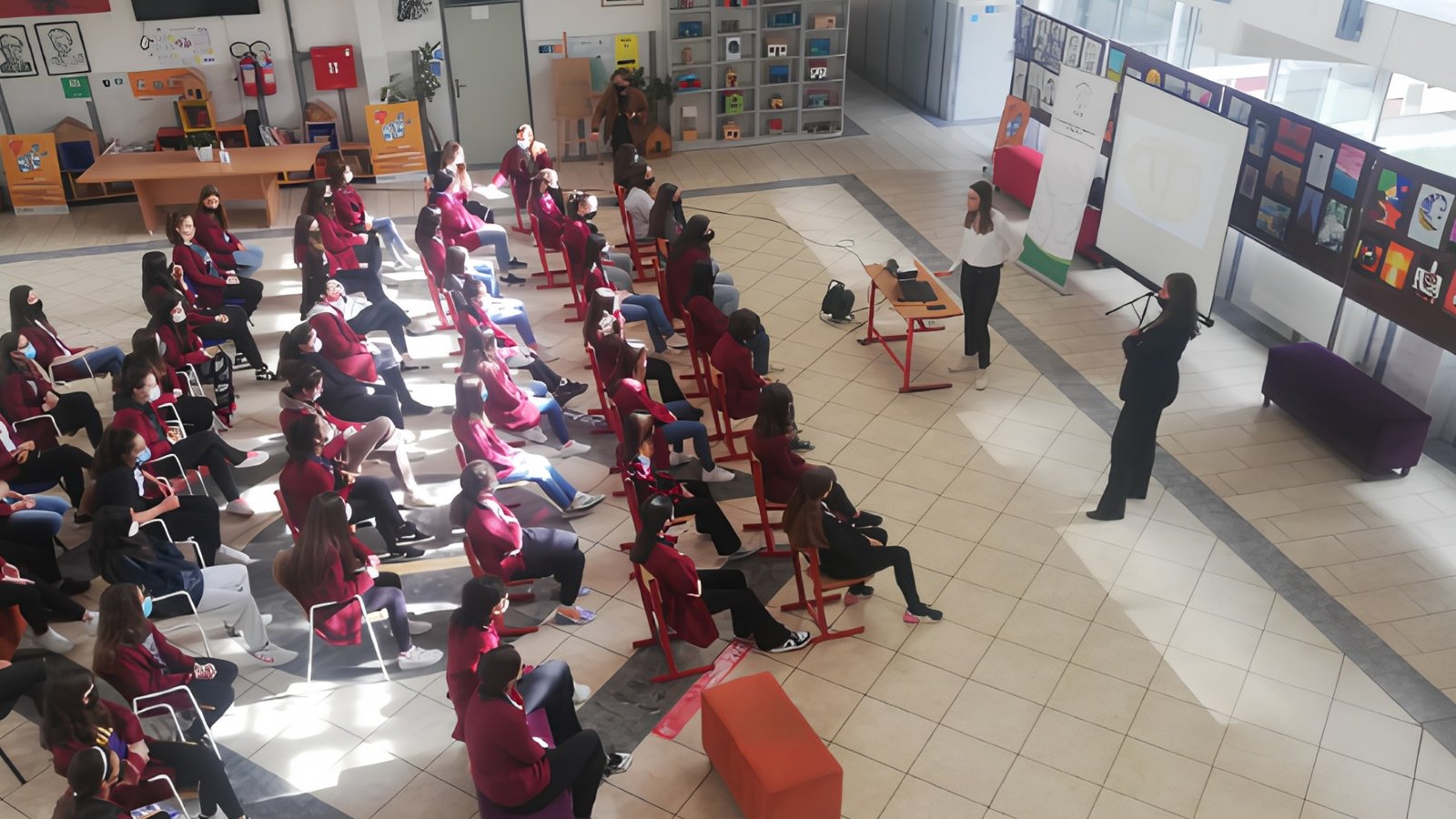
            Furthermore, we are planning to work closely with the Ministry of Education and various education institutions. The idea is to organize open houses covering different municipalities in Kosovo to promote the reporting of sexual harassment by using classrooms as meeting points with young high school students. This will serve not only for the promotion of the platform but to help young students think differently about the issue of sexual harassment, to not let them embrace this as a familiar day-to-day phenomena, but show them how to fight against it for a better society. We see this as a very important next step, adding value and substance to the promotion strategy.
We invite you to download the app (https://goo.gl/zkuTze) and help spread the word.


Come walk with us freely, together!

KWN is conducting a research on Women’s Access to Quality Health Care

KWN has initiated a health research, in order to improve the women’s and girls’ access to quality health care. Up until now, the surveyors have surveyed 1,300 citizens, both men and women, from all ethnical groups, of more than 16 years of age, and who come from urban and rural areas across Kosovo. The surveyors have collected data as to how much informed various citizens are of their rights to health care, the violations of rights to health care, reproductive health, sexual activity, mother and child’s health, and the opportunity and access to quality health services.
            Interns from Denmark, the Netherlands, and the United States of America, have joined this research, giving their contribution on voluntary basis. They are engaged in coding and analyzing the data; later they will proceed with a summary of final findings derived from such data, in order to write the comprehensive report.
            In order to compile the most comprehensive report possible, the research team is currently conducting interviews with key actors in the health sector, such as the health workers, and other state institutions. The Ministry of Health is supporting the KWN in this project, by having compiled a supportive letter whereby it invites all the health institutions of the Republic of Kosovo to cooperate with the KWN, by providing data in compliance with the applicable legislation regulating the protection of confidentiality.    
This year, the Dartmouth College entered into a partnership with the KWN in order to assist in finalizing the health research project. In Kosovo, focus of researches from the USA was on analyzing the data gathered through the questionnaires. Each of researches has a different specialty; the quantitative aspect starts with the initial analysis and proceeds with the qualitative aspect, which consists of writing guidelines for the interview and the report.
The volunteers’ interest in becoming participants in this research was great, with most of them having worked in the field of gathering of complaints, and others being researchers in the field of medicine, as well as administration, pharmacy, and medical school; they have carried out the research with the key health sector actors, such as gynecologists, oncologists, cardiologists, specialists in family medicine, nurses and pharmacists. All of them contributed to this research with their experience and knowledge.
This whole research has helped reflect the women’s and girls’ access to the health care, and has made it possible for numerous girls, who had been facing difficulties in finding a job, to have an opportunity to gain experience and contribute to something important.
This research is being conducted by the Kosovo Women’s Network (KWN) and the University of Prishtina, in cooperation with other actors including the Ministry of Health, Agency on Gender Equality, Kosovo Agency of Statistics, UNDP, UNFPA, WHO, and the Dartmouth College.   


KWN successfully finalizes the “Hisja” series of shows

 The Kosovo Women’s Network (KWN), in the framework of the project titled “Immovable property and gender equality”, supported by PPSE Swisscontact, and in cooperation with the Art and Community Center – ARTPOLIS, has successfully finalized the series of theatric shows titled “Hisja” (the share), with the last show in Peja. 
      “Hisja” series shows have been designed to be in the format of Forum Theatre and performed over the course of two weeks for the Kosovo society at the largest centers, namely in Prizren, Gjakova, Prishtina, Mitrovica, and Peja. 
        “Hisja” has shown the reality faced by Kosovo women and girls in the context of difficulties of realizing their property rights. Furthermore, the show has aimed at mobilizing the society for the property rights that the women and girls enjoy. 
       The shows were given by director Zana Hoxha-Krasniqi and actors Donikë Ahmeti, Ermal Sadiku and Kushtrim Qerimi, who transmitted through their roles the conduct of judges during the proceedings for the registration and inheritance of the immovable property, but they have also reminded us of social dogmas and the discriminatory behavior of the families against the women’s/daughter’s right to inherit property. A considerable number of citizens, who watched the shows, welcomed them. After the shows, their discussions focused even on concrete cases, providing details. In Mitrovica, a student of the Faculty of Law opposed the judge, calling him non-professional, and quoted the applicable structural laws on the women’s right to property, such as the Law on Family, Law on Inheritance, Law on Gender Equality, and Law on Anti-Discrimination. 
       In Gjakova, a participant shared her experience with the attendees saying: “I transferred my property to my brother; today I regret doing so. After my mother died, I have not gone home anymore, because my brother and his wife do not receive me”. 
In Peja, a citizen declared: “I have three children, two sons and a daughter. I will divide my property into two parts – one for my sons and the rest for my daughter”. 
      In the framework of the project titled “Immovable property and gender equality”, the KWN aims at raising the awareness of the importance of registering the property in the name of the woman as the sole owner, co-owner, or equal heir. In addition to this, the project foresees the provision of legal and financial aid to women in order for them to realize such right. 
        Furthermore, besides the shows and legal and financial aid, this project foresees door-to-door meetings with families in all the main centers in Kosovo, in order to raise the awareness of the society about the importance of realizing the women’s property right. These meetings are organized by KWN activities in various cities of Kosovo.

My home, my right!

Rogova to Serve on NATO Advisory Panel on Resolution 1325

 On 30 June, Ambassador Marriët Schuurman, the NATO Special Representative for Women, Peace and Security invited Igballe Rogova, Kosovo Women’s Network (KWN) Executive Director, to serve on the newly-established NATO Civil Society Advisory Panel on Women, Peace and Security. 
     The Panel seeks to “engage in more systematic and regular dialogue with civil society in the area of Women, Peace and Security,” so that NATO may “draw upon the valuable expertise and insights many civil society organisations and individual experts have developed in this area,” stated Ambassador Schuurman in her letter. “Through the feedback and recommendations from civil society we hope to enhance the implementation of the Policy on Women Peace and Security NATO’s 28 Allies and 27 Partners have adopted in 2014. Thereby, we wish to strengthen NATO’s contribution to the international community’s implementation of Security Council Resolution 1325 and related resolutions adopted by the Security Council,” the letter further stated. The establishment of this Panel also was foreseen in NATO Action Plan on United Nations Security Council Resolution (UNSCR) 1325. 
Rogova’s selection was based on recommendations received from nations and international organisations. 
    The Civil Society Advisory Panel has two groups, including the Core Group of civil society persons participating in their own capacity and the Group of CSOs that each selects one person to represent the CSO on the Panel. Rogova will serve as a member of the Core Group. The first annual meeting is planned to be held in mid-October 2016. 
    Rogova often has been heralded as a pioneer in her advocacy work on UNSCR 1325. Since the Resolution’s passage in 2000, Rogova has used it in advocating for women’s right to participate in decision-making processes, initially in Kosovo’s post-war reconstruction phase. She was deeply involved in supporting the establishment of the President of Kosovo Atifete Jahjaga’s interministerial National Council on Survivors of Sexual Violence; in advocacy for justice and reparations for women who suffered sexual violence during the war; and in regional truth and reconciliation commissions on this issue. Rogova also advocated for and later participated in the drafting of Kosovo’s National Action Plan to implement Resolution 1325. 
    Most recently, Rogova served on the UN High-level Advisory Group for the Study on the implementation of UNSCR 1325 on Women, Peace and Security. 
For the last 15 years Rogova has shared her knowledge and experience on best practices for implementing the Resolution with several militaries and civil society activists in other conflict and post-conflict countries. 
     Adopted on 31 October 2000, UNSCR 1325 emphasizes the important role that women play in preventing and resolving conflict, distributing humanitarian aid, peace-building, peace negotiations, peacekeeping, and post-conflict reconstruction. Considering this, the Resolution notes the importance of women’s equal participation in processes related to peace and security and encourages all actors to ensure women’s participation. The Resolution also urges all actors involved in conflict to protect women and girls from gender-based violence, including rape and sexual violence.

Action for Mothers and Children Launched the Project: Cervical Cancer Screening Program

Today at Hotel Sirius: Action for Mothers and Children, a member organization of Kosova Women’s Network (KWN) in cooperation with UNFPA and World Health Organization (WHO), launched a project of a pilot-screening program of Cervical Cancer Screening. The program offers free PAP-tests in five family medicine centers in Prishtina Municipality, for women aged 25-50. The aim is to prevent cervical cancer through early detection, with a liquid-based cytology method that is proven to be an effective cancer detection. The model aims to expand within all the municipalities in Kosovo. The program will last until 30 November2016.
    Various representatives from institutions and organizations participated in the launching event, and the panelists included: Dr. Izet Sadiku, Vice-Minister of Health; DR. Arben Vitija, from the Health Department, Municiplaity of Prishtina; DR. Curr Gjocaj from the University Clinical Centre of Kosovo; and Prof. Suzana Manxhuka-Kerliu, National Board for Cancer Screening.  “If detected early, cervical cancer is one of the most successfully treatable cancers” – stated members of the panel.  


High level consultation regarding EU Integration Process and Gender Equality

 On June 30th in Prishtina, a high-level consultation was held on the process of European Integration and Gender Equality. For the first time such a meeting took place at the premises of the Government of the Republic of Kosovo and it was the first time that in a meeting of this kind the Prime Minister of Kosovo Isa Mustafa was present.The meeting was attended by Minister of European Integration Mr. Bekim Qollaku, civil society representatives, Agency for Gender Equality in Kosovo, representatives of international organizations operating in Kosovo and Executive Director of Kosova Women’s Network (KWN) Igballe Rogova. 
    Above others Rogova emphasized that " There must be more commitment regarding gender equality and women’s rights from institutions especially from Ministry of European Integration in order for gender equality to be a priority during this very important process”. While, Prime minister Mustafa stressed that "without women and girls we cannot do anything, not only because half of the population is comprised by women but also by the fact that all the studies show that in countries where there is greater involvement of women in economic processes and development processes they are the most developed countries ". Given the importance of the process of Kosovo’s accession to the European Union and achieving gender equality throughout this process as a key factor, equality between individuals was described as the essence of democracy. Without achieving gender equality there cannot be full democracy. Furthermore, it was discussed how to advance gender equality in Kosovo working together with civil society in the process of European integration, in particular in the process of implementing the SAA.Deliu – Kodra, Head of Women Caucus of the Assembly of Kosovo emphasized that "despite the legal framework that Kosovo has, challenges remain in the implementation of laws and in strengthening the mechanisms which regulate these laws”. Other speakers included: Mrs. Flora Macula Director of UN Women in Kosovo, Mrs. Sibel Halimi sociologist and lecturer at the University of Pristina, Mrs. Edi Gusia Chief Executive of AGE – and Mrs. Luljeta Demolli, Executive Director of the Kosovar Centre for Gender Studies. 
      This consultation was organized by the Ministry of European Integration, Office of the Prime Minister – Agency for Gender Equality in Kosovo and the Kosovar Centre for Gender Studies, which is also a member of KWN.

KWN Bimonthly Members Meeting

KWN held its bimonthly members meeting on 20 June. The meeting was opened by Igballe Rogova, Executive Director of the Kosova Women’s Network (KWN) opened the meeting by welcoming KWN members, partners and all participants. She took the time to thank the interns from Dartmouth University, and other volunteers involved in KWN activities and research, for their motivation and hard work even during these hot summer days.  
     Solidarity was the main topic of this meeting. Ms. Rogova spoke about the time when KWN started its work, how solidarity kept women’s organizations alive and brought them together as a network. They used to overcome all challenges through expressing their solidarity, therefore she stressed the importance of continuing to do that in our current work.
     Later Ms. Rogova praised all organization that are giving more and more space to young women. Moreover, a considerate number of young women are opening their own organizations and as a result a stronger young women’s movement exists in Kosovo, including men. This was shown publicly also during the campaign Take Back the Night organized by KWN in 2014, where men and women, boys and young women marched against sexual harassment. Furthermore, thanks to the innovative application “Ec Shlirë” (Walk Freely) which was brought from a collaboration between Girls Coding Kosova, Open Data Kosovo and KWN, all citizens are reporting in variations detail cases of sexual harassment in Kosovo, and outside.
       Also representatives of KWN member organizations who were present at the meeting shared various information as follows:
     Fazile Bungu from NGO Hendifer in Ferizaj, informed participants about a case of an old couple who, because of the financial situation, were forced to continue their life separately. The woman went to her relatives, while the man had to go to an elderly home. She asked KWN and other present participants to raise their voice together for this concern. She also explained another concern related to a vehicle which was donated to their organization but they are not being released from taxes as an NGO for registration. Some of the participants gave different advice for both raised concerns on how to overcome them, and they decided to continue a more detailed discussion after the meeting for other possible solutions based on the laws of Kosovo.  
     Havushe Bunjaku, from organization Shqiponjat e Dardanës talked about a project in partnership which is almost closed, with the purpose to empower farmer women in the field. As a continuation of other successfully implemented activities, she informed everyone about an upcoming activity in Graqanica.
     Nevenka Rikallo, from organization Ruka Ruci talked about a project in partnership with Dera e Hapur supported by KWF, which was completed successfully. She told about a TV Show at RTK2 where she was invited and had to talk about their work. Among other activities as part of this project, she emphasized that KWN through KWF has become an important boost for all women, including Serbian community in Kosovo.
     On the second part of the meeting, the documentary movie about Sisters Qiriazi activism during the war in Kosovo was screened. After 45 minutes watching the movie, participants had the space to discuss and they expressed their gratitude for the energy and activism of Sisters Qiriazi even at those hard times for Kosova.
     The next regular bimonthly members’ meeting will be held in September. 


The Security and Gender Equality Group (SGEG) in Support of Shelters

The Security and Gender Equality Group (SGEG) is a group composed of numerous stakeholders, the key group led by UN Women, and the sub-group for Gender-Based Violence/Domestic Violence, led by the OSCE Mission in Kosovo and the KWN. This group on 28 June sent two official letters to the Ministry of Finance and to the Ministry of Labour and Social Welfare to seek institutional support for Kosovo’s Shelters. 
 
To read the full letters please click the links below:


Letter addressed to the Ministry of Finance

Domestic violence remains one of the most widespread forms of violence across the world. The report titled “No more with excuses” published in 2015 by the Kosovo Women’s Network (KWN) in close cooperation with the Agency on Gender Equality and the National Coordinator against Domestic Violence, Vice Minister of the Ministry of Justice, shows that the situation in Kosovo has slightly changed, however it continues to remain of concern. 
 
The Ministry of Finance provides the budget through the Ministry of Labour and Social Welfare (MPMS) planning annual funding. Shelters contracted by MPMS, in particular the Department for social and family policy, to provide shelter. However, sustainable funding for shelters remains a challenge. It notes that the role of shelters is crucial in terms of housing, rehabilitation and reintegration of victims of domestic violence.
 
We suggest that the Ministry of Finance plans and provides a budget of permanent shelters, which should be sufficient for them to cover all costs, including counseling and care for victims of domestic violence and other forms of violence gender and all services which are offered to them during their stay in shelters.
 
The Kosovo Shelter Coalition have presented in their proposal addressed in June 2016 to the Government of the Republic of Kosovo a budget plan designed to cover the basic expenditures of shelter service package comprising eight shelters [1]. Based on the proposed project, all shelters have calculated in their budgets the annual amount of €60,000.00 per annum, or €5,000.00 per month. This means that the total amount needed for 2017 for the eight shelters is €480.000.00.
 
The shelters will provide reports on expenditure of public funds and the relevant institution will designate a supervisory team in order to provide full and transparent supervision of the use of such funds and other funds obtained from international organizations.
                                                                                   
Taking into account that the shelters are the only service and care provider to the victims of domestic violence and other gender-based violence forms in the Republic of Kosovo, we, the Security and Gender Equality Group (SGEG), suggest that the Ministry of Labor and Social Welfare should support the Kosovo Shelter Coalition to fully deliver these services.
 
Note to the media
The Security and Gender Equality Group (SGEG) is a group composed of numerous stakeholders, the key group led by UN Women, and the sub-group for Gender-Based Violence/Domestic Violence, led by the OSCE Mission in Kosovo and the KWN. The following institutions are members of the SGEG or members of the sub-group and support this public statement: International Organizations: UN Women, UNDP, UNICEF, UNFPA, OHCHR, OSCE Mission in Kosovo, WHO, IOM; Civil Society Organizations: Kosovo Women’s Network, Shelter Coalition, Kosovo Gender Studies Center, Kvinna till Kvinna.


[1]1) Center for Protection of Women and Children – CPWC, shelter in Prishtina; 2) Safe House– SH, shelter in Gjakova; 3) Center for Women’s Welfare – CWW, Peja; 4) Center for Protection of Women and Children’s Rights – CPWCR ” LIRIA”, shelter in Gjilan; 5) Center for Protection of Victims and Prevention of Trafficking in Human Beings – PVPT, shelter in Prishtina; 6) Children’s Hope and House – CHH “Kosovë”, Prishtina shelter for children; 7) Center for Sheltering Women and Children – CSWC – P – shelter in Prizren; 8) Center for Protection of Women and Children – CPWC “Raba Voca”, shelter in Mitrovica.
 

Letter addressed to the Ministry of Labor and Social Welfare

Domestic violence remains one of the most widespread forms of violence across the world. The report titled “No more with excuses” published in 2015 by the Kosovo Women’s Network (KWN) in close cooperation with the Agency on Gender Equality and the National Coordinator against Domestic Violence, Vice Minister of the Ministry of Justice, shows that the situation in Kosovo has slightly changed, however it continues to remain of concern. 

 The Ministry of Labor and Social Welfare (MLSW) has overall responsibility for the organization of the provision of Social and Family Services in Kosovo and ensures that inhabitants of Kosovo have fair and equal access to Social and Family Services[1], by allocating annual funds. The shelters are contacted by the MLSW, specifically by the Department for Social and Family Policies, in order to provide sheltering services.
 
Considering that the role of the shelters is decisive as regards the sheltering, rehabilitation, and reintegration of domestic violence victims, the sustainable funding for shelters remains a challenge. We suggest that the MLSW should determine and provide a permanent budget for shelters, which will be sufficient for them to cover all expenses, including counseling of and care for victims of domestic violence and other gender-based violence forms, as well as all the services that are provided to them during their stay in the shelter.
 
The Kosovo Shelter Coalition have presented in their proposal addressed in June 2016 to the Government of the Republic of Kosovo a budget plan designed to cover the basic expenditures of shelter service package comprising eight shelters [2]. Based on the proposed project, all shelters have calculated in their budgets the annual amount of €60,000.00 per annum, or €5,000.00 per month. This means that the total amount needed for 2017 for the eight shelters is €480.000.00.
 
The shelters will provide reports on expenditure of public funds and the relevant institution will designate a supervisory team in order to provide full and transparent supervision of the use of such funds and other funds obtained from international organizations.
 
Moreover, now that the individual providers of services and sheltering have been licensed, there should be some kind of supervision by the MLSW in order to ensure that the licensed social workers working in the shelters perform their duties in a proper manner, including the adequate approach in relations with the survivors of domestic violence. This aims at ensuring that the efficient and effective expenses of state funds for such type of services be in line with the contractual obligations of the shelters.
 
Taking into account that the shelters are the only service and care provider to the victims of domestic violence and other gender-based violence forms in the Republic of Kosovo, we, the Security and Gender Equality Group (SGEG), suggest that the Ministry of Labor and Social Welfare should support the Kosovo Shelter Coalition to fully deliever these services.
 
Note to the media
The Security and Gender Equality Group (SGEG) is a group composed of numerous stakeholders, the key group led by UN Women, and the sub-group for Gender-Based Violence/Domestic Violence, led by the OSCE Mission in Kosovo and the KWN. The following institutions are members of the SGEG or members of the sub-group and support this public statement: International Organizations: UN Women, UNDP, UNICEF, UNFPA, OHCHR, OSCE Mission in Kosovo, WHO, IOM; Civil Society Organizations: Kosovo Women’s Network, Shelter Coalition, Kosovo Gender Studies Center, Kvinna till Kvinna.


[1] Law on Social and Family Services, Article 2.1.
[2]1) Center for Protection of Women and Children – CPWC, shelter in Prishtina; 2) Safe House– SH, shelter in Gjakova; 3) Center for Women’s Welfare – CWW, Peja; 4) Center for Protection of Women and Children’s Rights – CPWCR ” LIRIA”, shelter in Gjilan; 5) Center for Protection of Victims and Prevention of Trafficking in Human Beings – PVPT, shelter in Prishtina; 6) Children’s Hope and House – CHH “Kosovë”, Prishtina shelter for children; 7) Center for Sheltering Women and Children – CSWC – P – shelter in Prizren; 8) Center for Protection of Women and Children – CPWC “Raba Voca”, shelter in Mitrovica.