KWN is concerned over comments made by Minister of Economic Development, Blerand Stavileci

The Kosovo Women’s Network reacts to recent offensive comments made by Minister of Economic Development, Blerand Stavileci. KWN believes that Minister Stavileci made inappropriate comments regarding the unemployed, the poor, and particularly women. These comments were made in two instances: the launching event of the Democracy for Development research report titled “The cost of Patriarchy”, and an interview on the KTV program “Interaktiv”.

Comments made at the launch of the D4D report on Feb 25. Included statements referring to the unemployed in Kosovo that receive remittances as “parasites”, whose reliance on remittances has rendered them lazy. KWN would like to remind Minister Stavileci that according to a research report launched by the Kosovo Agency of Statistics and UNDP, the total of remittances received in Kosovo composes only 9.3% of Kosovo’s GDP. Further, in 2012 a total of 22,4% of families in Kosovo have obtained remittances. This study also concludes that the largest part of remittances is spent on clothing and food.

KWN would like to remind Minister Stavileci that reliance on remittances results from high levels of poverty and unemployment, due to 30% of Kosovars living under poverty level and 10% under extreme poverty, especially women headed households (38%). KWN considers Minister Stavileci’s comments as inappropriate and that he should instead tackle the problem itself that is poverty and unemployment, rather than tackling the symptom of the problem, reliance on remittances.

Further problematic comments were made by Minister Stavileci in the KTV programme “Interaktiv”. There, Minister Stavileci stated that one of the main social problems in Kosovo is a high birth rate, and the lack of family planning. He stated that it is insufficient for the state to fulfill its duties, because someone who earns 300 E monthly should not be giving birth to 7 children, “that person should be aware of their capacities”, he added. In addition, he also stated that people who have not invested in their future and have children, should not expect someone to continuously help them, with this he referred to the state.

Once more, KWN would like to remind Minister Stavileci that high birth rates are strictly tied to high poverty levels, high unemployment, and low levels of education. The latter are caused by the former, and not vice versa. Especially in Kosovo where levels of poverty, unemployment, and lack of education are very high, especially among women, and minorities. Women’s participation in the Labour Force for 2012 was only 17.8%, and only 8% of women own property.

What should not be happening under any circumstance, however, is for the state to blame the citizens for receiving remittances and having high birth rates, which are only symptoms of real problems such as high unemployment, high poverty rates, and low education levels.


KWN Comments on Draft Laws Related to Human Rights

Three existing draft laws on human rights are currently being reviewed: The Draft Law on Gender Equality, the Draft Law on Protection against Discrimination, and the Draft Law on the Ombudsperson. Together, these three laws will comprise a single “Legal Package on Human Rights”, which will be a cornerstone of human rights legislation in the Republic of Kosovo.
    Following on prior consultations in Nov., KWN has carefully reviewed these draft laws and submitted detailed written comments on them to the Legal Office in the Office of the Prime Minister of the Republic of Kosovo on 23 Feb.
     Some of the key comments on the Draft Law on Gender Equality included to insert the appropriate definitions of “man” and “woman”, better differentiating between “gender” and “sex”, which were frequently used interchangeably in the initial draft. KWN commented that it must be clear that “gender” refers to the social roles and responsibilities given to women and men by the society, whereas “sex” refers to biological differences (e.g., male, female). This is important to clarify in the law, since gender is assigned by society whereas sex is biological. Gender norms can change, whereas, sex change requires a medical intervention. KWN added that the definition of these terms is particularly important relating to gender identity and the protection of persons with different gender identities. In this regard, KWN also recommended inserting definitions for “transgender” and “transsexual” persons, as well as ensuring their protection in later articles.
    Moreover, KWN proposed text towards clarifying the definition of “Gender Responsive Budgeting” (GRB). The article on GRB encourages ministries and municipalities to collect gender disaggregated data, apply gender analysis in all steps of the budgetary process (analysis, planning, implementation, monitoring and evaluation), and to include GRB in their budget documents.
Another important suggestion made by KWN was directed towards clarifying the role of the Agency for Gender Equality and increasing its role and responsibility in reviewing all laws, policies and programs from a gender perspective. KWN suggested that the law to have more “teeth” by increasing the fines, clarifying the procedures for reporting and seeking justice for rights violations and offering compensation to persons whose rights were violated. This would provide an insentive for persons whose rights have been violated to report violations, which has not existed to date. Without such an insentive, the law runs the risk of remaining merely declarative and not being implemented, which has been a problem to date with the current law. 
    KWN comments provided on the Draft Law on Protection against Discrimination include aligning some of its definitions, such as that for Harassment, to the Law on Gender Equality, and simplifying the language throughout the law so as to make it clearer for the general public. 
  An example of this is the fact that in the current draft law, “Affirmative Action” was very vaguely defined and thus could even be misinterpreted as an excuse for discrimination in certain cases. KWN proposed to clarify this definition as so it cannot be misused. Moreover, KWN proposed to increase fines so that the law can be properly implemented. As it stands, fines may not be high enough to encourage persons report discrimination. 
  Lastly, comments provided on the Draft Law on the Ombudsperson were primarily related tolanguage, as the Ombudsperson was frequently referred to as “him”, “he”, or “Ombudsman”. KWN suggested to insert a gender perspective.
    KWN hopes that our comments will be considered in finalizing the Legal Package on Human Rights.

Surveyors are conducting interviews with respondents all around Kosovo, meanwhile every evening, KWN's offices are full of youngsters that show a great will to work.

KWN Launches Research on Domestic Violence and Sexual Harassment

The Kosovo Women’s Network (KWN), in cooperation with other key stakeholders including the Agency for Gender Equality in the Office of the Prime Minister of the Republic of Kosovo, launched this month a new research initiative on domestic violence and sexual harassment in Kosovo, which will follow-on a baseline study carried out in 2008. The research also will inform the new National Strategy and Action Plan on Protection against Domestic Violence, planned to be drafted in 2015.      
     The aims of the new research include measuring (changes in) attitudes, awareness and incidence of domestic violence and sexual harassment in Kosovo, respectively; and monitoring implementation of the legal framework by relevant public institutions (e.g., police, judges, prosecutors, victim advocates, shelters, legal aid offices, healthcare workers, education institutions, etc.), particularly related to the National Strategy and Action Plan on Protection against Domestic Violence.
     The research will involve mixed methods including a review of the Legal Framework to identify remaining gaps in the legal outface and its implementation; conducting a survey with 1,290 citizens to measure awareness, attitudes and incidence of domestic violence and sexual harassment; interviews with institutions and actors responsible for implementing the legal framework; and review of statistical data gathered from relevant institutions on official interventions in cases of domestic violence since 2008. The results of research on sexual harassment will be particularly enlightening considering that limited research exists on the general population’s attitudes and experiences with sexual harassment.
      The research is planned to be publish in mif-2015 and will be used to inform advocacy initiatives carried out by KWN and its members between mid-2015 and the end of 2017 (in cooperation with other interested actors). The exact same research process will be repeated in 2017 to measure improvements in attitudes and behaviours.
     In 2008, KWN conducted the first ever Kosovo-wide household survey on incidence of domestic violence in 2008 in collaboration with the Agency for Gender Equality in the Office of the Prime Minister of the Republic of Kosovo (AGE) and the United Nations Development Programme (UNDP) Women’s Safety and Security Initiative.
     Entitled Security Begins at Home, the resulting publication examined levels of awareness regarding domestic violence, its forms, and where to seek assistance. The research also involved interviews with officials in institutions responsible for implementing the then existing legal framework pertaining to domestic violence. This important study informed the Law on Protection against Domestic Violence, Strategy and National Action Plan (NAP), and Standard Operating Procedures in Kosovo for persons who suffered domestic violence (SOPs) used by all institutions.
     Much time has passed since the baseline study and now the time is ripe to carry out a follow-up study to measure how attitudes have changed over time as well as to identify remaining gaps in the legal outface and its implementation. This research will be funded by the Austrian Development Agency.
 

On Feb 16, in Tirana a Balkan CSO consultation was organized for the Global Study on the implementation of UNSCR 1325.

Women from Region Contribute to Global Study on 1325

A series of consultations are being held around the globe to inform the Global Study on the implementation of United Nations Security Council Resolution (UNSCR) 1325 on Women, Peace and Security. These consultations will provide an opportunity for Radhika Coomaraswamy, lead author of the Global Study, to have a dialogue regarding progress and challenges to the implementation of Resolution 1325 and the women, peace and security agenda. Discussions will be held with member states and civil society representatives, as well as academia, policy makers, senior UN leadership and most importantly those who have been directly impacted by conflict.
     With support from UNWOMEN, on Feb 16, in Tirana a Balkan CSO consultation was organized for the Global Study on the implementation of UNSCR 1325. Women’s rights activists from the throughout the region gathered to contribute to the study. KWN Executive Director and member of High-level Advisory Group for the Global Study onUNSCR 1325, Igballe Rogova, participated in this meeting.
     The Balkans were selected for a consultation because of the conflict that occurred during the 1990s and the diverse experiences of peace and security in former Yugoslav countries. The establishment of the international Criminal Tribunal for the Former Yugoslavia (ICTY) and several of the Tribunal’s judgments can be seen as important milestones for regional efforts towards recovery and reconciliation following the 1990s war. The regional consultation provided an opportunity to examine to what extent positive developments have occurred and challenges persist in areas such as women’s participation and representation, their protection against sexual violence and other humans rights abuses, their economic and social empowerment, as well as their access to (transitional) justice, reparations and humanitarian assistance whenever needed.        
    The region also has valuable experiences in the context of border crossing security challenges. Recommendations will be critical to chart the way towards a renewed commitment to the women, peace and security agenda. 
 

Within the scope of the One Billion Rising campaign, citizens in Kosovo have protested against violence towards women for the third consecutive year.

Citizens March against Violence against Women

Within the scope of the One Billion Rising campaign, citizens in Kosovo have protested against violence towards women for the third consecutive year. According to official statistics, worldwide one in three women is raped or experiences violence in the family in her lifetime.    
     In February 2013, one billion men and women worldwide took to the streets to protest violence against women through dancing. Now this worldwide campaign is organized in more than 200 countries, including Kosovo, which has been part of the campaign since its very  beginning. 
     This years’ One Billion Rising events made use of musical instruments such as drums, percussions and tambourines to protest against violence against women.  Hence, on 14 Feb. dozens of Kosovo citizens assembled at Skenderbeu Square from which they marched to Zahir Pajaziti Square with loud musical instruments. The march was led by two professional musicians.
     The march attracted the attention of many citizens throughout the city, many of whom joined the march. The march halted at “Zahir Pajaziti” square, where Dardana Mehmeti held a brief speech, and citizens had the opportunity to witness and join the traditional One Billion Rising dance performed and prepared by Artpolis.
    “I am very happy that our country is part of this amazing initiative, we need to continue to organize more similar campaigns,” said one participant. “We cannot stop until women and girls are free to walk through public spaces without being harassed.”
   In Kosovo, the campaign was is organized by a coalition of organizations that included the Kosovo Women’s Network (KWN), Artpolis, Alter Habitus, Qendra, and the Program for Gender Studies. It received support from UNFPA.

KWN Organizes Workshop on “Partnering for Change”

KWN organized a workshop on networking, partnerships and coalition building for advocacy on 23 Feb. Participants included 40 KWN members and FemAct activists.
    The participants discussed the importance of creating partnerships/coalitions and advocating in partnership with different stakeholders. Further, through interactive work in groups, organizations had the opportunity to identify stakeholders, and to present their ideas on partnership, and create common advocacy strategies.
    This workshop was very beneficial for KWN members, especially for those that are planning to co-apply for the Kosovo Women’s Fund.
    “Since it is the period of grant applications, this workshop vested us with further information on how to prepare our advocacy initiatives,” said one of the participants.
This workshop was supported by Austrian Development Agency (ADA).

On 19 Feb. KWN organized a training on Effective Advocacy.

KWN Members Draft Strategies for Effective Advocacy

Within the scope of the “Empowering Civil Society Organizations led by Women in Kosovo” initiative, financed by the European Union and managed by the EU Office in Kosovo, on 19 Feb. KWN organized a training on Effective Advocacy. During this training, participants had the opportunity to review elements of the advocacy cycle and discuss practical methods for developing advocacy strategies in order to apply to the Kosovo Women’s Fund (KWF).  
  During the first part of the workshop, participants discussed the importance of advocacy for promoting and protecting women’s rights and reviewed the advocacy cycle. 
   During the second part of the workshop, participants collaborated in groups to create strategies for effective advocacy, presenting these to other participants for input. 
     KWN members will be able to draw from these strategies in writing their project proposals for support from the Kosovo Women’s Fund. 

KWN Members Hold Bimonthly Meeting

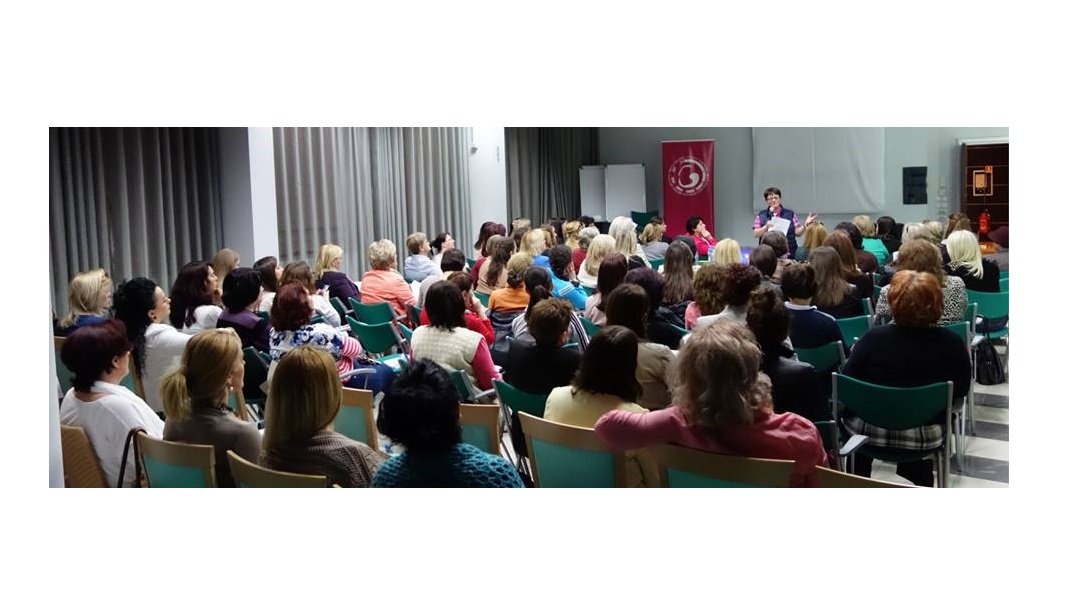
KWN organized its regular bimonthly meeting on 2 Feb. in which more than 60 participants, including KWN members, Board members, international organizations, and other stakeholders participated.
     Participants voted on members of the Grant Review Committee during the meeting. The chosen candidates will not be eligible to apply for Kosovo Women’s Fund grants. Voting was conducted according to the rule of one member organization receives one vote. Ultimately, Feride Rushiti was selected as the member of the Grant Review Committee.   

    Mimoza Paçuku, Fund’s Manager, explained the details of the call for applications for the Kosovo Women’s Fund, which will remain open until 26 February 2015 at 17:00.  For the second time in the history of the fund, KWN members will have the opportunity to apply for two types of grants: 1) Grants for individual advocacy initiatives led by one organization, and 2) Networking for Change Advocacy grants. Mimoza explained how to complete each type of application. Full applications for both types of grants can be downloaded from KWN’s website here. 

The Kosovo Lobby for Gender Equality met on 25 Feb in Prishtina. Assembly members and civil society representatives discussed their advocacy initiatives for every municipality, as well as those on the central level.

Lobby for Gender Equality Holds First 2015 Meeting

 The Kosovo Lobby for Gender Equality met on 25 Feb in Prishtina. Assembly members and civil society representatives discussed their advocacy initiatives for every municipality, as well as those on the central level. Further, they discussed legislation regarding war rape survivors, the Law on Inheritance and advocacy activities planned for 8 March, International Women’s Day. 
   “I have benefited a lot from the meetings organized by the Kosovo Women’s Lobby, mostly from the fact that we discussed what other Gender Equality Advocacy Groups were advocating for in other municipalities,” stated Hysnije Mustafa-Shamolli “We will use the information we exchanged in order to finalize our existing ideas, as well as to come up with new ideas”.

     This meeting was supported by the Austrian Development Agency (ADA). The next meeting of the Lobby will be held in April.  
 
 
The establishment of the Lobby provides space for men and boys of Kosovo who support equal rights between women and men, to join the group.
Members of this Lobby can be women and men, boys and girls, from throughout Kosovo who share this vision, regardless of political party affiliation, gender, age, ethnicity, ability, religion, geographic location, level of education, or socioeconomic status.
 Lobby groups continue to operate at the municipal level and have selected issues on which they will advocate in 2015 towards gender equality. They will also collaborate for national level advocacy initiatives.
 For further details, please contact info@womensnetwork.org

KWN starts the new Research on Domestic Violence and Sexual Harassment

The Kosovo Women’s Network (KWN) conducted the first ever Kosovo-wide household survey on incidence of domestic violence in 2008 in collaboration with the Agency for Gender Equality in the Office of the Prime Minister of the Republic of Kosovo (AGE) and the United Nations Development Programme (UNDP) Women’s Safety and Security Initiative.
     Much time has passed since the baseline study and now the time is ripe to carry out a follow-up study to measure how attitudes have changed over time as well as to identify remaining gaps in the legal outface and its implementation. KWN, in cooperation with other key stakeholders, plans to carry out this important research. The research also will inform the new National Strategy and Action Plan on Protection against Domestic Violence, planned to be drafted in 2015. This research will be funded by the Austrian Development Agency.
     Entitled Security Begins at Home, the resulting publication examined levels of awareness regarding domestic violence, its forms, and where to seek assistance. The research also involved interviews with officials in institutions responsible for implementing the then existing legal framework pertaining to domestic violence. This important study informed the Law on Protection against Domestic Violence, Strategy and National Action Plan (NAP), and Standard Operating Procedures in Kosovo for persons who suffered domestic violence (SOPs) used by all institutions.
     The aims of the new research to be undertaken by KWN in the coming months, include measuring (changes in) attitudes, awareness and incidence of domestic violence and sexual harassment in Kosovo, respectively; and monitoring implementation of the legal framework by relevant public institutions (e.g., police, judges, prosecutors, victim advocates, shelters, legal aid offices, etc.), particularly the National Action Plan on Protection against Domestic Violence.
     The research methods will involve mixed methods including: review of Legal Framework to identify remaining gaps in the legal outface and its implementation; conducting a survey with 1,290 citizens to measure awareness, attitudes and incidence of domestic violence and sexual harassment (95% confidence); interviews with institutions and actors responsible for implementing the legal framework; and review of statistical data gathered from relevant institutions on official interventions in cases of domestic violence since 2008. 
      The research is planned to be publish on the first half of September 2015 and will be available in three languages. The research will be used to inform advocacy initiatives carried out by KWN and its members between mid-2015 and the end of 2017 (in cooperation with other interested actors). The exact same research process will be repeated in 2017 to measure improvements in attitudes and behaviours.