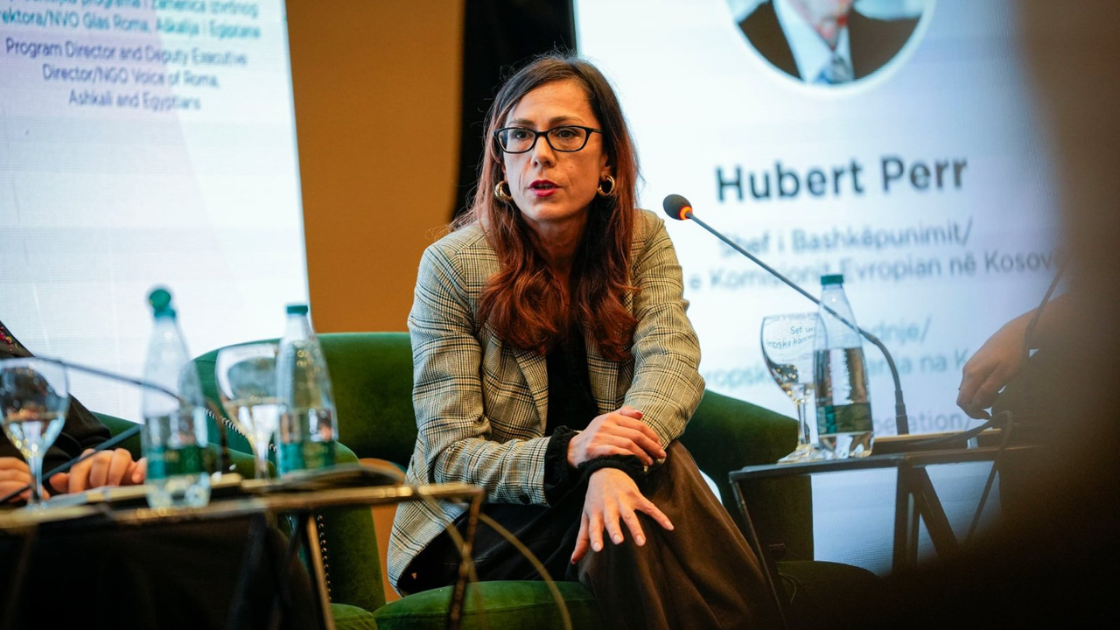
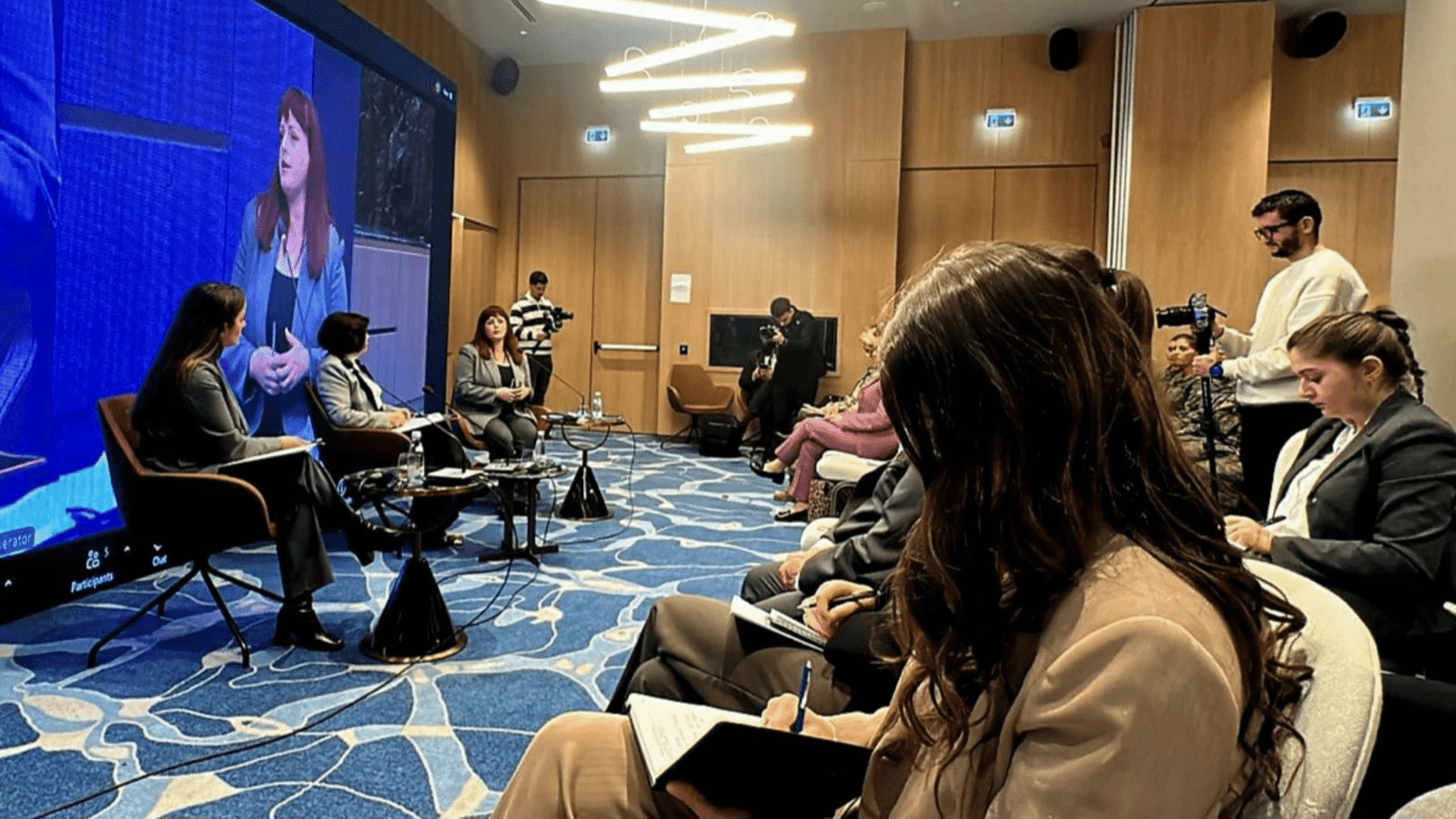
In a discussion organized by the British Embassy at Union Café in Prishtina on 5 Mar., several organizations, practitioners, institutions and officials gathered to discuss women’s economic empowerment in Kosovo.
Ariana Qosaj-Mustafa, Chair of the Board, raised several issues on behalf of the Kosovo Women’s Network (KWN) during the meeting. A crucial issue undermining women’s labour market participation is the lack of affordable childcare facilities, which hinders women in particular from entering the workforce due to social norms according to which women should care for children, among other family members. Opening more affordable day care centres could both provide employment opportunities for women and enable more women to work.
Qosaj-Mustafa also emphasized the importance of municipal Economic Development Plans being aligned with the Government’s planned economic development and employment plan. All should include a gender perspective. She expressed concern that drafting the governmental plan in only six months was problematic as the timeframe is very short for proper planning. She also emphasized the importance of setting aside sufficient budget for plans to be implemented and of ensuring gender responsive budgeting within plans.
The Government of Kosovo could take additional proactive measures towards increasing employment among women. For example, implementing a quota in the hiring of women and men under the subventions budget line of the government could contribute to employment among women who currently tend to be under-represented, particularly in decision-making positions, she said. This would be in line with the Law on Gender Equality, which foresees 40% participation of each gender within all institutions and at all levels.
“Relegating women to lower positions or even outside the private sphere transfers to the public sphere,” Qosaj-Mustafa said. “We have seen this in that very few women have been selected to lead ministries, for example. The Law on Gender Equality is not being implemented.”
KWN looks forward to collaborating with institutions and organizations working on women’s economic empowerment and economic development towards ensuring that Kosovo’s particular social, economic and political context are sufficiently considered in planning and implementing programs.
Ariana Qosaj-Mustafa, Chair of the Board, raised several issues on behalf of the Kosovo Women’s Network (KWN) during the meeting. A crucial issue undermining women’s labour market participation is the lack of affordable childcare facilities, which hinders women in particular from entering the workforce due to social norms according to which women should care for children, among other family members. Opening more affordable day care centres could both provide employment opportunities for women and enable more women to work.
Qosaj-Mustafa also emphasized the importance of municipal Economic Development Plans being aligned with the Government’s planned economic development and employment plan. All should include a gender perspective. She expressed concern that drafting the governmental plan in only six months was problematic as the timeframe is very short for proper planning. She also emphasized the importance of setting aside sufficient budget for plans to be implemented and of ensuring gender responsive budgeting within plans.
The Government of Kosovo could take additional proactive measures towards increasing employment among women. For example, implementing a quota in the hiring of women and men under the subventions budget line of the government could contribute to employment among women who currently tend to be under-represented, particularly in decision-making positions, she said. This would be in line with the Law on Gender Equality, which foresees 40% participation of each gender within all institutions and at all levels.
“Relegating women to lower positions or even outside the private sphere transfers to the public sphere,” Qosaj-Mustafa said. “We have seen this in that very few women have been selected to lead ministries, for example. The Law on Gender Equality is not being implemented.”
KWN looks forward to collaborating with institutions and organizations working on women’s economic empowerment and economic development towards ensuring that Kosovo’s particular social, economic and political context are sufficiently considered in planning and implementing programs.