KWN Expresses Deep Concern Over the Murder of a 63-Year-Old Woman by her Husband

Pristina, 25 November

Kosovo Women’s Network (KWN) expresses its deep concern regarding the murder of a 63-year-old woman by her 70-year-old husband on Friday (25 November) in Pristina. This murder reflects and highlights the ingrained consequences of patriarchal and cultural norms where women are murdered only for being women. The murder took place on the day when the world campaign “16 Days of Activism Against Violence Against Women” begin and at the time when media in Kosovo reported an increase in sexual harassment, gender-based violence, and the rape of girls cases.

Women in Kosovo are living in a dangerous environment. There are no rehabilitative measures for abusers and victims of gender-based violence are left with no way to avoid the repeated violence. At the same time, women’s employment and property inheritance remain among the lowest in the Balkans, and this keeps women bound in abusive environments.

Dangerous environment assessments conducted by police officers are poor and result in recidivist cases. The Kosovo courts continue to impose low convictions for the offenders and absurd decisions of retrials for the accusers of the brutal killing of women. For these cases, they also apply mitigating circumstances during the criminal procedure.

This chain of circumstances shows us that the killing of women is a consequence of the institutional, social and collective failure in dealing with gender-based violence as a primary issue within the framework of the rule of law and access to justice.

Article 173 of the Criminal Code of the Republic of Kosovo clearly defines the punishment for Aggravated Murder, by stating that long-life imprisonment shall be imposed on a person who kills a family member or a child. Therefore, the KWN demands a maximum sentence for the perpetrator and asks the institutions not to apply mitigation because of the voluntary surrender or the age of the perpetrator.

KWN, as a network of 190 different organizations for women’s rights throughout Kosovo, will closely monitor the institutional response to this case and tall other cases of gender-based violence.

KWN remains open to cooperation and assistance to victims of gender-based violence through free legal advice and referral to relevant institutions. If you need free legal aid for cases of gender-based violence or know someone who needs it, contact us at: 038 245 850.

Nicole Farnsworth Presents KWN, Members’ Work to U.S. Department of State

Today KWN Program Director & Lead Researcher Nicole Farnsworth made a presentation to the U.S. Department of State on KWN and its members’ history and work, including on the Women, Peace and Security Agenda. She shared ideas on how the U.S. can better support women’s rights activists and movements, including by

1) regularly consulting WCSOs;

2) speaking about WCSOs, their priorities, and expertise in political dialogues with officials and in high-level events;

3) investing in WCSOs and movements as long-term partners because social change takes time and WCSOs remain dedicated and engaged in bringing about social change; reviewing funding modalities to compensate WCSOs for their expertise and engage them as experts; and

4) support WCSOs’ advocacy, at local, national, and international levels.

The U.S. Department of State organized this presentation as a follow-up to President of Kosovo Vjosa Osmani Sadriu’s Women, Peace and Security Forum on Oct. 22-23.

Special thanks to the U.S. Department of State for continuing the conversation and consulting WCSOs and activists. We appreciate the opportunity to share our experiences and look forward to continuing this dialogue!

Lobby for Gender Equality Meets, Discusses its Empowerment

Today on November 16, The Lobby for Gender Equality (Lobby) gathered to discuss “Women, Peace, and Security- Decision Making in the local level.”

Representatives of institutions, women’s rights organizations, as well as members of the Kosovo Women’s Network (KWN) and women engaged in politics discussed and shared their experiences regarding women’s participation in politics at the local level.

KWN Executive Director Igballe Rogova, stressed the important role of the Lobby for Gender Equality since its establishment, towards supporting women in institutions, politics, and decision-making processes.

She said that the KWN will continue to work to strengthen the Lobby. Therefore, during this meeting, the members of the Lobby have been given the opportunity to give their concrete suggestions on how the KWN in the next four years, through its new Strategy, can contribute to the empowerment of women and girls at the local level and in the decision-making processes.

The members of the Lobby for Gender Equality, divided into three groups, have discussed the challenges and problems and have given their suggestions that should be included in KWN’s new strategy for 2023-2026.

Rogova also emphasized that women’s rights organizations should continue to support each other, as well as women in politics, especially at the local level.

Valbona Sadiku, from CECD Friends, during today’s meeting, spoke about the importance of local organizations cooperating with local institutions in peacebuilding.

In this context, she mentioned that as a result of the cooperation between women’s rights organizations and Mitrovica’s Municipal Assembly they manage through advocacy to plan the building of a new shelter house for victims of domestic violence in this city.

This meeting has been supported by the Office of the European Union in Kosovo.

400 Women Were Informed About Legal Means of Protection From Gender-Based Violence

Fifty women, victims of violence, namely from the Roma, Ashkali, and Egyptian (RAE) communities from the municipalities of Gjakova, Deçan and Junik, have received legal and psychological assistance within the project “Providing legal and psychological support to women who are victims of gender-based violence”.

In a period of 6 months, through the Kosovo Women’s Network (KWN) member organization, Femrat Aktive të Gjakovës’s initiative, 400 women have been informed about legal mechanisms of protection from gender-based violence.

This image has an empty alt attribute; its file name is image-4.png

To discuss these issues and the inter-institutional coordination, this organization held a roundtable on September 29th in Gjakova.

The legal expert Arbnore Shehu Bunjaku, who worked as a trainer in this project, spoke about three activities carried out within this project.

“We have encountered the biggest problems during these meetings with the Roma, Ashkali Egyptian community because they have very little knowledge about their legal rights. The community should feel they can come forward for any problem to report violence, school dropouts (which is a criminal offense), child marriages, and so on”.

Some of the recommendations that were made at this discussion table consisted of increasing the number of cases for judges, the amendment of the Family Law, and the increase in the number of victims’ defenders in other municipalities.

Erblina Dinarama, director of the “Shtëpia e Sigurt” shelter in Gjakova, said that there are 25 women and children currently staying in this shelter.

“However, from the beginning of January until August 31st, there were 141 mothers and children who came to the shelter,” she announced.

Enis Gashi, prosecutor at the Basic Prosecutor’s Office in Gjakovë, said that the domestic violence cases have been treated with priority.

“For some of these cases the security measures have been applied and the suspects have been sent to the detention center to ensure that crime will not be repeated. This year we had quite a large number of cases. In the period of January through August, we had over 50 cases with detention. The number of domestic violence for this year is over 100,” Gashi said.

Valbona Doli Rizvanolli, director of the NGO “Femrat Aktive të Gjakovës” stressed that one of the main problems of victims of violence is the change of statements.

“I think that these communities have resistance to these issues, even though I have tried to raise their awareness. They report cases of sexual violence or domestic violence. They report to the police that there was violence and evidence to prove this. When they go to the prosecutor, they slowly start to change their statement. They withdraw their original statement because they do not have the support of the state. The state does not support them, and the only solution is for the victim to return to the abuser, and usually the largest number of cases we see a return to the abuser.”

Meanwhile, Dinarama said that “the period of stay in the shelter for any victim is not the same because it depends on how the victim is able to rehabilitate. There are women who overcome the abuse easier and quicker and women who need more time. So, if a mother is not ready to take care of her children, then we cannot make requests to provide her with social housing or the insurance of a rental apartment,” Dinarama said.

According to her, the action plan for the victim is done in coordination with the Center for Social Work. This project has been implemented by the NGO Femrat Aktive të Gjakovës, supported by the European Union Office in Kosovo.

NGO Femrat Aktive të Gjakovës carried out this activity as a beneficiary of the grant from the 17th Round of the Kosovo Women’s Fund, through the initiative of the KWN “Enhancing the Capacities and Resilience of CSO’s: Furthering Gender Equality Amid the COVID-19 Pandemic,” which is financed by the Office of the European Union in Kosovo.

KWN Discusses Membership’s Manual and Code of Conduct and Finalizes its Four-Year Strategy

Around 90 representatives of member organizations, partners and supporters of the work of the Kosovo Women’s Network (KWN), gathered on 14 November in Pristina to finalize the KWN Strategy for 2023-2026. Also the Policy Manual and Code of Conduct of Assembly Members has been presented.

Igballe Rogova, Executive Director, KWN, during the opening speech, spoke about the second edition of KWN’s 1325 Facts and Fables, which, as she emphasized, “it is the history of women’s activism in Kosovo, when solidarity was the greatest power to push forward women’s agenda.”

Today, when KWN has 190 organizations, she pointed out the importance of bringing back the updated Policy Manual and Code of Conduct as a necessary mechanism.

Further, she spoke about all the important work, achievements and the advocacy during the four years of KWN’s Strategy 2019-2022 implementation.

While, Donjeta Morina, gender expert, presented the objectives and expected results of the new KWN Strategy.

In the second part of the meeting the participants divided in four working groups have worked to finalize objectives and expected results from the strategy for each of the following programs:

  • Furthering gender equality through rule of law;
  • Life free from gender-based violence;
  • Empowering women economically and
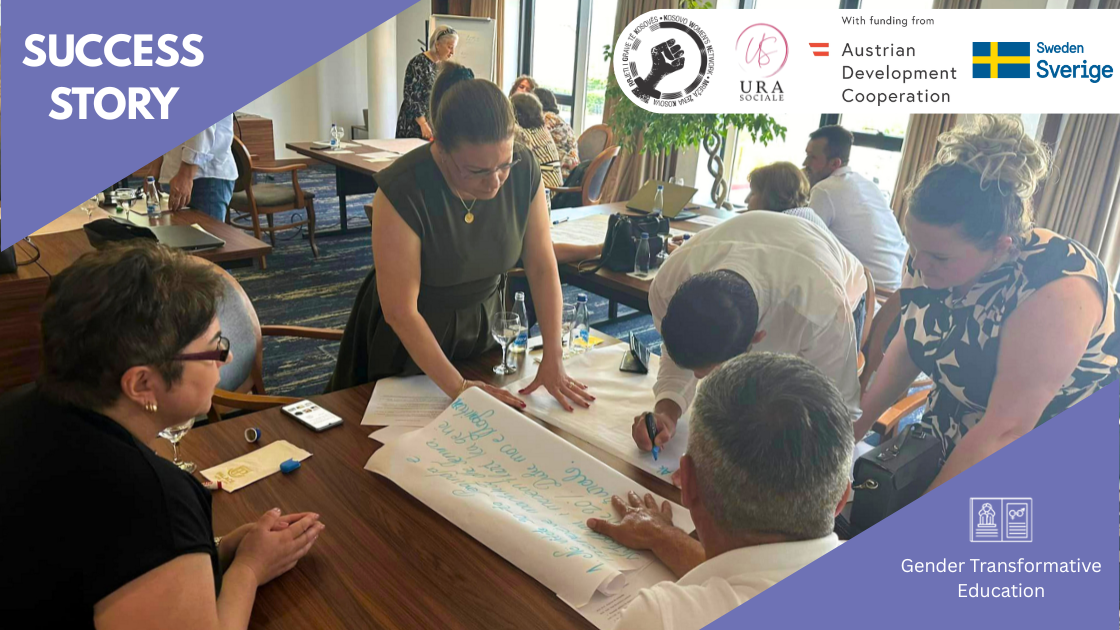
  • Education that transforms gender norms, and protecting the environment.

This meeting is supported by Austrian Development Agency (ADA).

NGO “Bliri” Held Advocacy Meetings with Municipal Directorates of Drenas

On 8 November the beneficiary organization of the 17th Round Bliri held an advocacy meeting with the Directorate of Health and that of Budget on November 8, regarding the recommendations from a policy analysis undertaken by the organization.

The Kosovo Women’s Network member organisation Bliri has conducted a survey with about 100 women from the municipality of Drenas about women’s access to gynecological services during the COVID-19 pandemic.

The results of the survey were written in a summary of policies and its findings were discussed at the meeting. According to this survey, it appears that 22% of women in Drenas have never had a gynecological checkup and 62% of single women have never had a gynecological checkup. Although there are 2 gynecologists at the Principal Center of Family Medical Care in Drenas.

This image has an empty alt attribute; its file name is RITA2-1024x768.jpg

Its capacity is not enough if women performed regular gynecological check-ups. According to surveys, the problem of access to gynecological check-ups is also transportation, considering that the villages do not have public transportation that connects them to the urban areas.

Head of the Directorate for Health and Social Welfare, Arsim Haxhiu has indicated that the current capacities are sufficient for the flow of gynecological checks, agreeing that the mentality in Drenas prevents women from routine checks and agreeing with the recommendation that work should be done on awareness for routine checks.

During this meeting, the budget allocation for the health sector was also discussed. According to the data from the municipality, the municipal budget was doubled during the pandemic, but to improve the situation in health services, the municipality must address the need for public transport, so that they can have access to gynecological services. However, the cost of urban transport connecting the villages is much higher than what the municipality can afford.

The Director for Budgets and Finances in the municipality of Drenas, Shyqiri Bublaku said that “we always invite women to participate in budget hearings so that the budget also addresses the needs of women. We are open to collaborations because the participation of women in budget hearings makes our work easier.”

NGO Bliri carried out this activity as a beneficiary of the grant from the 17th Round of the Kosovo Women’s Fund, through the initiative of the KWN “Enhancing the Capacities and Resilience of CSO’s: Furthering Gender Equality Amid the COVID-19 Pandemic,” which is financed by the Office of the European Union in Kosovo

NGO “You Can Do” Held Focus Groups with Women and Girls with Disabilities in Ferizaj and Prishtina

On 9 November, the beneficiary organization of the 17th Round “You Can Do” held the second focus group with young girls and women with mental disabilities, in support of the research/project: “Promoting state mechanisms that women and girls with disabilities live free of sexual abuse”.

NGO “You Can Do” has engaged a psychologist to meet with young girls and women with mental disabilities in the municipality of Ferizaj and Prishtina, to discuss and learn about their cases of sexual abuse and how their disabilities intersect.     

The results of these group discussions were written in two separate reports for each group and will be used in the research report along with other findings.

The data obtained from the meetings and correspondence of “You Can Do” include the representatives of the Mental Health Centers , police officials, the prosecutor’s office of the two targeted municipalities and organizations for persons with disabilities. The findings show that the number of sexual abuses, ill-treatment, insults, discrimination and cases where physical and mental violence has been exerted on persons with mental disabilities is extremely high, especially among girls and women of this category.

The stories shared by the participants of the focus groups, psychologist’s meetings with social workers,  and nurses of mental health centers, reveal that despite the large number of abuses and misuses of young girls and women with mental disabilities, very few cases are reported to the police even fewer cases end up in court. These cases remain unsolved and legitimize such behaviors and abuse towards disabled people, emphasizes the psychologist, who, based on meetings with nurses and social workers, has discovered that cases of rape, mistreatment and sexual abuse are cases that are repeated multiple times.

Young girls and women of this category face this many times throughout their lives. Focus groups with women in mental health centers have pointed out that group psychology sessions, but also individual psycho-social sessions are more than necessary for these girls and women.

The psychologist and the workers of the two mental health centers (Ferizaj and Shtime) have explained that many of the women and girls participating in the focus groups are diagnosed with schizophrenia, and this in many cases prevents them from receiving their requests, complaints and lawsuits seriously. Disbelief in the statements of victims of this category not only victimizes them even more and affects further institutional and social oppression and violence, but also makes it easier for the perpetrators and sexual abusers to continue abusing these girls and women.

“You Can Do” envisages that at the end of the project and the research report, it will also come with concrete recommendations for mental health institutions and other actors for the prevention of misuse and abuse, the measures that must be taken and the rehabilitation of victims.

NGO “You Can Do” carried out this activity as a beneficiary of the grant from the 17th Round of the Kosovo Women’s Fund, through the initiative of the KWN “Enhancing the Capacities and Resilience of CSO’s: Furthering Gender Equality Amid the COVID-19 Pandemic,” which is financed by the Office of the European Union in Kosovo.

A New Facility for the Shelter for Victims of Domestic Violence in Mitrovica

The Center for the Protection of Women and Children “Raba Voca” in South Mitrovica is expecting to have a new facility. South Mitrovica municipality has allocated a plot of land for the new building which will have the capacity to hold 30 people.

The Director of Culture, Youth, and Sports of this municipality, Valdete Idrizi, announced that the construction is co-financed between the donor and the municipality and that the work is expected to start this year. She made these comments during a meeting organized by Kosovo Women’s Network member organization CECD – Friends, in the framework of the project “Life without domestic violence – promoting domestic violence protection mechanisms.”

The Director of the shelter “Raba Voca,” Fidane Hyseni, said that the current shelter has a significant lack of space, especially after the increase in the number of victims after the pandemic.

But she said that despite the poor conditions the victims are satisfied “being away from their abusers.” She added that the recent floods have also created problems with humidity, which has resulted in power outages.

The Regional Director of Police in South Mitrovica, Afërdita Mikullovci confirmed the increase in domestic violence in the last four years. Mikullovci said that they are working on raising awareness against domestic violence.

The Center for the Protection of Women and Children “Raba Voca” carried out this activity as a beneficiary of the grant from the 17th Round of the Kosovo Women’s Fund, through the initiative of the KWN “Enhancing the Capacities and Resilience of CSO’s: Furthering Gender Equality Amid the COVID-19 Pandemic,” which is financed by the Office of the European Union in Kosovo.

Lulishtja Informs Businesses on EU Directive on Work-Life Balance

The beneficiary organization of the 17th Round Lulishtja has started a cycle of sessions to inform businesses about the European Union Directive on Work-Life Balance.

NGO Lulishtja is implementing the project “Economic empowerment of women after the COVID-19 pandemic, through the creation of family-friendly jobs” and during these trainings, special attention was paid to parental leave and leave for caregivers.

One of the participating businesses that visited France realized that according to the labor law, paternity leave was 30 working days. In addition, the trainer spoke about eight benefits of businesses, if the latter would implement the practices of family-friendly countries.

This image has an empty alt attribute; its file name is lulishtja2-1024x768.jpg

“Businesses are already struggling to find workers, but flexible workplaces motivate workers to remain loyal to the business and to be more productive.”

There was compliance and a desire to implement family-friendly places from all businesses. One business said, “we were already introduced to this model and we have to reflect and implement these rules in our businesses”.

NGO Lulishtja carried out this activity as a beneficiary of the grant from the 17th Round of the Kosovo Women’s Fund, through the initiative of the KWN “Enhancing the Capacities and Resilience of CSO’s: Furthering Gender Equality Amid the COVID-19 Pandemic,” which is financed by the Office of the European Union in Kosovo.

WCSOs Call for the Inclusion of a Gender Perspective in the Berlin Process

Download File

KWN joins other WCSOs in the region in calling for more women’s rights activists to take part in the Berlin Process and for it to better reflect attention to gender equality in all sectors.

The Berlin process is a platform for high-level cooperation between official representatives of
the Western Balkan Six (WB6), consisting of Albania, Bosnia and Herzegovina, Kosovo,
Montenegro, North Macedonia and Serbia, and their peers in Berlin Process host countries1
It aims to improve and intensify regional integration as well as accelerate the entire region’s
closer alignment with the European Union (EU).

Its main areas of focus are infrastructure development and connectivity, business, regional youth exchanges, reconciliation, and science. These areas were discussed through individual working papers during the digital preparatory workshop of the Berlin Process Civil Society and Think Tank Forum 2022 on October 19-20. The workshop sought to bring civil society voices and expertise into the Berlin
Process by preparing joint recommendations in these areas.

At least seven women’s rights civil society organisations (WCSOs) attended the preparatory
workshop and provided several recommendations on how attention to gender equality could
be integrated into the consolidated civil society recommendations. However, the resulting
draft recommendations that were shared lacked sufficient attention to gender equality.