The Importance of Civil Society Participation in Policy-Making

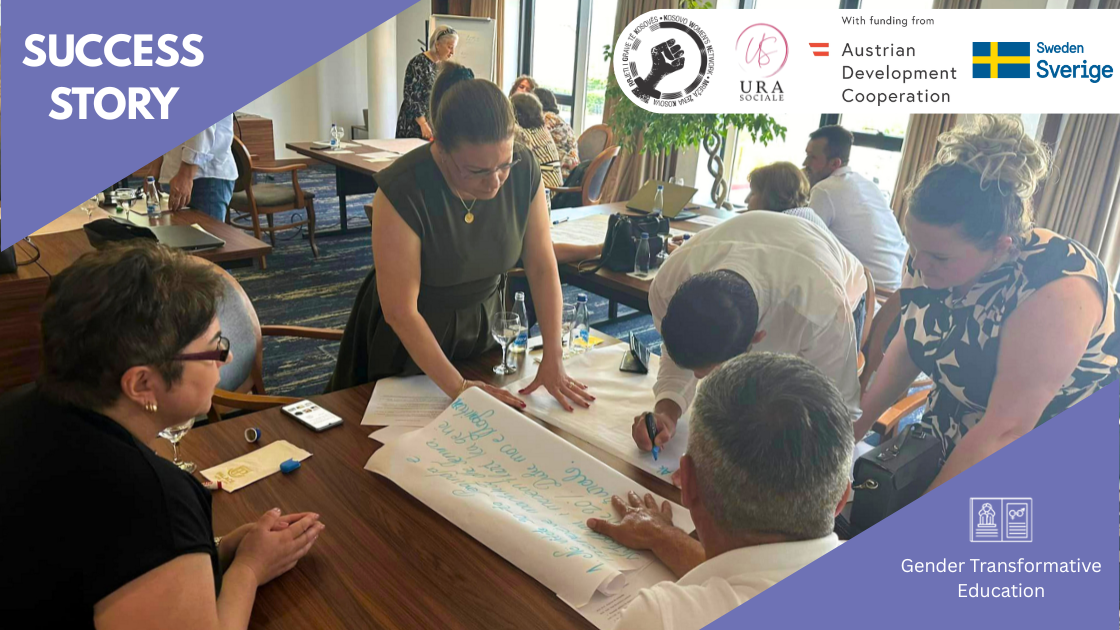
Throughout February, the Kosovo Women’s Network (KWN) participated in three thematic workshops organized by the CiviKos platform within the Citizen Engagement Activity.

These workshops were focused on “Increasing civil society participation in policy-making,” “Increasing volunteerism for programs of public interest,” and “Developing practices and procedures for contracting civil society organizations (CSOs).”

The activity was based in the four objectives of the Government Strategy for Cooperation with Civil Society 2019-2023. The meetings were attended by representatives of civil society organizations from the local and central levels.

At the meetings, the findings related to the implementation of the Government Strategy for Cooperation with Civil Society for the year 2022 were presented.

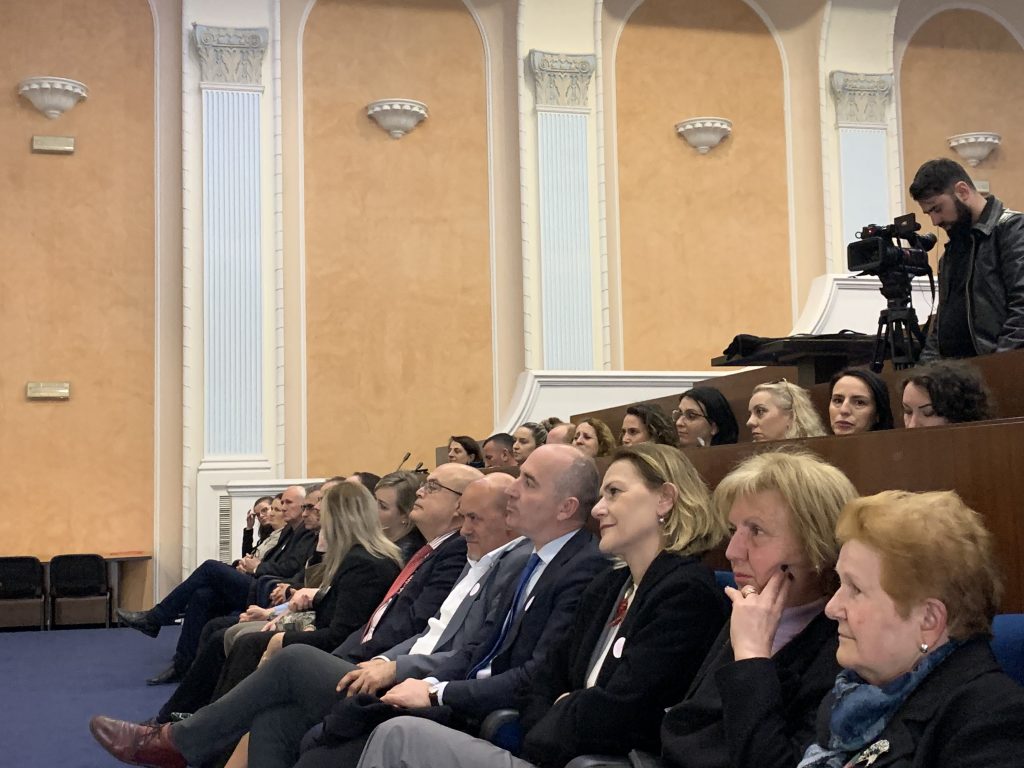
Based on the monitoring findings of the Strategy, the Program Officer at KWN, Etleva Malushaj, reiterated the importance of the active participation of CSOs in the creation of public policies.

Foto: Platforma CiviKos

She raised several points regarding public consultations, emphasizing the need to recruit an official for public consultations and hold information sessions for NGOs as foreseen by the Strategy.

According to her, this would help in better organizing these consultations. She also emphasized the importance of involving stakeholders, especially organizations working for women’s rights, and finding the best possible opportunity to increase participation in public consultations.

Regarding the increase in volunteerism, attention should be paid to the drafting of the legal framework for the regulation of this field. It is considered necessary to insist on the finalization of the concept document on volunteerism. Voluntary work is extremely important in building social solidarity.

Foto: Platforma CiviKos

During the meetings, Adile Shaqiri, Head of the Social Services Division in the Ministry of Justice, discussed the process of transferring social services from the Ministry of Finance, Labor, and Transfers to the Ministry of Justice.

Malushaj emphasized that CSOs have an important role in providing services, and it is necessary to continue the dialogue with them regarding the practices and modalities for long-term engagement of CSOs in the provision of social services.

The Shelter in Novo Brdo Raises Awareness of the Fight Against Gender-Based Violence

A shelter called the Women’s Inclusive Center (WIC) in Novo Brdo organized a two-day workshop on February 13th and 14th with representatives from the local self-government, centers for social work, Kosovo’s police, prosecutor’s office and non-governmental organizations that deal with domestic violence and gender-based violence from the municipalities of Ranilugu, Novo Brdo, Partesh, Kllokot, Graçanica and Shtërpce.

The shelter in Novo Brdo carried out this activity as part of the initiative for “Promoting the rights of victims of domestic violence through digital and advocacy activities” supported by the Kosovo Women’s Network (KWN).

Adelina Berisha, Program Manager for Addressing Gender-Based Violence in the Kosovo Women’s Network, spoke about the Istanbul Convention and the functioning of municipal coordination mechanisms against domestic violence. She stated that in Kosovo over 68% of women declared that they have experienced some form of violence.

“Although in most countries the most frequent form of violence is domestic violence, there are other forms of violence where women are the victims. In Kosovo, over 68% of women declare that they have experienced some form of violence. When I say in Kosovo, the statistics are quite similar in all ethnicities,” Berisha said.

However, she mentioned that in recent years there has been an increase in reporting to the police about cases of violence.

Among other things, she reminded the participants that “members of the Coordinating Mechanism have a legal obligation to engage in all efforts for combating gender-based violence and violence against women, starting from prevention, reintegration, and rehabilitation of these victims.”

Biljana Nastovska, adviser on gender issues from the OSCE Mission in Kosovo, spoke about the role of cooperation and coordination of many agencies in the prevention of domestic violence. She explained that everyone has a role and responsibility in fighting violence against women.

“When the Convention (of Istanbul) is in question, it says that violence against women cannot be solved by an agency. I mean, very often I hear that the police is needed. The convention is quite clear, that is, one leadership, but everyone has responsibility, the whole society,” Nastovska said.

“Violence against women is very complex. She demands the involvement of the police for all responsible people,” she added.

Meanwhile, Vesna Stanic, director of the Women’s Inclusive Center in Novo Brdo, emphasized that this seminar enabled the attendees to be more informed and receive answers from the panelists regarding the coordination mechanisms for fighting violence.

“Today we have contributed to the municipalities that have not had the mechanism or opportunity to seek support and to hear from our penal officers. As far as I can see, they are even more motivated to form coordination mechanisms in their municipalities,” stated Stanic.

This initiative is supported by the 17th round of the KWN’s Kosovo Women’s Fund with the support of the European Union Office in Kosovo through the KWN initiative “Enhancing the Capacities and Resilience of CSO’s: Furthering Gender Equality Amid the COVID-19 Pandemic.”

KWN Concludes Series of Trainings on State Protocol for Treatment of Sexual Violence Cases

Today, on February 20th, the Kosovo Women’s Network (KWN) in cooperation with the shelter “Center for Shelter of Women and Children” in Prizren, concluded the series of trainings on the State Protocol for Treatment of Sexual Violence Cases.

The Executive Director of this center, Jubilea Kabashi, thanked KWN for their continuous support in dealing with cases of gender-based violence during the opening of the meeting.

Besarta Breznica, the Program Officer for Addressing Gender-Based Violence in KWN, said that the series of training for the State Protocol for Treatment of Sexual Violence Cases is closing today. She described it as quite effective, considering the number of participants who have benefited from the training.

The Minister of Justice, Albulena Haxhiu, was present at the meeting and expressed deep gratitude for the continuous work of the KWN in addressing gender-based violence. She further stated that justice institutions should be more committed to eradicating this problem.

“During the past year, 60 percent of the cases of violence have been addressed or are being addressed, but it should be noted that we also need power from the prosecutorial and judicial council. The percentage of implementation for one year is optimistic,” Haxhiu said.

Vlora Tuzi Nushi, the head of the UN Women Office in Kosovo, also thanked the Ministry of Justice and the KWN for taking this important step in the fight against sexual violence, through a multi-sectoral approach as required by the Istanbul Convention.

“I must also emphasize that the drafting of the protocol is the result of a long-term investment of the European Union in aligning the institutional response against violence against women and girls (VAWG) with the international standards defined in the Convention on the Elimination of Discrimination against Women (CEDAW) and Istanbul Convention (IC), which was made possible through the Regional Program implemented in the Western Balkans and Turkey since 2017,” Nushi said.

Officials from the Municipal Coordinating Mechanisms and local institutions were trained by trainer Monica Kocaqi on the State Protocol for Treatment of Sexual Violence cases, its purpose, the management of cases of sexual violence, institutional responsibilities and prevention. Concrete cases of sexual violence were also discussed during this training.

Officials from the municipalities of Prizren, Suhareka, Dragash, and Mamusha participated in today’s training. Meanwhile, the trainings on this protocol were also held in Pristina, Ferizaj, Gjilan, Novobërde, Mitrovica, Pejë, and Gjakovë.

The State Protocol for the Treatment of Cases of Sexual Violence was launched on December 5th, 2022 by the Ministry of Justice in cooperation with the Institute of Forensic Medicine.

This initiative is supported by UN Women Kosovo through European Union funds.

A Conference Held on Programs for Perpetrators of Domestic Violence

On February 16th, representatives from local, international, and civil society institutions discussed about the prevention of domestic violence at a conference called ” Breaking the cycle of violence – programmes for perpetrators of domestic violence” organized by the Council of Europe in Pristina.

The Kosovo Women’s Network (KWN) has offered concrete recommendations for the entire ongoing process. The Minister of Justice, Albulena Haxhiu, said that violence in the family and against women is alarming and must be handled urgently. The influence of social factors and norms mainly contribute to the inequality women face in all spheres of life.

“We are witnessing that violence also ends in fatality. Support requires a multi-sectoral approach and cooperation that empowers victims to not tolerate any kind of violence. The one-year report for 2022 has identified the successful interventions as well as those that are lacking,” said Haxhiu.

Frank Power, Head of the Office of the Council of Europe in Pristina, has said that Civil Society Organizations for women’s rights have played a crucial role in combating violence against women and they have kept our feet on the ground to ensure that our interventions target the right audience.

Meanwhile, Nicole Farnsworth, Program Director and Research Leader at KWN, said that since 2008, KWN has emphasized the need to transform gender norms, address gender power relations, and ensure an improved institutional response in the treatment of abusers towards violence prevention. Farnsworth added that programs related to the rehabilitation of perpetrators should also be reflected in the Law on Protection from Gender-Based Violence, which should be finalized as soon as possible.

She added that legal accountability should be made clear for the institutions that are responsible for rehabilitation, including the provision of services, coordination of work, exchange of information, and independent monitoring of offenders over the long term.

“Based on experience and research, the best way to prevent violence is to transform socialized gender roles, norms, structures and relationships that place women and girls in an unequal position, whether it is here in Kosovo or around the world. ,” Farnsworth said.

Other recommendations for the Government of Kosovo from KWN are:

  • To continue working closely with CSOs in finalizing programs for perpetrators of violence in Kosovo, relying on their expertise;
  • To ensure that every program for perpetrators of violence has a comprehensive community-based approach;
  • Clarify the institutions responsibilities to assist victims and monitor perpetrators from reoffending, especially as the legal framework is being finalized
  • Ensure adequate training for all offender program facilitators and judges;
  • Ensure that financial resources are not removed from rehabilitation programs that work for people who have suffered violence, as these programs should be prioritized and funded by the state first;
  • Continue efforts to transform traditional gender norms and power relations that contribute to gender-based violence through education.

Caterina Bolognese, Head of the Division for Gender Equality from the Council of Europe, announced that policies have been developed according to the six-year strategy to stop domestic violence and violence against women.

“We have focused on boys and men. We have adopted a set of guidelines for men and boys fighting violence against women,” she said.

After the approval of the curriculum, the drafting of the program for treatment of perpetrators will be continued, in order to work towards the prevention of gender-based violence. KWN is expected to be part of the working group that will design this program, ensuring the recommendations and perspectives of civil society women’s organizations will be integrated.

Kosovo Women’s Fund to Allocate €215,000 in its 18th Round

This month, the Kosovo Women’s Network (KWN), through the Kosovo Women’s Fund (KWF), announced the 18th round of grants in the amount of €215,000, thanks to donors such as the Sigrid Rausing Foundation (SRT), the Austrian Development Agency (ADA), the Swedish Agency for Development and International Cooperation (SIDA), and the European Union (EU) Office in Kosovo.

“We believe in the work of KWN members, and the Women’s Fund team believes that this year too there will be cooperation with all of you. These grants are also for organizational support and help all members to implement their work and implement the strategy that we have compiled together,” said Igballe Rogova, Executive Director of KWN, in the first information session with KWN members.

Through the calls published on the KWN website, member organizations have been invited to apply with initiatives that will contribute to the advancement of women’s and girls’ rights and gender equality in Kosovo.

More specifically, their initiatives should contribute directly to the realization of the Strategy and its objectives identified by KWN members, within the KWN Strategy for the period 2023-2026, advocating for the support, protection, and promotion of the rights and interests of women and girls, which promote human rights and aim to bring about long-term change.

To inform the member organizations in detail, KWF held an information session about the 12 grants given by the Sigrid Rausing Trust for organizational support, each worth €10,000, €112,000 in total.

Also, two informative sessions were held in the form of workshops related to grants for the field of education and health, where members had the opportunity to work directly with experts in the fields in designing their initiatives based on the developed methodology and legislation in the country.

More specifically, 15 grants will be awarded by ADA and Sida, in the amount of €5,000, €75,000 in total.

While the next informative session was also held for the two grants that are allocated by the Office of the European Union, each of €10,000, €20,000 in total.

Përmirësimi i shërbimeve për viktimat e dhunës në familjen – misioni i strehimores në Gjilan

Gjatë vitit 2022 Qendra për Mbrojtjen dhe Rehabilitim e Grave dhe Fëmijëve “Liria” në Gjilan ka punuar për 6 muaj që reagimi institucional ndaj dhunës me bazë gjinore të trajtohet me prioritet të mjaftueshëm dhe që kjo dukuri të përputhet me Konventat Ndërkombëtare dhe praktikat më të mira.

Kësisoj, nga prilli i vitit 2022 e deri në fund të shtatorit të po atij viti, kjo qendër është përkrahur nga Rrjeti i Grave të Kosovës në projektin “Përfshirja e institucioneve dhe shërbimeve përkatëse shtetërore në qasje të koordinuar të dhunës ndaj grave dhe dhunës në familje sipas Konventës së Stambollit -“ ngritja e kapaciteteve dhe Qëndrueshmërisë së OSHC: Avancimi i Barazisë Gjinore gjatë Pandemisë Covid-19”.

Ky projekt i cili synon të përmirësojë cilësinë e shërbimeve të ofruara për viktimat e dhunës në familje është financuar nga Zyra e Bashkimit Evropian dhe prej tij kanë përfituar 54 persona, prej të cilëve 36 gra dhe 18 burra.

Nazife Jonuzi, Drejtore Ekzekutive e Strehimores “Liria” ka bërë të ditur se në këtë projekt përfitues kanë qenë anëtaret e Mekanizmi Koordinues Kundër Dhunës në Familje në  Komunën e Gjilanit, Vitisë dhe Kamenicës: Gjykata, Prokuroria, Mbrojtësit e Viktimave, Qendra për Punë Sociale, Spitali, Qendrat e Mjekësisë Familjare, Qendra e Aftësimit Profesional, Drejtoria e Arsimit, Zyrtarja për Barazi Gjinore, Enti i Punësimit, Shërbimi Sprovues, Shëndeti Mendor, Ndihma Juridike Falas, Avokati i Popullit, Strehimorja “Liria” dhe OJQ-te e grave.

Ajo ka shpjeguar se falë këtij projekti, 15 anëtarë të Mekanizmit Koordinues Kundër Dhunës në Familje të komunës së Vitisë  dhe 10 anëtarët e stafit të strehimores “Liria” janë të gatshëm/e dhe kanë aftësinë për të zbatuar standardet e përcaktuara në CEDAW dhe Konventën e Stambollit.

Po ashtu, 15 anëtarë të Mekanizmit Koordinues të komunës së Kamenicës  dhe 10 anëtarët e stafit të strehimores “Liria” janë të gatshëm dhe kanë aftësinë për të zbatuar standardet e përcaktuara në CEDAW dhe Konventën e Stambollit.

Jonuzi ka shtuar se 15 anëtarët e Mekanizmit Koordinues Kundër Dhunës në Familje të komunës së Gjilanit dhe 10 anëtarët e stafit të strehimores “Liria” janë të gatshëm dhe kanë aftësinë pёr shkёmbim informacioni, koordinimin e veprimeve konkrete dhe kanë hartuar Planin e Veprimit tre vjeçar për MKKDHF ne komunën e Gjilanit për tri vite 2023, 2024, 2025 duke u bazuar në Strategjinë Nacionale kundër Dhunës në Familje 2022-2026 me standardet e përcaktuara në CEDAW dhe Konventën e Stambollit .

“Projekti ka pas ndikim në përmirësimin e bashkëpunimit për të ofruar shërbime për të mbijetuarat e dhunës në familje dhe dhunës në baza gjinore, përmes ngritjes së kapaciteteve të anëtarëve të Mekanizmit Koordinues për Mbrojtje nga Dhuna në Familje, Vetëdijesimi i zyrtarëve komunal , stafit të “Liri-së” dhe Draftimi i Planit të Veprimit trevjeçar 2022, 2023 dhe 2024 për Mbrojtje nga Dhuna në Familje në komunën e Gjilanit”, ka thënë për KALLXO.com Nazife Jonuzi, Drejtore Ekzekutive e Strehimores “Liria”.

Në anën tjetër, Ibadete Mustafa, asistente e drejtoreshës së Strehimores “Liria” ka theksuar disa prej rekomandimeve të nxjerra gjatë këtyre punëtorive.

“MKKDHF duhet të funksionojnë në mënyrë që të mund të kontribuojmë të gjithë në parandalim, mbrojtje, rehabilitim dhe riintegrim të viktimave të dhunës në familje sepse jemi në një situatë ku për shkak të gjendjes ekonomike, papunësisë dhe  pandemisë COVID 19 që ka lënë pasoja kemi edhe rritje te rasteve,” ka thënë Mustafa.

Tutje, ajo ka theksuar se si rekomandim tjetër ka qenë që pjesëmarrja e të gjithë akterëve në takime edhe takimet të jenë të rregullta.

“Themelimi i MKKDHF në Komunën e Kamenicës duhet themeluar se është shumë i rëndësishëm” dhe tash veçse ky MKKDHF është i themeluar, ne jemi anëtarë të këtij mekanizmi dhe kemi marrë pjesë në takimet e rregullta që kanë mbajtur gjatë këtij viti po ashtu edhe kemi kontribuar në draftimin e Planit të Veprimit të MKKDHF Kamenicë 2024, 2025 dhe 2026,” ka shtuar Mustafa.

Ky projekt përkrahet nga Fondi i Grave të Kosovës me mbështetjen e Zyrës së Bashkimit Evropian në Kosovë përmes nismës së RrGK-së “Ngritja e kapaciteteve dhe qëndrueshmërisë së OShC-ve: Avancimi i barazisë gjinore në mes të pandemisë COVID-19”.

Foleja Publishes Research “Effect of COVID-19 on the Implementation Rights for Roma, Ashkali, and Egyptian Communities”

On February 6th, Foleja, a member organization of the Kosovo Women’s Network (KWN), published “The impact of the COVID-19 pandemic on the implementation of rights and the promotion of social welfare of the Roma, Ashkali, and Egyptian communities in the municipality of Prizren.”

According to the research done in the framework of the initiative supported by KWN, “The Impact of the COVID-19 Pandemic on Women and Girls of the Roma, Ashkali, and Egyptian Communities,” only 12 percent of these communities have benefited from state aid, many of them have lost their jobs, and the economic situation has worsened.

The main findings are as follows:

• State aid for the COVID-19 pandemic has not arrived at the addresses of the Roma, Ashkali, and Egyptian communities. From the responses of the survey it appears that only 12.7% of them have received aid from the local or central level;

• 7% of the surveyed citizens lost their job as a result of the COVID-19 pandemic, while 19.7% of the respondents stated that a member of their family lost their job as a result of the COVID-19 pandemic. Also, 61.5% of surveyed citizens do not know that the Employment Agency of the Republic of Kosovo existed;

• 44% of citizens who belong to the Roma, Ashkali, and Egyptian communities, estimate that their economic situation after the emergence of the COVID-19 pandemic is more difficult or worse, while 3% of them estimate that their economic situation has gotten very worst;

• While the Roma, Ashkali, and Egyptian communities in the Municipality of Prizren represent only 2.48% of the population, in the domestic violence statistics this percentage multiplied, reaching over 26%;

• The Government of Kosovo has not put the Economic Revival Package into public consultation at all, as it is obliged by legal provisions. As a result, only 6% or 23.7% of the 26 measures of the Economic Revival Package directly affect the Roma, Ashkali, and Egyptian communities.

However, thanks to the work of Foleja, a cooperation has been achieved between institutions and civil society to take concrete steps and overcome the problems faced by these communities in terms of women’s rights in the family.

When the research was discussed at the table, Gjyzel Shaljani, project coordinator, expressed her satisfaction with the results achieved.

“The research we have done has also highlighted other problems related to the levels of employment, health issues, education, economic revival – how many measures have been appropriate for this community? Have they received the aid or not? Over time have they been insured or not? How do they overcome these difficulties? This project has given us a lot, a lot of information and made us aware as implementers of this project”, said Shaljani.

She also mentioned some of the concrete difficulties faced by some of the members of the Roma, Ashkali, and Egyptian communities.

“For example, during this project we have identified six girls who needed to enroll in secondary schools. We have advocated, helped and begged them to go to school. They simply didn’t know who to approach, how to register, had no financial support, unaware that the Ministry of Education awards scholarships to high school students, and where to send or obtain documents”, she emphasized.

Among the participants of this roundtable was Saranda Berisha, said that the biggest challenge for the communities is the lack of information because they don’t know where to go or where to look.

“This activity seemed very good and a great opportunity for the development of the community and to prepare the community as much as possible for different activities”, she said.

“Today, I liked everything, starting from the discussion, but also from the various data we received. There was a lot of information that we did not know, but now we have discovered new facts. We have learned where to get the answers to all the questions we have,” added Berisha.

During the May-December period last year, Foleja’s organization has informed over 300 people from the Roma, Ashkali, and Egyptian communities of the municipality of Prizren regarding the legal mechanisms against domestic violence. In this framework, 42 women and men have performed psycho-social sessions, with the aim of improving the psycho-social condition.

Foleja’s organization has undertaken all these activities as a beneficiary of the 17th round of the Kosovo Women’s Fund through the KWN initiative “Enhancing the Capacities and Resilience of CSO’s: Furthering Gender Equality Amid the COVID-19 Pandemic” financed by the European Union (EU) Office in Kosovo.

Rikotta Trains 100 Women for Employment Opportunities, 10 Expected to be Hired This Month

From April 2022 to January 2023, 100 women from the Prevalla region of the Prizren municipality were trained on the economic empowerment of women, the prevention of gender-based violence, the challenges posed by the COVID-19 pandemic, and employment opportunities for women who are economically dependent on their families.

These activities were carried out by the member organization of the Kosovo Women’s Network (KWN), Rikotta, as part of the “Violence Prevention through the Economic Development of Women in the Prizren Municipality” project. The project was funded by the European Union and supported by KWN. As a result of these activities, it is anticipated that during February 10 women will begin working in private businesses within the Prizren municipality.

The culmination of the project took place on January 27 with a closing meeting between the NGO Rikotta and municipal officials in Prizren. During the meeting, the results were presented, and the issue of gender-based violence and economic dependence of women on their families were discussed.

Pranvera Bullaku, the director of the Rikotta organization, outlined the progress of the trainings and activities that took place with women over the 10-month period.

“For the first three months, we conducted various trainings on food preparation, dough and sweets. Then we moved on to training women on creating CVs and cover letters, and teaching them how to apply for job vacancies. The third training was on finding resources and how a woman can start a business in Kosovo, how to find work and financial means,” she said.

Bullaku went on to explain that during November, research was done on the internet to determine the most in-demand jobs in the private sector, with cash register workers and bakery workers being among the top requests.

“The project was successful with a good outcome, 100 women were trained, and I can think of 10 women who will start working in the private sector in different businesses in the Prizren municipality from February,” Bullaku said, highlighting the growing awareness of women about reporting violence as another positive result.

“Gradually, women have started to become aware. There were women who did not know that there is a shelter and a Center for Social Work in the Prizren municipality where they should report violence, because they have always been afraid. We also held meetings with women to make them aware that they should report cases of violence, whether it’s in the family or elsewhere,” Bullaku added.

During the closing meeting on January 27, Kumrije Bytyqi, the director of the Center for Social Work in the Prizren municipality, was also present. She emphasized the need for social workers in schools and the police, as well as the need for continuous education and special training to address the institutional vacuum and shortage of human resources.

“There is a lot to be done, but with one-year or longer trainings and special services, I believe we will succeed,” Bytyqi concluded.

This project was supported by the 17th round of the Kosovo Women’s Fund (KWF) and the European Union Office in Kosovo through the KWN initiative “Enhancing the Capacities and Resilience of CSO’s: Furthering Gender Equality Amid the COVID-19 Pandemic.”

CALL FOR PROPOSALS FOR THE KOSOVO WOMEN’S FUND

CALL FOR PROPOSALS FOR THE KOSOVO WOMEN’S FUND

Issued: 2 February 2023                                           Application Deadline: 3 March 2023

PROGRAM OVERVIEW

The Kosovo Women’s Network (KWN) is pleased to announce the Kosovo Women’s Fund’s (KWF’s) eighteenth grant round. We invite women’s rights civil society organisations (WCSOs) to submit applications that will contribute to furthering women’s rights and gender equality.

More specifically, applications should demonstrate how organizations propose to contribute to realizing the Strategic Goals identified by KWN members in the KWN Strategy, towards supporting, protecting, and promoting the rights and interests of women and girls, using a rights-based approach and sustainable change.

As KWN’s research “The Pandemic Knows No Gender”? A Gender Fiscal Budget Analysis of the Government of Kosovo’s Response to the COVID-19 Pandemic from a Gender Perspective has shown, the pandemic has impacted both women and men, but given their generally unequal position within society, women have been particularly affected. The government response to COVID-19 has not been based on sufficient gender analysis, and, as a result, some government measures have neglected to address the specific needs of women amid this crisis. Some measures even contributed to worsening pre-existing gender inequalities.

Therefore, KWN strongly encourages initiatives that involve advocacy/monitoring on local and national levels, particularly related to government response to the socio-economic crisis resulting from the COVID-19 pandemic. Advocacy can include meetings with officials; raising awareness about rights to government benefits and programs; policy-oriented research; proposing policy changes related to the government’s response to COVID-19; and involving people in claiming their rights. Initiatives must aim to contribute to real, visible results (e.g., new legislation, new services, reports about cases of gender-based rights violations, monitored court cases, etc.). Please be aware that activities alone cannot be considered results of initiatives.

The types of activities eligible for financial support may include, among others:

  • Conducting policy-oriented research, such as related to beneficiaries of COVID-19 government allocations to date, government spending (using gender-responsive budgeting methods), and how government interventions could better reach and benefit diverse women, men, girls, and boys;
  • Building the capacities of women and girls to advocate for their priorities;
  • Organizing meetings among diverse women and decision-makers, during which women can advocate to officials regarding how the government can better their needs amid the COVID-19 pandemic and its aftermath;
  • Supporting women to influence and propose policy changes in existing laws and regulations at municipal and national levels, towards improving the government response to the COVID-19 pandemic;
  • Organizing awareness-raising to inform women of various government programs, their rights to benefits, how to access benefits, and how to report any potential gender-based discrimination in the allocation of government resources for addressing the COVID-19 pandemic and/or in related government programs;
  • Providing legal and psychological support to women seeking to realize their rights, including under anti-discrimination legislation;  
  • Documenting and reporting on cases of gender-based human rights violations;   
  • Building the capacities of civil society, public servants and service providers to further gender equality through their programs and in the distribution of resources;
  • Related, supporting municipalities or ministries in implementing gender responsive budgeting, including undertaking gender analyses of beneficiaries of COVID-19 programs to date to inform new policies and budgets to better meet the needs of diverse women, men, girls, and boys;
  • Monitoring of all forms of discrimination based on gender, ethnic origin, religion or belief, disability, age and sexual orientation, and/or intersections of these; and documenting and reporting on findings, towards influencing improved approaches;
  • Providing specific services, such as legal, educational, social and health services to persons most affected by the COVID-19 pandemic, particularly women suffering violence, impoverished, and other vulnerable women; and utilising this experience to inform advocacy for improving government services in the future;
  • Pilot the use of digital solutions for reaching diverse women with services, tele-counselling, counselling, legal aid and other support, particularly women who may not otherwise have access;
  • Conducting organizational capacity building activities (e.g., strategic planning, furthering organizational resilience, public relation, improving use of digital solutions to issues) may also receive support as part of initiatives, but not as the main objective.   

NOTE: Initially, each selected grant applicant will undergo an Organizational and Advocacy Capacity Assessment (OACA).[1] The assessment will be used to identify organizational strengths, as well as opportunities for furthering their capacities. Based on this assessment, organizations will be asked to develop a simple Capacity Development Plan that they can realize during their initiative, towards furthering their capacities. Based on the needs identified, tailored capacity building support will be provided to grant recipients. All support will relate to the planned Actions. A follow-up OACA will be carried out in the end of the Action to assess any changes to organizational capacities over time.

The types of action that are ineligible include:

  • Actions concerned only or mainly with individual sponsorships for participation in workshops, seminars, conferences and congresses;
  • Actions concerned only or mainly with individual scholarships for studies or training courses;
  • Purchasing of buildings, offices, vehicles or of equipment (unless necessary for the successful execution of the project);
  • Actions supporting political parties, groups and movements;
  • Debts, debt service charges (interest), provisions for losses or potential future liabilities, currency exchange losses and credit to third parties;
  • Salary costs of the personnel of government officials;
  • Costs declared by the beneficiary(ies) and already financed by another action or work programme of the European Union or another donor.

In accordance with the KWN Strategy, the types of initiatives that will be prioritized for funding will include:

Strengthening the Feminist Movement in Kosovo

  • Building capacities and involving youth (young women and men) in advocating for women’s rights, particularly related to COVID-19 response measures;
  • Mobilizing persons with disabilities, pensioners, persons from minority ethnic groups (within their municipality), and women from rural areas in advocating for their rights, particularly related to COVID-19 recovery;
  • Collaborating with other KWN members to share knowledge and further other network members’ capacities in specific areas, as well as increase solidarity among women’s organizations in joint advocacy for an improved COVID-19 response;
  • Utilize KWN’s research Where’s the Money for Women’s Rights? and other data available to inform advocacy and awareness raising for women’s rights, such as the allocation of permanent government budget lines for civil society towards enhancing the resilience and sustainability of women’s rights organisations.

Women in Politics and Decision-making

  • Involving women in identifying priorities towards gender equality in their municipalities and directly advocating to officials to address their priorities, related to the COVID-19 recovery;
  • Involving women in reviewing draft policy documents at municipal or national levels and providing their input (e.g., budget documents, new municipal regulations, etc., particularly related to addressing COVID-19);
  • Support municipalities and/or ministries in implementing gender-responsive budgeting particularly related to the COVID-19 response, including by building their capacities and supporting them to conduct gender analysis of who has benefitted from measures; and using this to set objective and activities for improving the distribution of state resources and services related to COVID-19 in the future; 

Women’s Right to Healthcare

  • Involving women in advocating for improved access to quality healthcare, including taking actions to demand quality, affordable healthcare be provided and/or to report violations of women’s right to healthcare, particularly related to COVID-19 prevention and treatment;
  • Collaborate with women to officially report abuses of their right to healthcare to the appropriate authorities (especially reproductive and maternal health), after raising their awareness about their rights;
  • Utilize KWN’s research Access to Healthcare in Kosovo and other data available on women’s access to quality healthcare to inform advocacy and awareness raising;
  • Provision of specific services, such as legal health services.

A Life Free from Gender-based Violence

  • Advocate to institutions for improved services for persons who have suffered gender-based violence (e.g., domestic violence, sexual harassment), particularly during COVID-19;
  • Advocate to institutions for better rehabilitation and reintegration services for persons who suffered violence;
  • Monitor court cases related to domestic violence and report incorrect application of the legal framework by courts, advocating to the appropriate institutions for these issues to be addressed;
  • Strengthening capacities of individuals, communities and authorities to ensure safety of women and reduce domestic violence towards women and girls in the context of crisis;  
  • Support women and girls who have experienced sexual harassment at work, at school, or in the street by providing legal help to them and teaching them how to approach the correct institutions and seeking an address for these cases. Initiatives may also include informing citizens of their rights to address sexual harassment;
  • Consult the research reports of KWN, such as From Laws to Action? (2021), monitoring the institutional response to gender-based violence and the report on Sexual Harassment in Kosovo (2016), which monitors the implementation of relevant legal framework by responsible institutions, in order to inform advocacy that holds individual institutions accountable and improves their approach in addressing all forms of gender-based violence;
  • Collaborate with local institutions and businesses to install mechanisms for addressing sexual harassment;

Provide legal and psychological support to women who are victims of gender-based violence through tele-counselling and in person; advocate for sustained state support of these services based on lessons learned from this experience.

Women’s Economic Empowerment

  • Advocating to municipal or national authorities for policies that encourage and support women’s economic empowerment particularly amid COVID-19 recovery measures (e.g., more allocation of agricultural subsidies to women and men, more equal distribution of government grants for business development for women and men, the opening of more public day cares that will provide jobs for women and enable women to work);
  • Providing legal aid, advice and assistance to women whose labour rights were violated amid COVID-19 and helping them access justice;
  • Working with Regional Employment Centres to encourage and help them to support more women in securing employment;
  • Directly supporting women in claiming their rights to property and/or inheritance, as needed to qualify for state benefits related to COVID-19 response measures (this can follow awareness-raising, but must involve women actually registering property or claiming inheritance);
  • Improving the gender perspective on reforms related to the EU accession process related to women’s employment, particularly amid COVID-19 recovery measures.

Improving Access to Quality and Gender Sensitive Education

  • Advocating at municipal and national levels for the government to allocate more resources for establishing more pre-schools and childcare centres, as essential amid COVID-19 relief measures;

GRANT AWARDS

Supported by the European Union Office in Kosovo (EU) through KWN’s initiative Enhancing the Capacities and Resilience of CSOs Furthering Gender Equality Amid the COVID-19 Pandemic” KWN anticipates distributing two (2) grants up to €10.000. The total amount expected to be distributed through this initiative is € 20.000.

SIZE, TYPE AND DURATION OF GRANTS

Initiatives are expected to begin on 1 June 2023 and can last up to a maximum of eight (8) months from the date of contract signature. KWN reserves the right to fund any or none of the applications submitted, as well as to discuss with applicants allocating actions as needed within the aforementioned categories. Funding decisions will be made by KWF Grants Review Committee (GRC), elected by KWN members.

ELIGIBILITY

In order to apply, organizations must fulfil the following criteria:

  1. Plan and implement activities in accordance with their own organizational strategy;
  2. Undertake activities that contribute to the implementation of the KWN Strategy, including programs on:
    1. Strengthening the Feminist Movement in Kosovo;
    1. Women in Politics and Decision-making;
    1. Women’s Rights to Healthcare;
    1. A life-free from Gender-based Violence;
    1. Women’s Economic Empowerment;
    1. Improving Access to Quality and Gender Sensitive Education
  3. Be able to provide at least 10% of the budget total amount from another donor and/or self-contribution (e.g., documented volunteer work). This 10% contribution should be reflected in the budget proposal;
  4. Have no staff members currently part of KWN’s Board, or part of the GRC.

The GRC will prioritize funding for:

  • KWN members;
  • Initiatives linked to addressing COVID-19 related challenges and/or needs;
  • Initiatives that involve advocacy, towards bringing about sustainable changes in supporting, protecting, or promoting women’s rights and gender equality at municipal and/or national levels;
  • Initiatives that aim to contribute to produce tangible and visible results (e.g., new legislation, new services, reports about cases of gender-based violence, monitored court cases, etc.);
  • Initiatives that engage persons with different abilities, minority ethnic groups and marginalized persons;
  • Organizations lacking other funding opportunities from different donors.

APPLICATION SUBMISSION PROCEDURES

Applications may be submitted in Albanian, Serbian and English languages. The full application must be submitted electronically to the following email: grants@womensnetwork.org.

Applicants must submit the following documents:

  1. Application, using the KWN Application Form (Word format, attached and available at: https://womensnetwork.org/wp-content/uploads/2023/02/KWF_Application-Form-3.docx), and

Applicants must submit the following documents: Budget Proposal, using the KWN Form (Excel format, attached and available at: https://womensnetwork.org/wp-content/uploads/2023/02/Budget-Proposal.xlsx ).

Please note: all budgets must represent an allocation of costs (which means co-financing by another institution) and / or a non-financial contribution (meaning volunteer work, donations from businesses, community involvement) in the amount of 10% of the total budget proposal. This should be stated in the budget proposal. KWF will consider wage coverage and operating expenses in cases where the applicant has explained clearly how this will enable them to advance women’s rights and / or gender equality.

Proposals submitted to KWN must be the original and sole work of the applicant organization. Plagiarism will result in disqualification of the application. KWN will retain all materials and documents submitted by applicants. KWN will not use information presented by applicants for purposes other than review and will not provide this information to other persons or institutions, except when required either by Kosovo law or requested by donors.

Upon delivery of their application, applicants will receive a Confirmation of Receipt with an application number, signed by KWN staff.

ANTICIPATED TIMELINE

CONTACTS FOR INFORMATION

Clarification requests / additional information: Applicants must submit their clarification requests by March 1, 2023 at 5:00 p.m., via email to grants@womensnetwork.org.

To have access to the info session, please click the link below:

Join Zoom Meeting
https://us06web.zoom.us/j/89664539031?pwd=OUdHTWVVNW84dWlJWUY4ZCtEUjUzQT09

Meeting ID: 896 6453 9031
Passcode: 932758


[1] This respectable methodology, derived from the United States Agency for International Development (USAID) Advocacy Index, and further developed by the East-West Management Institute, is used in several countries worldwide to assess organizations’ capacities and abilities to carry out effective advocacy.

KWN and Shelters Held Trainings With the Coordinating Mechanisms on Violence Cases Management

The Kosovo Women’s Network (KWN) and Kosovo shelters held trainings with the Coordinating Mechanisms on Violence Case Management in cities such as Prishtina, Prizren, Mitrovica, Ferizaj, Pejë, Gjakovë, Gjilan, and Kllokot last year.

The local institutions were trained on case management, rehabilitation, reintegration of domestic violence victims, as well as local and international legislation.

Ariana Qosaj Mustafa, the expert contracted by KWN, considered the training a unique experience with open and interactive discussions among participants from institutions and shelters that provide assistance to victims of gender-based violence.

“The main challenges identified included infrastructure limitations, insufficient long-term assistance, difficulty in reintegrating victims, and the need for institutional support. The institutions welcomed the implementation of the Istanbul Convention standards and the victim-centered approach, but also noted their need for continuous training and support from the central government and donors.”

KWN also organized training for representatives of Kosovo shelters on professional burnout. Due to the emotionally charged work environment, these representatives are at risk of burnout. The training taught them how to maintain personal well-being to protect themselves from occupational burnout.

The Initiative “Institutionalizing Quality Rehabilitation and Integration Services for Violence Survivors”, is supported by the Austrian Development Agency (ADA) with funds from the Austrian Development Cooperation.