OPDMK Supports People with Disabilities in Accessing Social Protection Services

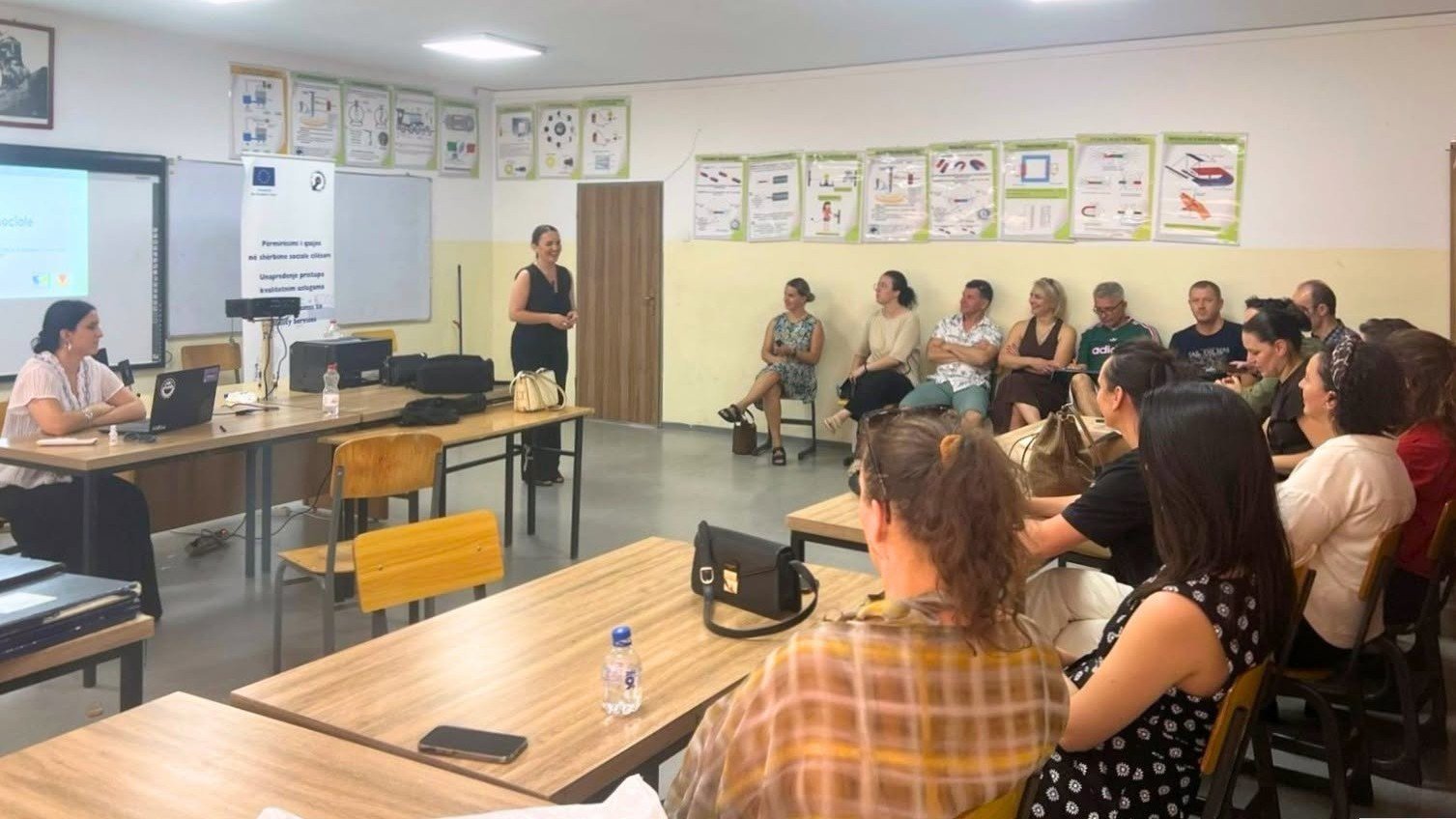
On 9 October 2025, the Organisation of Persons with Muscular Dystrophy of Kosovo (OPDMK) held an information session in the municipality of Prizren for people with disabilities and their personal assistants. The session focused on access to social and family protection services, as well as procedures for filing complaints.

The activity was carried out within the framework of the project “Enhancing the capacities of civil society to increase access to quality social protection for diverse women and men,” funded by the EU Civil Society Facility (EU CSF) Programme and implemented by the Kosovo Women’s Network (KWN), in partnership with OPDMK and Ruka Ruci.

During the session, participants learned about existing services, recent reforms in the field and the institutional mechanisms that support citizens in need. They had the opportunity to learn how to access social protection services and navigate public digital platforms. A special segment was dedicated to the E-Kosova platform, where participants were shown how to create accounts and use online services, encouraging greater use of digital solutions.

Participants were informed about the procedures for applying for social assistance and the channels available for submitting complaints in cases of obstacles or unfair treatment by public institutions. Discussions underscored the importance of being aware of one’s social and legal rights as a tool to drive concrete improvements at both the local and institutional level.

The information session also featured practical exercises, real-life examples and role-playing activities designed to enhance participants’ understanding of administrative procedures and help them develop the skills to address their issues independently.

During interactive discussions, participants shared their own experiences, including challenges in accessing social services and obtaining official recognition of disability status. They emphasised frequent delays in case reviews, a lack of transparency and insufficient information from responsible institutions.

At the end of the session, concrete recommendations were provided for improving access to public and digital services for people with disabilities, emphasising the need for ongoing cooperation between public institutions and civil society organisations.

This activity marks a significant step towards advancing inclusion and equality in access to social protection, demonstrating the commitment of KWN and OPDMK to empower citizens and foster a more inclusive and just society for all.

Wartime Sexual Violence Survivors Rebuild Lives Through Psychosocial Support and Access to Health care

In Kosovo, many women who experienced sexual violence during the war continue to face profound psychological and social consequences. Their situation worsened during the COVID-19 pandemic, as delays in applying for legal recognition and verification of their status as wartime victims coincided with the resurfacing of traumatic memories during prolonged isolation. At this critical moment, the Center for the Promotion of Women’s Rights (QPDG) in Drenas stepped in to provide much-needed support. Through their initiative, 30 survivors of wartime sexual violence got to participate in psychosocial group sessions, health education workshops and activities designed to promote social interaction and overall psychological wellbeing.

Over the course of three months, three groups of 10 women each took part in psychosocial therapy sessions, which provided them with an opportunity to share their experiences, break through isolation and gradually rebuild confidence. Recreational and relaxing activities, such as meditation sessions, discussions and moments of laughter, helped relieve daily stress and provide small outlets from the weight of trauma.

Additionally, lectures were held on women’s right to quality health care. These sessions covered early detection and treatment of breast cancer, reproductive and sexual health and sexually transmitted infections. Lecturers and participants also discussed the importance of sexual education in schools and the significance of disseminating this vital information to younger generations. The last session held covered citizens’ rights in cases of health care violations and provided guidance on how to utilize available resources if faced with such violations.

Following the health care sessions, free mammograms as well as diabetes screenings were offered to the participating women. Most underwent these procedures, some for the very first time. Women who were found to have high blood sugar levels were provided with further health services to manage them.

Throughout the initiative, special attention was paid to women who had been denied their status as survivors of wartime sexual violence. The sessions gave them a rare sense of recognition and belonging, and served as a reminder of the significance of their experiences.

Step by step, the sessions formed a supportive community, where the women not only addressed their past but began to imagine a different future. By the end of the initiative, survivors described feeling more connected, less isolated and better equipped to face daily challenges.

“Rehabilitation, coping with trauma, a sense of belonging, safety and empowerment, and the fight against stigma, are the main services of our organization. The voice of survivors will never be silenced – every day it will grow louder and stronger,” says QPDG’s psychologist, Anita Istogu.

QPDG still offers both individual sessions aimed at rehabilitation, coping with trauma and developing a healthy lifestyle, and group sessions that focus on learning emotional management techniques, coping with stress, fostering a sense of belonging and sharing experiences. Women gather regularly at the Center, which welcomes both those who have already received legal status and those who are in the process of applying.

“This is our second home. We feel good and safe here. Every time they call us, we come with joy, meet with the staff and with each other, build friendships, work on different crafts, and relax. Sometimes we come without an invitation, because if we don’t come for a week or two, we really miss this place,” says one survivor.

QPDG’s initiative “Providing Psychosocial Services to Women Who Have Experienced Sexual Violence During the Recent War in Kosovo” was carried out with support from the Kosovo Women’s Network’s (KWN) Kosovo Women’s Fund (KWF), financed by the Austrian Development Agency (ADA) and co-financed by the Swedish International Development Cooperation Agency (Sida), in the amount of 4,007€, from October to December 2021. The initiative contributed directly to KWN’s Programme “Right to Health”.

Raising Awareness on GBV and TFGBV through Forum Theatre at “Xhevdet Doda” School

On 8 October, at “Xhevdet Doda” School in Prishtina, Artpolis held the premiere of the forum theatre performance “Behind the Screen”. This activity aims to raise awareness among young people about gender-based violence (GBV) and technology-facilitated gender-based violence (TFGBV).

Students watched scenes illustrating real-life situations where gender-based violence can occur, engaging in discussions and suggesting possible ways to intervene and protect victims. This interactive format allows young people to express their thoughts and reflect on their role in preventing violence.

The activity was met with interest and active participation from the students, who openly discussed various situations, challenges, and the importance of raising awareness within the community. The forum theatre created a safe space where students felt empowered to think critically and act to foster a safer and more respectful environment for everyone.

This activity is part of Artpolis and KWN’s efforts to educate young people and strengthen their knowledge about GBV and TFGBV, contributing to the development of a more aware and informed society on these issues. The activity was carried out by Artpolis, within the framework of the project implemented by the East-West Management Institute, Inc. (EWMI) and the Kosovo Women’s Network (KWN).

“Door to Door” for Change: NRAEWOK Empowers Roma, Ashkali, and Egyptian Communities Against Gender-Based Violence

KWN previously reported on the “Door to door” campaign, a joint initiative of several organizations, including NRAEWOK, which specifically engages with Roma, Ashkali, and Egyptian communities. As part of this campaign, NRAEWOK trained and mobilized 10 field coordinators, who managed to meet approximately 725 community members, holding open and educational conversations within their homes. Citizens showed high interest in these often-taboo topics, such as domestic violence, online harassment and other forms of gender-based violence.

Field coordinators reported that a large portion of those contacted were unaware that gender-based violence, including technology-facilitated violence, is illegal and punishable. During the campaign, one woman shared her experience of domestic violence. Although she chose not to take legal action at the time, through the coordinators’ intervention she is now equipped with knowledge, institutional contacts and legal avenues for support, including free legal assistance from KIJ, KWN and Victim Advocates.

The campaign used informational brochures in four languages – Albanian, Romani, Turkish and Serbian – to ensure equal access for all members of the target communities.

“Community conversations revealed two key dynamics: a clear increase in awareness of gender-based violence and technology-facilitated gender-based violence, alongside ongoing hesitancy among some individuals to openly share personal experiences,” said a NRAEWOK staff representative. “These findings show that the project is successfully raising awareness, but also highlight the importance of strengthening monitoring mechanisms, providing safe spaces for dialogue and creating practical empowerment opportunities.”

The “Door to Door” campaign is only the beginning of a broader commitment aimed at creating communities where citizens feel protected, informed and capable of seeking help. With continued support from KWN and EWMI, NRAEWOK will continue its fieldwork, addressing not only the consequences of violence but also its root causes through awareness-raising, education and direct support.

KWN Members, Board and Staff Unite for Women’s Rights during Three-day Strategic Planning Retreat

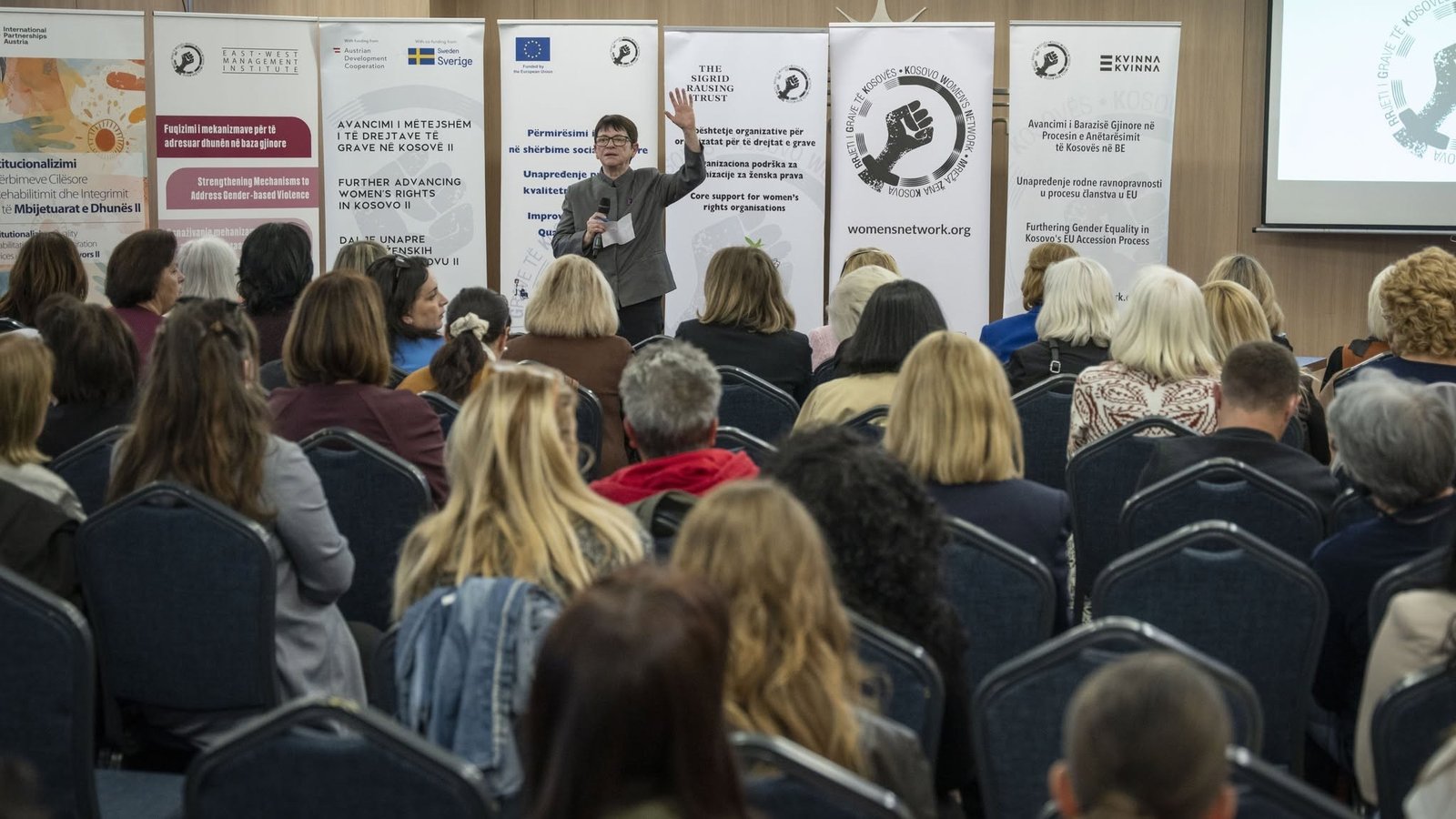
For the first time in several years, on the weekend of 26–28 September, the Kosovo Women’s Network (KWN) had the opportunity to gather its diverse members, Board and staff for a three-day strategic planning meeting. We came together to connect, reflect, strategise and co-create KWN’s new Strategy.

The atmosphere at the opening session on Friday was one of determination and collective strength. KWN’s Executive Director, Igballe Rogova, set the tone with a message that resonated throughout the weekend: “We are here, and we are strong because we are together.”

Her words highlighted the power of solidarity, a theme echoed by Nermin Mahmuti, Chair of the KWN Board, and Mary Ann Hennessey, Head of Office of the Council of Europe Office in Pristina.

Mahmuti underlined how shrinking space and limited support for women’s rights groups makes moments like this gathering even more vital, noting: “You have done wonderful work for the women’s movement even in these uncertain times, and the Network has not stopped working to ensure that feminist activism continues.”

Hennessey emphasised specifically how the conversation around women’s empowerment must shift from rhetoric to systemic change:

“Why do we speak all the time about women’s empowerment? Because we see women today, and since centuries or millennia, as disempowered in most spheres of life – public and private. But lacking power is in no way a natural or inherent condition of women. […] Women do not need to be ‘empowered’ – we need only for embedded systems of oppression, based in misogyny and greed, to kindly take their boots off our neck.”

Hennessey also reminded participants that women’s equality is inseparable from democracy itself: “Our modern European idea of democracy cannot exist without the free and equal participation of all citizens. Democracy makes no sense without the demos – and women are half of it.” She stressed the urgency of ending gender-based violence, transforming education to break cycles of inequality and redefining power “as responsibility, not privilege.” Concluding on a hopeful note, she affirmed: “Like a river, equality may have to bend and wind around obstacles, but it always finds its way to the sea.”

The opening session continued with KWN staff reporting on efforts and results across KWN’s programmes this year.

Inspired, Selvije Rexhepi from KWN member organisation the Association for Women’s Wellbeing “Monsig” enacted a poem that encapsulated the opening speeches, re-emphasising that women can achieve, endure and transform. By repeating the powerful phrase “You can, because you are a woman”, she underlined that being a woman is not a limitation but a strength.

Nena Rikallo from member organisation Ruka Ruci also shared her gratitude, stating: “I would like to highlight the work and dedication of KWN, and emphasise that with their support we are working to improve the position of women in society. The more women we have in decision-making positions, the more democratic our society will become. We can achieve this together with you and with KWN.”

KWN was thrilled to have some of the initial members of KWN with us, reuniting after more than 20 years of solidarity in joint activism. We celebrate with them: the KWN they helped start remains strong and continues to grow!

The second day, members came together to co-create KWN’s new Strategy. Divided in working groups based on areas of expertise, they identified key issues and priorities, to help ensure that KWN’s efforts in the coming years reflect the realities and needs of women and girls from diverse communities, ethnicities, abilities and geographic locations.

This process was not just about drafting a document. It was about building ownership, strengthening bonds among members and ensuring that KWN’s work remains deeply rooted in grassroots voices. The strategy that emerges will shape KWN’s path forward and amplify women’s voices in every corner of Kosovo and beyond.

KWN members and staff engage in a working group discussion on addressing gender-based violence.

KWN staff members extend our thanks to KWN members who made this gathering possible and to the ongoing support and inspiration provided by the KWN Board. As Executive Director Rogova reflected: “A special thanks goes to each of you, the members of the Kosovo Women’s Network, who still are who you are, who have been and continue to be, who are still those who fight and … push forward the gender equality agenda in Kosovo.”

This long-awaited gathering was made possible with the generous support of the Sigrid Rausing Trust Fund.

Women’s Center “ATO” Brings Reproductive Health Education to Rural Kosovo

In Kosovo’s rural villages, conversations about reproductive health are almost absent. Families rarely discuss it, parents often consider it a “shameful” topic, and schools lack organised, comprehensive sexual and health education. Many girls marry at a young age, some due to family decisions, others because of poverty or social pressure. This leads to unplanned pregnancies and health risks, often without support from local institutions. Young people grow up uninformed, relying instead on social media for information, which is often confusing or misleading.

Amid this silence, the Women’s Center “ATO” in Vushtrri decided to step in. With a clear mission to equip young people with accurate information, they launched an initiative to bring reproductive health knowledge and awareness directly to adolescents.

The initiative began through cooperation with the Municipal Directorate of Education and a series of meetings with school principals in five villages: Smrekonicë, Samadrexh, Lumë i Madh, Oshlan, and Maxhunaj. Between November 2021 and March 2022, ATO organised five interactive sessions reaching 107 students, girls and boys alike. When ATO entered the classrooms, they were stepping into a taboo that had lingered for generations. Their sessions opened space for discussions on issues left unspoken at home, including puberty, menstrual cycles, pregnancy, and even sexual harassment.

ATO’s lecturers created something rare: a safe space where questions could finally be asked. The young students spoke candidly about family silence, the choices they face every day, and practices within their communities that shape their health. Something began to shift. What started as information grew into confidence. Students left not only with facts, but with a new sense of agency, carrying healthier values and conversations back to their homes. Volunteers distributed brochures, ensuring that each student had something tangible to take home, a resource they could revisit privately or share with family.

ATO also produced an animated video explaining menstrual health, hygiene, and how to recognize and respond to harassment. Shared widely on Facebook and Instagram, it reached thousands of young people across the municipality, making clear and accessible information available even beyond the classroom walls.

By the time the initiative ended, its echoes had reached more than 20,000 students, parents, and community members, engaged directly or indirectly through trainings, brochures, and online campaigns. Conversations that were once hushed or avoided altogether began to surface. The message was simple, yet transformative: reproductive health is not a taboo, it is a right.

The story of ATO is a reminder that meaningful change often starts in the quietest place, like a classroom where young girls and boys dare to ask the first questions. By bringing students into conversation and equipping teachers, ATO laid the foundation for transformation.

The Women’s Center ATO’s initiative “Reproductive health education” was carried out with support from the Kosovo Women’s Network’s (KWN) Kosovo Women’s Fund (KWF), financed by the Austrian Development Agency (ADA) and co-financed by the Swedish International Development Cooperation Agency (Sida), in the amount of €4,553, from October 2021 to March 2022. The initiative contributed directly to KWN’s Programme “Gender Transformative Education”.

EKW Supports Healthcare for Marginalized Communities in Fushe Kosovo

In the municipality of Fushe Kosovo, marginalized communities face structural and institutional barriers that severely restrict their access to basic rights, especially quality healthcare. Women and girls are particularly affected. Despite constitutional and legal protections, they often encounter discrimination and inadequate treatment in public health services due to their ethnicity and gender. Socio-economic hardship and low formal education can further limit their understanding of healthcare rights, how to access services, and how to report violations.

Adolescent girls face additional obstacles: menstruation remains a taboo subject, causing many to neglect hygiene or avoid discussing health concerns. This can lead to school absenteeism, negatively affecting both their health and education.

To address these inequalities, the NGO EcoKosWomen (EKW) launched an initiative aimed at empowering women and girls to claim their right to health with dignity.

Educating, Empowering and Advocating for Change

Grounded in a holistic approach to community health and empowerment, the initiative worked on multiple levels, raising individual awareness, fostering peer support, and encouraging institutional change.

The first component targeted 38 women from marginalized communities. Through interactive sessions, they deepened their knowledge of legal healthcare rights and learned how to report violations and demand accountability from medical staff. This space also allowed them to share experiences and realize they were not alone in facing systemic neglect.

Simultaneously, the initiative reached 293 girls aged 12-15, including Roma, Ashkali, Egyptian, and Turkish students at a local lower secondary school. A psychologist-led lecture addressed reproductive health, menstrual hygiene, and patient rights, often for the first time in an open and respectful setting.

The third pillar of the initiative focused on institutional advocacy. Six municipal officials participated in a session on improving healthcare access and reducing discrimination. EKW also researched and documented violations in community healthcare, sharing their findings with local authorities to support ongoing advocacy, even beyond the life of the project.

Building Lasting Impact

EKW’s initiative made a clear and meaningful impact. Women who once felt powerless now report greater confidence and knowledge. One woman who participated in the interactive sessions stated, “This project made us feel stronger and more informed. We are now ready to negotiate and demand better healthcare. It has increased our self-confidence and awareness of our health rights.” Another added, “We are now more aware of menstrual hygiene and will share this knowledge with our daughters.” They now understand how to file complaints, what treatment standards to expect, and how to support their daughters in managing reproductive health as a normal part of life.

Girls at the local school have gained greater awareness of bodily autonomy and their rights. According to EKW staff, since the project’s completion the girls have become more willing to seek support from the school psychologist and now discuss personal topics with greater ease. Their increased awareness also has influenced their peers and families, helping to foster broader community change. “The impact on society is evident, as the girls share information with their friends and encourage them to speak openly,” says Shpresa Gosalci, Project Manager at EKW.

At the institutional level, the initiative strengthened authorities’ attention and commitment. The session with municipal officials led to initial steps toward establishing a local budget line for sanitary products in schools – a key policy measure to normalize menstrual hygiene and reduce absenteeism. Building on the healthcare violations documented during the project, EKW has continued its advocacy through periodic meetings with the Directorate of Health and the municipal Gender Equality Officer, supporting the municipality’s ongoing efforts to provide equitable healthcare services to all residents.

This initiative is an example of how lasting progress requires both awareness and structural reform, which can be brought about by addressing community education and institutional change simultaneously. Even modest, well-designed projects can promote dignity, equity, and justice for marginalized women and girls.

EKW’s initiative “Promotion of healthcare; an essential part of life” was carried out with support from the Kosovo Women’s Network’s (KWN) Kosovo Women’s Fund (KWF), financed by the Austrian Development Agency (ADA) and co-financed by the Swedish International Development Agency (Sida), in the amount of €4,937, from June to November 2023. The initiative contributed directly to KWN’s Programme “Right to Health” by encouraging women to advocate for their health rights, and by urging local institutions to address barriers.

Ura Sociale Empowers Youth to Speak Up Against Sexual Harassment

In Kosovo’s schools, silence around sexual harassment has lingered for too long. For many young people, growing up means entering classrooms where the subject is never discussed, textbooks barely touch upon it, and students, especially girls, are left without the knowledge or confidence to recognize or report abuse. This silence carries consequences: young people facing harassment do so alone, afraid of stigma and unsure where to turn for help.

The NGO Ura Sociale, based in Vushtrri, decided to change this reality. Guided by the voices of students, teachers, and families, its initiative was built not only to raise awareness but also to provide practical tools, confidence, and safe spaces.

Throughout the initiative, 125 students from three secondary schools in Vushtrri joined a program that combined awareness-raising, dialogue, and practical guidance. In workshops led by Ura Sociale’s trainers, teenagers spoke openly about what sexual harassment is, how it happens, and how it can be stopped. The sessions moved beyond mere definitions and became a safe space for students to raise difficult questions, reflect on their own experiences, and learn that their voices carry weight.

School staff, too, joined the process. Sixteen educators, school leaders, and psychologists participated in training sessions designed to help them recognize signs of harassment and respond with sensitivity and responsibility. For many, it was the first time they had approached their own teaching through a gender-sensitive lens, realizing how classroom dynamics can either reinforce silence or foster respect and equality.

Teacher Ibrahim Lahu, now the director of the “Lutfi Musiqi” Vocational High School, states: “Students were very engaged in these lectures, showing a clear need for more open discussions on preventing sexual harassment. The project demonstrated that such sessions should become a permanent part of the educational process.”

Parents took part in the initiative through a dedicated meeting where mothers and fathers were encouraged to break long-standing taboos and talk with their children about safety, respect, and dignity.

Step by step, knowledge turned into confidence. Students left the sessions with a clearer understanding of their rights and the courage to speak up. Over 90% of students rated the lectures as highly valuable. What began as guided discussions soon blossomed into a peer-to-peer culture of awareness, with students sharing what they learned also with friends. Through this knowledge-sharing, supported by informational materials and online campaigns, the initiative reached more than 1,500 peers indirectly. Parents, too, walked away empowered with the knowledge and confidence to sustain these vital conversations at home, turning silence into trust and dialogue. Teachers gained practical tools and a renewed sense of responsibility, and many have continued to address the topic of sexual harassment in classes or during school activities, keeping the conversation alive long after the initiative ended.

Ura Sociale’s initiative “Raising Awareness for the Prevention of Sexual Harassment” was carried out with support from the Kosovo Women’s Network’s (KWN) Kosovo Women’s Fund (KWF), financed by the Austrian Development Agency (ADA) and co-financed by the Swedish International Development Cooperation Agency (Sida), in the amount of €4,318, from October 2021 to March 2022. The initiative contributed directly to KWN’s Programme “Gender Transformative Education”.

Supporting Those Who Support Others: KWN’s Ongoing Commitment to Shelter Staff

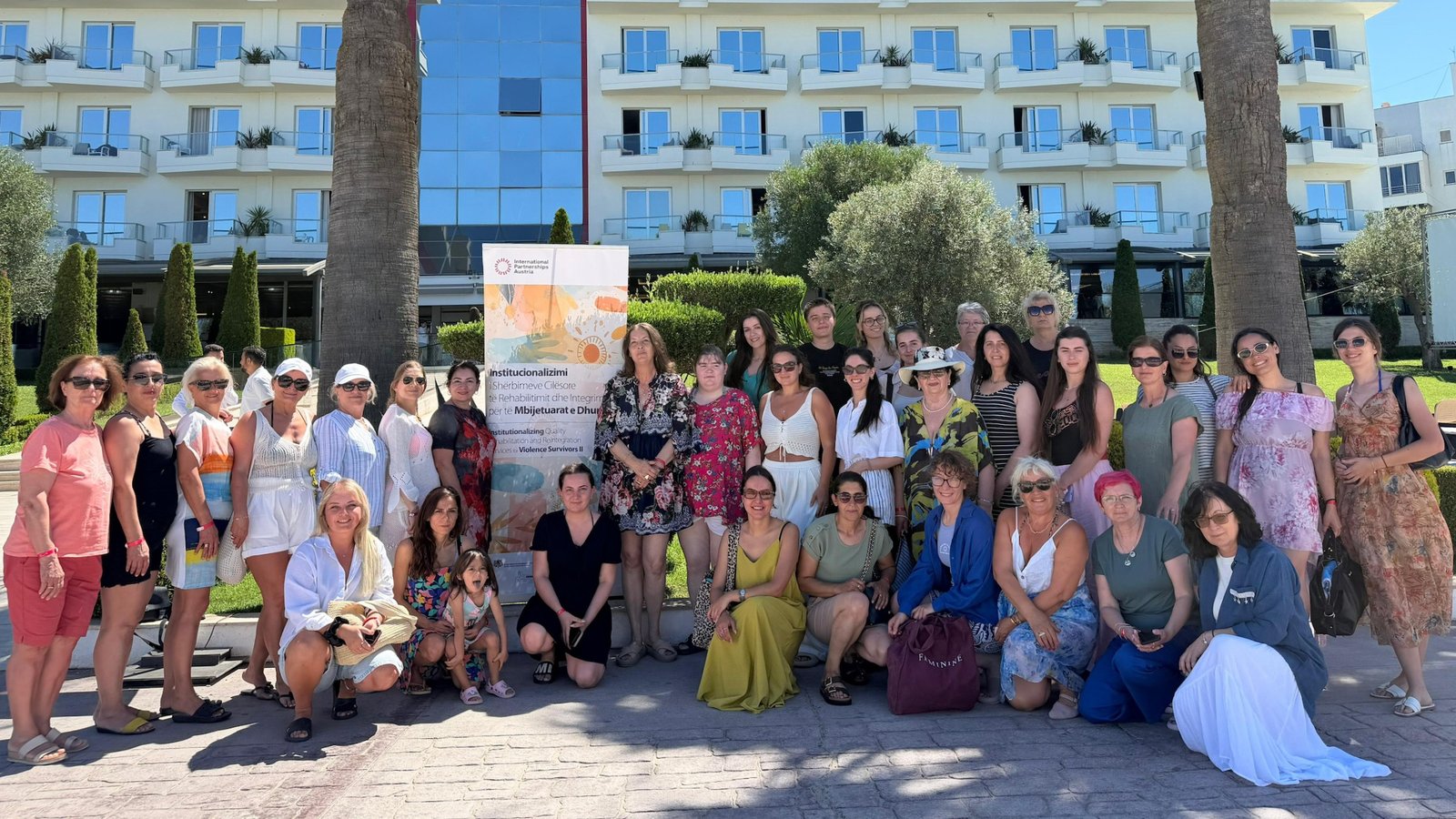
From 22 to 25 September 2025, the Kosovo Women’s Network (KWN) organized the second in a series of workshops designed to support the emotional and professional well-being of shelter staff and service providers working with survivors of gender-based and wartime sexual violence.

As in the previous workshop, clinical psychologists Melis Bilibani and Tringa Lajqi led sessions on recognising and preventing burnout, fostering team resilience, practising clinical and peer supervision, and establishing healthy emotional boundaries in the workplace.

The sessions offered participants a safe space to exchange experiences and reflect on the emotional challenges of their work, while also acquiring practical strategies for self-care and stress management.

“During the training, I gained additional professional knowledge and understood the importance and the humanitarian role of the staff working in shelters. I am very honored and feel good to be part of this event,” said Mimozë Sopaj, Psychologist at The Kosova Rehabilitation Centre for Torture Victims (KRCT).

Participants warmly welcomed the workshop, emphasizing how it strengthened their skills and renewed their commitment to supporting survivors.

“Feminist activists and shelter staff give so much of themselves to support others, often at the expense of their own well-being. These retreat workshops are a chance for them to rest, reflect, and recharge — so they can continue their vital work,” says Adelina Berisha, Program Director on addressing Gender-Based Violence, at KWN.

This activity was developed within the Initiative for Institutionalizing Quality Rehabilitation and Integration Services for Survivors of Violence, funded by the Austrian Development Agency (ADA), with funds from Austrian Development Cooperation.

KWN Participates in the Berlin Process Civil Society and Think Tank Forum 2025

On 22-23 September, Kosovo Women’s Network (KWN) Board Member Maria Berishaj took part in the Berlin Process Civil Society and Think Tank Forum 2025, held in Podgorica, Montenegro.

The Berlin Process, launched by Germany in 2014, is a platform aimed at strengthening cooperation between the six Western Balkan countries and EU member states. Since its inception, it has been carried forward through annual summits hosted each year by a different country – this time, the United Kingdom.

Alongside the Summit, the process features ministerial meetings and several side events. One of them is the Civil Society and Think Tank Forum, which provides civil society organisations and think tanks with the opportunity to engage directly with policymakers from the region and the EU. In doing so, they bring their perspectives into an otherwise high-level political process and help ensure that citizens’ diverse needs and priorities are adhered to in the Western Balkan countries’ EU integration processes.

This year, the Civil Society and Think Tank Forum brought together more than 130 civil society representatives to exchange ideas and solutions on six key topics shaping the region: Common regional market and growth; Gender and diversity; Reconciliation and dealing with the past; Environment, energy and decarbonization; Security; and Good governance.

“A particularly powerful discussion unfolded around gender and diversity,” says Maria Berishaj. “Despite formal commitments, reforms remain fragmented, underfunded, and increasingly undermined by rising anti-gender movements and shrinking civic space. Marginalized groups – including women, LGBTIQ+ persons, Roma, and youth – continue to face structural discrimination, while grassroots CSOs are often sidelined and underfinanced.”

To tackle these issues, the panel on gender equality recommended:

  • Mainstreaming gender equality in all reform processes, ensuring integration into growth plans, common regional market, green transition, and digital transformation agenda.
  • Launching a Gender Innovation Fund to support intersectional CSO-led pilot initiatives and institutional reforms in areas such as care economy, reconciliation, digital inclusion, and local democracy – designed to be transparent, participatory, and accountable.
  • Providing sustainable financing for feminist infrastructure, including core long-term funding for feminist CSOs and independent gender research centers in the Western Balkans.
  • Ensuring direct financing mechanisms for national and local-led organisations, particularly those working with structurally excluded communities, to avoid over-reliance on international intermediaries.

By amplifying these voices, the Civil Society and Think Tank Forum demonstrated that meaningful change in the Western Balkans depends not just on high-level commitments, but on inclusive, well-supported, and diverse civil society participation.