Justice Institutions Continue to Encourage the Abusers of Young Women

Download File

The Kosovo Women’s Network (KWN) with deep concern followed the report made today by Kallxo.com regarding the decision of the Basic Court in Peja, which sentenced the accused KP to only eight months in prison for abusing a 15 -year girl in 2012.

According to the law, this criminal offense is punishable by 5 to 20 years in prison, the Basic Court of Peja has failed to impose the deserved punishment for violence against girls, thus reflecting once again the lack of institutional response to cases of gender-based violence.

The court used unacceptable and scandalous reasonings to this decision. Reasoning such as,  “the victim had not been injured” and “the accused behaved correctly” only prove that the victim was not put as a priority by the Basic Court in Peja.

KWN estimates that these low-level decisions are only motivating perpetrators even more, and are demotivating women and girls to report violence against them.

Therefore, through this press release, KWN requests the Basic Prosecution in Peja to clarify whether they have appealed against this decision to the Court of Appeals. This is recalling that the Basic Prosecution is responsible for handling these cases by protecting the victims and following the cases to the end, and not just by sending the indictment.

KWN reiterates its call on responsible justice institutions such as the Courts, the Prosecution, and the Kosovo Police to prioritize cases of violence against women and girls, always focusing on a victim-based approach.

KWN Welcomes Activists from the Balkans: Together Combating Gender-Based Violence

KWN Welcomes Activists from the Balkans: Together Combating Gender-Based Violence

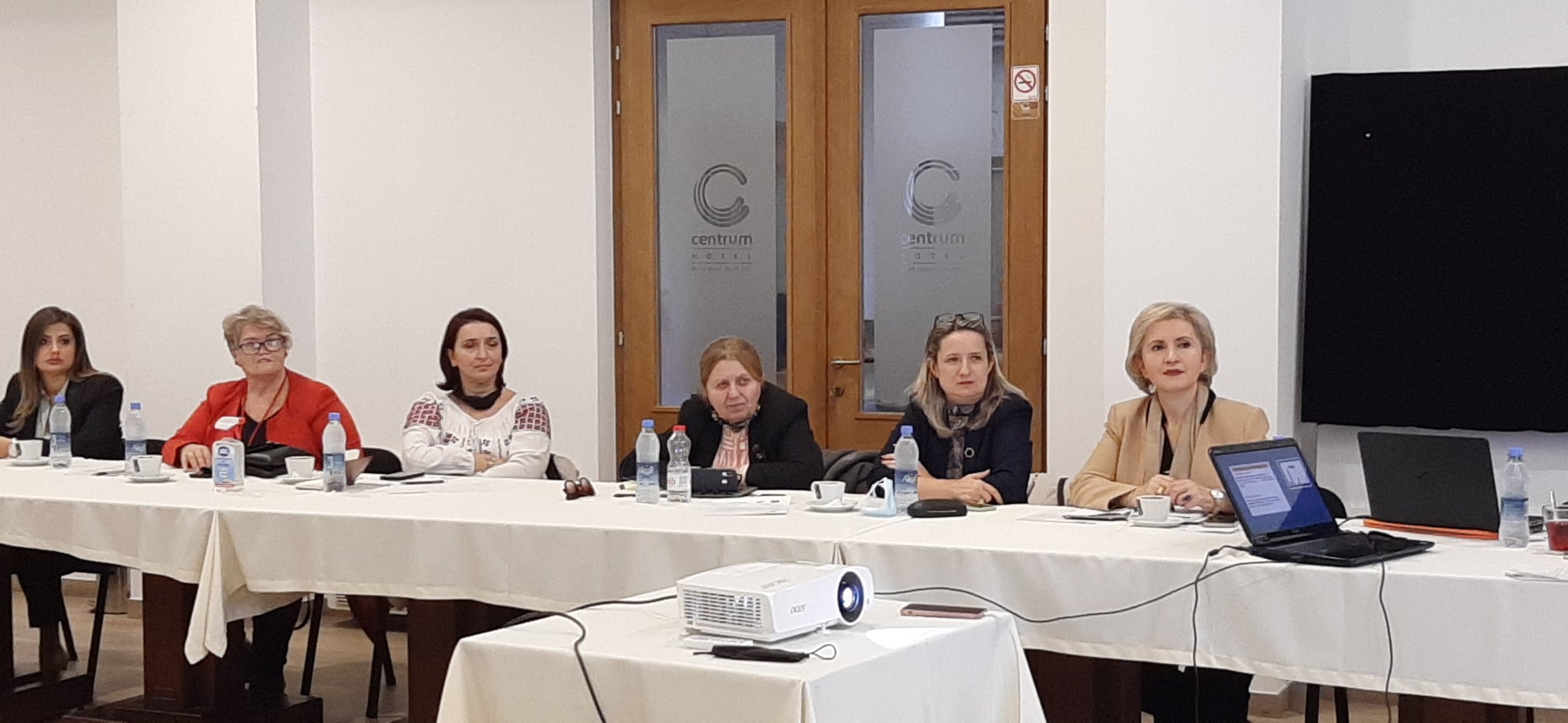
Three days in a row (October 19-21), the Kosovo Women’s Network (KWN) hosted a regional meeting held between partner organizations in the “Institutionalizing Quality Rehabilitation and Reintegration Services for Survivors of Gender-Based Violence” initiative.

The organizations participating in this workshop were; Autonomous Women’s Centre from Serbia, National Network Against Violence against Women from North Macedonia, Women’s Rights Centre from Macedonia, Gender Alliance for Development Centre, Albanian Women’s Empowerment Network from Albania and Foundation United Women from Bosnia and Herzegovina.

The meeting was opened by KWN Executive Director Igballe Rogova, who stressed the importance of joint meetings between women in the Western Balkans.

We are very happy that for these three days we will be together and we will discuss more about services, rehabilitation and reintegration of survivors of gender-based violence. During these days, we will have the pleasure to have you in our KWN offices as well, in order to have a more comfortable environment and to work together,” she said.

Rogova also stressed that meetings with partners are always important for KWN, so that experiences can be shared and opportunities for further cooperation seen in the future.

After the opening, the partners conversed more about the advocacy opportunities for creating social housing for victims of gender-based violence.

“In addition to victims of gender-based violence, we need to include victims of wartime violence in these areas,” said Alexandra Nestorov from the Autonomous Women’s Center.

Further, in the meeting femicide was discussed as a topic. The partners spoke on cases of femicide in each state, and creating a joint video for the six states in order to reflect the femicide in each state, as well as its treatment by the responsible institutions.

Furthermore, the partners shared their experiences from anti-feminist protests in the respective states, as well as the treatment of femicide in court proceedings.

The partners also discussed the impact of the COVID-19 pandemic on the increase in cases of gender-based violence, their treatment by institutions and the sheltering of women in shelters during home isolation measures.

This three-day workshop was supported by the Austrian Development Agency (ADA), through the three-year initiative “Institutionalizing Quality rehabilitation and reintegration Services for Violence Survivors”.

“Humanus Vita” Holds Information Session with High School Seniors of Drenas to Combat Sexual Harassment

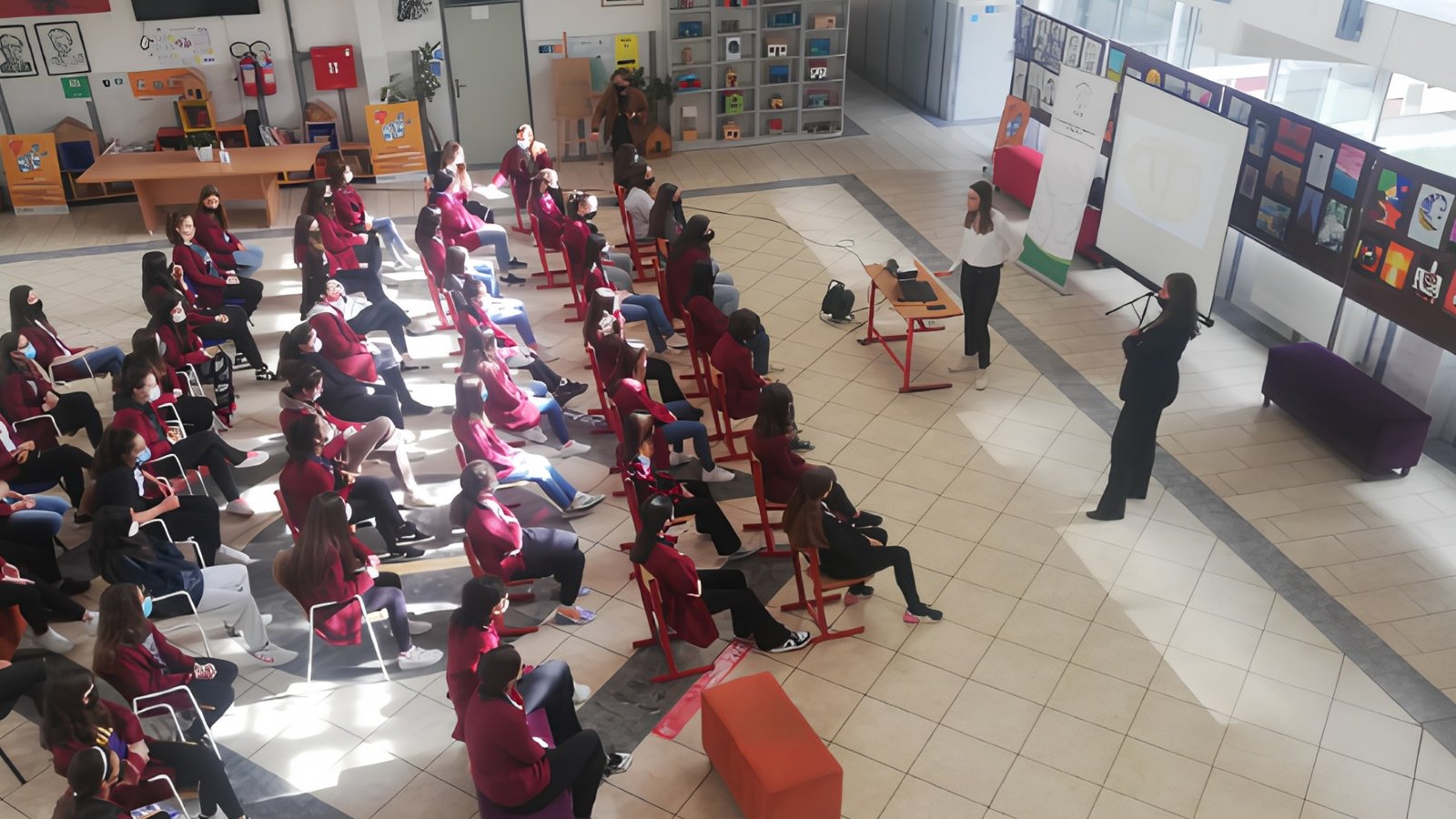
The member organization of the Kosova Women’s Network (KWN), “Humanus Vita”, held the first of a series of information sessions for students in the town of Drenas. The sessions are part of the “Awareness of young people about harassment and sexual assault and the importance of early reporting” initiative, which received funding from the 15th round of the Kosovo Women’s Fund (KWF).

The first sessions were held on October 21st at the Technical High School “Fehmi Lladrovci” in Drenas, where students discussed about their perceptions of harassment and sexual assault.

Trainer Valentina Bejtullahu, explained the concepts of gender-based violence and sexual assault, and informed the participating students about the local and international legal framework that regulates this issue. Particular attention was paid to combating gender stereotypes, identified as some of the most common causes of sexual harassment.

“If there were no gender stereotypes from society and the media, there would be fewer harassment cases. Therefore, young people should avoid generalisations, be open-minded, and make the fight for equality part of their daily lives,” she added.

Meanwhile, student Arlinda Bërbatovci said that everyone should have the freedom to be themselves, without fearing harassment or prejudice.

“One of the first things we are judged on is the way we dress. But this in no way gives anyone the right to harass someone else,” she said.

The second part of the sessions was dedicated to the importance of immediate reporting of sexual assault and harassment to the responsible institutions. Students were advised to work closely with school pedagogues and management, and their families.

A total of 720 students are expected to benefit from this cycle of information sessions with middle school and high school students in the municipality of Drenas, while the activities will continue with the local educational institutions.

This initiative of “Humanus Vita” is supported by the Austrian Development Agency (ADA), through KWN’s “Further Advancement of Women’s Rights in Kosovo II” initiative, co-financed by the Swedish International Development Cooperation Agency (Sida), through the Swedish Embassy in Prishtina.

KWN Part of 1325 & 2250 Forum, Women and Youth for Peace and Security

On 20th of October, the OSCE Dialogue Academy for Young Women alumnae hosted the panel discussion Introduction to best practice examples and actions when implementing UNSCR 1325 & 2250.

Among the invited experts and keynote speakers, Majlinda Behrami, co-author of the research “A Seat at the Table” conducted by Kosovo Women’s Network (KWN) was also present as a panelist.

During this panel, Behrami presented the findings and recommendations of the report focusing on the needs and challenges of women and young women in Kosovo.

Behrami pointed out the main obstacles that women and young women face in regard to their involvement in peace and security processes but also their needs and priorities regarding the Dialogue between Kosovo and Serbia.

This activity is part of the online educational conference “1325 & 2250 Forum, Women and Youth for Peace and Security” started on 4th of October and will continue till 30th October.

The Conference gathered experts from academia, the non-governmental sector and international organizations aiming to raise awareness, dialogue, and discussions about the United Nations Security Council Resolution (UNSCR) 1325 on Women, Peace and Security and the UNSCR 2250 on Youth, Peace and Security.

KWN Demands Urgent Response by Justice Institutions to the Rape Case of 12-Year-Old Girl in Kamenica

Download File

Through this press release, Kosovo Women’s Network (KWN) supports the request of the Basic Prosecution in Gjilan to take detention measures on M.J. who is suspected of raping a 12-year-old girl in Kamenica in October of this year.

The suspect being detained for 48 hours, and given the severity  and sensitivity of the crime, we call on the Court of Gjilan to treat this case in accordance with the Criminal Code of Kosovo, Article 227 for the offense “Rape”.

KWN specifically requests that this case to be treated with gender sensitivity, as enshrined in the Istanbul Convention, and to provide appropriate psycho-social treatment to the victim.

We also announce through this press release that KWN will follow the case closely and seek justice.

KWN will not stop until violence against girls and women is not treated only as daily news or as a private matter.

KWN Board Holds its Second Meeting this Year

The Board  of Kosovo Women’s Network (KWN) held its second meeting for 2021 on October 15 and 16.

The narrative and financial report was presented at this meeting. Moreover, KWN’s new strategy was discussed as well ass KWN activities and advocacy undertaken during this time were also part of the Board discussion.

Nicole Farnsworth, Program Director and Lead Researcher, KWN, has further led the discussion on philanthropy, as one of the areas in which KWN is focusing as part of KWN’s fundraising strategy.

Board members once again praised KWN’s commitment and activities towards advancing the position of women and girls in Kosovo.

Read HERE KWN board meeting in 2020.

“Shqiponjat e Dardanës” Advocates for Women Participation in Local Elections

The member organization of the Kosovo Women’s Network (KWN), “Shqiponjat e Dardanës “, beneficiary of the 15th round of the Kosovo Women’s Fund (KWF), has held meetings with women and young women from different villages in the municipality of Lipjan and Gracanica.

The purpose of these meetings was to advocate for the support of female candidates in the local elections of October 2021, as well as to raise awareness of women and young women from rural areas about the role of their vote.

At the meeting held in Kishnica on October 14, citizens from different communities living in Gracanica were present.

Havushe Bunjaku, the executive director of the NGO “Shqiponjat e Dardanës”, introduced the participants to the candidates from all communities, and thanked KWN for the support provided for the implementation of these informative meetings. Moreover, she mentioned the importance of increasing the participation of women in politics and decision-making.

This image has an empty alt attribute; its file name is IMG_6619-1-1024x683.jpg

The participants explained the reasons why their municipality needs women in the assembly, and why they will vote for more women.

“A woman in the municipal assembly means that the voice of all young women and women would be heard. The main problem that needs to be addressed is employment, in order to be independent and to prevent early marriages,” said participant Samira Selimovic.

This image has an empty alt attribute; its file name is IMG_6696-1024x720.jpg

“I will vote for women because they actually understand our daily problems. We need them to help us in labor and funding our initiatives,” said another participant, Raba Salievic.

This image has an empty alt attribute; its file name is IMG_6684-1024x727.jpg

As for Rita Gashi, self-employed in the collection of medicinal plants, it is important to have care for children.

“I am a mother of five children and my biggest obstacle has been lack of a kindergarten. I believe that a woman in the assembly would take this issue seriously, so that women have the opportunity to successfully become working mothers.” she said.

This image has an empty alt attribute; its file name is IMG_6673-1024x683.jpg

The activities of NGO “Shqiponjat e Dardanës” will continue after the elections, when meetings will be organized with women elected to the municipal assemblies of Lipjan and Gracanica, as well as with leaders of political parties.

These activities are supported by the European Union (EU) Office in Kosovo through the initiative “Strengthening Women’s Participation in Politics”, within the 15th round of the KWF. Recall that this round was also supported by the United Nations People’s Fund (UNFPA), and the Austrian Development Agency (ADA), the operational unit of the Austrian Cooperation Agency.

Aureola Holds Meetings to Increase Women’s Participation in Decision-making

Following the initiative “Increasing women’s participation in decision-making”, the member organization of the Kosova Women’s Network (KWN), the Women’s Association “Aureola”, has held meetings in several cities of Kosova with candidates for municipal assembly. 

The executive director of the organization “Aureola”, Sanije Grajcevci, said that they are thankful for benefiting from the 15th round of the Kosova Women’s Fund, because such initiatives are necessary to increase women’s participation in decision-making.   

At the meeting held in Fushë Kosovë on October 8, the municipal assembly candidates emphasised the need for institutional support for women. 

Assembly candidate Hasime Kostanica, mentioned the main factors that hinder the inclusion of women in politics, but also in other areas. 

Many schools in Fushë Kosovë do not offer preschool education, which is directly related to the role of women in child care and the inability for her to engage in other activities. In public kindergartens, only employed mothers have the right to register their children. But the same should apply to unemployed mothers so that they have time to complete training and be prepared for the labor market”. 

Further, the other candidate, Vildane Latifi, said that women need support in financing and employment. 

“It is a saying that if we want to invest in the sustainability of the community, we must invest in women. Therefore, our goal is to strengthen the role of women in society as much as possible. Women should be supported and should have leadership positions”. 

Whereas, for the candidate Vjollca Tërnava-Konjusha, who is running for the third term, the cooperation between women assembly members is very important. 

“We have always had good relations with each other, to work for the interest of women. This cooperation must continue, in order to work together to strengthen the position of women in society and to inspire other women to get involved in politics”. 

Similar meetings were held with candidates from the municipalities of Prishtina, Kastriot, Lipjan, Drenas, and Podujeva. In all these meetings was discussed the work done by assembly members to raise and address the problems of women, as well as to strengthen their role in society. 

The next activities of the Women’s Association “Aureola” include meetings with women candidates for mayors. 

Aureola’s initiative “Increasing women’s participation in decision-making” was supported by the 15th round of KWF, with financial support from the European Union (EU) Office in Kosova.
*****

This round has also received support from the United Nations People’s Fund (UNFPA) supported by the Austrian Development Agency (ADA), the operational unit of the Austrian Cooperation Agency. 

In the following links you can read more about all the initiatives supported by the 15th round of FGK. 

Kosovo Women’s Fund Allocates €109,312 for 23 Organizations in Kosova 

Kosovo Women’s Fund Allocates Additional €49,673 for 11 Organizations in Kosovo 

KWN starts the campaign “Vote for more women in local KWN elections”

Today, on October 11th, the Kosova Women’s Network (KWN) launched the field campaign “Vote for more women in local elections”.

Around 80 volunteers will talk to citizens for five days (October 11-15) going from door to door in 21 municipalities in Kosova. They will discuss with women and men voters the importance of voting for more women in the upcoming local elections on October 17, 2021.

The Law on Gender Equality (LGE) guarantees equal gender representation in all areas, including politics. However, contrary to this law, to date, neither political parties nor municipalities have ensured equal participation of women and men in public life.

Therefore, it is up to us as citizens to achieve equality!

KWN encourages all citizens to vote for women who will best represent the interests of citizens in municipalities and municipal assemblies, as well as strive for gender equality.

Supporting women’s participation in politics and decision-making is part of KWN’s Strategy 2019-2022. We also recall that KWN campaigned for this in the elections of 2017, 2019, and in the national elections of 2021, and will continue to support, protect and promote the rights and interests of women and girls throughout Kosova, regardless of their political, religious, ethnic or sexual orientation.

KWN values ​​elections as an essential element of a democratic state, and gender equality as a basic human right. We call for more votes for women in these local elections, as a necessary condition for fighting the institutional tradition[LM1]  that has unjustly deprived women of participation in politics and decision-making processes.

Also, let us be reminded that these elections are being held only a few months after the early national elections held on February 14, 2021, in which the representation of women in the Assembly of Kosovo increased by five seats (compared to previous elections of 2019), and also this time more women were elected without a quota rather than with it[LM2] .

Therefore, on October 17, whichever list you choose, vote for more women in the municipalities!

This campaign is implemented as part of the initiative “Strengthening Women’s Participation in Politics“, and is supported by the European Union (EU) Office in Kosovo.

KWN member organisations supporting the implementation of this campaign:

Active Females of Gjakova – Gjakovë

Centre for Education and Development “Elita” – Lipjan 

Family Care and Education Association – Gjakovë

Female Emancipation Association ALMA – Pejë

Hendifer – Ferizaj

Independent Women’s Association “Hareja” – Rahovec 

Local Reforms Organisation (EULOC) – Viti

Mitrovica Association of Persons with Disabilities “Handikos Mitrovica” – Mitrovicë

NGO Drugëza – Skënderaj

NGO Women’s Centre for Rural Development – Novobërdë

NGO Women’s Centre “ATO” – Vushtrri 

Organisation of People with Muscular Dystrophy of Kosova (OPMDK) – Prizren

Psychotherapists in Action – Gjilan

Ruka Ruci – Fushë Kosovë, Graçanicë, Partesh, Ranillug, Kllokot, Leposaviq, Mitrovicë e Veriut, Zubin Potok – Zveçan

Women’s Alliance for Integration – Prishtinë.  

KWN Recommends How World Bank Can Better Support Women’s CSOs

On 7 October, Kvinna till Kvinna organized a panel at the World Bank/IMF Civil Society forum on the role of the World Bank in combatting economic gender inequality in conflict-affected countries.  The event was hosted by Petra Totterman Anforff, Secretary General of the Kvinna till Kvinna Foundation, who presented their report Challenging the norms – Global stories of women’s economic empowerment

Panellists discussed how COVID-19 has furthered pre-existing gender inequalities, especially in crisis-affected countries. They emphasized the need for a feminist recovery.  

Audience members asked important questions of the panellists, such as whether the World Bank is undertaking ex-ante and ex-post gender impact assessments to see how its macroeconomic policies are affecting gender (in)equalities.  

Nicole Farnsworth from KWN engaged briefly with three recommendations for the World Bank, deriving from KWN and other women’s rights organisations’ research in Kosovo and the Western Balkans. The main recommendations included: 

  • World Bank representatives need to consult women’s rights organisations (WCSOs) and movements more in planning and implementing interventions.  
  • The World Bank should strongly consider reviewing its financing modalities to better enable the contracting of WCSOs to provide expertise to the World Bank; and to earmark long-term, flexible grants for supporting WCSOs and movements, as strategic partners in instigating change.  
  • The World Bank should support WCSOs politically and financially, as experts, in utilizing the Public Expenditure and Financial Accountability (PEFA) Supplementary framework for assessing gender responsive public financial management in their countries; should support WCSOs’ advocacy for governments to institutionalise gender responsive budgeting as per the PEFA gender framework; and must practice what it preaches by ensuring that all programs that it funds use gender responsive budgeting, especially World Bank budget support to governments.  

Panellists included Sofija Vrbaski from the Kvinna till Kvinna Foundation who spoke about economic inequalities in Western Balkans in light of the pandemic and how the regional coalition to address gender-based discrimination at work has used advocacy to address inequalities. Dr. Hana Brixi, Global Director for Gender at the World Bank, presented how the World Bank views its role in supporting the women’s movement and economic gender equality in conflict affected countries. Xavier Devictor, Manager for Fragility Conflict and Violence at the World Bank spoke about how the World Bank works to have a dialogue with women’s rights organisations in conflict-affected countries. Rula Asad, Executive Director of the Syria Female Journalist Network, spoke on the challenges female journalists face working in Syria and how the Syrian Female Journalist Networks has combatted patriarchal structures within media outlets. 

KWN has been engaged in gender-responsive budgeting since 2011, and it is part of the Gender Budget Watchdog Network (GBWN), through which CSOs are monitoring and supporting government efforts to institutionalize gender-responsive budgeting in the Western Balkans and Moldova. KWN recently published The Pandemic Knows No Gender”? A Gender Fiscal Budget Analysis of the Government of Kosovo’s Response to the COVID-19 Pandemic from a Gender Perspective, which recommends steps towards a feminist post-COVID-19 recovery. KWN shared this and CSOs’ similar reports during this event, available on the GBWN website. The network has also monitored Western Balkan governments’ progress in implementing the Sustainable Development Goal indicator 5c1 on gender budgeting.  

KWN’s research with Kvinna till Kvinna and other women’s rights groups in the region, entitled Where’s the Money for Women’s Rights?, involved interviews with more than 241 diverse women’s rights groups across the Western Balkans. It demonstrated that WCSOs play a crucial role in advocating for evidence-based legal and policy changes, providing essential services not provided by states, and consistently pushing for transforming social gender norms. Yet, they are sorely under-financed and need long-term, flexible, core financing towards realising their long-term strategic interventions towards transforming gender norms and contributing to gender equality.