The Exhibition “Break the Silence: Ending Violence Behind Walls” Returns to Pristina

The Exhibition “Break the Silence: Ending violence behind walls” has continued the journey it began last year.

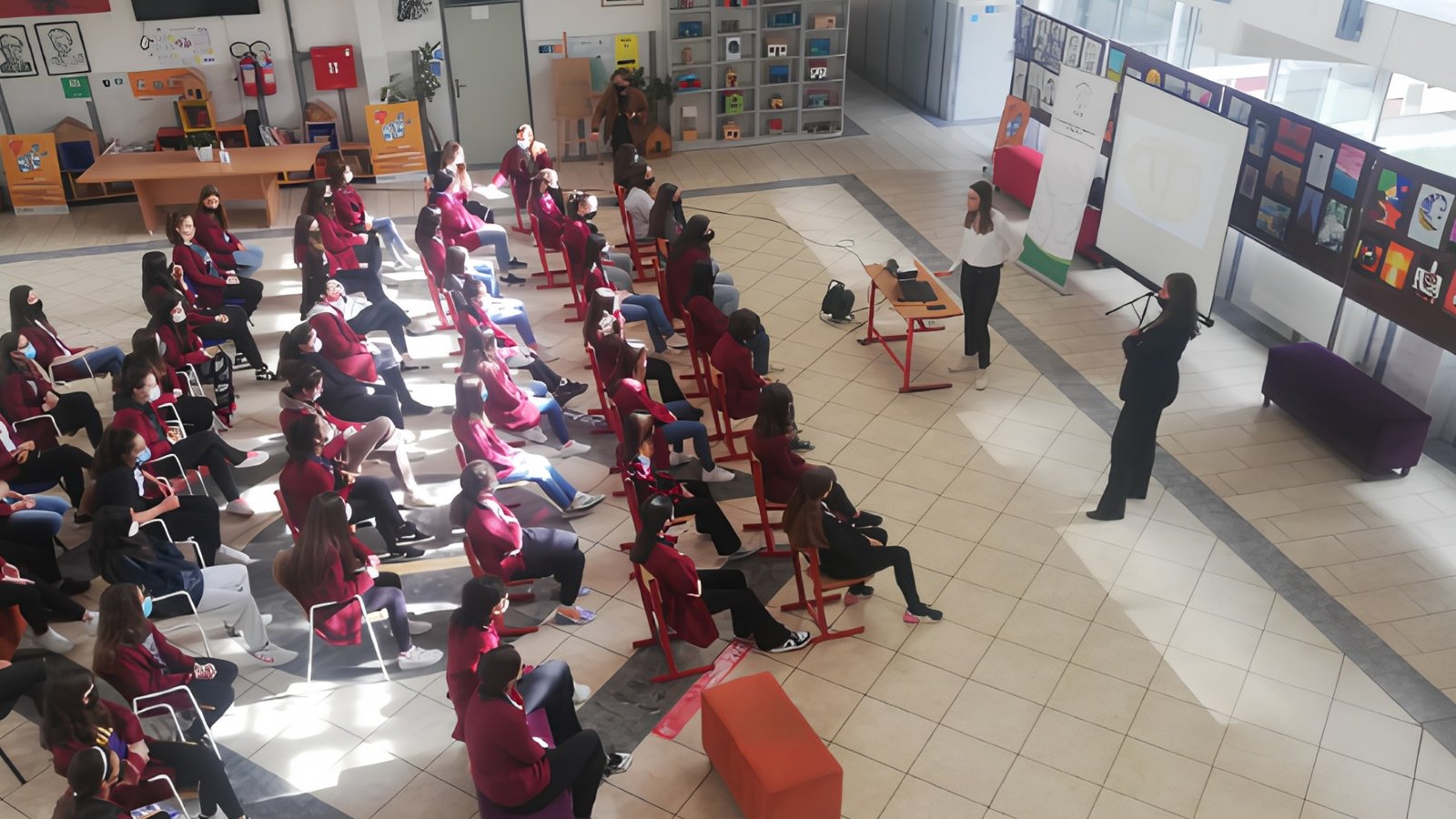
Today, the citizens of Pristina had the opportunity to visit this exhibition, which symbolically portrays a labyrinth that reveals some of the real stories and experiences of women and men who have suffered domestic violence collected by the Kosovo Women’s Network (KWN).

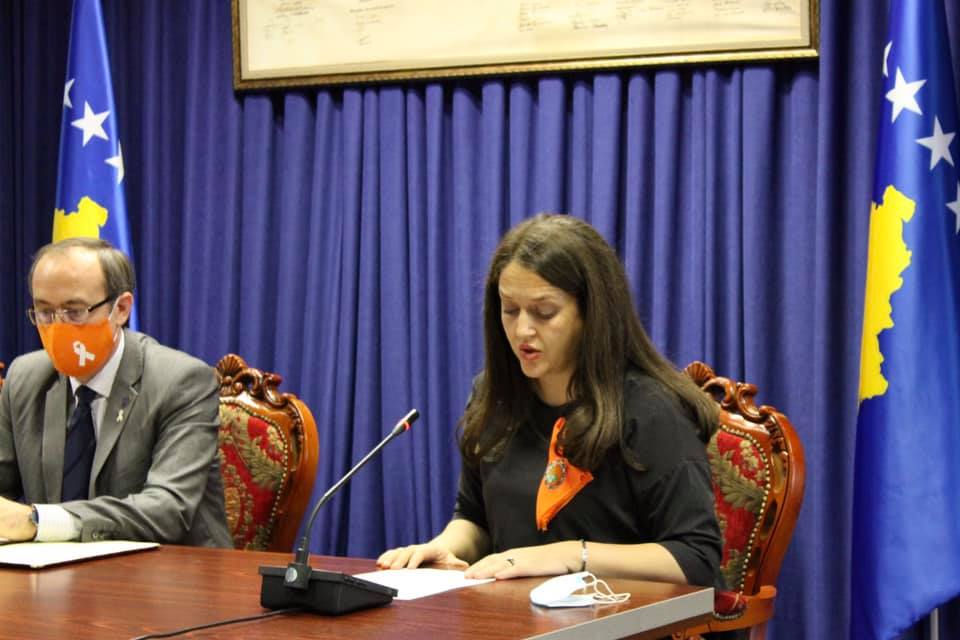
Adelina Berisha, Program Manager for Gender-Based Violence, opened the exhibition and mentioned that this event symbolically coincides with the 20th anniversary of United Nations Security Council Resolution 1325 on Women, Peace and Security.

“The exhibition has continued this year, knowing that, unfortunately, there was an alarming rise in domestic violence cases during the quarantine and movement restrictions. Violence against women must be condemned by each of us, without any compromise or justification”, said Berisha.

“Retaining Walls” was a part of exhibition that stirred a great deal of interest among the citizens. Through the stories hung in frames on these walls, the visitors were informed about what the key institutions provide to address this form of violence and how the citizens can reach those institutions to exercise their rights.

The Exhibition “Break the Silence: Ending violence behind walls” was held in Gjilan, Gjakovë, Pejë, Ferizaj, Prizren, Mitrovicë, and Drenas last year.

This exhibition was supported by the European Union (EU) through UN Women (#EVAW), the Austrian Development Agency (ADA).

20 Years of Resolution 1325: Kosovo Needs to Implement This Resolution

Download File

Dear Prime Minister of the Republic of Kosovo Mr. Avdullah Hoti,

Dear State Coordinator for the Dialogue with Serbia Mr. Skender Hyseni,

On the eve of the 20th Anniversary of United Nations Security Council Resolution (UNSCR) 1325 on Women, Peace, and Security, the Kosovo Women’s Network (KWN), as a network of 156 member organizations, request that the Government of Kosovo ensure women’s meaningful participation in negotiations, peace, and security processes, as guaranteed by this Resolution.

For twenty years, KWN has used UNSCR 1325 on Women, Peace, and Security to fight for gender equity, peace, and security in Kosovo. Resolution 1325 expresses concern that the vast majority of persons affected by armed conflict are women. Thus, the Resolution stresses the importance of recognising women’s role in the prevention, solution, and consolidation of peace. 

Even though recent research conducted by KWN, entitled Where Is My Seat at the Table? evidences the substantial contributions of (young) women to peace and security during and after the war, women’s priorities and needs have not been addressed during the negotiations or dialogue with Serbia. Therefore, drawing from input from 434 diverse women and young women from different ethnic groups living in Kosovo, we ask the Government of Kosovo to address women’s main priorities during the ongoing dialogue with Serbia:

  1. Ensure the meaningful participation of women in decision-making related to the negotiations and dialogue, both through participation in the official negotiation team and through public consultations;
  2. Request that Serbia recognise publicly and apologise for crimes committed against civilians by the state; 
  3. Ensure the return of missing persons;
  4. Prosecute people who committed war crimes, including sexual violence perpetrated during the war, thereby ensuring justice; and
  5. Secure compensation and reparations for the state’s destruction of civilians’ livelihoods, including the return of pensions.

KWN will continue to closely monitor the implementation of Resolution 1325 by the Government of Kosovo and the involvement of women in decision-making. We remain at your service to provide names of qualified persons and to support in the organizing of public consultations, towards ensuring a democratic, transparent, and participatory process which is crucial for lasting peace and security in Kosovo, Serbia, and the region.

Thank you for your attention and immediate action on this issue.

Sincerely,
Igballe Rogova, Ekzekutive Director of Kosovo Women’s Network

Advocacy for Women’s Rights at Work Continues

Representatives of civil society organizations gathered on October 28 to discuss next steps on joint advocacy for the introduction of Maternity, Paternity and Parental Leave in the Labour Law.

In this meeting, the Kosovo Women’s Network (KWN) stressed the need for the Labour Law to be in accordance with European Union (EU) directives, recalling that the current draft of the Labour Law is discriminatory against women. Therefore, an amendment in line with the EU Work-Life Balance Directive is a priority.

Igballe Rogova, KWN Executive Director, said this meeting was important so that all recommendations from women’s organizations can be considered in the amendments of labour law. 

“The unity of organizations working for women’s economic rights is essential to the amendment of the Labour Law,” she said.

The next meetings of this working group will be held under the organization of the Women’s Economic Forum.

All organizations present, as; Women for Women Kosovo, Riinvest Institute, Kosovo Centre for Gender Studies (KGSC), GAP Institute, Democracy for Development (D4D), Friedrich-Ebert-Stiftung Kosovo-FES, Kosovo Stability Initiatives and the Kosovo Women’s Network (KWN), pledged to continue working until women in the labour market enjoy their full rights.

EULOC Successfully Completes Their Initiative on Promoting Gender Responsible Budgeting at The Local Level

Organization for local reforms “Euloc” within the initiative “Gender budgeting policies and practices at the municipal level” held meetings and workshops with local government officials to discuss various topics on Gender Responsible Budgeting.

Beneficiaries of this initiative were a total of 71 participants (35 women and 36 men), officials from the Directorate of Urbanism, Planning and Environmental Protection, representatives from the Office of Correction, representatives from the Municipal Directorate of Education, Directorate of Health and Social Welfare, Municipal Assembly, Decision-making Committee, Directorate of Public Administration, Directorate of Culture, Youth and Sports, Main Family Medicine Center – Viti, representatives from the Communities Committee, the Policy and Finance Committee, the Municipal Office for Returns and Communities , Office of Civil Status, Office for Gender Equality, Office of Finance, Office of the Mayor, Office for Communication and Information, Center for Social Work, Directorate of Public Services, representatives of non-governmental organizations, Youth Center. A large number of these representatives were trained on topics such as: Gender structure model, gender budget mainstreaming and standard gender budgeting tools

Latife Neziri, Training Consultant, emphasized the importance of involving women and men in all stages of the decision-making process.

“Gender budgeting is a budget analysis from a gender perspective, resulting in differences in its impact on men and women,” Neziri said.

On 18 June in Viti, EULOC hosted a roundtable in order to present the findings and recommendations from this initiative. Participants in the discussion panel were municipal officials, as well as representatives from NGO Euloc, Florim Brahimi, Executive Director of EULOC, Latife Neziri, Project Trainer, and Melihate Osmani, Manager at EULOC.

The results from the research were presented by Florim Brahimi where he showed graphics and corresponding percentages from the survey conducted in 11 villages of the Municipality of Viti.

“Based on the meetings with various groups, it has been recommended that more women and young people should be more involved in municipal committees so that their voices can be heard.” said Brahimi.

 The project coordinator, Melihate Osmani, added that in the framework of this research, during the period of November 2019 to January 2020, volunteers interviewed 200 random respondents (women and men) from small villages in the Municipality of Viti, such as: Viti, Smirë, Pozheran , Drobesh, Beguncë , Fshati Ri , Kabash , Vërban , Skifteraj, Tërpezë, Bincë.

“This survey research focused on gender equality, gender representation and economic empowerment of women, and the obtained results show that the citizens of the Municipality of Viti do not have much knowledge in these areas. Therefore, we as an organization need to continue this project to have more gender involvement in the future.” said Osmani.

The findings of this project, as well as the recommendations obtained from the trainings, can be found in the report of the Organization for local reforms “Euloc”. 

This initiative is supported by the Kosovo Women’s Fund (KWF) and funded by the European Union (EU) Office in Kosovo.  

In addition to the EULOC organization, there are 17 other member organizations benefiting from the 13th round of the KWF. You can read the full list HERE

KWN Members Cooperate on Drafting a Feminist Strategy

Over the course of three days (21-23 October), representatives of around 90 member organizations of the Kosovo Women’s Network (KWN) gathered at the KWN Feminist Strategy Planning Workshop, held in Durrës, Albania. In compliance with safeguard measures against COVID-19, masks were required, and social distancing was enforced. 

Ariana-Qosaj Mustafa, Chair of the KWN Board, and Igballe Rogova, Executive Director of KWN, spoke about the importance of such meetings in uniting women towards achieving gender equality in their opening remarks. 

” During these days, we will work together in drafting the feminist strategy; we can do this and implement it only as a team. We must never forget that solidarity remains the key pillar of feminism; without solidarity there is no feminism or empowerment”, Rogova said.  

The second day of the workshop continued with sharing experiences and opinions, in five working groups, divided as follows:  

  • More young women and men involved in the feminist movement; 
  • Transformation of norms: changes in the early childhood education; 
  • Public opinion on feminism; 
  • Advancing feminism internationally; and 
  • Access and inclusion of women from rural areas 

Among the recommendations derived from group work are as follows:  

  • Advocate and work, together with the members, for the Istanbul Convention to be implemented;  
  • Consider opportunities on amending the Law on the Use of Languages, to prohibit discriminatory terms against women; 
  • Achieve socio-economic equality between men and women;  
  • Increase employment of women;
  • Monitor the committees for subsidies, so that there is a transparent allocation of subsidies by implementing the affirmative measures of the Law on Gender Equality (LGE);  
  • Greater involvement of young people in the feminist movement;  
  • Invite boys/men in activities to achieve gender equality; and  
  • Involve more young men and women in the feminist movement.  

A part of the workshop was chaired by Zana Hoxha, Executive Director of KWN member organization ARTPOLIS, who engaged members in group and creative activities through the “Road towards sustainability of women activists” activity. 

The workshop was supported by the Kvinna Till Kvinna Foundation. 

More photos from the workshop can be found HERE. 

“Moravski Biser” Advocates for Women’s Rights to Inheritance in 5 Different Municipalities

In the framework of the initiative “The harmonization of traditional inheritance norms with the legal framework”,  Moravski Biser, member organisation of the Kosovo Women’s Network, held five meetings withboth women and men in the municipalities of Partesh, Kllokot, Ranilug, Kamenica and the village of Shillovo, from November 2019 to February 2020. 

34 participants from the Serb community (25 women and 9 men) have directly benefited from this initiative through completing trainings where they were introduced to the basic principles of gender equality, governing legislation , and pertinent mechanisms that support gender equality in Kosovo, property rights and the right for inheritance. 

The leader of the training was Vesna Jovanović, Project Coordinator of Moravski Biser, who shared statistics on the number of women who inherited the property. 

This image has an empty alt attribute; its file name is 25.-1-1024x683.jpg

“For the municipality of Partesh in the period from 2016 to the end of 2019, a total of 50 people began the procedure of transferring property in the name of a woman. In the municipality of Ranilulg a total of 39 people for the same period, in the municipality of Kllokot a total of 24 people, in Gjilan, counting only the village of Shillovo, a total of 7 people, while in Kamenica, a total of 17. ” said Jovanović adding that “I hope that in 2020 we will have an increase of women in this dataset.” 

This image has an empty alt attribute; its file name is Sl-1-R-1024x683.jpg

The final activity of the project was the round table on “Gender equality in property registration in a woman’s name”. The meeting was attended by women and men from the mentioned municipalities, representatives of civil society from the Gjilan region, as well as officials, directors of local self-government where the position of women and subsequent property rights was discussed, as well as  best practices. 

This model was created to create a more favorable ground for women to enjoy the right to inheritance, thanks to the support received from the 13th round of the Kosovo Women’s Fund (KWF) with funding from the Austrian Development Agency (ADA). 

Gender Responsive Budgeting: A Recap of Milestones and a Glimpse to the Future

By: Donjeta Morina

Gender Responsive Budgeting (GRB) has become a buzz-word in Kosovo. It is a term used frequently by government officials, civil society organizations, and international donors. In fact, it is so frequently used and so infrequently defined that I personally had a very difficult time grasping its meaning back in 2013 when I first encountered it. Now, after seven years of working with the Kosovo Women’s Network on GRB I have come to the conclusion that the term is infrequently defined because there are widespread misconceptions and widespread lack of knowledge on what it actually is. In 2013, I applied and got accepted to a position with the Kosovo Women’s Network. When Igballe Rogova, KWN Executive Director and Nicole Farnsworth KWN Programme Director told me I would be trained to work with GRB, I thought it would be some kind of mechanism distributing funds to women! Well, I was completely wrong and turns out, many of my colleagues and peers share my misunderstandings. I decided to write this article to recount my experiences with GRB, clear up some common misconceptions, and to narrate the important milestones KWN’s work has led to. 

Let’s begin by highlighting that, contrary to popular belief, Government budgets are not gender neutral, and do not by default benefit women and men equally. Due to their differing social and economic circumstances, women and men have different needs and priorities. Governments are responsible to ensure that women and men’s potentially different needs and priorities are tackled through budget allocations. The false assumption that government budgets are neutral can lead to reinforcing and sustaining existing gender inequalities.  This is where GRB comes into play. By analyzing women and men’s different needs and priorities, GRB ensures a gender perspective throughout the cycle of planning, implementing, monitoring, and evaluating government budgets. GRB can be integrated in all economic categories, including, salaries, goods and services, subsidies and transfers, and even capital investments. As long as there is an in-depth gender analysis, GRB can be integrated in all government expenditures.   

GRB remains a very misunderstood concept. For instance, it is frequently believed that GRB requires a separate budget line for women. This is incorrect; GRB requires funds to be spent equitably between men, women, boys, and girls addressing each groups particular needs. Moreover, GRB does not require simply a budget line to the Gender Equality Officer or the Women’s Caucus. Providing funds for activities for these two entities is very important, but GRB stands for gender mainstreaming in all economic categories and goes above and beyond simply providing an additional budget line. Further, GRB does not necessarily require additional funds from the Municipality. Regardless of the municipality’s finances for one particular fiscal year, they can all be spent in a gender sensitive manner. GRB requires the different needs of men and women to be considered throughout the budget phases in all economic categories. 

GRB has not yet been fully institutionalized in Kosovo. However, the last seven years have shown many milestones and successes. In 2014, the Kosovo Women’s Network together with the Deutsche Gesellschaft fuer Internationale Zusammenarbet (GIZ) lobbied to the Ministry of Finance towards institutionalizing GRB. As of 2014, the Budget Circulars that are published annually by the Ministry as guidelines for how municipalities and ministries should plan budgets, include guidelines on GRB as well.  These guidelines are mandatory and all budget organizations should provide information on current and planned beneficiaries of expenditures, disaggregated by gender. While this in and of itself is not an institutionalization of GRB, it is an important first step in the long and winding road of fully institutionalizing GRB.  

A long advocacy process by the Kosovo Women’s Network, the Agency for Gender Equality (AGE), and other partners led to GRB becoming a legal obligation for all public institutions in Kosovo in 2015. Institutions were then faced with a new legal obligation and few internal capacities on how to implement it. With its limited resources KWN provided direct support to several local and central institutions on how to implement the new legal requirements of GRB. KWN directly supported, among others, the Ministry of Labour and Social Welfare, the Ministry of Education, the Ministry of Trade and Industry, the Ministry of Environment and Spatial Planning, the Ministry of Agriculture, Forestry and Rural Development, the Ministry of Diaspora, and the municipalities of Kamenica, Gjakova, Hani i Elezit and Prishtina. This was done via support from partners, most notably the Austrian Development Agency and USAID. Among others KWN provided concrete guidelines and recommendations on how to implement GRB, but also specifically trained officials.  

This GRB training curriculum was later taken as a best practice by the Kosovo Institute for Public Administration (KIPA) and AGE. KIPA has continued with trainings for public officials, using KWN’s GRB training curricula.  

AGE and the Ministry of Finance have continued their work, building on prior achievements by drafting a concept for better institutionalizing GRB in Kosovo. If adopted, this could set a clearer way forward for ensuring that all institutions regularly implement GRB, contributing to better, more transparent expenditures for women and men in Kosovo. 

So, what have we learned so far? We have learned that fully institutionalizing GRB is not an easy task. Lack of gender disaggregated data, lack of political will, and a lack of internal capacities for gender analyses are only some of the difficulties that continue to undermine full institutionalization of GRB in Kosovo. While there is a long road ahead, KWN’s experience does show that through professionalism, capacities in gender analysis, and close cooperation with public institution, we are on the right track to institutionalizing GRB. 

About the author: Donjeta Morina is a gender mainstreaming and gender responsive budgeting expert. She has been working with KWN since 2013 in integrating a gender perspective and gender budgeting into public policies and institutions.

“Ruka Ruci” Continues Activities to Strengthen Women’s Participation in Politics

On October 15, Kosovo Women’s Network (KWN) member organization, “Ruka Ruci”,  held a workshop that discussed the Law on Gender Equality (LGE), legislation regulating women’s participation in politics and European Union (EU) legislation on gender equality.

A total of 12 women from Mitrovica, Novo Brdo, Gracanica, Lipjan, Partesh and Ranillug discussed capacity building for women’s involvement in politics and the decision-making process. Representatives from KFOR were also present.

Nevenka Rikallo, Project Coordinator within the “Strengthening Women’s Participation in Politics” initiative, shared the purpose and expected results of this initiative.

Moderator Radmila Kapetanovi, briefed the participants on the legal and institutional framework for promoting increased participation of women in politics.

During the discussion Gordana Toskiq, Executive Director of “Ruka Ruci”, informed the audience that the Lobby for Gender Equality (Lobby) would be gathering soon. This organization has a key role in uniting women who want to take on decision-making roles in their community, as well as holding pertinent workshops and trainings.

“If each of us takes only a few steps in the right direction of dialogue, cooperation, and peace building, then we will be closer to achieving justice and gender equality between women and men in Kosovo.” she said.

Duushica Stojkovi, NGO Ženski inkluzivni centar” from Novo Brdo, talked about terms and concepts related to gender, such as; gender mainstreaming, gender sensitivity, gender equality, and gender justice; and how these terms need to be explained more often and thoroughly to the youth in the community.  All of these concepts are key parts of Kosovo legislature, but are not necessarily implemented or discussed within families, communities, or local politics.

Further, Vesna Stajic, participant, discussed the existing institutional mechanisms for gender equality, emphasizing the positive role that the Agency for Gender Equality (AGE) and Gender Equality Officers have at the local level.

However, according to her, the LGE has a few shortcomings, as it does not provide sanctions for political parties, or other institutions that do not implement it.

During the discussion, another participant, Sonja Stojanovic, said that there are still obstacles in women’s involvement in elections. She mentioned the lack of political will and perception of society, as factors that hinder the construction of an equal society between men and women.

Conclusively, participants agreed that it is necessary to organize more meetings with youth, women and non-majority communities in rural areas.

This workshop was hosted in a continuity of the initiative “Strengthening Women’s Participation in Politics”, supported by the European Union (EU) Office in Kosovo.

A Discussion about the Importance of Economic Empowerment in Preventing Violence against Women

Photo Credits: KCGS

On October 14, a consultative meeting “Economic Empowerment as a Precondition for Preventing and Combating Domestic Violence and Gender-Based Violence”, organized by the AGE and Kosovar Gender Studies Centre (KGSC) was held, to mark the 25th anniversary of the Beijing Declaration and Platform Action, the 20th anniversary of Resolution 1325 on Women, Peace and Security, and the 15th anniversary of the Agency for Gender Equality (AGE)

The purpose of this meeting was to strengthen knowledge, stimulate cooperation between institutional actors in combating gender-based violence, and emphasize economic empowerment as a precondition for preventing and eliminating these forms of violence.  

Participants in the panel were representatives of institutions, women’s organizations, as well as international organizations.

Igballe Rogova, Executive Director of the Kosovo Women’s Network (KWN), called for institutions to coordinate their agendas and put a priority on gender equality.

She praised AGE’s work of over 15 years since its establishment, recalling the continuous persistence of women’s organizations for this institution to operate within the Prime Minister’s office. 

“AGE is one of the three key factors of cooperation towards functioning and achieving gender equality in Kosovo, together with donors and women’s organizations”, she added, inviting donors to consult with AGE on investments towards achieving gender equality in Kosovo.

The Executive Director of KGSC, Luljeta Demolli expressed her concerns about women still not bring represented in the public sphere, adding that their hardships have increased during the COVID-19 pandemic.

“The legislation is not being implemented properly. Violence remains a constant threat and reality. It is very important that the addressing of violence is a priority of the institutions and every challenge is followed according to the Istanbul Convention; that is also foreseen by the Constitution of Kosovo. Apart from addressing violence against women, we must also reflect on economic empowerment,” she said.

Further, Karin Hernmarck Ahliny, the Ambassador of Sweden to Kosovo, pointed to the Swedish government’s aims for feminist policies, one of the key points of which is economic and social empowerment. 

“Economic empowerment means autonomy – having the opportunity to move away from a relationship in which you are not treated as a human being,” she said.  

Ulrika Richardson, United Nations Development Coordinator, shared the work of the UN Agencies during the Covid-19 pandemic, devoting a portion of her speech to the importance of women in the workforce.

“If we exclude women from the economy, it means a huge loss of income for our societies. If an approximate number of women and men were included in the workforce, global GDP would increase by $12 trillion”, she added.

In addition, present at this meeting were Teuta Haxhiu, Member of Parliament, Ardita Dushi, Adviser to the Prime Minister, as well as Florian Dushi, Deputy Minister of Justice / National Coordinator Against Domestic Violence.

OPDMK Holds GWD’s Annual Meeting

The Organization of Persons with Muscular Dystrophy of Kosovo (OPDMK) has continued its activities within the initiative “Strengthening Women’s Participation in Politics”, supported by the European Union (EU) Office in Kosovo.

On October 10, OPDMK held its annual meeting in Prizren with the Women with Disabilities Group (WDG) to discuss more about the year’s activities. Activities for the remainder of the year were also planned during this meeting.

The Executive Director of OPDMK, Antigona Shestan, spoke about the importance of this meeting.

“WDG representatives need to engage as much as possible with women of different abilities who can be more involved in WDG on daily basis and thus contribute to the realization of their needs and goals. In this way we will be a voice that will be heard in public, and only in this way we will remove all obstacles, not only for us as a group, but also for all women with disabilities”, she said. 

Resmije Rrahmani, Mobilizer within this project in OPDMK, says that meetings like this are vital for improving the position of women and girls with disabilities in Kosovo. 

“We intended to share the achievements with each other, as well as talk about planned activities. I hope next year to have more activities together, given that this year we were somewhat limited due to the COVID-19 pandemic”, says Rahmani. 

The participant Pranvera Musaj considered this meeting as a very fruitful.

“Discussions like this have a positive effect on each of us, especially because it has been a while since we last met for already known reasons. In my opinion, meetings like this increase the capacity of WDG, and moreover generally improve the position of women with disabilities”, says Musaj.

The participants valued this meeting and pledged for further cooperation to improve the position of women and girls with disabilities in Kosovo.

In July this year, OPDMK marked the Dystrophy Week. For more information regarding this event, click HERE.

These activities are supported by the European Union (EU) Office in Kosovo through the initiative “Strengthening Women’s Participation in Politics”. For more about these activities click HERE.