KWN Presents New  Report at EU FEMM Committee 

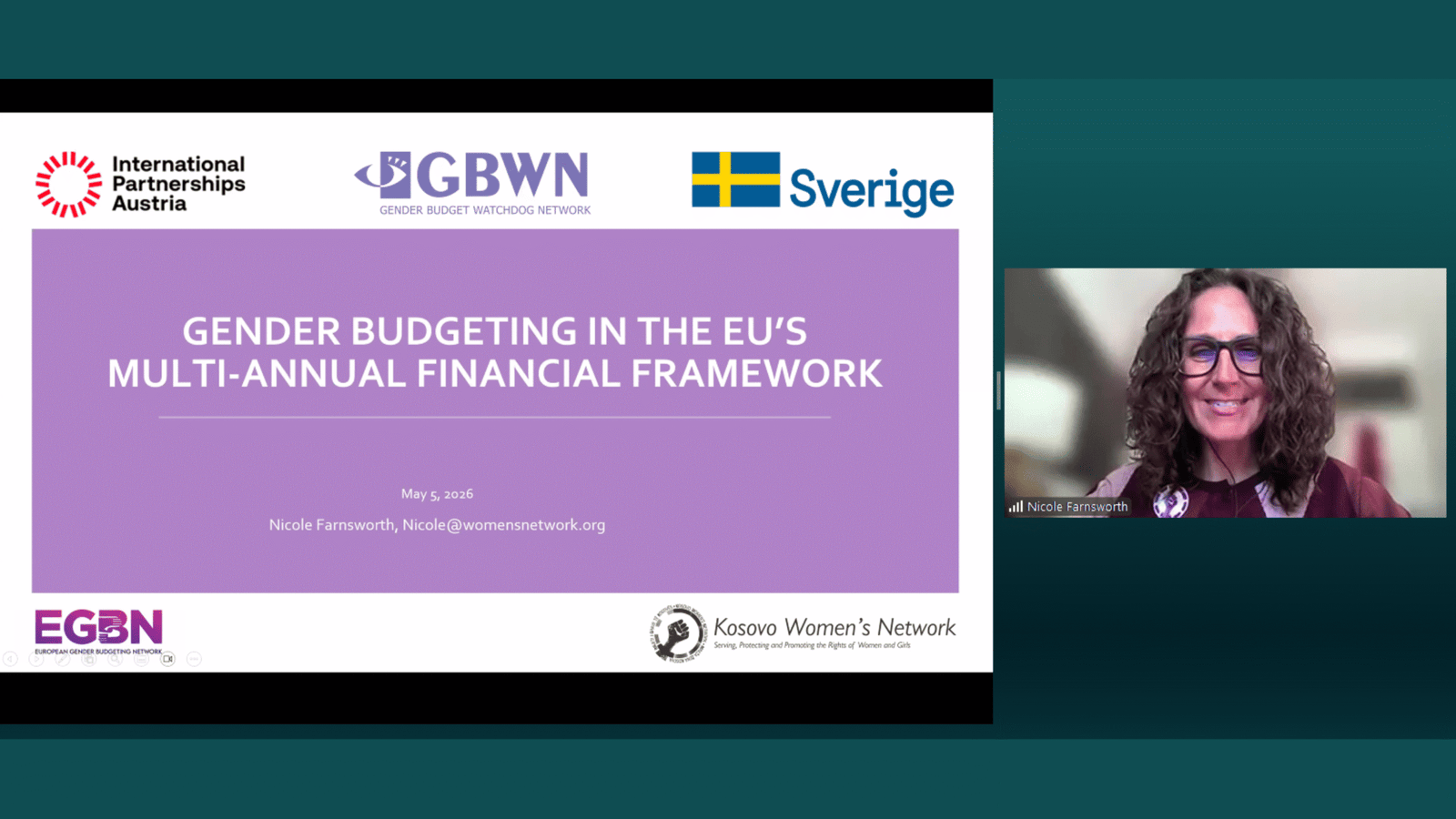
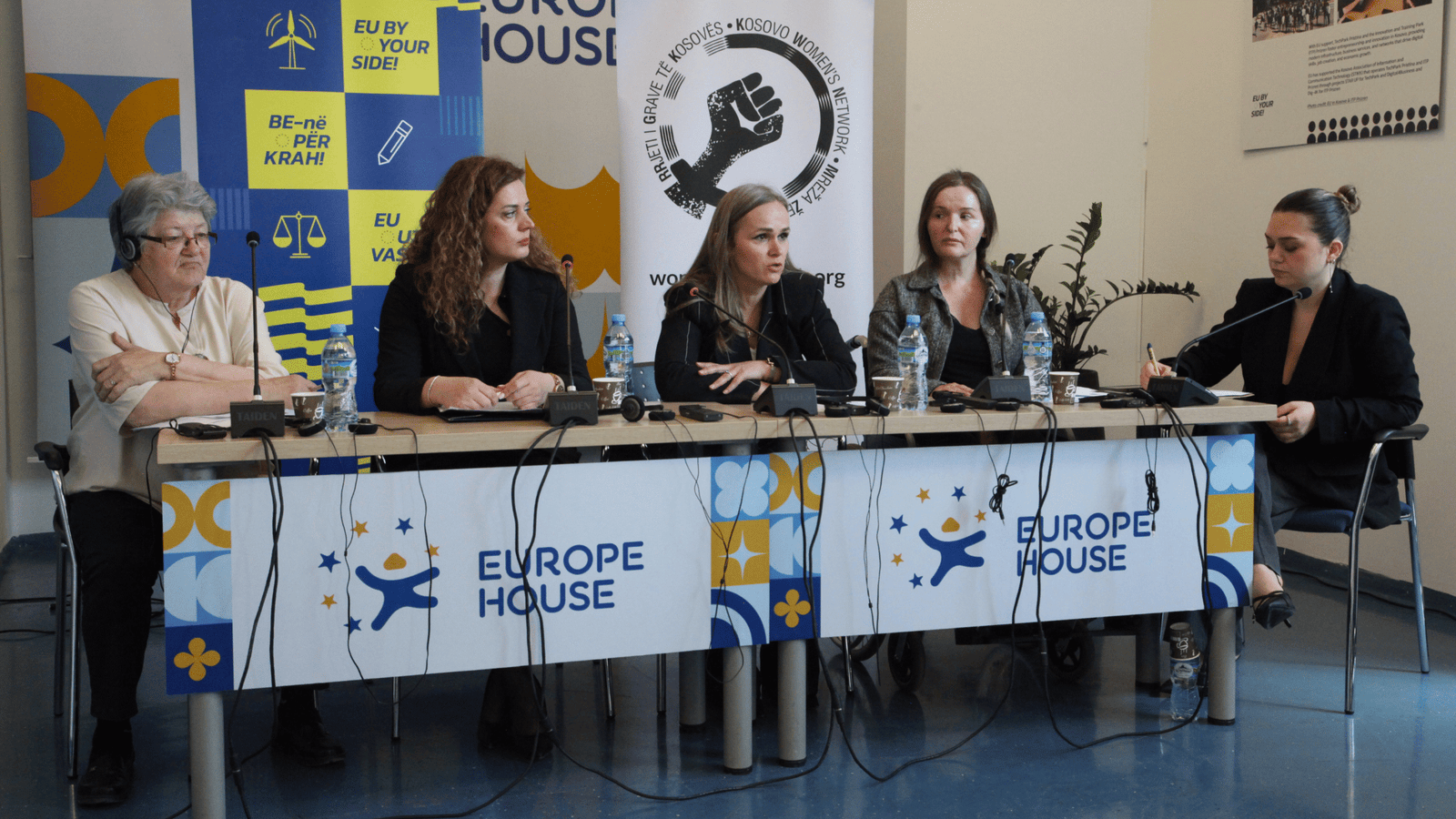
A Kosovo Women’s Network (KWN) representative, Nicole Farnsworth, presented KWN and its regional partners new report on Gender-based Discrimination and Labour in the Western Balkans at the European Union (EU) Parliamentary Committee on Women’s Rights and Gender Equality (FEMM) on 5 December 2019 in Brussels.  

The report contains several recommendations for Western Balkans (WB) institutions as well as the EU, including the adoption and implementation of legal reforms related to addressing gender-based discrimination, improved monitoring, awareness-raising of people regarding their rights and continued support to women right’s organisations working to address such discrimination.   

“We will take concrete action regarding income equality, work-life balance and the fight against violence against women,” said Ms. Evelyn Regner, Chair of the FEMM Committee. 

The new research provides information about shortcomings in the relevant legal framework; the prevalence and nature of gender-based discrimination related to labour; the extent to which people have filed claims; and how institutions have treated such cases. 

“Although several survey respondents have faced discrimination, very few have reported it. More than 76% did not report it to any institution”, Farnsworth said. She added: “This research draws from primarily welleducated women, employed women, from urban area with access to internet, yet one in three have suffered sexual harassment and many have suffered gender-based discrimination in hiring. Can we even imagine what is the situation for women who are not in the same position, who are in a more precarious position? 

The recommendations presented to the European Union were to: 

  • Prioritise and require implementation of institutional reforms to better address gender-based discrimination related to labour as a conditionality of the EU accession process.  
  • Encourage all WB governments to amend their legal frameworks in line with EU directives, including the EU Work-Life Balance Directive. 
  • Continuously monitor gender-based discrimination in labour via Country Reports, using a consistent regional approach.  
  • Via political and policy dialogues with government counterparts, apply political pressure for governments to implement research recommendations.  
  • Continue meeting women’s rights organisations to monitor reforms. 
  • Continue supporting women’s rights organisations to raise awareness, advise women, provide legal aid and monitor/hold accountable institutions.  

 In addition, towards furthering gender equality through EU external financing, following the adoption of the new 7-year Multiannual Financial Framework (MFF), Farnsworth recommended that the FEMM Committee consider gender mainstreaming the new Common Implementing Regulation, which at present is fairly gender blind. She also suggested earmarking finances under the Instrument for Pre-accession (IPA) portfolio that would focus specifically on gender equality as a sub budget line. “Putting a budget line in the MFF under IPA would earmark these funds for women rights groups who are qualified to provide these services in the future and ensure that these services are provided in accordance with the Istanbul Convention,” she said. 

“You already gave us some food for the upcoming work and I think it is a great moment to do this,” Regner said. “This Committee is open minded to your contribution in this regard.”  

 Supported by the EU and co-funded by the Swedish International Development Agency, the research on gender-based discrimination was part of a broader regional initiative aimed at addressing gender-based discrimination and improving women’s labour rights. The report was researched and written by a coalition of women’s rights organisations from the WB, including the Kosovo Women’s Network,Reactor – Research in Action from North Macedonia, Gender Alliance for Development Centre from Albania, Helsinki Citizens’ Assembly Banja Luka from Bosnia and Herzegovina, Women’s Rights Centre from Montenegro, and the Kvinna till Kvinna Foundation from Sweden through its office in Serbia.  

For more information, see the fact-sheet of the report HERE 

The presentation can be viewed HERE.   


‘Drugëza’ Advocates for Women’s Property Rights  

A very small number of women carry their own property rights, even though such a right is guaranteed by law.  

To address this, Drugëza, a member organization of Kosovo Women’s Network (KWN), on January 29th hosted a roundtable about “The property rights of women: Challenges and Institutional support”, as part of the initiative “Advancing women’s rights to property and their economic empowerment”. 

In addition to women beneficiaries, present in this meeting were representatives of the Municipality of Skenderaj, as well as civil society representatives.  


Hana Zabeli, Executive Director of NGO Drugëza, shared information regarding the initiative and its importance.  

The Director of Department of Geodesy, Cadastre, and Property, Ramiz Shala explained the co-ownership property procedures and registration of property in cases of inheritance.  

Dueto the Administrative Directive, property registration in the name of both spouses has increases by 185 percent compared to previous years,” said Shala, encouraging increased use of this directive.  

The roundtable was accompanied by an open discussionSkenderaj Municipal Assembly member, among other things, emphasized patriarchal mentality as an obstacle toward understanding and realizing women’s equal property rights. 

“We have not made children aware that both girls and boys share completely equal property rights. This requires a lot of work, especially in the Municipality of Skenderaj,”, she added.  

Readers are reminded that more women having access to inheritance and property ownership is part of KWN Strategy 2019-2022. 

This initiative is supported by Kosovo Women’s Fund (KWF) and funded by UN Women. 


Hareja Successfully Completes the “Don’t be silent – Speak Up” Initiative

The three-month Hareja initiative “Don’t be Silent – Speak Up” held its closing meeting 28 Jan. in Rahovec. Present were representatives from Safe House in Gjakova, the Center for Social Work, Kosovo Police, and KWN. Hareja is a Kosovo Women’s Network member organization.

Adelina Paqarizi, Director of Hareja, explained that the overall objective of this initiative was to provide proper and fair access for victims of domestic violence and sexual abuse, as well as to support and promote women’s rights in the Municipality of Rahovec.

Hareja during this initiative held individual training, lectures and advocacy meetings with the Center for Social Work in Rahovec, with the Police of Kosovo, the Safe House in Gjakova, and with victims for their rehabilitation and integration. The purpose of these meetings was to increase cooperation with these institutions as well as provide adequate treatment of victims.

Paqarizi noted that the project was also expanded to the villages of Krusha e Madhe, Ratkoc, and Xerxa, where a total of six lectures were held to raise awareness of women and the society as a whole. The focus of these lectures was to prevent violence and to understand the importance of reporting it.

This initiative is supported by the Kosovo Women’s Fund and is funded by the Austrian Development Agency (ADA).

READ ALSO: Kosovo Women’s Fund Grants €66,429 to 18 KWN Member Organizations

Women Activists from Kosovo and Serbia Discuss Women’s Participation in Kosovo-Serbia Dialogue

Women activists from Kosovo and Serbia gathered to discuss Belgrade-Prishtina Dialogue from Women’s Perspective”, in North Mitrovica on Jan. 24.

This public discussion was a continuation of the initiative implemented by Mitrovica Women’s Association for Human Rights (MWAHR) and Women’s Association Pescanik from Krusevac, Serbia. This is an initiative which aims to establish contacts and bring together activists for human rights and women’s rights from Kosovo and Serbia in order to contribute to reconciliation and peace building in the region.

Kosovo-Serbia Dialogue, gender perspective according to European standards, and greater participation of women in integration processes were among the issues addressed in the panel consisting of: Luljeta Demolli, Executive Director of Kosovar Gender Studies Center (KGSC); Vetone Veliu, Executive Director of MWAHR; Snezana Jakovljevic, Executive Director of Pescanik; Faruk Mujka, Deputy-mayor of Mitrovica; Igballe Rogova, Executive Director of Kosovo Women’s Network (KWN); and Artan Murati, Senior Legal Advisor at Kosovo Legal Services Company (KLSC).

Veliu informed the participants that this initiative started in 2017, highlighting the lack of information sharing with women as one of the main concerns.

“We as a civil society have made efforts, and this is a good thing because we are now communicating. We are about 30 women from Kosovo and Serbia who have already built a healthy communication with each other, we have begun to create friendships,” she said.

Expressing a similar opinion was Jakovljevic as well, who shared that it’s not her first time in Kosovo.

“We want to empower women to protest for their rights, to fight for those rights and to achieve gender equality. We want to inform women about what is happening [in Kosovo-Serbia dialogue], and to their initiatives too”, she added.

The deputy-mayor of North Mitrovica welcomed this joint initiative of two NGOs.

“I am happy that such debates are being treated on a local level. I promise on behalf of the municipality that the next activity will be in coordination with us in order to have an even more comprehensive agenda. Mitrovica is a challenging place for such initiatives, yet I want to assure that even though Mitrovica operates with two municipalities, the city belongs to all people, regardless if they are from North or from South,” Mujka said, adding that they are willing to improve the discussion of issues that can contribute to the achievement of gender equality.

On the other hand, Rogova congratulated the two organizations that for a long time now are having this discussion. She recalled the beginnings of women’s rights activism since the 1990s.

“While Martti Ahtisaari led the negotiations, the women’s alternative voice was the Women’s Peace Coalition,. Although it was not an official part of the negotiations, it nonetheless contributed women’s voices from Kosovo and Serbia to be heard. Now is the time for women’s rights activists to be included in dialog through the expert group”, Rogova said.

On the 20th anniversary of United Nations Security Council Resolution 1325 on Women, Peace, and Security in Kosovo, Rogova recommended to the audience to read the collection of Facts and Fables, which KWN published regarding the implementation of this resolution.

                                       Facts and Fables can be read HERE.

The discussion concluded with a productive interactive debate between the participants and the panellists.

This initiative aims to increase women’s participation in European integration processes, including the Kosovo-Serbia dialogue, this after taking into account the limited information available for the public, especially for women.


AEFC Holds Training on Istanbul Convention

Representatives of women’s organizations from Gjakova, Junik and Rahovec were part of the roundtable on “Istanbul Convention and National Strategy Against Domestic Violence” held on 24 Jan. in Gjakova organized by Association for Education and Family Care (AEFC).  

On this occasion, the organizations added their recommendations for the National Strategy against Domestic Violence.   

BahrijeVehapi, Project Coordinator, first outlined the importance of this initiative, which aims to develop and build the capacity of women’s organizations in the three aforementioned municipalities.   

“Many women’s organizations from this area are unaware of the importance of this Convention in raising the responsibility of institutions to address domestic violence with elements of gender-based violence, including sexual violence, which failed to be integrated with the previous national strategy,” Vehapi said at the beginning of the training.   

Arbnore Shehu, lawyer, mentioned that the main purpose of the Istanbul Convention is to prevent violence. She then added that there are specific requirements to protect victims from further violence and to provide support and assistance to overcome impacts and rebuild their lives. 

“The need to raise awareness and knowledge regarding the Istanbul Convention, and the legal and practical interpretation of this Convention in the direct work of the NGOs with victims of gender-based violence was seen during the previous trainings for this Convention conducted by Medica Kosova,” Shehu said. 

EmirjetaKumnovaa psychologist, emphasized the importance of campaigns or programs that aim to raise awareness, including cooperation with national human rights institutions and equality bodies, civil society and non-governmental organizations, especially women’s organizations.  

This initiative is supported by the Kosovo Women’s Fund (KWF) and funded by ADA Austrian Development Cooperation in Kosovo.  

In addition to the AEFC organization, there are 17 other member organizations benefiting from the 13th round of KWF. You can read the full list HERE.  

EU Election Observation Mission Report Mentions KWN’s Campaign 

The final report of EU Election Observation Mission to Kosovo (EU EOM) on the early legislative elections held on 6 Oct. 2019 has been received by representatives of civil society organizations and other institutions. 

This report, in a section dedicated to women’s participation in elections, mentions the work carried out by KWN to increase women’s participation in politics through the “Vote for More Women in Parliament” door-to-door campaign, held for five days (25-29 Sept.).  

Among the others, Kosovo Women’s Network (KWN) Executive Director Igballe Rogova was also present at the 22 Jan. meeting with Viola von Cramon-Taubadel, Chief Observer of the EU EOM in Kosovo and a German member of European Parliament (PE). 

The full report in English is accessible HEREand KWN’s campaign is mentioned on page 33.  

Concerning women’s participation in elections, EU EOM has issued the two following recommendations:  

  • Political parties to consider adopting internal policies to promote women’s participation and integrate gender issues into party platforms. To increase public funding for parties that promote gender equality.  
  • The Central Election Commission (CEC) to increase women participation at all levels of the electoral administration. 

In total this report consists of 23 recommendations on how to improve future electoral processes. 

In conclusion we recall that few days before the election took place, Cramon-Taubadel was introduced to this campaign during a joint-meeting with Rogova on Oct. 

                             Read HERE more regarding this campaign.  

The EU EOM in Kosovo operates independently under itsown specific mandates.   

Note that supporting women’s participation in politics and decision-making is part of the KWN Strategy 2019-2022.   

Kosovo Women’s Fund allocated € 59,266 for 20 KWN member organizations in Kosovo

Today, on the 20th of January, the Kosovo Women’s Network (KWN) held an Orientation Session on which occasion it allocated 19 grants to 20 beneficiary organizations in Kosovo within the Kosovo Women’s Fund (KWF), amounting to a total of € 59,266.00. More specifically, the grants that were allocated in this round were supported by the Austrian Development Agency (ADA), through the KWN initiative “Advancing Women’s Rights Initiative” co-funded by UN Women in the amount of € 48,410, and through the KWN initiative “Empowering Youth for a Peaceful, Prosperous and Successful Future in Kosovo” supported by UN Women in the amount of € 10,866.

These initiatives will directly contribute to the implementation of the current KWN Strategy for 2019-2022, which was drafted together with KWN members.

KWF Grants beneficiaries are:

Individual Advocacy Grant for an Organization:

  • EcoKosWomen – EKW with the initiative: “Advocacy for easier access of women to grants in the municipality of Prishtina” (€ 3,649.00, supported by ADA and UNW)
  • Organization of People with Disabilities, Handikos Prishtina with the initiative: “Integration of women and girls with disabilities in society” (€ 2,470.00, supported by ADA and UNW)
  • Women Association Aureola with the initiative: “Advancing inheritance law” (€ 2,300.00, supported by ADA and UNW)
  • Association of Retired Women “Vita-Jeta” with the initiative: “Diabetes in the Elderly” (€ 2,030.00, supported by ADA and UNW)
  • Association of Women Beekeepers “Okarina e Runikut” with the initiative: ”Promoting the Employment for the Beneficiaries of Social Assistance Scheme in the Drenica Region” (€ 3,110.00, supported by ADA and UNW)
  • Blind Women’s Committee of Kosovo with the initiative: “Respecting the rights of blind and visually impaired women guaranteed by law” (€ 2,832.50, supported by ADA and UNW)
  • Kosovo Midwives Association with the initiative: “Promoting maternal and child health through strengthening the role of midwifery” (€ 3,857.50, supported by ADA and UNW)
  • Psychotherapists in Action with the initiative: “Health and treatment of silent diseases in third age women” (€ 3,242.50, supported by ADA and UNW)
  • Center for Protection of Women and Children with the initiative: “Empowering the women victims of gender-based violence through reintegration programs” (€ 3,355.00, supported by ADA and UNW)
  • Association of Women with the initiative “Empowerment of Women in the Labour Market” (€ 3,105.00, supported by ADA and UNW)
  • Independent Initiative of Blind People: “I want to lead a dignified life” (€ 2,955.00, supported by ADA and UNW)
  • Center for Protection of Women and Children Raba Voca with the initiative: “Break the Silence” (€ 3,351.00, supported by ADA and UNW)
  • Association of the Blind and Visually Impaired with the initiative: “Supporting the Blind and Visually Impaired for leading an independent life” (€ 2,982.50, supported by ADA and UNW)
  • Women Farmers’ Association ‘Krusha e Vogel” with the initiative: “Women’s Health Education in Rural Areas” (€ 3,195.00, supported by ADA and UNW)
  • NGO Drugëza with the initiative: “Advancing women’s rights to property and their economic empowerment” (€ 2,136.00, supported by UNW)
  • NGO Gruaja Hyjnore with the initiative: “Raising the awareness of girls and women about reproductive health” (€ 2,995.00, supported by UNW)
  • Youth Center Lipjan with the initiative: “Supporting girls and women for active participation in the economy” (€ 2,940.00, supported by UNW)
  • Handikos Mitrovica- Association of People with Disabilities with the initiative: “Improving employment skills among the youth, girls and women with disabilities” (€ 2,785.00, supported by UNW)

Advocacy Grants in Partnership for Change:

  • Medica Kosova & Djepi i Buzëqeshjes with the initiative: “Mobilizing women assembly members to address the needs of women traumatized by war” (€ 6,295.00, supported by ADA and UNW).

Kosovo Women’s Fund (KWF) of the KWN provides small grants to women’s organizations that do not have access to other sources of funding and who seek to work for women’s rights, especially for groups working in rural areas and/or marginalized persons. Since 2012, KWF has allocated 193 grants, thus supporting 119 organizations, by a total amount of € 1,011,288. In 2020, the Kosovo Women’s Fund is supported by the Austrian Development Agency (ADA), the European Union and UN Women.


Kosovo Women’s Fund Allocates Nearly €200 Thousand to 14 Organizations in the Region

The Kosovo Women’s Network (KWN) and its partners in the Coalition of Women’s Rights Organisations against Discrimination in the Western Balkans have awarded 14 grants to civil society organizations (CSOs) through the Kosovo Women’s Fund, amounting to €198,275. The grants are part of a joint initiative, “Furthering Women’s Labour Rights”, funded by the European Union and co-funded by Swedish International Development Cooperation.

Of the 14 CSOs receiving grants, two from Kosovo signed contracts on 13 January: The Kosovo Law Institute (Instituti i Kosovës për Drejtësi) from Pristina with the initiative “Improving Women’s Rights at Work” (€19,950), which will provide legal aid and undertake court monitoring; the Kosovo Center for Gender Studies (Qendra Kosovare për Studime Gjinore) from Pristina with the initiative “Prevention of all forms of discrimination in the workplace” (€10,000), which will raise women’s awareness and empower them to report discrimination.

This marks the first time that KWN has awarded grants to CSOs in the region through its Kosovo Women’s Fund. Other CSOs in the region that will receive grants include:

Albania

Albanian Women Empowerment Network in Tirana with the initiative “Improving Women’s Rights at Work through Improving Access to Justice” (€20,000); Community Development Center ”Today for the Future” (Qendra për Zhvillim Komunitar “Sot për të ardhmen”) in Tirana with the initiative “Advocating for Improving Institutional Response to Gender-based Discrimination at Work by Sharing Practices in the Municipality of Lezha and Creating Interactions with the Committee for Protection from Discrimination at Work” (€10,000); and the Counseling Line for Girls and Women (Linja e Këshillimit për Gra dhe Vajza) in Tirana with the initiative “Empowering Women and Girls to Report Gender-based Discrimination” (€9,990).

Bosnia and Herzegovina

United Women Network Foundation (Fondacija Udružene žene) in Banja Luka with the initiative “Improving Women’s Position in Employment and Preventing Gender-based Discrimination in Bosnia and Herzegovina” (€19,814); and the Foundation Academy for Women (Fondacija Academy for Women) in Sarajevo with the initiative “This Is Discrimination Too” (€10,000).

North Macedonia

The Helsinki Committee for Human Rights in Skopje with the initiative “Women Workers Join” (€19,998); and the Association Loud Textile Worker in Stip with the initiative “Promoting the Rights of Textile Workers from the Eastern Region” (€9,998).

Serbia

The Victimology Society of Serbia (Viktimološko društvo Srbije) in Belgrade with the initiative “Know Gender Discrimination, Identify Violations of Labour and Employment Law! React!” (€19,942); the A 11 – Initiative for Economic and Social Rights (A 11 – Inicijativa za ekonomska i socijalna prava) in Belgrade with the initiative “Improving Institutional Practices in Preventing Discrimination against Women in the Labour Market in Serbia” (€8,930); and ROZA Association for Women’s Labour Rights (ROZA Udruženje za radna prava žena) in Zrenjanin with the initiative “What Is Awaiting Me in the Labour Market” (€9,754).

Montenegro

The Trade Union of Media of Montenegro (Sindikat Medija Crne Gore) in Podgorica with the initiative “Equality through Justice: Work-related Discrimination Cases” (€20,000); and the Association of Youth with Disabilities (Udruženje Mladih sa Hendikepom) in Podgorica with the initiative “Empowered, Employed, Involved” (€9,997).

Research conducted by Coalition members in 2018 found that gender-based discrimination in the workplace is a key issue hampering women’s employment and undermining their rights at work.

Concerned by women’s low employment rates and evidence of widespread discrimination against women in relation to work, the Coalition will work closely with other CSOs in the region, including the above-mentioned grant recipients, to address the recommendations resulting from this research.

This joint Action aims to empower diverse CSOs to effectively hold relevant institutions accountable for implementing anti-discrimination legislation related to women’s labour rights.

The grant recipients were selected from a total of 70 applicant, based on critera established by the Grant Review Committee. The Committee was comprised of members of the Coalition, including: the Kosovo Women’s Network, Reactor – Research in Action from North Macedonia, Gender Alliance for Development Centre from Albania, Helsinki Citizens’ Assembly Banja Luka from Bosnia and Herzegovina, Women’s Rights Centre from Montenegro and the Kvinna till Kvinna Foundation from Sweden through its office in Serbia.

Since 2012, the Kosovo Women’s Fund has awarded 174 grants, supporting 99 different CSOs, totalling €952,022. To date, the Fund has had more than 20,855 beneficiaries.

For more information, see: https://womensnetwork.org/kosovo-womens-fund/.


Ruka Ruci briefs women of Uglarë to the “Strengthening Women’s Participation in Politics”

On April 16, Ruka Ruci organization held an informative session with Serbs women in Fushë Kosova’s Uglarë, with the purpose to brief them with the initiative “Strengthening Women’s Participation in Politics”.  

This four year-long initiative is implemented by Kosovo Women’s Network (KWN) together with Ruka Ruci, Organization of Persons with Muscular Dystrophy of Kosovo (OPMDK), and the European Women Lawyers Association (EWLA), whereas it is supported by the European Union (EU) Office in Kosovo. 

In this meeting present were representatives of the municipalities of Graçanica and of Fushë Kosova, and also co-operators and volunteers of the Ruka Ruci organization.  

Initially, Nevenka Rikalo, Executive Director of Ruka Ruci, shared with the participants the most crucial information about this action, including here objectives and results they are expecting from the implementation of this joint initiative.   

She has further mentioned the importance of solidarity between the women.  

“There is a lack of solidarization between women and girls, and hence some networks exist in order for us to achieve our goals. Kosovo Women’s Network, Coalition for Equality (CfE) and Kosovo Lobby for Gender Equality (KLGE) are among these networks”, she stated.  

Suzana Emini, Assistant Coordinator, Kvinna till Kvinna Foundation has acknowledged that the time has come for women to be in political positions and also have a say in decision-making process.  

“During the election time there is a huge gap [between men and women]. Men receive more support and more money, while women cannot do the same because of the lack of contacts”, Emini stated.  

While agreeing with the absence of support towards the women, Snezana Stajoneviq from the Municipality of Fushë Kosova, added that it is time for increased participation of women in politics.  

“Women in politics are not themselves, they are usually somebody else’s marionette. We are always finding reasons to not take part, but now the time has come to be part of politics and for this we need support”, she said.  

Participants further discussed the best ways of women’s public representation, sharing together the features that make a woman a successful public figure.  

“Door to door” activities and grants to member organizations of KWN, are some of the issues that women present discussed, in order to know better the plan of initiative “Strengthening Women’s Participation in Politics”. 

Such meeting will take place also in the Municipality of Gracanica, Novo Brdo, North Mitrovica, Zubin Potok, Obilic and Ranilug.  

This initiative is supported by the European Union (EU) Office in Kosovo. 

The Government Strategy for Cooperation with Civil Society 2019-2023 is launched

Pristina – On 4 April, the Government’s Strategy for Cooperation with Civil Society 2019-2023 has been launched. Strategy’s objective is to increase the participation of Civil Society in policy making.  

This Strategy is of a great importance to civil society activists, taking into account that only an active and empowered civil society can influence better policy making for citizens, as well as monitor the implementation of these policies.  

It is foreseen the recruitment of two new officials responsible for assisting the implementation of the Strategy, with an allocated budget of 253.300 Euros for the implementation of the Strategy and of the Action Plan.  

In total there are four strategic objectives for the implementation period 2019-2023. The first strategic objective is for Increasing the participation of civil society in policy makingThis objective aims to raise citizens’ and also civil society’s knowledge of public consultations, as well as improve civil society capacities to contribute to this process. 

The second strategic objective is for increasing accountability and transparency in public financing of Civil Society Organizations (CSOs)According to this objective, the Government should draft and adopt standards and procedures for offering public services by CSOs, including here the coverage of licenses 

The third strategic objective is developing practices and procedures for contracting public services from CSOs. It aspires to improve the overall political and institutional framework for regulating the economic activities of civil society organizations. It also foresees systematic gathering and publication of the information on the potential of these organizations to provide public services to public institutions. 

And the fourth strategic objective is set for the increment and the promotion of volunteering in programs of public interestThe intent here is to establish a comprehensive legal and institutional framework to support the development of volunteering, including also civil society capacity building to recruit, engage and manage volunteers.   

Noteworthy that in addition to the funds from the state budget, the implementation of these strategic objectives will be supported by technical assistance from the European Union (EU) as well. Furthermore, additional funding is expected from donors in the field of civil society development as well as by CSOs whose mission is to develop civil society or specific areas addressed by the respective strategic objectives.  

Read HERE the full Albanian version of the Government Strategy for Cooperation with Civil Society 2019-2023.