Healthcare Workers to Empower Women, Engage Fathers

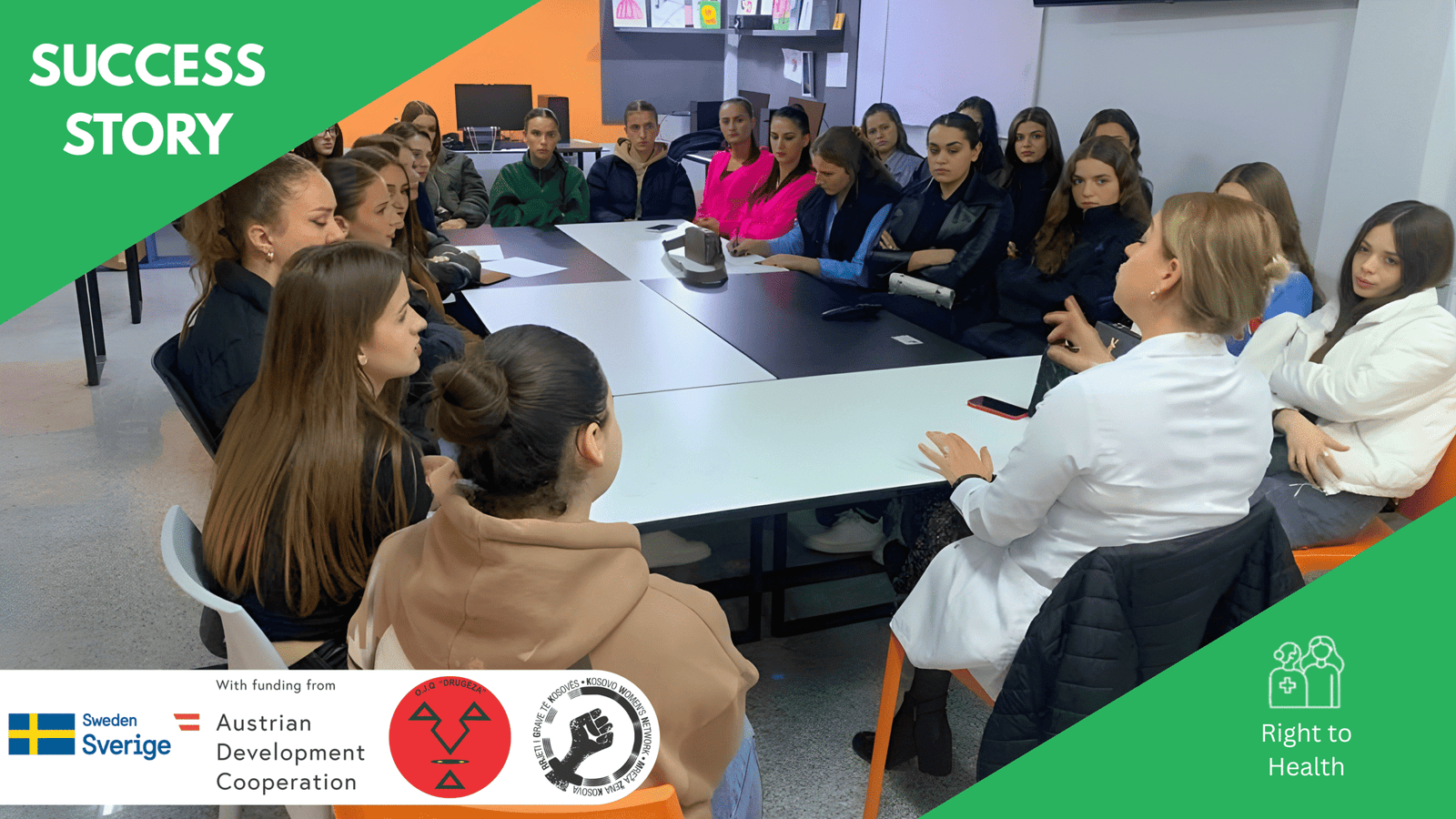
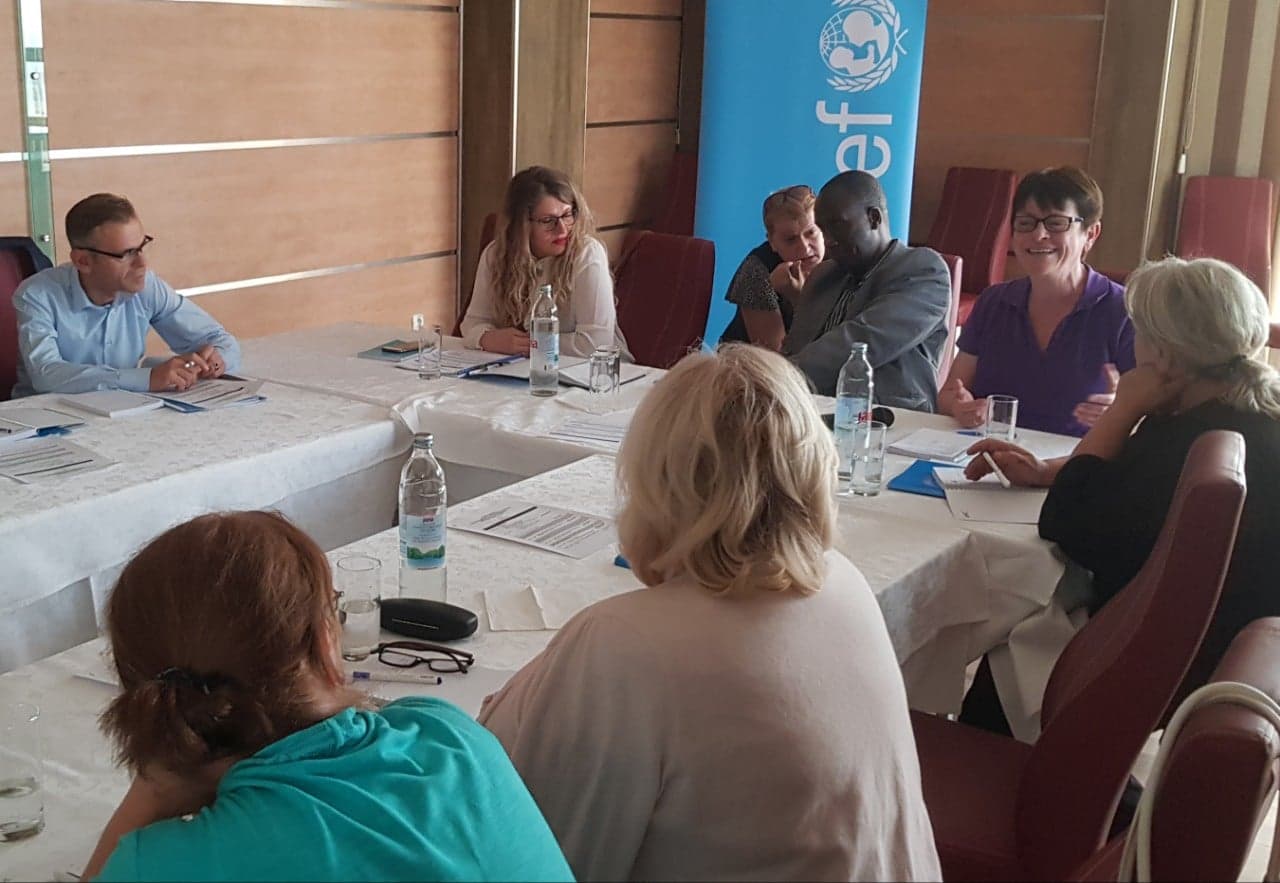
Yesterday, the Ministry of Health, UNICEF and Kosovo Women’s Network (KWN) in cooperation with the Action for Mothers and Children launched a joint effort to engage healthcare workers in transforming traditional gender roles in Kosovo.  

From an early age, girls and boys are socialized to dress and act a certain way. Their gender determines how society treats them, where they can go and the opportunities they will have in their lives. Research has shown that a child begins learning these roles from a very young age, perhaps as soon as they are born.  

A new initiative by the Ministry of Health and UNICEF, in collaboration with KWN, seeks to engage healthcare workers conducting pre-natal and post-natal home visits in talking to families about gender roles and how they can create for their children a happier, healthier life with more opportunities. As part of the UNICEF home visiting project, health practitioners will incorporate positive parenting strategies, gender socialization and the important role of the father into their home visits.  

“We think through home visits you can transform the culture towards gender equality in Kosovo,” Deputy Head of UNICEF Office Kosovo James Mugaju stated. You are the champions of this,” he told healthcare professionals attending the workshop“This program is successful because of you and your commitment,” Magaju said. 

On behalf of KWN, Ilirijana Banjska is among the trainers working with healthcare workers to support them in better understanding gender roles, stereotypes, power relations and how these can contribute to gender-based violence.  

KWN’s Executive Director Igballe Rogova spoke at the workshop opening, sharing experiences from the 1990s when, as part of the Motrat Qiriazi Association, activists saw that the best method to reach people was door to door outreach. “I thank you for your work, which will lead to gender equality in Kosovo, she said. “You have contact with people and you can change people! 

While progress has been made in furthering women’s rights in Kosovo, gender-based stereotypes rooted in social norms continue to undermine equality among women and menOfficially only two in ten women in Kosovo are employed. This is due largely to women’s traditional social roles as unpaid caretakers.  

The situation in Kosovo is slowly changing,” Rogova saidMen have indicated that they want to be with their children but sometimes people around them say they can’t.”  She recalled research by KWN, among others, which showed that approximately 64% of men said they want to spend more time with their children and care for them. “And we support them to!” Rogova said. 

Only when men have more rights to spend time with their children will women have more rights to enter into public space.  

Therefore, KWN also is working with its partners to call for amendments to the Labor Lawto better enable both men and women to spend time with their families. 

As part of the UNICEF home visiting and gender responsiveness project, KWN will continue to collaborate with UNICEF. Rogova thanked the Ministry of Health and UNICEF for engaging KWN in this process and for their collaboration in furthering gender equality in Kosovo.  

This initiative aligns with the Kosovo Health Sector Strategy 2017-2021, which seeks to improve the quality of services, while improving access to these services for vulnerable groups. 
“Speak up on Time” Campaign Urges Earlier Reporting of Sexual Assault    

Sexual violence in Kosovo remains one of the least reported forms of violence. Yet it needs to be reported in a timely way because collection of evidence can help to prosecute cases.  

“Speak Up on Time” is a newly launched campaign stressing the importance of preserving biological evidence in sexual violence cases. The Institute of Forensic Medicine (IFM), in partnership with the Kosovo Police (KP) and EULEX, hosted a roundtable discussion 9 Sept. to commence the public information program. 

Research reports from Kosovo Women’s Network (KWN) show that some key institutions charged with tackling the problem lack knowledge of how to treat it appropriately. Approaches to sexual violence victims continue to be inadequate, often putting the victim in difficult situations. This can discourage victims from reporting the violence and pursuing justice. 

KWN’s findings also indicate minimal knowledge among the general public about the importance of collecting and preserving biological evidence in sexual violence cases.  

Statistics of the Institute of Forensic Medicine show that: 

  • In just 28% of sexual violence cases is biological evidence collected 
  • About 90% of sexual violence victims are women or girls  
  • Most sexual violence victims are between 11 and 16 years old 
  • In 81% of sexual violence cases, the perpetrator is known to the victim 

 Former President of Kosova Atifete Jahjaga called for increased cooperation between relevant stakeholders in supporting wartime sexual violence survivors, as well as their social re-integration.  

“We have worked to achieve this; however, we need to work harder in some fields: in the aspects of legal framework, institutional, socio-economic aspects, as well as offering access to justice for the survivors”, Jahjaga said. 

Kosovo has undertaken initiatives to help survivors of sexual violence that occurred during wartime. Yet very little attention has been given to women and girls experiencing sexual violence nowadays. Unfortunately, 20 years after the war similar challenges are shared by women and girls suffering sexual violence, whether it be perpetrated by acquaintances or strangers.  

Deputy Director of the Institute of Forensic Medicine, EULEX staff called for people to speak up about the issue. “Now is the time to raise public awareness of what sexual act and sexual violence is,” Tarja Formisto said.  

Forensics Medicine Specialist at the Institute of Forensic Medicine expressed a similiar sentiment. “This is our direct contribution to helping victims achieve justice and break the silence that surrounds those who have something to say and those who must hear,” Bergita Curri said.  

The “Speak up in Time” campaign will continue through mid-2020.  


KWN Joins the March Seeking Justice for the Missing

PRISTINA – On Aug. 30, Kosovo Women’s Network (KWN) along with other civil society organizations joined the event organized by Youth Initiative for Human Rights (YiHR), to march for those missing on the International Day of the Victims of Enforced Disappearances. 

The New Born obelisk in the capital city was the meeting point of many citizens seeking justice and truth for over 1,600 missing persons, whose fate is still unknown, even two decades after the end of the last war in Kosovo. The participants held posters bearing the name of a missing person.  

During this event the New Born installation was exposed, which was covered with a black cloth as a symbolic gesture for the missing. From there, marchers headed towards the government building where organizers as well as family members of missing persons gave speeches. 

Bjeshka Guri, from YiHR said that “This march aims to raise awareness and collective social responsibility to seek truth and justice for the missing from all ethnic groups. It is the responsibility of each of us to raise our voice for the missing and their families.” 

Meanwhile, Arbenita Muhaxheri, a family member of the missing, urged the institutions to include the issue of missing persons on political dialogue agenda between Kosovo and Serbia. 

“I, along with other families of missing persons and Kosovar society, urge the state of Kosovo to prioritize the issue of missing persons and work on resolving their fate without any compromise,” she said. 

Over the years, KWN has sought responsibility for revealing the fate of the missing. 

Read also: 8 March: Women Seek Address, Justice for Missing Persons 

KWN condemns the imposition of house arrest measure against suspect Q.A., considering it insufficient 

On August 16 Kosovo Women’s Network (KWN) through a press release expresses its deep indignation about the scandalous measure imposed by the Basic Court in Peja - Department for Serious Crimes against the suspect for the criminal offense of trafficking in human beings, committed in 2012 in the Municipality of Istog. The reported case in question is related to the suspicion of trafficking in human beings, enslavement and rape.

KWN insists that the measure that should have been immediately imposed was detention on remand, taking into account that defendant Q.A. refused several times to attend the court hearings reasoning that he was abroad. He was brought to the court proceedings by issuing a local wanted notice by Kosovo authorities.

Furthermore, KWN expresses its concern that such a culture of undignified treatment of alleged cases of trafficking in human beings is a further encouragement for the perpetrators of these criminal acts. This is because they are not getting the punishment they deserve in accordance with the foreseen legal measures. Therefore, we plead that the Court of Appeals imposes the measure of detention on remand until the final court review and resolution of the case.

Read HERE the full Press Release.


Kosovo Women’s Network condemns the imposition of house arrest measure against suspect Q.A., considering it insufficient

Download File

Kosovo Women’s Network was informed th­­rough Koha.net about the scandalous measure imposed by the Basic Court in Peja – Department for Serious Crimes against the suspect for the criminal offense of trafficking human beings, committed in 2012 in the Municipality of Istog. The reported case in question is related to the suspicion of trafficking human beings, enslavement and rape.

KWN expresses its deep indignation over such a measure, finding the decision of the Court against suspect Q.A. and his co-perpetrators inadequate.

Based on Article 183 of the Criminal Procedure Code, in cases when there are circumstances that indicate that there is a danger of flight of the defendant, lesser measures to ensure the presence of such a person and to prevent re-offending are insufficient. ­

Since the defendant refused several times to attend court hearings, claiming that he was abroad, KWN insists that he should have been detained on remand . Furthermore, local Kosovo authorities had to issue a local wanted notice to bring him to court proceedings.

Article 187, paragraph 1.2.3. provides that detention on remand may also be imposed in cases when:

“The seriousness of the criminal offence, or the manner or circumstances in which it was committed and his or her personal characteristics, past conduct, the environment and conditions in which he or she lives or other personal circumstances indicate a risk that he or she will repeat the criminal offence, complete an attempted criminal offence or commit a criminal offence which he or she has threatened to commit.”

KWN expresses its concern that such treatment of alleged cases of human trafficking further encourages perpetrators of these criminal acts and prevents them from receiving the punishment they deserve in accordance with appropriate legal measures. Therefore, we plead that the Court of Appeals imposes the measure of detention on remand until the final court reviews and resolves the case.

American Student Appreciates KWN Internship, Willing to Cooperate in the Future

Mira Tan, 19 years old from California, United States of America (USA), was an Intern at the Kosovo Women’s Network (KWN) for one month, from June to July 2019. She is in her second year at Miami University, Ohio, co-majoring in International Studies and International Business with a minor in Chinese.

ISLA, Live Learn Intern, an international program offering internships for intrepid humanitarians, social entrepreneurs, and change-makers with local partner NGOs in Africa & Europe, matched Tan to work for four weeks with KWN.

During this short but productive time spent at KWN she mainly carried out duties related to social media activities, including the Communication Outreach Plan of two of KWN’s exhibitions titled “Break the Silence: Ending Violence Behind Walls.” She was especially involved in the exhibitions in Prishtina and Gjilan.

Read HERE this Exhibition’s Booklet.

Tan shared her internship experience, emphasizing the advantages she gained by working in another country and immersing herself in the Kosovar culture.

“This internship experience with KWN has been really educational, I really believe that this experience was invaluable and there wouldn’t be any place in America that I could have learned as much as I did here”, Tan said. “Also, as an intern, I was able to actually experience things first hand, like the exhibition, instead of being forced to stay in the office all day and just do random paperwork”, she said.


“Working closely with KWN’s staff I had an astonishing opportunity to get a hands-on experience on what a feminist movement looks like, how it works and most crucially its impact toward improving and promoting the rights and the interests of women and girls”, she highlighted.

Tan said she valued this KWN’s internship experience as an opportunity to expand her knowledge on gender equality-related issues. She especially noted that KWN’s vision is a Kosova where women and men are equal and have equal opportunities in every sphere, and that ISLA currently is working on Gender Equality as one of its key sectors.

“I really do appreciate this experience and I hope that I can come back one day to continue to collaborate with KWN”, she added.

Tan looks forward to continuing to share her awe-inspiring experience with her university colleges and her circle of friends, adding yet another brick to the wall of Kosovar-American friendship.


Civil Society Organizations Demand that Qehaja Be Held Responsible for Justification of Sexual Violence and Homophobic Views

Download File

Only six days have passed since Kosovar pathologist Dr. Nazim Qehaja caused a scandal by openly justifying sexual violence, which he said occurs because a girl/woman dresses in a way that is “immoral and anti-national”.

Even after numerous reactions appeared on social media by activists for human rights, women’s rights, girls’ rights, and LGBT persons’ rights, Dr. Qehaja continued defending his view that sexual violence is justified in some cases and that rapists should not be punished nor held accountable before the law.

Referring to his profession as a doctor, he said that “not only humanly but also professionally and psycho-medically, rapists of such women, extremely provocative in public, should not be held accountable”. Further, to justify this statement, a few days later he added that only persons with “mental disorders” commit rape.

Moreover, following activists’ reactions, he said that a nation is in danger “when whores, fornicators, homosexuals and others with similar psychosomatic disorders speak for morality!”

Through this letter, we, the undersigned, remind Dr. Qehaja that if sexual assault were specific to persons with mental disorders, then our state, through laws in harmony with those of democratic developed countries, would not define sexual assault as a criminal offense, punishable with 2-10 years in prison, but as a mental health disorder. Therefore, this view is ungrounded and contrary to the law.

Justifying such criminal acts, including by blaming the victim for “provocative” clothing, is a form of public incitement to hatred, which is punishable by the Criminal Code of the Republic of Kosovo by fine or imprisonment of up to five years.

We also remind Dr.Qehaja who made a homophobic statement, that international medical professionals since 1990, through the World Health Organization, confirmed that homosexuality is not classified as a disease, much less a psychosomatic disease, as he defined it.

For lack of basic knowledge and incitement to hatred, in a democratic country, a person like Nazim Qehaja would have his diploma revoked and be banned from practicing duties as a medical doctor.

Recalling that medical profession in principle has equal and dignified treatment of all without distinction, we demand that the Doctors Committee publicly distance itself from the hate speech that Dr.  Qehaja has used against women, girls and LGBT persons; and that they condemn his language and his lack of medical professionalism.

The Constitution of the Republic of Kosovo guarantees freedom and security for every citizen, regardless of gender, gender identity, sexual orientation, nation, race or religion. According to the law, any person inciting hatred and disunity must receive the deserved punishment. Therefore, we also demand that the State Prosecutor’s Office urgently take action against Dr. Qehaja.

Signed by:

DokuFest

Lumbardhi Foundation

Kosovo Civil Society Foundation – KCSF

Cultural Heritage without Borders Kosovo Foundation – CHwB

Community Development Fund – CDF

INTEGRA

Kosovar Institute for Policy Research and Development – KIPRED

Kosovar Youth Council – KYC

Equal Rights for All Coalition – ERAC

GAP Institute

Youth Initiative for Human Rights – YIHR

Organization for Increasing Quality of Education – ORCA

NGO Consumer

Centre for Equality and Liberty of the LGBT Community – CEL

Center for Social Group Development – CSGD Kosova

Art and Community Center – Artpolis

Advocacy Training and Resource Center – ATRC

European Center for Minority Issues – ECMI Kosovo

Center for Legal Aid and Regional Development – CLARD

Kosovar Gender Studies Center – KGSC

Kosovo Women’s Network – KWN

Kosovar Stability Initiative- IKS

Syri i Vizionit

Center for Counseling, Social Services and Research- SIT

Shkëlzen Maliqi

Lawyers Association – Norma

Numismatic Association – Demastion


Civil Society Organizations Demand that Qehaja Be Held Responsible for Justification of Sexual Violence and Homophobic Views  

On August 1. through a press release Kosovo Women’s Network (KWN) with its partners from civil society have reacted against homophobic views expressed by the Kosovar pathologist, Dr. Nazim Qehaja.

Qehaja caused a scandal by openly justifying sexual violence, which, according to him, occurs because a girl/woman dresses in a way that is considered “immoral and anti-national”. After several reactions on social media by activists for human rights, women’s rights, girls’ rights, and LGBT persons rights, Dr. Qehaja continued defending his views that sexual violence is justified in some cases and that rapists should not be punished nor held accountable before the law.

Through this letter, the undersigned organizations, remind Dr. Qehaja that if sexual assault were specific to persons with mental disorders, then our state, through laws in harmony with those of democratic developed countries, would not define sexual assault as a criminal offense, punishable with 2-10 years in prison, but as a mental health disorder.

The Constitution of the Republic of Kosovo guarantees freedom and security for every citizen, regardless of gender, gender identity, sexual orientation, nation, race or religion.  According to the law, any person inciting hatred and disunity must receive deserved punishment. Therefore, we also demand that the State Prosecutor’s Office urgently take action against Dr. Qehaja.


Read HERE the full Press Release.  

Signed by:   

DokuFest 

Lumbardhi Foundation 

Kosovo Civil Society Foundation – KCSF 

Cultural Heritage without Borders Kosovo Foundation – CHwB  

Community Development Fund – CDF 

INTEGRA 

Kosovar Institute for Policy Research and Development – KIPRED  

Kosovar Youth Council – KYC 

Equal Rights for All Coalition – ERAC 

GAP Institute  

Youth Initiative for Human Rights – YIHR 

Organization for Increasing Quality of Education – ORCA 

NGO Consumer  

Centre for Equality and Liberty of the LGBT Community – CEL 

Center for Social Group Development – CSGD Kosova 

Art and Community Center – Artpolis  

Advocacy Training and Resource Center – ATRC 

European Center for Minority Issues – ECMI Kosovo 

Center for Legal Aid and Regional Development – CLARD  

Kosovar Gender Studies Center – KGSC 

Kosovo Women’s Network – KWN 

Kosovar Stability Initiative- IKS 

Syri i Vizionit 

Center for Counseling, Social Services and Research- SIT 

Shkëlzen Maliqi 

Lawyers Association – Norma 

Numismatic Association – Demastion  


OPDMK aims to Strengthen the Participation of Women with Disabilities in Politics

The Organization of Persons with Muscular Dystrophy of Kosovo (OPDMK) on July 5, held its third informative session, within the “Strengthening Women’s Participation in Politics” initiative at the Informative Center of the European Union “Europe House” in Prishtina.

This session was attended by more than 20 participants from Handikos, the Association for the Blind, Women’s Group from the Association for the Deaf, as well as women with disabilities from the Prishtina region.

OPDMK is part of a four-year initiative implemented by the Kosovo Women’s Network (KWN) along with Ruka Ruci organization and the European Women Lawyers Association (EWLA). It is supported by the European Union (EU) Office in Kosovo.

Antigona Šestan, Director of OPDMK, briefed the attendees on this initiative, while acknowledging the contribution of the KWN in strengthening her organization and helping achieve its goals

“This initiative aims to contribute to the overall objective of strengthening civic engagement, gender equality and inclusive democracy through participation of women in politics and decision-making process in Kosovo in various ways. OPDMK made great strides thanks to KWN’s fund, and in this way we have worked on advancing the position of women with disabilities,” Šestan said.

Vesa Zatriqi, Project Coordinator, KWN, spoke about the activities of this initiative as well as the expected results from its implementation.

“The initiative will officially end after a four-year period, but our common purpose is that its impact does not end there”, Zatriqi said. “The work and activities to empower women’s participation in politics will leave marks even after the end of this initiative supported by the EU Office in Kosovo”.

Further, Zatriqi through an interactive discussion with the attendees briefed them about the initiatives of Lobby for Gender Equality (Lobby) and Coalition for Equality (CfE).

Resmije Rrahmani, OPDMK, addressed her experience of cooperation with KWN.

“KWN has always accepted us, me as an individual, and also us as an organization”, she said.

The participants jointly discussed the opportunity of benefiting from the open call of Kosovo Women’s Fund (KWF).

Read HERE more about the KWF’s Open Call.

This meeting and this initiative are supported by the European Union (EU) Office in Kosovo.

More on this story:

Coalition for Equality discusses “Strengthening Women’s Participation in Politics”.

OPDMK Advocates for the Participation of Women with Disabilities in Politics.


Gjilan becomes the Second City to Host the “Break the Silence: Ending Violence behind Walls” Exhibition

On June 27 at the “Agim Ramadani” Square in Gjilan, more than 100 visitors visited the exhibition “Break the Silence: Ending Violence behind Walls,” hosted by Kosovo Women’s Network (KWN). They closely observed the labyrinth revealing stories of women and men who experienced domestic violence in Kosovo, collected by the KWN.

“This exhibition carries within itself breath-taking stories of Kosovar women and men who experienced domestic violence”, said Adelina Berisha, Advocacy and Research Coordinator on Gender-Based Violence.

She shared with the public more information about this exhibition.

“After Prishtina, Gjilan becomes the second city to welcome the exhibition “Break the Silence: Ending Violence behind Walls,” while in the upcoming months we will visit other municipalities as well. By moving from one place to another, this exhibition aims to reach every individual, because only together we can fight domestic violence”, said Berisha.

Among the attendees were representatives from the Shelter of Gjilan, from the CSO Divine Woman (Albanian: Gruaja Hyjnore), as well as representatives from the Police Inspectorate.

“Standing walls” were an essential part of the exhibition, through which people were briefed about what the key institutions provide for addressing this type of violence and how citizens can reach out to these institutions to realize their rights. Confessions of domestic violence survivors affected those who dared to walk through this labyrinth.

“An excellent meaning,” “Very good and also very necessary,” “Perfect, very well, but I also hope that it will have an impact,” were just some of the impressions gained by the visitors.

The exhibition “Break the Silence: Ending Violence behind Walls” was open in Prishtina 14-16 June. After Gjilan, it will also be launched in Gjakovë, Ferizaj, Pejë, Mitrovicë, and Prizren.

This exhibition was supported by the European Union (EU) through UN Women (#EVAW), and the Austrian Development Agency (ADA).

READ MORE: KWN Launches Exhibition: “Break the Silence: Ending Violence Behind Walls.”

For more information, you can find the Exhibition’s Booklet HERE.