“Contemporary Woman” discusses sexual and reproductive rights

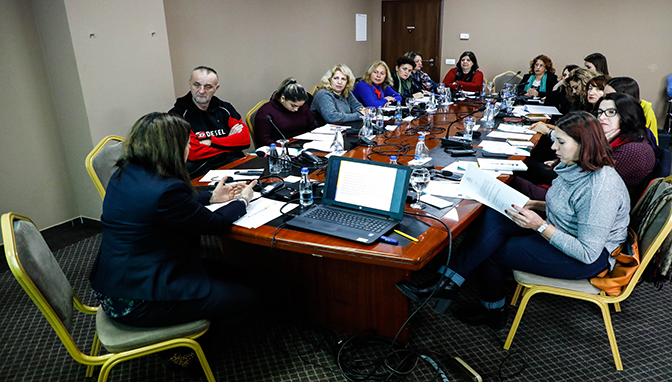
On March 5, the “Contemporary Woman” organization held a discussion on “Sexual and reproductive rights” in the framework of the “Society’s Stigma on Sexuality” initiative.  

At this meeting, representatives of the Directorate of Health of Prizren, civil society and students were present. FilloretaVukshinaj, Project Coordinator at ‘Contemporary Woman’ center, informed the attendees regarding the initiative and its aim.  

Some of the recommendations to be submitted to the Ministry of Health and Municipal Directorate are as follows:  

  • Raising awareness on using modern means of contraception through lectures for adolescents and other people, especially those coming from rural areas. Health professionals must not be reluctant to discuss contraception methods with those interested.  
  • Promotion on different internet tools – Prizren Regional Hospital and Family Health Centers need to update the information regarding reproductive health on their website. 
  • Privacy protection – Prizren Regional Hospital in coordination with the Ministry of Health (MoH) shoud raise awareness among health professionals about privacy and confidentiality regarding contraceptive services, abortion, and maternity care. The MoH should also establish a monitoring committee regarding the professionalism of health officials. 
  • Amend the Law on Reproductive Health – Articles 2.5, 7, 8 of Law No. 02 / L-76 of the Law on Reproductive Health replace the word “female” with the word “woman” because the term “female” is the scientific term which refers to the biological and physiological characteristics, namely the sex of a species that is capable of giving birth, and the term “woman” refers specifically to human beings, or to a socially created role. 

A detailed presentation of the Law on Reproductive Health was carried out by lawyer Leotrim Gërmizaj. He also discussed pornography, the dangers and threats that come from cybersex (a virtual sexual relationship where people send messages / images with sexual content to each other throught internet). 

Attendees emphasized that these phenomena are particularly dangerous, because in most cases, the victims of pornographic and cybersex programs happen to be adolescents. 

This initiative is supported by the Kosovo Women’s Fund (KWF) of the Kosovo Women’s Network (KWN) and funded by Austrian Development Agency (ADA). 


Women’s Rights Activists Encourage Sweden’s Continued Engagement in Western Balkan Countries

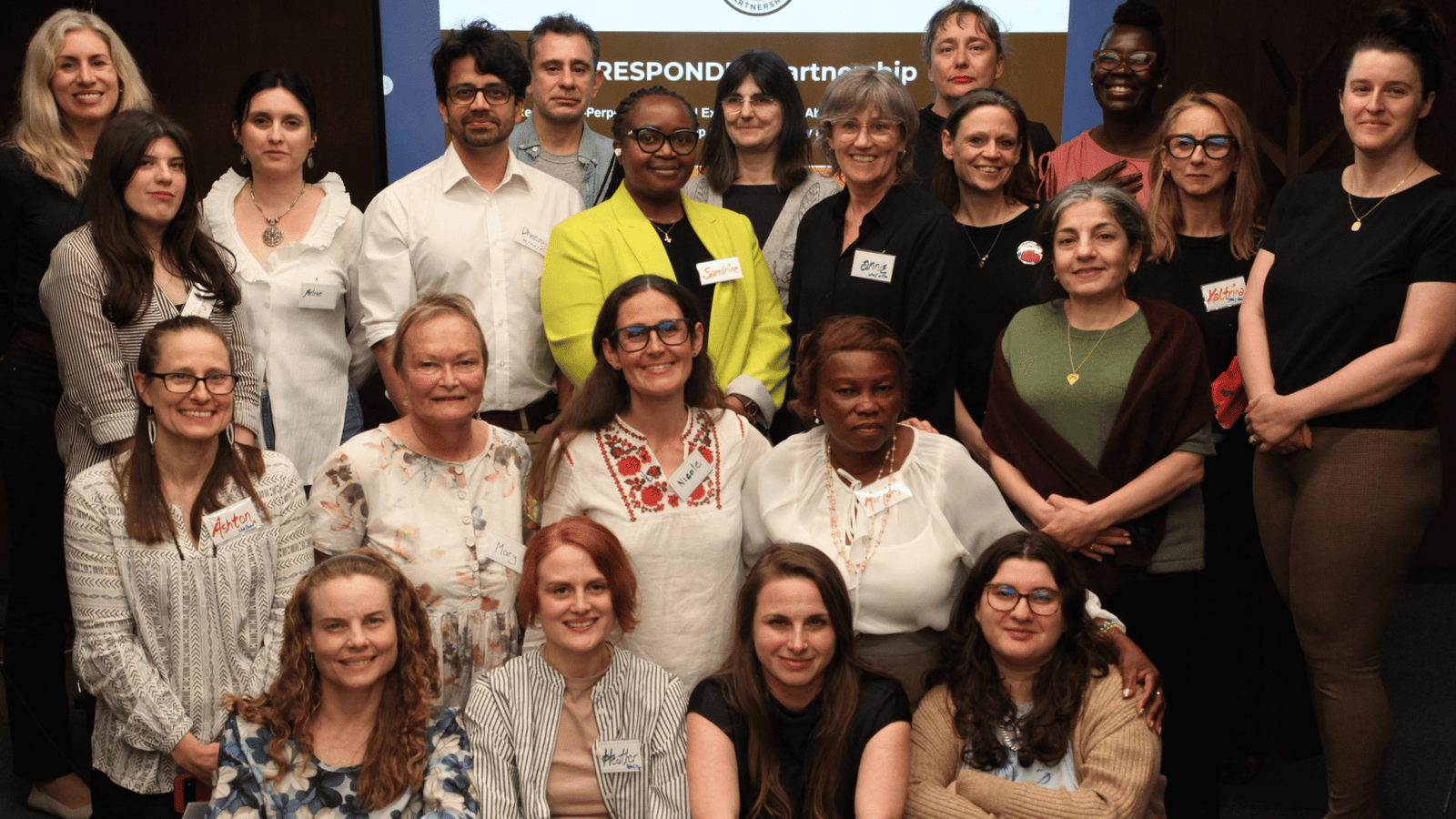
On 21 Feb., a delegation of women’s rights activists from Western Balkan (WB) countries met representatives of the Swedish Ministry of Foreign Affairs in Stockholm, Sweden to discuss the situation of women’s rights activists in the region.

The timely meeting occurred in the context of the Ministry of Foreign Affairs designing their new Strategy for the WB. Activists encouraged the Swedish government to continue with its bold Feminist Foreign Policy and the priorities of its current Strategy, which remain very relevant: democratic accountability; increased trust and reconciliation; human rights, gender equality and non-discrimination; and a pluralistic civil society, particularly one that recognizes and includes women’s rights activists.

On behalf of the Kosovo Women’s Network (KWN), Nicole Farnsworth spoke about the importance of Sweden’s continued political support in promoting women’s rights as human rights in the region.

“Sweden has been among our greatest allies in pushing forward reforms over the last 10 years”, Farnsworth stated.

Sweden, through its embassies, the Swedish International Development Cooperation Agency (Sida) and the Kvinna till Kvinna Foundation, have provided important long-term political and financial support to women’s rights organizations, enabling them to bring about positive changes within their countries and communities.

Towards building resilient democracies, forging peace and furthering human rights, women’s rights organizations have been a leading force, sometimes among the only critical voices and watchdogs holding their governments accountable, Farnsworth said.

Maja Raicevic from Women’s Rights Centre in Montenegro explained, for example, that autonomous women’s rights groups play a crucial role in providing services to survivors of violence and meanwhile holding justice institutions accountable. Their work diagnoses serious issues with the justice system and state services, which then can be used to hold governments accountable.

Farnsworth later observed the many other roles women’s rights groups play, “We have contributed important research to inform democratic processes and new laws. Sometimes we have even written the laws and policies,” she said. “Women activists also have supported integrating a gender perspective in the EU accession process; raised awareness about democratic values and gender equality; facilitated public consultations and citizen engagement, particularly of women [and] built peace across divides,” she continued.

Despite these important developments, several challenges still exist in the region, which remains highly unstable, activists said.

“Democracy continues to be under threat amid patriarchy, nationalism and corruption,” Farnsworth said.

Marija Bashevska from Reactor in Macedonia spoke of the challenges of nationalism and its impact on women’s rights activists’ work, but also on individual women citizens.

Women’s voices are regularly left out of negotiations, Bojana Mumin from the Kvinna till Kvinna Foundation in Bosnia and Herzegovina explained. Snezana Jakovljevic from Sandglass organisation in Serbia similarly emphasized that women’s priorities have not been considered in the dialogue between Prishtina and Belgrade, a point that KWN often has reiterated.

Big political issues like border exchanges, threats of potential war and ongoing negotiations continue to dominate public space, activists said. By keeping the focus on these “political crises”, political leaders divert public attention away from the real issues that affect people’s everyday lives, like high unemployment rates, poverty, poor healthcare and weak education systems, all of which affect women in particular.

Moreover, perhaps since women’s rights activists often are among the few voices holding officials accountable, some activists have been declared “enemies of the state”. Activists shared stories of violence and threats against them, including by politicians who maintained full impunity; policies put in place and corrupt procurement practices that inhibit their access to resources and influence; and policies attempting to control women’s bodies amid nationalistic arguments of increasing natality rates.

Meanwhile, many foreign funders have stopped funding women’s rights organizations in the region, with the understanding that governments should take responsibility. However, this has not happened in practice. All of these issues, among others, have contributed to what has been termed the “shrinking space” for women’s rights activists.

In this context, Sweden’s continued political support in furthering women’s rights as human rights in the WB, including the simple act of standing physically beside women’s rights activists, is crucial support. As foreseen in the EU’s Gender Action Plan, this coupled with continued financial contributions to the work of autonomous women’s rights groups is a crucial investment in stability in the region and thus in Europe, activists argued.

“Sweden, through Sida and Kvinna till Kvinna, has been a role model among funders in providing long-term, flexible support that meets our needs and supports us in realizing our shared goals of strengthening democracy and furthering gender equality and human rights in our countries,” Farnsworth said. “We hope that direct support to women’s rights organizations and regional women’s funds, with their special approach, will enable us to continue pushing for key reforms.”

Representatives of the Ministry of Foreign Affairs thanked activists for sharing their experiences and emphasized that the support to women’s rights organizations will remain a priority for Sweden in the future.

This meeting was part of a trip supported by the Kvinna till Kvinna Foundation, during which women’s rights organisations from six WB countries also strategized for future joint advocacy initiatives: Albania, Bosnia and Herzegovina, Kosovo, Macedonia, Montenegro and Serbia. This represented a continuation of their lasting cooperation towards integrating a gender perspective in the countries’ EU Accession processes. Other KWN member organizations involved included Vetone Veliu from the Mitrovica Women’s Rights Association and Luljeta Demollli from the Kosovar Gender Studies Centre.

Women’s rights organizations in the region have collaborated in forging peace across ethnic, national, age and other divides since the 1990s. The Kvinna till Kvinna Foundation has been one of their longest partners.

KWN and the Lobby discuss about the Cooperation Strategy

On Feb. 1, at the premises of the Municipality of Obiliq, a meeting was held between the Kosovo Women’s Network (KWN) and members of the Kosovo Lobby for Gender Equality from Obiliq, under the framework of the “Strengthening participation of women in politics” Project, funded by the European Union Office in Kosovo. The meeting was attended by 15 members of the Lobby, where they discussed priority issues about the women in this municipality and the importance of cooperation.

Initially, Igballe Rogova, Executive Director of KWN, opened the meeting talking about the Lobby and the continuous increase of interest about it. She stated that the time has come to come together and advocate about the priority issues. Rogova explained that at local level, the Lobby operates in 27 municipalities, but when the wish and availability of cooperation with the central level was expressed, then the Coalition for Equality was established.

“The women of the Coalition need us too, because together and with positivity we can change many negative things”, she said. “The purpose is to be together and support each other, because I’ve met lots of women able to support each other, but this number should increase”, she continued.

Ganimete Aliu, Gender Equality Officer in the Municipality of Obiliq, said among other things that, “main concerns of women in this municipality include domestic violence, employment for middle ages, social assistance for single mothers and, above all, pollution of the environment”.

Furthermore, discussing about the employment of women, Shqipe Strellci said that, “This is a problem in this municipality, especially due to gender-based discrimination”. She added that, “When men perform one job, they are acclaimed; but this does not apply for women”. With regard to the issue of employment, it was recommended to generate a list to identify the persons that do not have any employed family member.

Another concern raised in the meeting was also the lack of security for the women in this municipality. Some of the recommendations made in the meeting were also related to education, more specifically to the primary education curriculum. Suggestions were made to hold awareness raising activities about gender equality.

Sanije Grajҫevci, head of the KWN member organization “Aureola”, and member of the Lobby in this municipality, said that, “Municipal Assembly women members should be more vocal and advocate about different issues”. Moreover, it was also suggested to hold a meeting between the Lobby and the Mayor of this municipality.

“We never needed solidarity more than now”, Grajçevci said. She added that, “it is essential that women, including housewives, educated and non-educated women from all types of professions, come together to identify the issues and advocate, because at the end of the day, we are all equal citizens”.

All participants agreed and emphasized that the solidarity and support will be achieved only by increasing active participation of women.

Lobby for Gender Equality held the first meeting for 2019

On Feb. 11, the Lobby for Gender Equality (LGE) held its first meeting for 2019. The meeting started with discussions about current topics in our country, namely the case of sexual abuse of the minor girl from Drenas and the discriminatory logo of the 11th anniversary of independence. Moreover, in relation to the logo of the 11th anniversary of independence where in its foreground appears only the silhouette of a man, the discussions about the reaction to this issue concluded that this will only close the doors of the army for girls and women.

Therefore, immediately that day the Lobby and KWN sent a press release to the media, which can be downloaded here.

The meeting then continued with discussions about successful advocacy initiatives undertaken in 2018.

Igballe Rogova, Executive Director of KWN, presented a new initiative supported by the European Union Office which aims at strengthening the participation of women in politics, explaining how this four-year initiative will contribute to more meetings between KWN, Lobby and Coalition for Equality.

“We plan to organize meetings with women voters in every municipality. Today, we have in front of us a chance to work so that more women are included in decision-making positions. We need to change this situation, as now have the opportunity, after a long time, to turn to women voters. The goal is to give a message, and that message is solidarity among women”, Rogova said.

Municipalities of Mamusha, Fushe Kosovo, and Dragash are among the first places that were proposed to start the meetings with women voters.

Participants agreed that it is the time for women to publicly support each other.

While regarding the achievements of 2018 and the objectives for 2019, Lindita Dërvisholli from Municipality of Fushe Kosovo said that they have achieved to increase subsidies and advocacy for the mammography, with the latter being approved by the Municipal Assembly and budget will be allocated every year to ensure it.

In this meeting was decided that the meeting of the Coalition for Equality will be held in March. This meeting was supported by the Austrian Development Agency (ADA).


Protest in Drenas against Sexual Violence in Schools

On Feb. 6 in Drenas, starting at 12:00 hrs, a protest took place under the slogan “Pro Learning, No to Raping”, organized by the civil society of Drenas. Under the chanting “Pro Learning, No to Raping”, “Abortion is a choice, not an obligation”, “You are not an investigator but a rapist”, “School is ours, not of pedophiles”, the protesters marched from Gymnasium Gjergj Kastrioti Skëndërbeu toward the Police Station of Drenas.

The protest was also joined by teachers and students from Drenas school, and activists and citizens from different cities of Kosovo.

During the protest, organizers raised the following points:

  • Termination of the license of the gynecologist and closure of the clinic where the illegal abortion took place;
  • Dismissal of the teacher from the school;
  • More rigorous supervision by the director of the school;
  • Public commitment by the Commander of the Police in Drenas that: Upon his own initiative, to request from the Police Inspectorate to carry out a complete investigation of the Police Station in Drenas about similar cases; depending on the findings, to undertake measures; to organize trainings to increase the awareness of staff in relation to gender equality, dealing with such cases and ethics at work; to work closely with the civil society and youth organizations in handling social concerns; and to make sure that Article 37, item 9 of LAW No. 04/L-076 ON POLICE is rigorously implemented. After the protest, activists conducted a symbolic action, showing an banner in the form of a gratitude letter, on which was written: Vesel Veseli, rapist.

In relation to this case, a protest was held also yesterday, on February 7, in front of the Kosovo Police in Prishtina.

To read the press release sent by KWN, please click below:

https://womensnetwork.org/sq/e-mitura-dhunohet-shantazhohet-dhe-i-rrezikohet-shendeti-i-dyshuar-kryesor-nje-zyrtar-policor/

Women from the Dobrava village get informed about the reproductive health

On Feb. 5, the Women’s Alliance for Integration (WAI) Organization held a meeting with the women of the Dobrava village of the Municipality of Ferizaj to discuss about the reproductive health. This initiative was taken under the framework of the “Awareness of Roma, Ashkali and Egyptina Women in the Municipalities of Ferizaj and Lipljan for Their Health” Project. 27 women and girls from different communities attended the meeting.

Doctor Zekije Shala informed about the importance of intimate care and consequences that could come as a result of improper care. She shared with the women present detailed advice, in response to the concerns that they had.

Among other things, Doctor Shala informed the participants about the cervical cancer and breast cancer. She also shared information about sexually transmitted diseases, and importance of intimate care.

Participants expressed their gratefulness for this activity, considering that the advice received from the doctor will serve them for a healthier life.

This project is supported by the Kosovo Women’s Fund (KWF) of the Kosovo Women’s Network (KWN) and funded by the Austrian Development Agency (ADA).

Ministry to Release Long-Awaited Assembly-Approved Funds for Shelters

For years, the Kosovo Women Network (KWN) has advocated for the government of Kosovo to allocate sufficient budget for covering all the expenses of shelters for women and children who have suffered domestic violence. Indeed, assuring the wellbeing and safety of women and children, is in accordance with Kosovo’s constitutional obligations and legal responsibilities.

In recent years, the lack of sufficient shelter financing, coupled with delays in such financing, have placed women and children at great risk. Shelter closures due to insufficient financing in December 2018 and January 2019, left some women and children on the street and endangered.

Initially, the draft budget for 2019, once again did not include sufficient funding or a specific budget line dedicated solely to financing shelters. While some budget existed under the social services budget line of the budget of the Ministry of Labour and Social Welfare (MLSW), it would not cover all of the needs of shelters.

Therefore, on Dec. 7, KWN addressed the deputies of the Kosovo Assembly with a letter, requesting to add a new budget line in the draft budget, in the amount of €660,000. Discussions directly with shelters suggeseted that this amount would cover all the expenses of these shelters and daily care centres for women and children who had experienced domestic violence, human trafficking and children with no parental guidance. This proposed amount was calculated based on the previous expenditures and known needs of shelter staff. The calculations also considered the expenses for two new shelters for Serbian women in northern and southern Kosovo, respectively.

After sending this letter, KWN was invited to meet with representatives of several different political parties. The Women’s Caucus proposed and advocated amendments to the law soon after, towards ensuring a special budget line for the shelters.

On Feb. 3, the Kosovo Assembly approved the Budget for 2019, supporting KWN’s request to set a permanent budget line for shelters and day centres. This year’s budget includes a completely new line called “Basic Expenditure for Shelters”, in the amount of €880,000.

As shelters still at the end of Feb. 2019 had not received funding for their operations during the last two months, several contacted KWN requesting support in advocating for the release of the funds recently approved by the Assembly. KWN sent a letter to MLSW requesting immediate release of these funds last week.

Yesterday, Minister of Labour and Social Welfare Skender Reçica requested a meeting with KWN Executive Director Igballe Rogova. He confirmed that shelters and day centres will be directly financed from this budget line, in accordance with the rules of public finances. This will assure the adequate functioning of shelters and will avoid temporary closures and similar problems that they have encountered in 2018 due to the insufficient budget.

KWN and MLSW agreed to future cooperation to ensure protection for women and girls who have suffered violence. KWN will continue to monitor the implementation of the legal framework in the coming years, as part of its Strategy for 2019-2022.

Meanwhile, KWN, shelter and day centre representatives have thanked the Kosovo Assembly deputies for their work and approval of this crucial support. Moreover, KWN thanks the diverse actors that have been involved in these advocacy efforts: the EU Office in Kosovo, EU Special Representative, Organisation for Security and Co-operation in Europe, UN Women and other members of the Security Gender Group, among others.

In accordance with the Convention on the Elimination of All Forms of Discrimination against Women, which Kosovo has in its Constitution (Article 22), states have the responsibility to undertake all measures to combat violence, including protective measures and supporting services for victims. Setting a permanent budget for the shelters and covering their expenses, including counselling and caring for victims also is specified in the National Strategy of the Republic of Kosovo on Protection from Domestic Violence and Action Plan 2016 – 2020.

The long-term advocacy that contributed to this important development received support from the Austrian Development Agency and the Kvinna till Kvinna Foundation, who have financed the work of KWN staff members involved in drafting many letters, making evidence-based proposals and undertaking ongoing advocacy.

Photo credit: MLSW, 2019.

Shelters, KWN, Ombudsperson Institution Cooperate to Address Violence against Women

In close collaboration with the Ombudsperson Institution, the Kosovo Women’s Network (KWN) organized a workshop on the role of the Ombudsperson Institution (OI) in addressing violence against women for representatives of shelters and day centers that provide services to women who have suffered gender-based violence. 

Building on the positive collaboration established between KWN and the OI, Merita Syla, from the OI provided information on the relevant legal framework and instances in which the OI can assist with such cases.  

During the workshop, participants defined concrete steps for referring cases of violence against women and girls to relevant institutions and, eventually, when relevant, to the OI. 

This workshop is part of the cooperation established between shelters, KWN and the OI to work towards the more dignified treatment of women who have suffered violence by relevant institutions. Their cooperation will continue this year in supporting women and girls who have experienced violence in seeking justice and filing complaints against institutions that fail to undertake their legal obligations. Participants also discussed important issues faced by shelters, including permanent funding of shelters and the security of their staff.

This workshop was funded by UN Women with financial support from the European Union. A KWN staff member supported by the Austrian Development Agency also shared her expertise.  

“Psychotherapists in Action” hosts roundtable about palliative care in Kosovo

On Feb. 25 the association “Psychotherapists in Action” hosted a roundtable within the scheme of the initiative “Advancing palliative care in Kosovo and raising awareness among the community for people with special needs”.

The mission of this initiative is to protect and improve health, with a particular focus on rural areas where there is a weaker access to health services and people also lack health education.

This event was attended by the Director of the Regional Hospital of Gjilan, the Director of Health Department in Gjilan Municipality, the Director of the Main Family Medicine Centre, as well as representatives of the civil society organizations (CSOs).

Doctor Ramize Ahmeti – Ibrahimi,  presented the pace of the three-month work, during which time the “Psychotherapists in Action” conducted 230 visits to women, men and children from the villages of Gadish, Kishnapol, Verbicë, Zhegovc, Pidiq, Llashticë, Dazhnicë, Parallovë, and Makresh.

Further, the Director of Health Department in Gjilan Municipality, Selami Xhemaili appreciated the work completed by the Psychotherapists in Action.

Among the recommendations arising from the implementation of this initiative are the promotion, education, treatment and the counselling in the family that should be continuously followed, as well as families ought to be informed through media and schools on the role of the medical team.

This roundtable, respectively this initiative, is supported by Kosovo Women’s Fund (KWF) of Kosovo Women’s Network (KWN), and is funded by the Austrian Development Agency (ADA).

Handikos Mitrovica, a strong voice of Children with Disabilities and their mothers

On Feb. 25 Handikos Mitrovica held its last meeting on the project “Depression in mothers of children with disabilities and in people with disabilities”.

The meeting was attended by woman psychologist from Diakone Kosova Gjevahire Balaj, Director of Mundësia NGO Hasime Tahiri, Director of the Human Rights Unit in the Municipality of Mitrovica Fitim Rama, Director of Handikos Mitrovica Myrvete Hasani, and also the mothers of children and young people with disabilities.

In the beginning Hasani stated that this initiative benefited 15 mothers and 12 young people. Further she explained that mothers and children were trained to better understand and face issues related to symptoms and depression behaviours, confronting and fighting stress, and the postnatal stage with a child with disabilities.

Balaj added that the idea of this initiative is for mothers to gather and share their concerns and emotions. The lack of society’s support for mothers of children with disabilities was also part of this discussion.

Whereas Tahiri added that a civic lobbying is required in order for health and education institutions to contract psychologists for the needs of the mothers’ of children with disabilities.

Rama complained that the Municipality of Mitrovica has a limited budget and cannot provide financial support, while announcing that also this year a public call will be launched for a modest financial support of NGOs focused in this particular field.

This initiative is supported by Kosovo’s Women Fund (KWF) of Kosovo Women’s Network (KWN), and is financed by Austrian Agency for Development (ADA).