The women of Fushë Kosova’s Uglar introduced to the Mechanisms against Domestic Violence

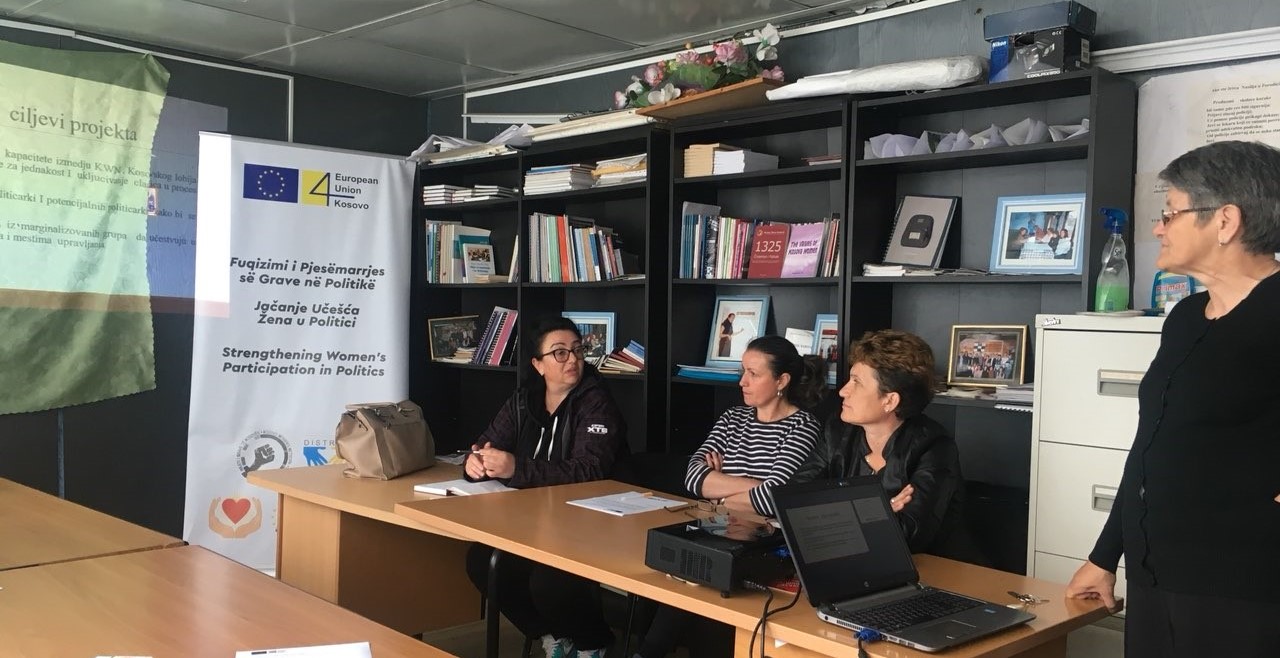
On February 22, “Luna” organization held its last meeting on the project “The promotion and protection of women’s right- against gender based violence”. This meeting took place in Uglarë, a village of Fushë Kosova and gathered over ten women from Serb community.

The subject of discussion was: “Informing women for their rights in case of domestic violence, regarding institutions, the support and acknowledge of problems which women from non-majority face when they are subject of domestic violence”.

Nevenka Riaklo, Director of “Ruka Ruci” organization, a member organization of Kosovo Women’s Network (KWN), gave a detailed description of this initiative for the attendees.

Amongst the speakers in this meeting was Ariana Qosja-Mustafa, Programme Director and Senior Researcher of KIPRED, and also Chair of the Board of KWN. She spoke about the causes and the most common victims of domestic violence. She also introduced the participants to the Law on Domestic Violence Protection, and the institutional ways to pursue in case of experiencing such a violence.

Qosja-Mustafa stated that Kosovo’s laws guarantee equal treatment, but the implementation of these laws remain weak.

Furthermore, the participants discussed amongst themselves for the importance of law implementation, and also about the forms of institutional response in the cases of domestic violence.

The participants highlighted the need for the Government to provide funds for running  the Office of Free Legal Aid, which used to exist in Graçanicë.

This initiative is supported by Kosovo Women’s Fund (KWF) of KWN, and is financed by the Austrian Development Agency (DA).

Civil Society reacts against the statements of prosecutor Rexhep Maqedonci

On March 27 through a press release Kosovo Women’s Network (KWN) with its partners from civil society have expressed concerns over the statements made by prosecutor Rexhep Maqedonci, published on 25 Mar. 2019, in the news portal Kallxo.com, more specifically the article “The Prosecutor Rexhep Macedonci calls ‘scurvy’ the student who complained of sexual harassment”.

In this discourse, the civil society called for the aforementioned prosecutor to be discharged from the case, due to the impartiality of the prosecutor on the case by aligning with the perpetrator hence failing a fair treatment of the victim.

Abstaining on having influence over the state prosecution’s independent investigation, civil society considers that the prosecutor’s statement is prejudicial, offensive and discourages the victim and the subsequent victims to denounce similar cases in the prosecution.

The civil society also emphasized the crucial significance for the State Prosecutor and the Kosovo’s Prosecutorial Council to distance themselves from this public statement of Maqedonci prosecutor.

Read HERE the full press release where you can find legal references in Kosovo’s laws and in the European Union’s directives as well.

Civil Society reacts against the statements of prosecutor Rexhep Maqedonci 

Alarmed by the statement of Prosecutor Rexhep Maqedonci, published on March 25, 2019, on the portal Kallxo.com, more specifically the article “The Prosecutor Rexhep Macedonci calls ‘scurvy’ the student who complained of sexual harassment”, we the below signed express our concern on the approach and statements given by the prosecutor concerned.

Abstaining on having influence over the State’s Prosecution independent investigation, the civil society deems that the prosecutor’s statement is prejudicial, offensive, and moreover discourages the victim of this case and also other victims to report similar cases to the Prosecution.

Attorneys’ allegations that a harassment cannot be reported after three years and the allegations that the case is a defamation still without listening to the victim’s statement indicates the incorrect approach of the state prosecution in addressing these cases. At the end the prosecutor warns that he will deal with the denouncers, which is a clear message to the other casualties who have the courage to report such issues to the prosecution. There is no time limit in the Kosovo Criminal Code forbidding the party to report sexual harassment, so it is not the prosecutor’s right to prejudge whether he will investigate the case or not based on when it was reported.

Prosecutor Rexhep Maqedonci, instead of initiating independent and objective investigations into the reported case of sexual harassment, has decided to “blame the victim”, thus directly affecting the conduct of the investigation as well as intimidating and blackmailing the sexual harassment victim to continue reporting and seeking justice regarding the allegation that the professor has sexually harassed. In his statement, the prosecutor emphasized that reporting is taking place 3 years after experiencing sexual harassment, and here seized the opportunity to threaten the victim’s spouse.

According to the Kosovo Anti-Discrimination Law and European Union Directive 2002/73 / EC on Equal Treatment in Employment for Men and Women supplemented by the European Union Directive of 5 July 2006 on the Application of the Principle of Equal Treatment of Women and Men in Employment and Occupation, persons who complain of discrimination or harassment before a court or other legal institution, leave the burden of proof to the person against whom a complaint is filed. This person must prove that the charges against him or her are not true, by providing evidence that there has been no violation.

Also, since January 2019, Sexual Harassment is defined in the Criminal Code as a criminal offense, where in para. 3 of this article states that: “When the offense provided for in paragraph 1 of this Article is committed by the perpetrator who is a teacher, a religious leader, a health care professional, a person entrusted with the caretaking of such person or in any way the perpetrator shall be punished by imprisonment of six (6) months to three (3) years.”

Given the progress of this investigation by the prosecutor Rexhep Maqedonci, through this letter, we the representatives of the civil society are requesting the dismissal of this prosecutor from the case in question because of the negligence with the accused party and the unfit treatment of the victim in question. The prosecutor’s prejudices deprive each victim of sexual harassment from seeking justice while encouraging other potential offenders to continue with their harassment.

It is very important that the State Prosecution and Kosovo Prosecutorial Council refrain themselves from proclaimed positions of the prosecutor Maqedonci in his public statement. Otherwise, this will be cosidered as a silent approval of such access to sexual harassment.

We remind the Chief State Prosecutor, Kosovo Prosecutorial Council and prosecutors in all Prosecutions in Kosovo that the treatment of sexual harassment and other forms of violence and sexual harassment against women and girls requires need serious treatment, objectivity and above all understanding of the relationship of power and discriminatory social norms on women and girls.

Therefore, let this case serve these institutions, including the Academy of Justice, to engage in capacity building of prosecutors and judges dealing with cases of violence and sexual harassment so that victims of these crimes receive dignified treatment and the perpetrators are penalized by merits.

Signed by:

Alter Habitus

Anibar

Community Development Fund – CDF

Dajana Berisha, Activist

Ellen Frank-Lajqi, Activist

Environmentally Responsible Action (ERA) group

FEMaktiv

Forum for Civic Initiatives – FIQ

Kosovar Civil Society Foundation– KCSF

GAIA Kosovo

Kosovar Institute for Policy Research and Development- KIPRED

Prishtina Institute of Political Studies- PIPS

INTEGRA

Youth Initiative for Human Rights – YIHR

Organization for Increasing Quality of Education- ORCA

The Program for Studies and Gender Research UP

Advocacy Training and Resource Centre –ATRC

Kosovar Gender Studies Centre – KGSC

Centre for Contemporary Art “Varg e Vi”

Art and Community Centre- – Artpolis

Centre for Social Group Development –CSGD

Balkan Investigative Reporting Network- BIRN

Kosovo Women’s Network- KWN

Network of Cultural Organizations

Syri i Vizionit

Women in Prizren introduced to the importance of Reproductive Health 

On Feb.27 the Organization of People with Muscular Dystrophy (OPDMK) held a meeting in Prizren to discuss issues related to reproductive health, intimate hygiene and about measures preventing sexually transmitted diseases. This initiative was undertaken in the framework of the action “Health for everybody”.

12 women were present in this meeting, some of them with disabilities, and the rest were mothers of children with disabilities.

Teuta Daullxhiu, Medical doctor interacted with the participants about the importance of reproductive health, while advising that this issue must never be neglected.

The significance of Papanicolaou test (abbreviated as Pap test) and Sexually Transmitted Diseases were two of the topics that were discussed in the continuity of the conversation.

“Unlike in other places, in Kosovo does not exist a National Plan in helping women and girls to carry a Pap test, therefore the awareness on this topic remains low”, said Daullxhiu.

This initiative was supported by Kosovo Women’s Fund (KWF) of Kosovo Women’s Network (KWN), and is financed by Austrian Development Agency (ADA).


We March, We do not Celebrate: Women and Men Marched Again for Human Rights

International Women’s Day, 8 March in Kosovo was marked with many activities organized by civil society, activists, academics and students.

This year again in Prishtinë was marched for economic and social rights, as a precondition for a decent civic engagement, to seek employment without exploitation, equality, freedom and social justice, employment with salaries for a dignified life, and also against sexism, homophobia, transphobia and racism. The participants also called for health insurances, safety at work and a right to work free of discrimination of age, ethnicity education, sexual orientation and skills.

“We march, we do not Celebrate” protest started from 12:00 PM, where hundreds people marched from “Zahir Pajaziti” Square, passing by Central Bank of Kosovo, the Municipality of Prishtina, the Basic Court, and then to the Government of Kosovo/Parliament. Protesters were chanting slogans drafted by the group such as: “My body, my right”; “Do not touch my inheritance!”; “I do not want flowers, I want a work contract”; and “The profession has no gender”. Activists under the motto “We march, we do not celebrate” urged citizens to mobilize together against the injustice and exploitations at work, in both public and private sector.

Similar marches were also held in other places in Kosovo, including Rahovec, Prizren, Mitrovicë and Ferizaj, where a large number of citizes protested in the streets.

Ashkali and Egyptian Women with infrequent medical visits

On March 29, the organization “Women’s Alliance for Integration” (WAI) held its last meeting in the framework of the initiative “Awareness on their health of women from Roma, Ashkali and Egyptian Community in the municipalities of Ferizaj and Lipjan”.

During this meeting the report titled “The access to health services of women and girls from Roma, Ashkali, and Egyptian Community in the municipalities of Lipjan and Ferizaj” was published.

Adelina Qorraj-Emini, Director of this organization shared with the participants the founding of this report, while stating two main concerns; rare medical check-ups and early marriages.

Representatives from the Department of Health and Centre for Social Work from Ferizaj, representatives from the Office for Communities and Returns in Lipjan, the Director of the Centre for Social Work from Lipjan, and women and girls who benefited from this initiative were also present in this meeting.

For drafting of this report, a survey within 102 women and girls from Ferizaj and Lipjan was conducted.

Some of the recommendations suggested by this report are as follows:

  • To conduct deep analysis and researches on the situation of early marriages in Kosovo, including the Ashkali and Egyptian communities, with the aim of informing key decision-makers on the next necessary steps needed to effectively address this practice;
  • To realize awareness raising campaigns for women and girls regarding the health and patient’s rights;
  • Provide further funding opportunities to organize and carry out awareness campaigns on the importance of regular gynaecological examinations, including the prevention of sexually transmitted infections and diseases, uterine carcinomas, etc., among women of Ashkali and Egyptian community.

This initiative is supported by the Kosovo Women’s Fund (KWF) of Kosovo Women’s Network (KWN) and is financed by Austrian Development Agency (ADA).

CPWC “Raba Voca” advocates for joint parental leave

On 26 March, Centre for Protection of Women and Children (CPWC) “Raba Voca”, held its last meeting under the framework of the initiative “Parental leave as a future model in Kosovo”. Part of this meeting were representatives of civil society, the municipality of Mitrovica and officials for Gender Equality.

Introductory, the Director of CPWC “Raba Voca”, Fidane Hyseni presented the achievements and challenges during the implementation of this initiative.

Whereas, Albulena Murati a psychologist in this organization revealed the research conducted on parental leave.

“The parents should be as good model as they can, aiming to be a good example for their children”, she stated.

Murati mentioned that according to the existing Labour Law, parental leave is not recognized. This because fathers are allowed of only two days off paid leave, as well as two unpaid weeks, a leave which they can use any time before the child is three years old.

However, in the amendment of Labour Law in which experts from civil society are contributing, the joint parental leave is intended, in which a period of 12 months of leave can be used by the mother, the father or even be shared between the two of them. Different actors involved in the process of amending the law have proposed different modalities regarding this leave.

150 citizens between the ages 19-70 from the municipalities of Mitrovica, Vushtrri and Skënderaj took part in this research.

In the research, on the question to whom the care of the kids belongs, the vast majority answered that it belongs to both parents. A percentage has answered that the care of children is a sole responsibility of women, and even a smaller percentage have estimated that caring of children belongs only to men. The findings of research suggest show that a very small number of people have used the joint parental leave from the workplace.

Hyka Imeri, Gender Equality Officer in Skenderaj Municipality, highlighted that “girls are being discriminated ever since they are in the mother’s womb, as soon as the baby’s gender is revealed. Tradition and mentality are very difficult to be changed”.

This initiative is supported by Kosovo Women’s Fund (KWF) of Kosovo Women’s Network (KWN) and financed by the Austrian Development Agency (ADA).

KWN Calls for Respect, Recognition for Survivors of War-time Sexual Violence

Download File
KWN expresses concern over recent, unfounded accusations by CDHRF, calls for continued public support for survivors of sexual violence perpetrated during the war in Kosovo

Pristina – The Kosovo Women’s Network (KWN) expresses deep concern regarding the statements made by the Council for Defence of Human Rights and Freedoms (CDHRF) regarding compensation for persons who suffered sexual violence during the war in Kosovo.

Today, CDHRF stated in media that there has been “manipulation of the number of victims of sexual violence during the war” and that “without any evidence or evidence-based list, it is speculated on the list of 20,000 victims of sexual violence that has been misused and is being abused by both politics and the non-governmental sector.”

First, in this statement, CDHRF contradicts itself; it states that there is no list and then immediately suggests that there is a list. There is no list and there can never be any list, given the specific nature of this heinous crime. Internationally, evidence has proven that all victims will never come forward, for several reasons. Therefore, as with the prevalence of any such crime, it is impossible to ever arrive at a specific number.

The estimate of “more than 20,000 women” derives from several sources. Among the most convincing, based on a survey of women refugees conducted by the Center for Disease Control and Prevention, Hynes and Lopes Cardozo, estimated that between 23,200 and 45,600 Kosovar Albanian women were raped between August 1998 and August 1999.[1]

Other authors from outside Kosovo, with absolutely no political interests at stake, have provided similar estimates, as detailed in KWN’s prior reports. These estimates do not include women of other ethnicities, or men, who suffered sexual violence and who also qualify for state benefits under the amended Law on the Status and the Rights of the Martyrs, Invalids, Veterans, Members of the Kosovo Liberation Army, Sexual Violence Victims of the War, Civilian Victims and Their Families.

Related to the fact that such awful crimes rarely are reported, it is completely unsurprising that only 968 persons applied for status recognition. Rather, this demonstrates that many brave women came forward.

“In Bosnia and Herzegovina, there were an estimated 60,000 women raped, but only 1000 applied,” said Igballe Rogova, KWN Executive Director. “Why? Because of stigma they did not want to come forward. The majority of survivors may not apply, but for them its important that the society stops stigmatizing them”.

KWN and its members know from experience that some survivors do not want to come forward for their own personal reasons. Society must respect their choice. We have no right to expect or demand that they come forward if they choose not to do so. What is important is that survivors feel recognized and fully supported by Kosovo institutions and society.

In conclusion, we are deeply saddened that such hurtful statements would come from CDHRF, which historically has been a defender of human rights and freedoms in Kosovo.

KWN continues to voice its strong support for all women and men who have suffered sexual violence during the war. We continue to demand justice, as well as seek recognition and respect for all survivors.

KWN is a network of 143 diverse women’s rights organisations that supports, protects and promotes the rights and the interests of women and girls throughout Kosovo.

Signatories:

Kosovo Women’s

Kosovar Rehabilitation Centre for Torture Victims

Medica Gjakova

Medica Kosova

Centre for the Promotion of Women’s Rights

Jahjaga Foundation

For further information or interviews contact:

Igballe Rogova

Executive Director

+383 49 323435

info@womensnetwork.org

__________________________________________________________________

[1] More specifically, they explained: “We found that the prevalence of rape among women was 4.3% (n 560) (95% confidence interval [CI] 2.7–5.9), and 6.1% (95% CI 4.1–8.2) of women were either raped or witnessed rape. Earlier anecdotal reports from the refugee camps in Macedonia and Albania revealed stories about mass gang rapes of Albanian women. Extrapolating these survey findings to an estimated 800,000 Kosovar Albanian women over 15 years of age, we estimated that the number of women raped between August 1998 and August 1999 is between 23,200 and 45,600 Kosovar Albanian women” (“Sexual Violence Against Women in Refugee Settings,”Journal of Women’s Health and Gender-based Medicine, 9, no. 8, 2000: pp. 819-824).

Coalition for Equality discusses “Strengthening Women’s Participation in Politics”

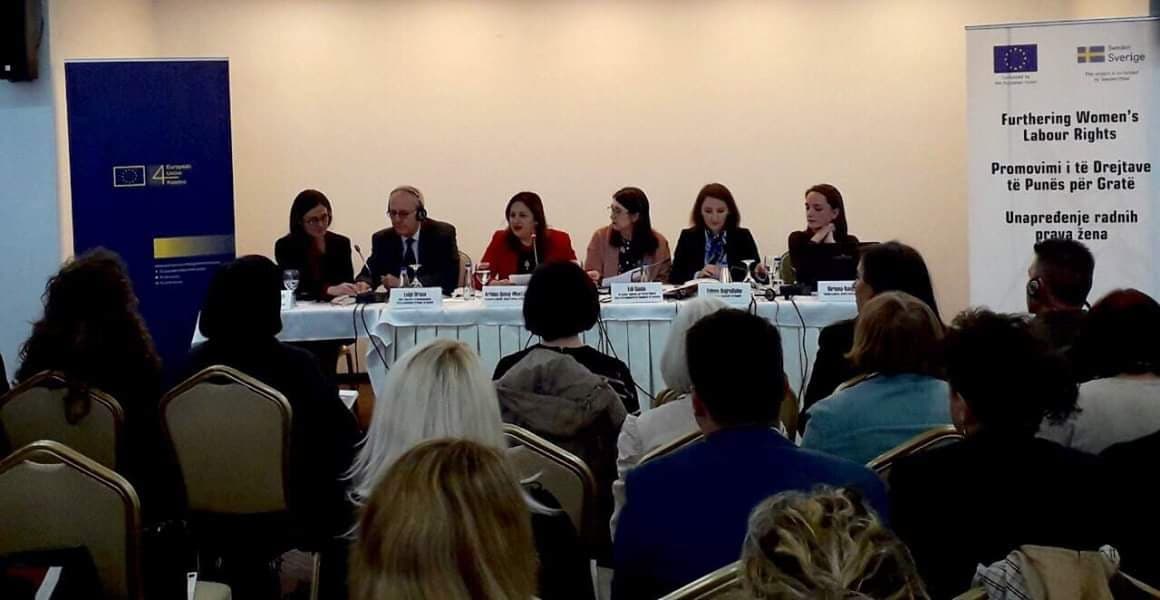
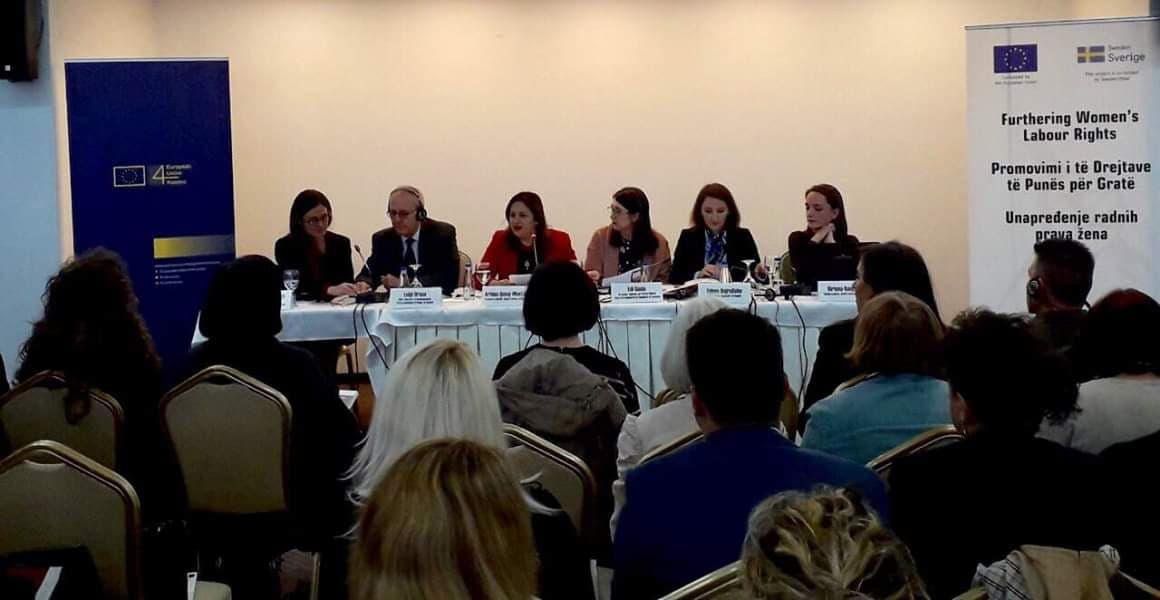
On March 19, Kosovo Women’s Network (KWN) held its Coalition for Equality Meeting where around 85 participants discussed “Strengthening Women’s Participation in Politics”.

KWN’s Executive Director, Igballe Rogova presented to the attenders the initiative supported by the European Union Office in Kosovo, the initiative with aims to increase the women’s participation in politics.

Rogova said that the goal is “empowerment of the civic engagement, gender equality and inclusive democracy by increasing women’s participation in politics and decision-making process in Kosovo”.

“Today we are here with positive energy, because the dream we started last year, it has come true.  And that dream is that we have been united and have created the Coalition for Equality, and now we have found support from the EU’s Office to achieve our unification, our solidarity”, she said.

Annette Fath-Lihic, Chief Political Adviser/Executive Coordinator, European Union Special Representative Office in Kosovo, assessed that lack of law’s implementation remains a problem.

“I have to seize this opportunity and call upon Kosovar authorities to end this gap between execution and legislation, so the lives of women would not be affected because they represent 50 percent of population, but also because this is social justice and a necessary condition for a better functioning of the society”, said Lihic.

Regarding the lack of law implementation, spoke also Mexhide Mjaku-Topalli, Member of Parliament and Chairwoman of Women Caucus. “While the 30 % quota in the local and national assembly has been largely implemented, the Law on Gender Equality which foresees that women hold 50% of posts in decision-making is not being implemented,” she said.

Meanwhile, Ulrika Richardson, Development Coordinator, United Nations Kosovo Team (UNKT) has mentioned the importance of positive energy in such movements.

“Gender equality is related with power. When we look at the power, politics has to do with power. It is obvious that we need more women in politics”, stated Richardson.

In the second part of the meeting it was discussed about the problems which women in politics face in both central and local level. Important part of this discussion were also the ideas for continuing the implementation of Coalition Strategy.

This meeting was supported by European Union Office in Kosovo.

The advancement of the Inheritance Law is required 

Pristina – On 7 Mar. 2019 the Association of Women “Aureola”, a member organization of Kosovo Women’s Network (KWN), held a discussion on “Advancing the Law of Inheritance with purpose to guaranteeing economic stability of family inheritance for female heirs”. This discussion took place within the initiative “Advancement of the Heritage Law”. 

This debate is the second out of four planned to be held throughout the initiative, and it was attended by representatives from civil society and institutions.  

Sanije Grajçevci, Director of the “Aureola”, stated that they seek the removal or suspension of the Article 130 of the Law of Inheritance which will have an impact in women’s economic empowerment.  

Recommendations will be prepared after the cycle of debates get finalized, and then these recommendations will be sent to the relevant government commissions, as well as to all members of Parliament.  

This initiative was supported by the KWN Kosovo Women’s Fund and funded by the Austrian Development Agency (ADA).