KWN Provides Input for SAA Sub-Committee on Innovation, Information Society and Social Policy

The 2019 cycle of the Stabilisation and Association Agreement Subcommittees will begin in February with a meeting on Innovation, Information Society and Social Policy, where issues such as telecommunications, media, social policies, employment and education will be discussed.

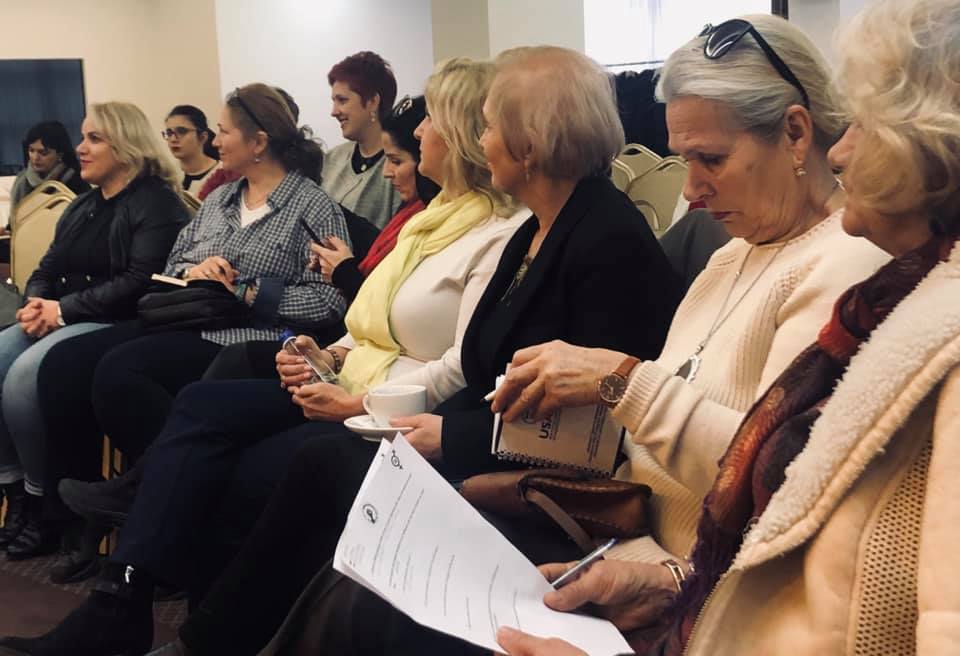
The sub-committees are mechanisms of the technical dialogue, as part of the Process of Stabilization and Association (SAA) for Kosovo. During these meetings, the European Commission and the Kosovo government discuss technical and policy issues and progress in making the necessary reforms related to Kosovo’s EU Accession process. Prior to the upcoming Policy Dialogue meeting between the Kosovo Government and European Union (EU) representatives, the EU Office in Kosovo organized a public consultation with civil society organisations (CSOs) on Jan. 28 in Pristina, attended by the Kosovo Women’s Network (KWN), among others.

KWN delivered practical suggestions and concrete policy recommendations to EU officials related to education reforms, labour and social welfare. KWN recommended closer monitoring of the gender review of education curricula towards transforming existing gender norms through education, including involvement of women rights CSOs in this process, as well as follow-up actions to train teachers based on the reforms. Suzana Bytyci-Jagxhiu, representative of the EU Office in Kosovo, suggested that CSOs should be more involved in monitoring the implementation of the Law on School Textbooks.

Regarding access to education, KWN emphasized the need to allocate a budget for personal assistants for children with disabilities and for the government to ensure accessible public transport so that all children can realize their right to education. KWN noted the gender segregation that exists in academic pathways, as described in the recent Kosovo Gender Analysis. KWN also recommended that the Ministry of Education, Science and Technology together with municipalities put in place policies that can enhance the gender balance at all levels, in accordance with the Law on Gender Equality.

Related to labour and social welfare, KWN addressed the issue of amendments needed for the current Labour Law, particularly related to maternal, paternal and parental leave, as recommended based on KWN’s, among others’, prior research. KWN also recommended transposing the concept of self-employed women, stating that the law needs to address their right to equal parental leave and to benefit from social and health insurance. Together with other civil society representatives, KWN brought attention to the lack of child-care options, particularly in rural areas, which research has shown to directly hinder women’s employment.

A highlight of this consultation was discussion surrounding the government’s approach to addressing the informal economy. KWN reiterated its previously raised recommendation that in its efforts to address the informal economy, the government must conduct a gender analysis to inform better tackling of this issue, using a “do no harm approach”. KWN also recommended that labour inspectors need further training on gender equality-related inspections associated with health and safety at work. EU representatives agreed that the increase in the number of labour inspectors is insufficient and that inspectors need to increase their professional capacity as well.

Each SAA meeting will result in jointly agreed follow-up actions for the Kosovo authorities to take.  KWN hopes that these actions will consider the recommendations made by civil society representatives.

Additionally, EU officials stated that they will consider these issues in the annual Kosovo Country Report for 2019.

KWN’s preparation and advocacy work related to integrating a gender perspective in the EU Accession process is supported by the Kvinna till Kvinna Foundation, with financial support from Sida. The views herein represent those of KWN and are not necessarily those of its financial supporters.

Women of Krusha e Vogël Discuss About Cervical Cancer

On 1 February, Association of Women Farmers “Krusha e Vogël” held its next activity at Central Family Medicine Centre (CFMC) in Prizren, within the framework of the action “Supporting Women through the Menopause”.

Around 20 women and girls from the village of Krusha e Vogël discussed about cervical cancer together with the lecturer Dr. Hanife Hoxha, Coordinator for Continuing Professional Development at MFMC Prizren.

Dr. Hoxha gave a detailed explanation related to the symptoms of this type of cancer, factors that increase the chances of being affected by cervical cancer, and also revealed the importance of regular medical checks.

“The symptoms do not appear at the early stages of cervical cancer, while over time the signs that can be obvious are pain after sexual intercourse, bleeding after the climax, rapid weight loss, as well as the repetition of the menstrual cycle shortly after it has been finished”, stated Dr. Hoxha.

Pap Test is the way through which this particular cancer can be detected, therefore Dr. Hoxha shared with the participants advices for undergoing this test.

Further, Dr. Hoxha called for awareness raising regarding gynaecological visits, while seizing this opportunity to announce that women and girls of Prizren for one year can do Pap test free of charge.

At the end of the discussion, women participants highly appreciated the benefits gained from this initiative, counting here awareness raising about the role of reproductive health at the general wellbeing as the most important one.

This initiative is supported by Kosovo Women’s Fund (KWF) of Kosovo Women’s Network (KWN) and financed by the Austrian Development Agency (ADA).


New Action Seeks to Empower Women’s Participation in Politics

On Jan. 24, the Kosovo Women’s Network (KWN), Organisation of Persons with Muscular Dystrophy of Kosovo (OPMDK), Ruka Ruci (RR) and the European Women Lawyers Association (EWLA) officially launched their new joint action, “Strengthening Women’s Participation in Politics”, in the amount of   €600,500, with €540,000 supported by the European Union (EU) Office in Kosovo and €60,500 from other contributions. 

From now through Dec. 2022, they will work together towards increasing women’s participation in politics and decision-making at both local and central levels. This initiative will contribute to achieving KWN’s Strategy for 2019-2022, recently adopted by KWN members in Dec. 2018. More specifically, this Action seeks to improve the capacities, inclusiveness, solidarity, representativeness and political engagement of women’s networks, so they may engage more in Kosovo’s EU accession process. 

In addition to supporting KWN, the initiative will strengthen the Kosovo Lobby for Gender Equality (KLGE), which brings together women in politics and civil society, as well as men supporters, at the municipal level to advocate for actions towards gender equality locally. The initiative also will support the Coalition for Equality (CfE), a newly formed coalition in 2018, which unites diverse women from politics and civil society at both national and municipal levels in advocating together for important reforms towards gender equality.  Designed in close consultation with KWN, KLGE and CfE members, this action seeks to address the greatest challenges faced by women in politics today.  

The Law on Gender Equality (LGE) defines equal representation as 50% participation of women and men at all levels. However, electoral laws are not aligned and sanctions for not implementing the LGE are rare. Moreover, representation requirements set by the LGE are not met by most central and municipal level institutions. Following 2017 municipal and central elections, women comprise only 33% of municipal assembly members, 32% of parliamentarians, 10% of ministers, 5% of deputy ministers and 0% of mayors. Women with disabilities, as well as Roma, Ashkali, Egyptian and Gorani women are not represented. 

“Women with disabilities are seldom mentioned and discriminated against not only in relation to men, but also ignored by the society in general”, said Resmija Rahmani from OPMDK. “I know that we won’t be able to eradicate the problem completely. However, I believe that one step at a time, we can really push for changes.” 

As stated in the Kosovo Gender Analysis, compiled by KWN, obstacles to women’s participation in politics include socialized gender stereotypes suggesting that women are not sufficiently qualified or capable of being political leaders; political parties’ resistance to involving women; low financing; minimal media coverage of women politicians; women’s time constraints due to care responsibilities at home; and weak connections with constituents. 

In order to address these challenges, the new initiative will work closely with women politicians at all levels and women interested in entering politics towards enhancing their capacities. Moreover, considering their significant underrepresentation to date, the initiative aspires to engage women with disabilities and women from minority ethnic groups more in the aforementioned networks, as well as in politics and decision-making. Inclusiveness and solidarity are fundamental values in this initiative to expand the women’s movement in Kosovo. More meetings between women politicians and citizens, organized in municipalities throughout Kosovo, will seek to engage women citizens, particularly those previously marginalized, in political and decision-making processes. They will have opportunities to bring their concerns directly to decision-makers. Grants to women’s rights groups amounting to a €105,000 over four years will support joint advocacy efforts, together with women politicians, towards gender equality at the local level.  

All networks will benefit from the expertise from European lawyers, related to Kosovo’s EU Accession process and reforms needed to align Kosovo law with the EU Gender Equality Acquis. Meanwhile, new philanthropic initiatives and a strengthened Volunteer Program will seek to secure resources to better sustain the women’s movement in the future.  

This initiative builds on the successes of several previous KWN initiatives, achievements made in the last KWN Strategy for 2015-2018, existing collaboration with KLGE and CfE and the inspirational work of OPMDK and RR in engaging previously marginalized women in advocacy initiatives, supported by the KWN Kosovo Women’s Fund.  

“The network selected you specifically thanks to the work and results you have achieved through small grants,” said Igballe Rogova, KWN Executive Director, during the partners’ first joint meeting. “We need an active voice for women with disabilities and women from minorities as part of the feminist movement and political decision-making processes.” KWN also will seek to actively engage its other member organisations in different dimensions of this initiative.  

Representatives from OPMDK and RR expressed their willingness and enthusiasm for this initiative.  

“This project comes with many responsibilities and challenges,” said Nevenka Rikalo, RR Executive Director, “but I am sure that together we will do even better than we have initially planned.” 

All partners agreed that only through genuine cooperation can we work towards advancing and empowering women to participate in politics and decision-making, especially increasing the number of marginalized women engaged in political processes.  

Students from the University of Vienna learn about KWN

In Jan., students from the University of Vienna and European Inter-University Centre for Human Rights and Democratization conducted a study visit in Kosovo. During this visit, on Jan. 19, the students met with Igballe Rogova, Executive Director of the Kosovo Women’s Network (KWN) at Hotel Sirius in Prishtina.

They demonstrated an interest in learning more about the experiences of women’s rights activists in Kosovo, recent developments, human rights challenges, peace and security, as well as obstacles and opportunities in the future.

Ms. Rogova initially spoke about activism during the 1990s in Kosovo, for the ‘Sisters Qiriazi’ Association. Even during the war in Kosovo, this Association did not cease its activities in helping Kosovars in refugee camps.

Attendees also heard about the history of the women’s movement in Kosovo, how the first women’s rights organizations in Kosovo were founded and about the history and work of KWN.  Rogova described KWN’s investigative reports on gender-based violence and sexual harassment in Kosovo, as well as initiatives and research monitoring the implementation of United Nations Security Council Resolution 1325 on Women, Peace and Security in Kosovo.

The students expressed their gratitude for the meeting and said that this was one of the most informative lectures that they had heard during their stay in Kosovo.

“Psychotherapists in Action” improving palliative care in Kosovo

On Jan. 28, “Psychotherapists in Action” association conducted its next visit as part of the initiative “Advancing palliative care in Kosovo and raising awareness among the community for people with special needs.”

On this occasion, a five-membered family in the village of Pediq of Gjilan was visited. Doctor Ramize Ahmeti-Ibrahimi together with a medical team conveyed health check-ups of all members, while also advising them on the next steps.

Family members expressed their satisfaction with this initiative, stressing that this was the first time that such thing is being done in this village.

Apart from residents, the benefits of this initiative were also acknowledged by Doctor Ahmeti-Ibrahimi, which revealed that through these kinds of visits they achieved to make early detections of illnesses too, which has also an impact in awareness raising about the importance of frequent medical examinations.

Whereas, Sevdije Musliu, Director of Psychotherapists in Action, stated that a large number of people of all ages have benefited from this initiative, even though it is still undergoing.

This initiative is supported by Kosovo Women’s Fund (KWF) of Kosovo Women’s Network (KWN) and funded by the Austrian Development Agency (ADA).


Kosovo Criminal Code Criminalizes Domestic Violence, Sexual Harassment

As of 14 Jan. 2019, domestic violence and sexual harassment are criminal acts in Kosovo, punishable in accordance with the recently amended Criminal Code of the Republic of Kosovo.

The lengthy process of amending the Criminal Code began in Sep. 2017. At that time, the Kosovo Women’s Network (KWN) cooperated with other members of the Security and Gender Group (SGG) to draft legal recommendations for including sexual harassment and domestic violence in the Criminal Code. KWN researched and prepared this legal justification in accordance with the Council of Europe Convention on preventing and combating violence against women and domestic violence, known as the “Istanbul Convention”, as well as based on best practices in the region and Europe.

According to police statistics, domestic violence has been among the most common crimes perpetrated in Kosovo in the last decade. In 2018, more than 1,125 domestic violence cases were reported to police. Moreover, a 2015 KWN study showed that more than 62% of Kosovars have suffered some form of domestic violence in their lifetimes. Only in the last three years (2015-2017), 49 women lost their lives due to violence perpetrated against them by family members. However, there have been very few convictions for such crimes, court data suggests. According to KWN monitoring, this has been due in part to the fact that the Criminal Code did not define domestic violence as a criminal offence. As a result, courts often treated crimes perpetrated within domestic relationships only in civil proceedings, even when a criminal offence was committed and should have been prosecuted automatically (ex officio). The release of perpetrators without prosecution has contributed to recidivist violence against women, even death.

Meanwhile, KWN’s research on “Sexual Harassment in Kosovo” found that an estimated 49% of Kosovars have experienced some form of sexual harassment in their lifetimes and 45% did in 2014 alone. Women (64%) are significantly more likely to have been sexually harassed than men (33%). Yet, only 4% of persons who had suffered sexual harassment ever reported it to authorities. Moreover, the research found that representatives of relevant institutions tend to lack knowledge about sexual harassment, its definition, the relevant legal framework and appropriate procedures for addressing it. They tend to misunderstand sexual harassment as rape or sexual assault, while “less severe” forms were either unknown or dismissed as “unimportant”.

These worrisome findings led KWN to instigate advocacy towards amending the Criminal Code, so that it would clearly define both domestic violence and sexual harassment as criminal acts, thereby enabling improved access to justice for persons who have suffered such acts, particularly women.

When KWN faced initial resistance from the Ministry of Justice working group, KWN strengthened its collaboration with an advocacy coalition comprised of experts from SGG, including the Office of the National Coordinator on Protection from Domestic Violence, UN Women and the Kosovar Gender Studies Centre.  Together, they reviewed the recommendations and compiled a joint recommendation, which also received support from the European Union Rule of Law Mission in Kosovo (EULEX).

Together, they argued that in accordance with the United Nations Convention on the Elimination of All Forms of Discrimination against Women (CEDAW), within Kosovo’s Constitution, the state has a duty to protect women in both public and private spheres. Including domestic violence and sexual harassment as criminal acts would improve such protection, they said. Additionally, the proposed amendments would contribute directly to implementing the Kosovo Strategy and Action Plan on Protection from Domestic Violence 2016-2020 by “specifying domestic violence as criminal act in the Criminal Code of Kosovo in accordance with the definition of domestic violence from the Law on Protection from Domestic Violence”. The proposed amendments also sought to address a recommendation made by the European Commission in the Kosovo 2018 Report.

Throughout 2017 and 2018, KWN used these arguments in several working group meetings, tirelessly advocating for its recommendations. This included several Assembly of Kosovo working group meetings. On Jun. 14, KWN wrote an official letter to all parliamentarians, strongly encouraging them to ensure that the specific definition of domestic violence provided by KWN and other key actors in line with the Istanbul Convention, would be adopted: “We call upon all parliamentarians to ensure that our proposed amendments are included, as originally proposed, in the amended [Criminal Code] and to vote in favor of these crucial amendments,” the KWN letter stated.

In Nov. 2018, the Assembly adopted the amended Criminal Code, including new definitions of Domestic Violence and Sexual Harassment as criminal offences. The Code has recently entered into force.

“This was a very long and important process that involved all of the main stakeholders,” said Adelina Berisha, KWN Advocacy Coordinator. “Including these two provisions in the Criminal Code will help institutions better fight violence against women,” she said. “One of our main aims in this process was to ensure that perpetrators will be punished for the crimes that they commit, which has not happened to date.”

KWN’s monitoring of access to justice, research reports that informed its recommendations for the Criminal Code and time spent advocating were supported by the Austrian Development Agency and the Kvinna till Kvinna Foundation.

KWN – part of the panel on the impact of the public appearance of survivors of sexual violence during the war

On 5 December 2018, within the scope of 16 Days of Activism, the Kosova Rehabilitation Centre for Torture Victims (KRCT), organized the event: “The echo of her voice: The Impact of public appearance of Ms. Vasfije Krasniqi Goodman, a survivor of sexual violence during the war in Kosovo”.

The main part of this event was the launching of a awareness raising video-message made by Vasfije Krasniqi-Goodman, where she once again calls for a stronger support to all survivors.

In a panel composed of Feride Rushiti, director of KRCT; Igballe Rogova, director of Kosovo Women’s Network (KWN); Kadire Tahiraj, director of the Center for Promotion of Women’s Rights (DWG); Mirlinda Sada, director of Medica Kosova; Linda Gusia, sociologist; Ramize Murtezi Shala, journalist, and Fitim Fluga from the Islamic Community of Kosovo; opinions were expressed regarding the impact of Vasfije’s story on the empowerment of the survivors.

Further, Ms. Rushiti said that, “The year 2018 has been a historic one for the survivors of sexual violence”, stressing that during this year the status of victims of sexual violence began to be recognized and their compensation commenced.

Whereas, Igballe Rogova in her speech hailed the family support from where the courage of the public appearance of Vasfije originated. By stating that we still don’t know about many women’s stories since after the war, she recalled also the activist Sevdije Ahmeti, as the first person who publicly raised this issue, by sending women to testify at the Hague Tribunal.

Given that the discussion’s purpose was continuous sensitizing of Kosovo’s citizens about the survivors, addressing discrimination, the stigma, as well as the demand for access to justice for survivors of sexual violence and equal integration in society, this was unanimously emphasized also by the panellists.

This event took place within the scope of the “Be My Voice” campaign, implemented by KRCT and Medica Gjakova and supported by the United Kingdom Embassy in Pristina and Medica Mondiale in Germany.

KWN empowers girls to deal with gender issues through internship

In June 2018, Adea Roka began her internship at the Kosovo Women’s Network (KWN) as a legal assistant. For five months, she became part of the KWN staff, where she was mainly engaged in issues of gender-based violence, focusing on domestic violence.

A part of her experience was providing legal advice to cases of gender-based violence addressed to KWN, by advising on the legal framework as well as about the role and responsibilities of relevant institutions where victims can report their experiences. This was done in cooperation with the persons in charge within KWN.

Following the signing of the cooperation agreement between KWN and the Kosovo Judicial Council, Adea had the opportunity to start monitoring gender-based violence cases in the Basic Court in Prishtina, more specifically in the Serious Crimes Department. There, she had the opportunity to become familiar with the specifics and difficulties encountered when dealing with gender-based violence, through the analysis of case files handled in this department during years 2014-2017.

“Human rights, including women’s rights, are part of my work and interest. The practice in KWN has helped me understand the work of the justice system in Kosovo, as I had only theoretical knowledge. Here I have managed to hear the stories of victims of violence, which has enabled me to learn even more about gender-based violence. The experience in court through monitoring of archives has complemented my professional knowledge, so the experience gained during this time will serve me a lot in my professional career. Also the cooperation spirit that prevails in KWN has contributed so that I feel comfortable and perform my work effortlessly”, said Adea after having completed the internship.

Adea is now working on the Master’s Thesis, with the aim to continue to contribute to issues related to gender equality in Kosovo.

Handikos Mitrovica holds psychological group sessions for mothers of children with disabilities

On 11 December, the organization Handikos Mitrovica, in the framework of the project “Depression in mothers of children with disabilities and disabled persons” held a group session with the mothers of children with disabilities. This session was attended by 18 mothers of these children, psychologists and staff of the Psycho-social Center for Trauma Therapy “Diakonie”, as well as representatives from Kosovo Women’s Network (KWN).

Depression includes symptoms such as slowdown and regression in thinking, in movement, and the presence of feelings of worthlessness, weakness, reluctance, pessimism, suicidal thoughts and slowdown in physiological functions as well as the feeling of deep sadness. One of the main causes of depression in persons with disabilities, according to the World Health Organization, is reported to be the limited ability, respectively the conditions and prejudices that derive from the social environment.

“We have very often discussed with Handikos Mitrovica staff, about the importance of psychological sessions for the treatment of depression in disabled persons and have hoped that we will find financial support for providing such sessions”, said one of the psychologists leading the session. “We have also always emphasized the fact that only few suchlike opportunities are provided to family members who care for these people, namely the mothers of children and young people with disabilities, who usually take care of them in most of the cases. We have emphasized how necessary it is for mothers to be provided such sessions to try to relieve them from depression”.

Participation in such sessions for mothers of disabled persons is first of all challenging because they are permanent caregivers for their children and have no place where they can leave their children when they want to attend such sessions or whatever other activity outside the home, and consequently they neglect also the care for their personal physical and mental health.

Therefore, participants in this session discussed the importance of expressing emotions in order to release their mental loads, aiming for their well-being and the well being of their children at the same time.

Mothers began to talk to each other and to psychologists about their life experiences.

While one of the participating mothers said she “faces many difficulties as she has a daughter with autism and it is almost impossible to go outside her home without her daughter, as she is very closely bound to her”, another mother stressed that “when I see my child in bad condition, I get worse and my life gets even more difficult”.

Whilst another mother stressed that “the fact that she started contacts with the organization Handikos Mitrovica and her participation in the sessions and meetings organized by this organization have helped her a lot, and sometimes when I am very nervous and in poor emotional state and cannot come here, I try to remember what I have been taught and advised in the organization and manage to soothe myself”

Participating women were very thankful for being able to participate and express their opinions and receive advice from other mothers who are facing similar problems.

This project was supported by Kosovo Women’s Fund (KWF) and Kosovo Women’s Network (KWN)

and is funded by the Austrian Development Agency (ADA).
Artpolis unites young feminists from Kosovo and Serbia

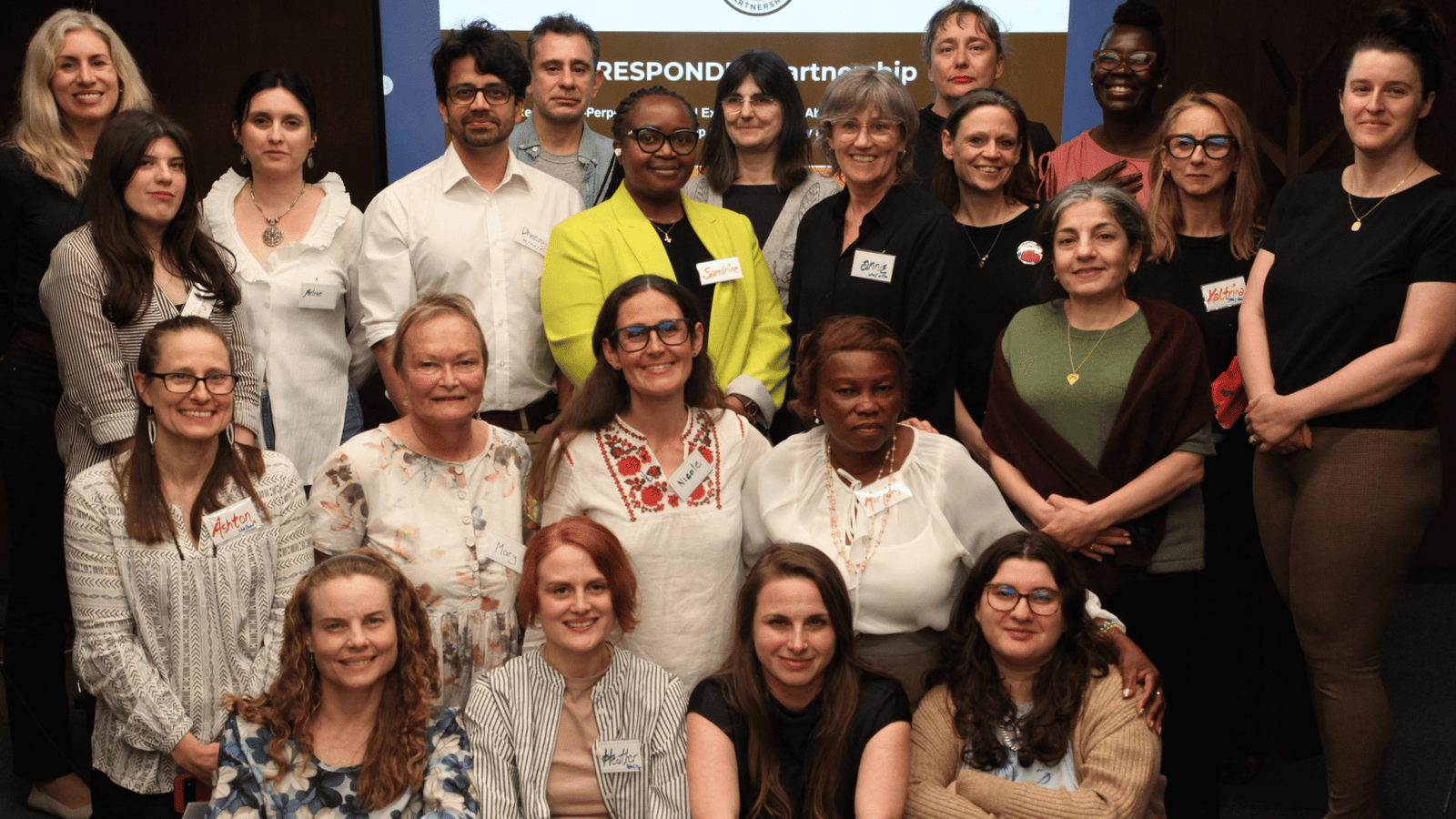
From 29 November to 2 December in Belgrade, Serbia, took place the feminist school organized by the Art and Culture Center Artpolis from Kosovo and the Alternative Girls Center (Alternativni Centar za  Devojke) from Serbia.

This four-day meeting was attended by 10 girls from Kosovo, including Mirjeta Dibrani, the representative of the Kosovo Women’s Network Representative (KWN) and 10 girls from Serbia. The topics of the workshops that were dealt with during these days were: the faith, which was held by Vesna Bujosevic; along with the solidarity that was treated by one of the most prominent feminists in Serbia, Lepa Mladjenovic, who spoke also about the history of the feminist movement in the former Yugoslavia and the twining between activists from Kosovo and Serbia. Another topic that was dealt with was the transitional justice and its mechanisms, which was held by the historian Mariana Toma.

“While our statesmen build walls again, we women go to each other, help each other and exchange experiences among ourselves”, Sandra Farkas of the Alternative Center said at the opening of this meeting.

Another speaker who spoke to young feminists about the feminist ethics of disobedience was also Stasa Zajovic, one of the founders of the Women in Black organization in Serbia. Among other things, she mentioned the numerous protests that the Women in Black have organized against the war, in the early 1990s when they gathered for an hour at a square in Serbia each Wednesday, by holding posters reading Albanian women are our sisters.

After four days, a young activist from Kosovo said he was pleased to be part of this school because “Irrespective of ethnicity, women have the same challenges and pains”.