Minister of Justice Albulena Haxhiu Visits KWN

Minister of Justice Albulena Haxhiu, along with Political Advisors Nazlije Bala and Berita Abazi, visited the offices of the Kosovo Women’s Network (KWN) on January 12.

During the meeting with all the staff of KWN, Minister Haxhiu and her associates held discussions with the Executive Director of KWN, Igballe Rogova, the Program Manager for Addressing Gender-Based Violence, Adelina Berisha, and the Program Officer, Besarta Breznica.

Minister Haxhiu was briefed about KWN’s programs, aligning with the organization’s four-year strategy, with a specific focus on initiatives to be developed during 2024 to address gender-based violence.

This meeting marks the continued cooperation between KWN and the Ministry of Justice, further strengthening the collaborative efforts in combating and preventing Gender-Based Violence throughout the year.
Gruaja Fermere Successfully Completes Initiative to Improve Women’s Access to Health Care

The member organization of the Kosovo Women’s Network (KWN), Gruaja Fermere, has successfully implemented the five-month initiative titled “Promoting Primary Healthcare for Women in Rural Areas.”

122 women and girls from the municipality of Rahovec, including the villages of Apterushë, Zatriq, and Krushë e Madhe, have benefited from this project. Additionally, there are around 200 indirect beneficiaries, including their family members and relatives.

Municipal health officials were also included in this initiative, being informed about the current situation in the municipality of Rahovec.

During this initiative, Gruaja Fermere organized four informative meetings with the aim of raising awareness about quality healthcare for women and girls. There were also four lectures held with women and girls from Rahoveci, Apterushë village, Krushë e Madhe, and Zatriq. Additionally, an advocacy meeting was organized with institutional officials.

According to Gruaja Fermere, from these meetings, 82 women became more aware of their rights to access quality healthcare and gained better understanding of the mechanisms for reporting violations of their rights. More women were encouraged to advocate for their healthcare rights and to document and report violations.

Additionally, over 40 women are now more informed about diseases and disease prevention, such as breast cancer, cervical cancer, as well as the management of diseases like diabetes. Through advocacy meetings, Gruaja Fermere has also succeeded in raising awareness among some municipal officials and service providers.

The organization “Gruaja Fermere” undertook this initiative as a recipient of the 18th round of the KWN’s Further Advancing Women’s Rights in Kosovo II,” financed by the Austrian Agency for Development (ADA) and co-financed by the Swedish International Development Cooperation Agency (Sida).

Norma Raises Awareness of Free Legal Services for Women and Girls in Kosovo

The Norma Lawyers’ Association, a member organization of the Kosovo Women’s Network (KWN), has successfully achieved the strategic goals outlined in the project, thanks to the grant received from the Kosovo Women’s Fund through various activities.

  • Analysis of free legal aid services for women and girls provided by professional non-governmental organizations in the legal field in the Republic of Kosovo.
  • Improving access to justice and the applicability of legislation; and
  • Raising awareness and understanding of women’s rights within the laws of Kosovo.

Beneficiaries of the activities implemented by Norma include individuals in need of free legal assistance, specifically vulnerable women and girls, representatives of local and governmental institutions, as well as local and international NGOs.

They were informed about the current state of the realization of women’s right to inheritance. Additionally, women and girls from different communities were educated about property and inheritance rights, along with the legal framework that guarantees equal rights for all.

A total of 264 people have benefited from participating in roundtables, meetings, and workshops. The activities of the Norma association were carried out thanks to the grant obtained in the 18th round of the Kosovo Women’s Fund of the KWN’s core support, financed by the Sigrid Rausing Foundation.

Medica Kosova Publishes Research on Pupils’ Perceptions of Sexual and Gender-Based Violence

The member organization of KWN, Medica Kosova, published the data obtained from the research conducted with students and teachers, measuring the perception of wartime sexual violence and gender-based violence in one of the secondary education schools in Gjakova.

The need for this research is attributed to the absence of educational programs addressing topics such as sexual violence and gender-based violence, aimed at educating the new generations against violence in general and gender-based violence in particular. The results obtained from this research confirm a high level of prejudices and a lack of knowledge regarding sexual violence and gender-based violence among the new generations. Educational programs have denied them access to this information, consequently hindering a qualitative and more sensitive gender education.

NGO Handikos Mitrovica conducted this activity as a beneficiary of the 18th round of the Kosovo Women’s Fund, supported by the KWN’s Further Advancing Women’s Rights in Kosovo II,” financed by the Austrian Agency for Development (ADA) and co-financed by the Swedish International Development Cooperation Agency (Sida).

KWN Urges the Government to Address the Needs of Shelters and Other Social Services

Download File

The beginning of the year finds several shelters providing residential services to victims of domestic violence, children without parental care and victims of trafficking without funds The Center for Protection and Rehabilitation of Women and Children “Liria” in Gjilan, the Center for the Protection of Victims and Prevention of Human Trafficking, and the Hope and Homes for Children have run out of funds for the months of January and February, since on Wednesday, 27 December 2023, in the meeting of the Government of Kosovo, the Minister of Finance, Labour and Transfers, Mr.  Hekuran Murati, rejected the request for funding these shelters. The request was submitted to the Ministry of Justice by the representatives of the shelters, who then forwarded it for approval to the Ministry of Finance, and it was subsequently rejected. 

In 2023, these shelters were financially supported by the Ministry of Justice for the period of May-December 2023, while they were promised that a public call for funding would be lauched in November 2023 for the beginning of the year, but this has not happened. Furthermore, many daycare centers providing social services are also in the same situation. 

The current Government has made numerous promises to prioritize combating gender-based violence, as well as improving social services. We, as KWN, have therefore often commended the Government for its expressed commitment to combating gender-based violence and other social disparities. However, this recent decision on the eve of the end-of-year holidays compels us to react and express concern for the well-being of individuals in need of shelter and social services.  

Kosovo Women’s Network, along with its 144 members, urges the Ministry of Justice and the Ministry of Finance, Labour and Transfers to address this issue as soon as possible. We are deeply concerned about the non-approval of financial support for the above-mentioned shelters and other social services because this will put all citizens in need of such services at risk. As has been the practice in previous years, we expect the government to create an Emergency Fund as soon as possible, through which the needs of shelters and social services will be covered for periods when they require assistance.

The Kosovo Women’s Network has consistently advocated for the existence of a separate line for shelter services for victims of gender-based violence and human trafficking. This has been included in the Law on Budget Appropriations since 2018, and now it is time for the contracting of social services provided by shelters to be covered for a three-year period as a sustainable solution. This is a recommendation that the KWN has been proposing to the Government of Kosovo for some time now.

KWN Board Concludes Final Meeting for 2023

The Executive Board of the Kosovo Women’s Network (KWN), along with the KWN management team, concluded the year with their final meeting for 2023. This marked the third consecutive meeting, held online on November 17.

During the meeting, the Board received and approved the narrative report on the implementation of the KWN Strategy programs for 2023-2026 and the financial report. Various significant issues were discussed, covering challenges, achievements, advocacy, meetings, and fundraising for the future.

Considering the postponement of the Annual Assembly of Members, typically held in December, to the first months of 2024 due to changes in the Statute of the KWN and in accordance with the revised Law on Freedom of Association in Non-Governmental Organizations, the board made the following decisions:

1) The mandate of the current board members will last until the next Annual Assembly, at which new members will be elected for those whose mandate is transferred;

2)The final meeting of the Board, where KWN reports for the last part of the year, will be postponed to the beginning of the next year when all information is complete.

During this two-hour meeting, Board members made invaluable contributions, consistently providing support and offering ideas to overcome any challenges that arose. They also took the opportunity to express their appreciation for the collective achievements over the years. To further explore and develop the many ideas discussed, the Board, in collaboration with the KWN, decided to organize a retreat in 2024.

Emphasizing the importance of transparency and accountability for optimal organizational functioning, KWN remains committed to reporting to the Assembly of Members annually and to the Executive Board as an intermediary and crucial body. The organization extends its gratitude to everyone for their continuous cooperation and unwavering support, contributing to the advancement of women’s rights and gender equality in Kosovo and beyond.

Rogova Re-elected as Member of NATO Civil Society Advisory Panel (CSAP)

The NATO Civil Society Advisory Panel (CSAP) on Women, Peace and Security has invited KWN Executive Director Igballe Rogova to rejoin this prestigious Panel.

This comes five years after Rogova completed her term as a panel member from 2016 to 2018 on the first CSAP ever established.

The invitation signals international recognition of Rogova’s expertise and extensive experience with the Women, Peace, and Security Agenda, as well as her valuable insight in supporting NATO to improve its implementation of this Agenda.

Rogova through this advisory panel will be advising NATO on its operations around the world drawing on her experience of over two decades in monitoring the implementation of United Nations Security Council Resolution 1325 on Women, Peace, and Security in Kosovo.

The new mandate of the panel commences in 2023 and extends until 2026. The first meeting took place today, Dec. 18, via Zoom, while the upcoming second meeting is scheduled to be held at NATO headquarters in Brussels in January.

Rogova raised several key issues there in the past and looks forward to continuing to contribute.

Funding Struggles: A Persistent Challenge for Women’s Rights Advocacy Organizations

“Djepi i Buzëqeshjes” is one of the organizations that has closed due to a lack of funds, while dozens of others advocating in the field of women’s and girls’ rights in Kosovo face financial resource shortages. There are nearly 200 non-governmental organizations focusing on women’s and girls’ rights in Kosovo, struggling with insufficient financial means to carry out their activities.

“Djepi i Buzëqeshjes” has collaborated with the organization “Medica Kosova,” aiming to alleviate the traumatic symptoms caused by war, especially among victims of violence, and facilitate their integration into social and public life.

According to Veprore Shehu from “Medica Kosova,” this organization is also grappling with funding problems.

“This year, in February, we completed three very large projects simultaneously. We regret that it seems overlooked that we in Gjakova will cover our expenses,” said Shehu.

She also mentioned that they had a project with central institutions, where for five consecutive years, they received a certain amount of money to develop their activities. However, this project has also been completed.

“We have also concluded the project with central institutions; for five years, we received a sum of money for the support of survivors of sexual violence during the war. We are waiting for the deadline to be extended, and now we are waiting for an answer,” she said.

She mentions that they are waiting to be relicensed to continue with applications for other projects. The licensing process, Shehu says, is a challenge in itself.

“This process has been accelerated by the institutions, posing a challenge in itself as we require the license on time to proceed with the application for projects,” she added. Shehu further stated that foreign donations have already begun to shift their focus to other countries, presenting a challenge in receiving donations from abroad.

Shehu stated that it is the responsibility of the state to engage in this matter. Even the non-governmental organization “4 Change” has not been active for several years. This organization, focused on the empowerment of equal rights, closed due to financial and other issues.

Alba Hajdini, the former leader of this NGO in Pristina, explained that insufficient funds were a primary factor leading to the organization’s closure. “We didn’t have a lot of finance. This had the effect that when you don’t have sufficient resources to dedicate time to an NGO, treating it as a priority, then opportunities and conditions diminish,” says Hajdini.

She further adds that money was not the only problem; the limited time they could devote to the organization has rendered this NGO inactive.

“Now, even the members do not have much time left; it was not a primary focus for us as an NGO,” she continues. Shemsie Seferi, leader of the “Association for the Emancipation of Women – Alma” in Peja, states that the lack of funds is jeopardizing the organization’s continuity. She explains that the organization she leads is currently not fully active due to the challenges they are facing.

“The NGO is not fully active at the moment; we are dealing with problems related to the office. We don’t have funds to pay rent, etc.,” says Seferi. “Funding issues can indeed lead to the closure of the organization,” she adds. To overcome these problems, Seferi emphasizes that they have only one solution: sufficient funds.

She even adds that this applies not only to the organization she leads but to many other non-governmental organizations aiming to strengthen gender equality.

“In the future, for NGOs to remain active, they need stable financial support,” said Seferi. Another problem she highlights is the challenge they face in winning projects, noting that projects are typically secured by larger NGOs.

The allocated amount for NGO support in 2022 is 1 million euros, earmarked for non-governmental organizations with a primary mission focused on women’s rights.

From May 2022 to February 2023, the funds allocated for financial support to these organizations have increased by 500 thousand euros. According to the Ministry of Justice, for the first four months of this year, the Government has additionally allocated another 500 thousand euros.

“For the year 2023, the Government of Kosovo has provided support to legal entities, namely NGOs, in the amount of 500 thousand euros for the period of January-April. The Ministry of Defense is currently in the process of allocating financial support in the amount of 1 million and 500 thousand euros for the period from May to December 2023, extending to February 2024,” as stated in the responses of the Ministry of Defense to KALLXO.com.

According to the provided information, at the beginning of this year, the Ministry of Justice incorporated the Department for Social Services Policy into its composition. Until December 2022, this department operated within the Ministry of Finance. The Ministry of Defense stated that, in line with its responsibilities, it initiated a call for subsidizing NGOs offering social and family services to citizens in social need.

Additionally, the Ministry revealed that in the past year, the Ministry of Finance financially supported organizations with an amount totaling 1 million euros.

According to the information obtained by KALLXO.com, of the 1 million euros allocated, 400,000 euros have been assigned to shelters in Kosovo, and an additional 600,000 euros to NGOs providing social and family services. The data released by the ministry revealed that this monetary support benefited a total of 44 legal entities in 2022. Among them, ten were shelters, and 34 were other non-governmental organizations.

On October 3, 2023, the Ministry of Justice entered into contracts to subsidize four organizations for social services, with a total amount of 65,000 euros. The organizations receiving this subsidy include the National Association of Autism in Kosovo, HandiKOS-Gjakovë, AUTIZMI, and the humanitarian association of parents with mental disabilities “Hadër.”

In January of this year, a total of 10 shelters and 31 other licensed civil society organizations providing social and family services benefited from a sum of 1,435,000 euros. The allocated budget for family social services stands at 1.5 million euros, aiming to enhance capacities and social services across the Republic of Kosovo.

In 2012, the Kosovo Women’s Network (KWN) established the Kosovo Women’s Fund in response to shifting aid priorities and reduced budgets, leading many donors in Kosovo to close grant programs or decrease funding to non-governmental organizations. The Kosovo Women’s Fund of KWN, provides small grants to women’s organizations that lack access to other funding sources and are committed to advocating for women’s rights, particularly among groups in rural areas or marginalized communities. This special fund not only offers financial support but also provides opportunities for capacity development for beneficiary organizations, as well as those applying for grants.

According to data from the Kosovo Women’s Network, the transparent, efficient, effective, and proven systems and procedures of sub-granting within this fund have resulted in the administration of 289 grants to 153 Civil Society Organizations since its establishment.

The cumulative value of these grants amounts to a total of 1,771,249 euros.

This publication was made possible with the financial support of the European Union Office in Kosovo through the initiative of the Kosovo Women’s Network, “Enhancing the Capacities and Resilience of CSO’s: Furthering Gender Equality Amid the COVID-19 Pandemic.” Its content is the responsibility of Internews Kosova and does not necessarily reflect the views of the European Union Office in Kosovo.

Qamile Jaka: The First Albanian Dentist in Kosovo, Who Laid the Foundations of the Department of Dentistry at UP

“If we fail to make future generations more knowledgeable and capable than ourselves, then we have failed.”

Dr. Qamile Jaka, the first Albanian dentist in Kosovo, worked tirelessly to bring this statement of hers to life.

She became a source of inspiration and determination for new generations of dentists in Kosovo. While in her childhood and youth, education was a challenge in itself, Qamile Jaka, a girl born in Tropoja, attended primary and secondary school in Gjakova.

She entered the history of Kosovo by becoming the first Albanian dentist to return to her homeland after completing her studies at the University of Belgrade. In the 60s, when she finished her studies, Kosovo had no dentists.

The first Albanian dentist in Kosovo was Xhevat Rizvanolli, and the first Albanian dentist in Kosovo is Dr. Qamile Jaka, who made an important contribution. In addition to practicing the profession, she also developed dentistry, emphasizing its value among the people and enabling the youth of that time to be determined for this profession,” said Dr. Hasan Mehmeti, in an interview with a Kosovar media outlet, while discussing the beginnings of dentistry in Kosovo.

Together with colleagues who had just completed dentistry in the universities of the former Yugoslavia, Qamile Jaka laid the foundations of the Department of Dentistry. At the same time, she made significant efforts to raise awareness among the population about the importance of dental health.

Qamile Jaka specialized in the field of “orthopedic jaws” and completed her postgraduate studies at the Faculty of Dentistry at the University of Belgrade, where she defended her master’s degree. She defended her doctoral thesis in 1986 at the University of Pristina.

Since 1980, she worked in the Department of Dentistry at the Faculty of Medicine, initially as an assistant, and later as a professor teaching the subject ‘Orthopedics of the Jaws.’ Throughout her tenure, she actively participated in various roles, serving as a delegate of the Central Council of Workers at the Faculty of Medicine, a member of the Secretariat of the Association of Dentists, and a member of the Commission for Health Activities and Specializations at the Faculty of Medicine.

Later, in 1991, she was dismissed by the then Serbian regime. She is the author and co-author of over 70 professional scientific papers presented at congresses and symposia and published in professional scientific journals. Posthumously, she was honored with the ‘Honor of Kosovar Dentistry’ decoration by the Chamber of Dentists of Kosovo.

This decoration is awarded to dentists who honor the dental community, both domestically and internationally, through their achievements and reputation. It is bestowed upon individuals with outstanding and high-quality contributions to the field of dentistry, with a demonstrated commitment to future excellence. Recipients are recognized for their notable professional and scientific activities, both within and, notably, outside the territory of the Republic of Kosovo. The award is reserved for those who have made exceptional contributions and demonstrated special merits in the field of dentistry. Qamile Jaka was born in 1948 in Tropoja and passed away in 2007.

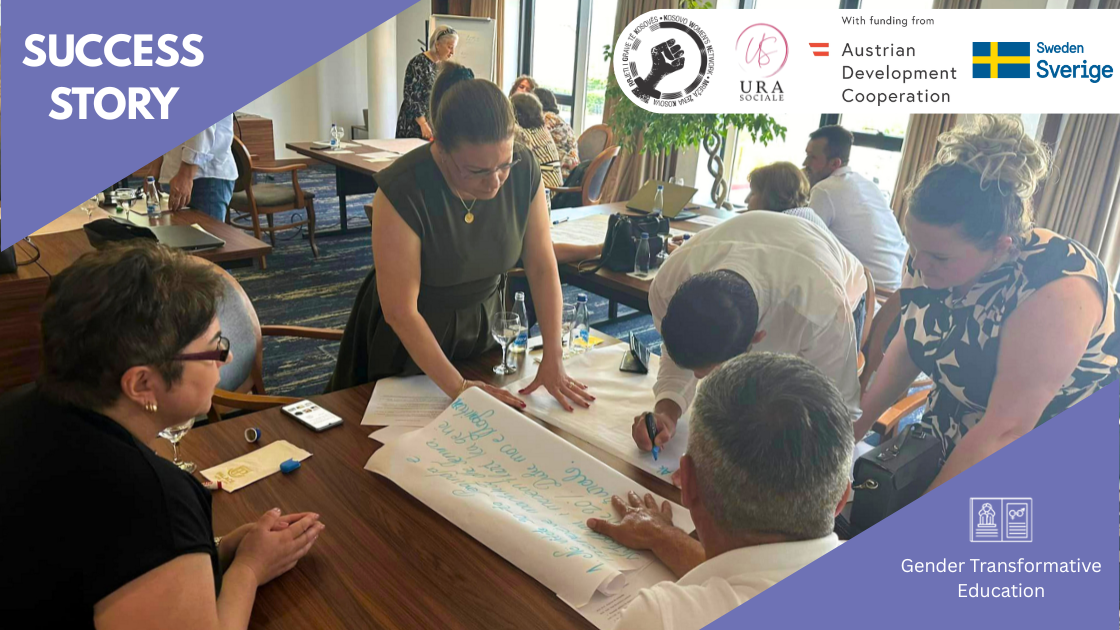
Ura Sociale organizes a concluding event on teaching methods

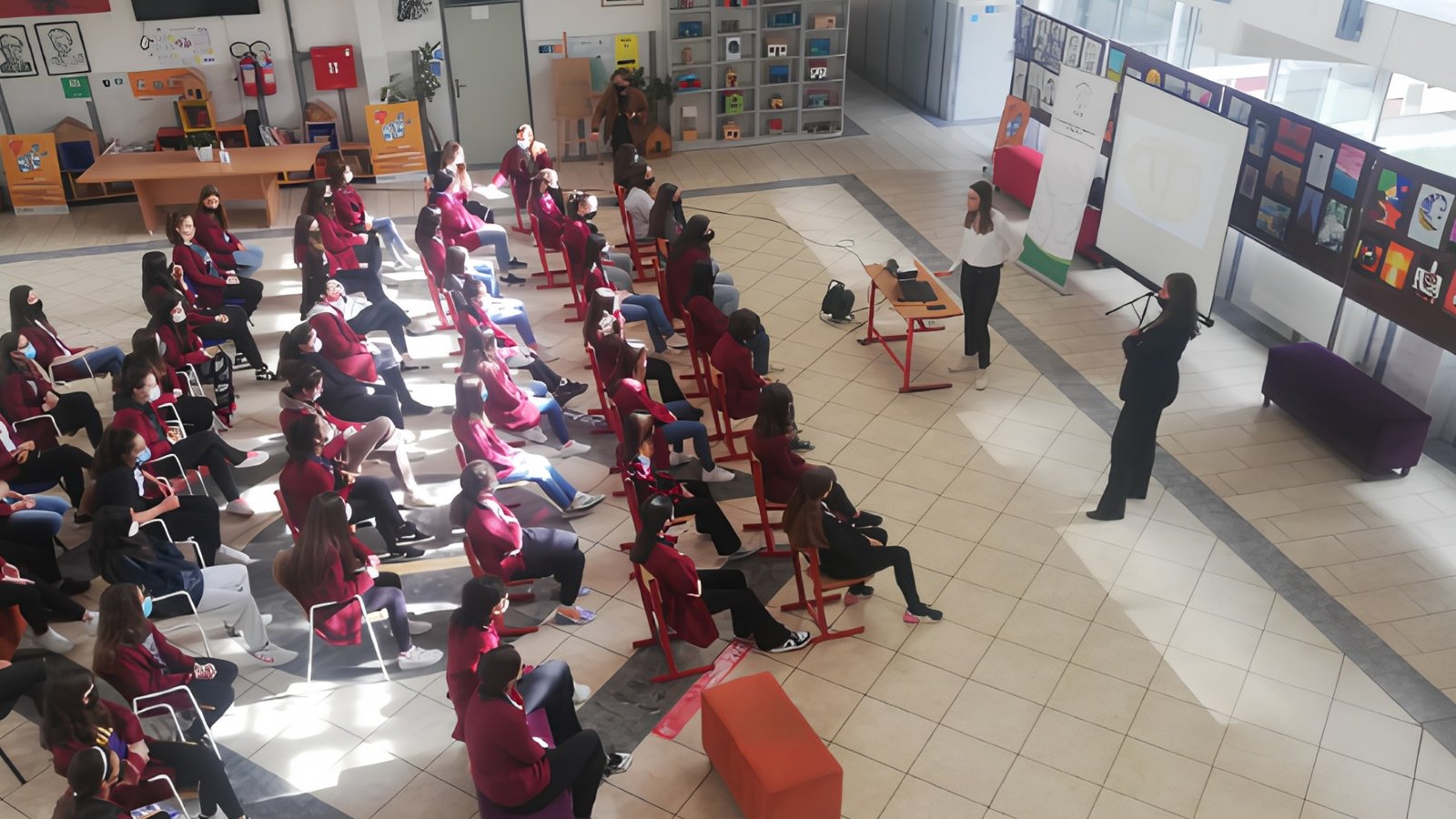
The member organization of the Kosovo Women’s Network (KWN), Ura Sociale in Vushtrri, hosted its sixth consecutive event as part of the project “Promotion of Quality Education and the Transformation of Traditional Gender Norms.” During this activity, the organization presented the findings from the observation of several classes in the “Lutfi Musiqi” and “Bahri Haxha” secondary schools. These findings were shared with teachers, school principals, and relevant individuals from the Directorate of Education in the Municipality of Vushtrri. The primary objective of this meeting was to engage in advocacy and discuss various teaching methods.

Jehona Jashari, a trainer, emphasized the critical need for the training in Vushtrri on this subject, citing numerous inquiries from both teachers and school directors regarding the research conducted by the Ura Sociale organization.

“In the research, we identified deficiencies in both teaching materials and the activities conducted in the classroom to address or promote gender equality, stereotypes, and gender-based violence in schools. Therefore, we believe that advocacy meetings, along with training sessions, would be instrumental in addressing the issues within the relevant institutions, particularly the Directorate of Education in the Municipality of Vushtrri,” she explained.

Zehra Kovaci, a biology teacher at “Bahri Haxha” school in Vushtrri, views these gatherings with teachers and school principals as valuable opportunities to conduct diverse activities that contribute to disseminating information on specific issues.

“I believe that in every conceivable scenario, additional training is beneficial for everyone in acquiring information. In vocational schools, the field of biology often lacks sexual education and concepts related to gender equality. However, inclusiveness is well addressed in textbooks. It’s worth noting that, as a foundational subject, the students I teach already possess above-average knowledge,” stated Kovaci.

Mergime Jashari, the director of the Ura Sociale organization, noted that this activity marked the sixth consecutive one and also served as the concluding event. The research was conducted in classes with the theme “Promotion of Quality Education and the Transformation of Traditional Gender Norms.”

“During the activity, we engaged with approximately 300 students from two vocational secondary schools in Vushtrri. We held meetings in the classes that were previously selected for observation. The goal was to assess inclusiveness, the promotion of gender equality, and the presence of stereotypes related to gender-based violence, family planning, and reproductive health. While most cases demonstrated full inclusion, there was a percentage where teachers lacked sufficient information on these topics to effectively explain them to the students. I believe this gap occurred due to a lack of comprehensive training.”

Ura Sociale conducted this activity as a beneficiary of the 18th round of the Kosovo Women’s Fund, supported by the KWN’s Further Advancing Women’s Rights in Kosovo II,” financed by the Austrian Agency for Development (ADA) and co-financed by the Swedish International Development Cooperation Agency (Sida).