“Ruka Ruci” Hosts a Discussion on the Possibilities of Advancing Gender Equality

The member organization of the Kosovo Women’s Network (KWN), “Ruka Ruci” in the course of the activities undertaken as part of the initiative “Strengthening Women’s Participation in Politics”, on 23 December held a discussion on Advancing Gender Equality.

Women’s rights activists and representatives of institutions discussed about the work done up to the present on advancing women’s position in the society, with particular emphasis on women’s participation in politics.

Nevenka Rikalo, the Project Coordinator, initially presented this four-year initiative supported by the European Union (EU) Office in Kosovo.

“I am glad that today we have present participants from the central level as well as from the KWN. They are the help to strengthen the participation of women and girls in politics. Also, KWN supports its members through the Lobby for Gender Equality (The Lobby), with the members of which we are are having increased cooperation during this joint initiative”, stated Rikalo.

Further, Edi Gusia, Chief Executive Officer of the Agency for Gender Equality, stressed the need for implementation of the Law on Gender Equality (LGE), which determines equal participation of women and men in politics at the local as well as national level.

“Numerous researches show that governing without the participation of women and girls, in  positions where decisions are made and financial resources are distributed is an unbalanced, unjust governance and does not contribute to achieving social peace”,  she said.

Whereas, the Executive Director of KWN, Igballe Rogova, recalled the beginnings of activism and cooperation with “Ruka Ruci”, by putting into discussion the importance of having the men involved in the gender equality activism.

“It is important that men get involved in our fight for gender equality. Also, we must show solidarity with each other, so that this solidarity can thereupon be reflected even in cases when women reach high leadership positions in politics and take part in decision-making processes”, she said.

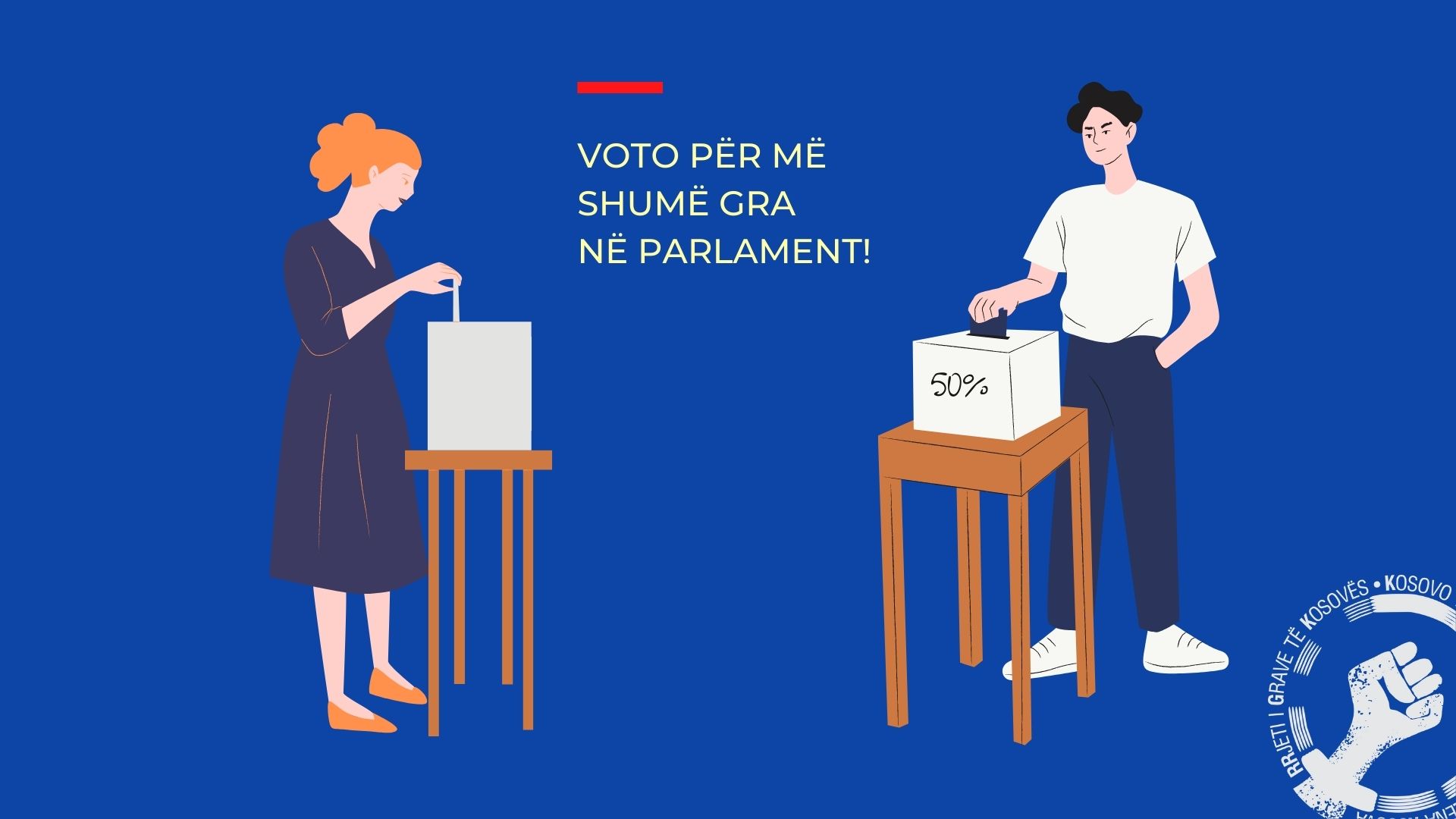
Among other things, Rogova mentioned KWN’s contribution in the “Vote for More Women in Parliament” campaign, which KWN undertook during September 2019, on the eve of the parliamentary elections.

Part of this discussion were also Premtime Preniqi, Gender Equality Officer in the Municipality of Prishtina, Radmila Kapetanović, activist and member of the Mechanism for Gender Equality against Domestic Violence, Municipality of Zubin Potok, and Zorica Timotijević, Gender Equality Activist and Coordinator against Domestic Violence, Municipality of Leposaviq.

LYC Holds Trainings On Capacity Building with Women and Girls to Start New Businesses

Lipjan Youth Center (LYC) within their initiative “Supporting girls and women for active participation in the economy”, held focus groups with women and girls in business in addition to prepare and draft a public policy document to support the business sector.

This image has an empty alt attribute; its file name is IMG_1141-1024x683.jpg

On September 25- 27, the Lipjan Youth Center (LYC) held a workshop on “Developing an Orientation Document on Local Policy to Support Women Start-ups and Increase Participation in Decision-Making”, with women entrepreneurs in Lipjan. The purpose of the three-day workshop was to draft a document which will be ready for municipal authorities’ approval. This document reflects the assessments and needs of small businesses in the region.

In total 32 representatives of small local businesses got informed on the decision-making processes and the development of local policies, as well as the identification of challenges and problems of new businesses.

This image has an empty alt attribute; its file name is viber_image_2020-09-27_13-15-354551-1024x768.jpg

Regarding the importance of this initiative, Valmira Marevci, Project Coordinator, LYC, stated that “Planned activities showed extremely positive impacts. Business representatives were introduced for the first time to many concepts that are closely related to success in business. This was extremely well received by the participants.”

This initiative is supported by the Kosovo Women’s Fund (KWF) and funded by UN Women.

MK and DB held meetings with women assembly members and survivors of the war

Medica Kosova and Djepi i Buzëqeshjës held meetings with women assembly members and survivors of the war to hear women’s concerns from rural areas.  Villages such as Babaj of Boka, Ponoshec, Korenic, Rracaj, Dobrosh, Molliq and Hereq.

Assembly members, together with the project coordinators, made a site visit to identify problems addressed at the meeting.  Through these activities, female assembly members can advocate on these women’s behalf in order to address their needs; in particular their health rights and the right to inheritance. This Initiative also intends to improve the level of implementation of the administrative instruction on property registration on behalf of both spouses. 

”There are obstacles that prevent women’s voices from being heard at Assembly meetings in the Municipality house. Women are reluctant to challenge traditional attitudes and lack the defensive abilities to strengthen their voices”, said Arbnore Shehu Bunjaku, Project Coordinator, regarding the main purpose of the project and how Medica Kosova together with Cradle of Smile Center (DB) had come to identify this problem.

This image has an empty alt attribute; its file name is Medica-Kosova-3_29-korrik-1024x576.jpg

On July 29, Medica Kosova and Center Cradle of Smile organized the closing roundtable within the initiative “Mobilizing women assembly members to address the needs of women traumatized by war” in Gjakova. Representatives of local institutions from Gjakova and civil society got together to discuss the situation of women who faced sexual violence during the war, as well as their treatment as the responsibility of state institutions.

This image has an empty alt attribute; its file name is Medica-Kosova-3_29-korrik-1024x576.jpg

The Executive Director of Medica Kosova, Veprore Shehu, outlined the achievements of the project, emphasizing the importance of identifying the needs of women survivors of sexual violence as well as addressing the consequences.

The meeting also discussed the importance of creating a Special Gender Budget Code at the Office for Gender Equality to create inclusion for the needs of both men and women.

Mimoza Shala, Chairwoman of the Assembly Women Group from the Municipality of Gjakova, indicated that women are reluctant to claim their rights due to the strong distrust of institutions and the societal stigma.

She showed how the system is flawed when identifying female survivors of sexual violence.  However, women who have been identified can start receiving help from the state.

In concluding the meeting, the participants agreed that it is necessary to strengthen more formal cooperation between NGOs and institutions in order to work on on solving the social, economic, and health problems faced by these women.

This initiative is supported by the Kosovo Women’s Fund (KWF), funded by the Austrian Development Agency (ADA) and co-financed by UNWomen.

KWN Holds the 18th Members Annual Meeting

Today, December 12, Kosovo Women’s Network (KWN) held its 18th Members Annual Meeting.

Although this meeting was held virtually through the Zoom platform, many representatives of member organizations, partners, friends, colleagues and supporters of KWN work and activism were present.

Ariana Qosaj-Mustafa, Chair of the KWN Board, made the opening remarks and expressed satisfaction and pride for this meeting and KWN achievements in 2020.

“We have never held the Annual Membership Meeting in these conditions, but I believe that we will still have a good and productive time. I welcome you and thank all the supporters of the KWN mission and member organizations.” said Qosaj-Mustafa.

KWN’s work and contribution was also highly praised by Edi Gusia, Chief Executive Officer of the Agency for Gender Equality (AGE).

“Thank you for giving me the opportunity to join the Network’s 18th Annual Membership Meeting. On behalf of AGE, I thank you for the collaboration we had during 2020, and I believe that this will expand even more in the coming year.” “said Gusia.

Nevenka Rikallo, Coordinator of NGO Ruka Ruci, KWN Member, also appreciated KWN’s support over the years.

“I am very glad that today we have the opportunity to gather. We have a four-year collaboration with KWN to build women’s capacity in politics; KWN has consistently supported us on our journey to improving women’s rights.” said Rikallo.

KWN Executive Director Igballe Rogova thanked the members, the board and supporters for their continued support and trust in KWN’s work, saying:

“Knowing that we would all like to be together, I thank and salute you all for the unparalleled cooperation we have in achieving our goal of gender equality.”

Further, Selma Cekic Dincsoy, Contact Person for Gender, European Union Office in Kosovo, Sandra Horina, Counsellor & Head of Austrian Development Cooperation for Kosovo, Vlora Tuzi-Nushi, Head of Office in Kosovo, UN Women, and Yllka Soba, Program Manager in Kosovo, Kvinna till Kvinna Foundation unanimously praised KWN’s contribution to improving the lives of women and girls from all communities in Kosovo. They expressed willingness and readiness to continue cooperating with KWN in the future.

KWN, for the third time, awarded the annual Sevdije Ahmeti Award, established in honor and memory of feminist activist and humanist Sevdije Ahmeti (1944-2016). This year this award was given to activist Safete Rogova for her contribution to the empowerment and education of women and girls.

“Even in the pandemic situation, KWN never stopped working. Thank you from the bottom of my heart for honoring me today with the “Sevdije Ahmeti” award. For me, Sevdije remains one of the most powerful women that Kosovo has had over the years.” She said.

KWN considers the Annual Members Meeting an excellent opportunity to share information and increase solidarity among women, KWN staff reported on work done during 2020, focusing on the six programs of the 2019-2022 Strategy. In the second part of the meeting, Zana Hoxha and Nermin Mahmuti were elected new members of the Board.

KWN’s work in 2020 was supported by the Austrian Development Agency (ADA), the Swedish International Development Agency (Sida), the European Union (EU), the Kvinna till Kvinna Foundation, Sweden Sverige, UN Women and the European Union Office (EU) in Kosovo.

KWN Holds Training on Public Relations Capacity Building

On December 1, Kosovo Women’s Network (KWN) held a one-day training “Public Relations and Effective Communication” with member organizations and grantees of the Kosovo Women’s Fund (KWF). 

The importance of branding, best communication practices through social media platforms, as well as media relations, were some of the topics presented during the workshop. Representatives of fourteen KWN member organizations gathered together to discuss their public appearances, the importance of open and interactive communication with their audience, and the importance of using social media as a means of communication. 

“This workshop was very practical and useful; we learned a lot about the strategic planning of social media posts and the importance of defining the target group, and creating content-based information for our audience,” said Fidane Hyseni, Executive Director of Center for Protection of Women and Children “Raba Voca”. 

Great emphasis was placed on introducing best practices to expose their organizations to a wider audience through professional writing and improving social media presence. Participants also discussed strategic planning of delivering key message to the public, and practices that affect the growth of organic audience. 

“One way to increase reach is by paying for social media posts to promote your content. Another alternative would be for organizations to concentrate on quality of content and posting techniques for a more organic audience growth “said Rudina Voca, Public Relations Coordinator, KWN, adding that “Together we discussed these methods and the challenges organizations face in creating a quality as well as creative content” 

In the final stage, the workshop focused on professional writing, where all participants had the opportunity to improve and practice their writing skills. The purpose of these exercises was for participants to provide feedback to further improve their communication strategy. 

READ ALSO: OPDMK Holds Training on Communication Capacity Building

The Acting President Dr. Vjosa Osmani presented the award Order Dr. Ibrahim Rugova to the activist and humanitarian Sevdije Ahmeti

Photo Credits: President of the Republic of Kosovo Webpage


December 10, on International Human Rights Day, the Acting President of the Republic of Kosovo, Dr. Vjosa Osmani presented posthumously the award Order Dr. Ibrahim Rugova, to the activist and humanitarian, Sevdije Ahmeti.

On behalf of the Presidency, the award was given to Ahmeti’s family. Sevdije Ahmeti (1944-2016) as won of the main founders and pillars of the women’s movement in Kosovo. Among the earliest defenders of women’s rights as human rights in Kosovo, she was a leader, activist, feminist.

On February 12, 2019, KWN submitted the proposal to the Office of the Presidency, which was approved by the President to mark the 20th anniversary of Kosovo’s liberation, in honor of the great contributor to human rights and women’s rights.

KWN: We Must Fight Mentalities That Portray Women Within a Patriarchal Construct

Members of the Kosovo Women’s Network (KWN) have been following concerning media articles which attack the former President Atifete Jahjaga’s contribution towards the improvement of gender equality in Kosovo.

Gender equality is guaranteed in the Constitution of the Republic of Kosovo. However, we must fight the language and mentality that continues to portray women within a patriarchal construct. We must challenge stereotypes and not accept them as part of our social, political and institutional discourse.

We need to say no to bullying towards women and girls, and discussions in the media on a woman’s appearance, or how she should behave in order to be socially acceptable. We must raise our voices against such mentality – which seeks to undermine women’s contributions to creating a society built on equal rights and gender equity. It sends a negative message to all those who would want to join the cause.

This mindset proves once again how much we need to do in our journey and mission to break down such gender inequalities and prejudices.

KWN Stands with Women of Krushe, Demanding Justice for War Crimes

Download File

Today the Kosovo Women’s Network (KWN) stands beside the women, men and children of Krushe e Vogel and Krushe e Madhe villages as they demand justice for war crimes perpetrated against them and their family members. We deplore the special department of the Court of Appeals’ recent ruling, which reduced the prior sentence of Darko Tasic from 22 years to only 11 years.

According to betimiperdrejtesi.com, Tasic has been accused of participating with Serbian police and military forces in looting, destroying and burning the property of civilians in Krushe, during an 11-day period from 15 to 26 March 1999. He has been found guilty of taking agricultural vehicles, among other valuable items, from people in the village, including specifically the Hajdari family, resulting in a seven-year prison sentence. The Special Prosecution indictment also charged Tasic with desecrating dead bodies, burning corpses together with other Serbian police and paramilitary forces and throwing corpses in the Drin River, near Krusha e Vogel.

The reduction of his sentence represents a blatant failure of Kosovo’s justice system to ensure justice for war crimes. Without justice, there cannot be lasting peace.

We wish to emphasise that the crimes he is accused of committing are indeed war crimes, as per Article 7 of the Rome Statute of the International Criminal Court, which defines ‘crimes against humanity’ as part of a widespread or systematic attack directed against any civilian population, including murder, extermination, deportation or forcible transfer of population, torture, sexual violence or persecution against any identifiable group based on political, racial, national, ethnic, cultural, religious and/or gender grounds.

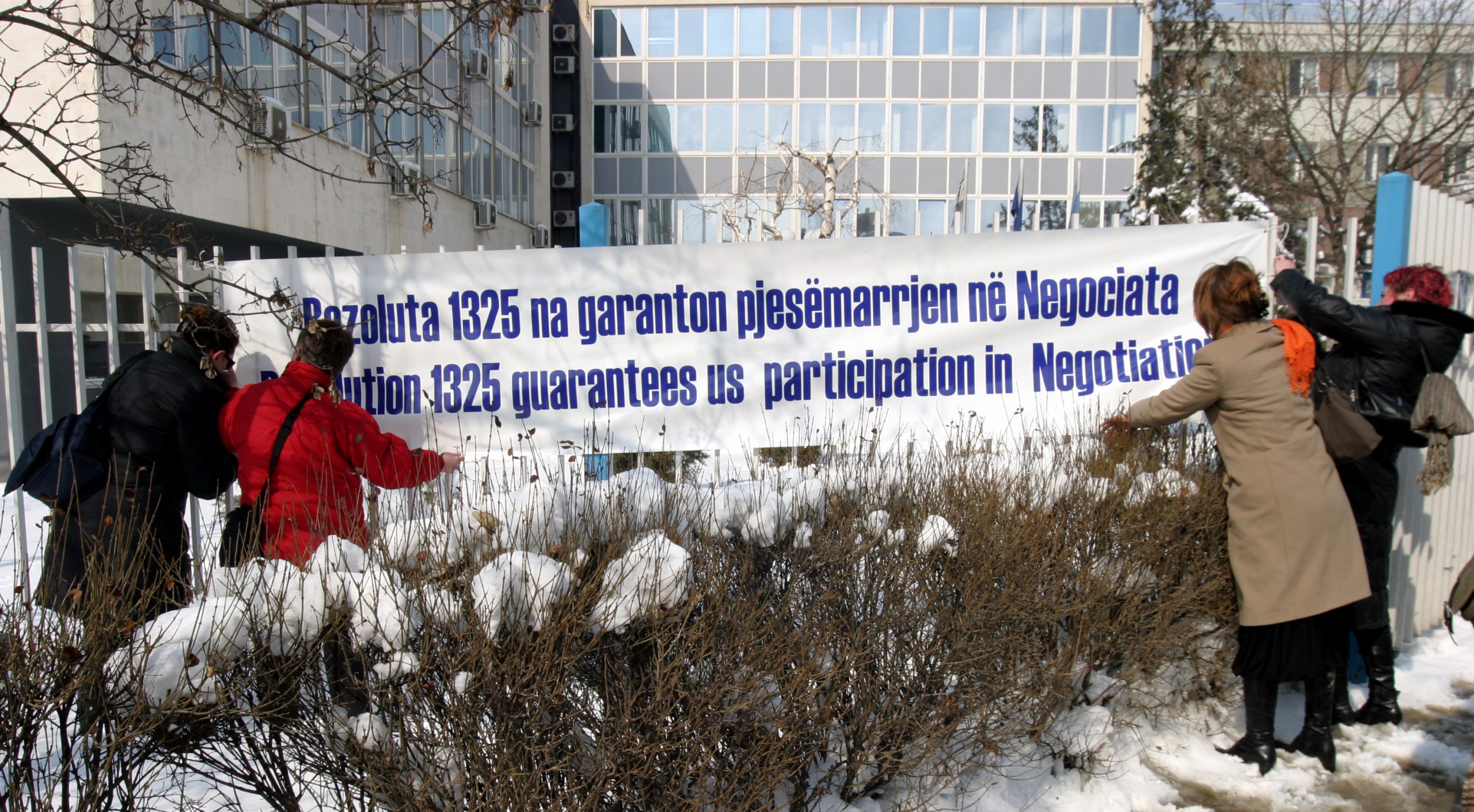
We recall that United Nations Security Council Resolution (UNSCR) 1325 on Women, Peace and Security (2000), UNSCR 1620 on Children and Armed Conflict (2005) and UNSCR 1674 on Protection of civilians in armed conflict (2006) emphasisethe responsibility of all States to put an end to impunity and to prosecute those responsible for genocide, crimes against humanity and war crimes, including those relating to sexual and other violence against women and girls. In this regard, the UN has stressedthe need to exclude these crimes from amnesty provisions. Indeed, no agreement for amnesty exists between Kosovo and Serbia regarding war crimes. Nor should amnesty for crimes against humanity ever be allowed, in accordance with international law.

Together with the women of Krushe e Vogel, today we recall the unspeakable events that occurred on 26 March 1999, when 114 Albanian men civilians (70% of the men in the village) were separated from their families and massacred. The remains of 86 people in their village, including children, are still missing. We remember how the homes of Albanian families were burnt to the ground, their cattle killed and their fields destroyed. We recall how the women and children who survived were forced at gunpoint to walk down to the Drini River, where Serbian forces told them “drown themselves or walk to Albania”. We remember all too well sitting beside the women and children of Krushe when they returned home, after being refugees. In addition to mourning the loss of 114 of their family members, their livelihoods were in ruins without homes or any form of income.

Despite the aforementioned, well-documented war crimes perpetrated against civilians, there has been no official apology from the Government of Serbia regarding what occurred in Krusha e Vogel. Nor has there been appropriate justice for the aforementioned war crimes committed.

Despite their immense human and economic loss, the women of Krushe have found the fortitude to move forward. They have participated in democratic structures. They have learned to plough their fields, drive tractors, sell their products and make a living independently, all while facing serious gender stereotypes and seemingly insurmountable challenges.

At the very least, we have expected and awaited a strong message from our own institutions that war crimes will not be tolerated and that justice will be served. Kosovo’s justice institutions owe this much to the women of Krushe.

Therefore, we are deeply enraged at the grave injustice our own justice system has shown to the women of Krushe.

KWN is a network of 158 women’s rights organisations with the mission to support, protect and promote the rights and the interests of women and girls throughout Kosovo, regardless of their political beliefs, religion, age, level of education, sexual orientation and ability. KWN fulfils its mission through the exchange of experience and information, partnership and networking, research and advocacy. We remain committed to monitoring the implementation of UNSCR 1325 in Kosovo and in demanding justice for women where justice is due.

New KWN Policy Brief Monitor Gender Budgeting as per SDGs

Kosovo Women’s Network (KWN), as part of the Gender Budget Watchdog Network, published its latest policy brief on “Monitoring the Implementation of SDG Indicator 5.c.1 in Kosovo” for 2019. The Sustainable Development Goal (SDG) 5.c.1 Indicator on gender responsive budgeting includes “the percentage of countries with systems for tracking and making public allocations for gender equality and women’s empowerment.” This policy brief used UN Women methodology which assesses three main criterions: i) government’s intent to address gender equality by identifying whether policies, programs and resources/budgets are in place; ii) if Public Finance Management System promotes gender-related or gender-responsive goals; and, iii) if public resource allocation mechanisms exist to increase accountability.

In relation to the first criterion, findings include that there are government programs or policies designed to address well-identified gender equality goals in Kosovo, as well as procedures in place to ensure that these resources are executed according to the budget. However, the programs or policies do not have sufficient resources allocated within the budget to meet both their overall objectives and their gender equality goals.

In relation to the second criterion, findings include that the Ministry of Finance issues circulars or directives providing specific instructions on gender responsive budget allocations, as well as key programs and policies proposed for budget inclusion are subject to an ex-ante gender impact assessment. However, the government does not provide, in the context of the budget, a clear statement of gender-related goals, often known as the gender budget statement. Furthermore, gender-disaggregated statistics and data are not used systematically across key programs and policies in a way that can inform budget-related policy decisions. Additionally, there are not any prerequisites for implementing a gender perspective in the context of setting performance-related objectives. In Kosovo, key programs and policies are not subject to ex-post gender impact assessment and the budget as a whole is not subjected to an independent audit to assess the extent to which it promotes gender responsive policies.

In relation to the third criterion, findings include that information on gender equality allocations has not been published in an accessible, timely manner and in an easily understandable format on the website of the Ministry of Finance and/or relevant official bulletins or public announcements in 2019 in Kosovo.

Recommendations tailored to specific institutions, to ensure progress for implementing this Indicator, included:

  • a shift from Kosovo’s current system of line budgeting and economic categories to using programmatic budgeting, which would facilitate systematic use of GRB and performance budgeting;
  • the government should use budget performance indicators relating to gender equality for diverse budget lines and sectors, to demonstrate progress more clearly; gender-disaggregated statistics and data should be created, maintained, and used systematically to inform budget-related policy decisions by all budget organisations at the local and central level;
  • all key programs and policies to be subject to an ex-ante and ex-post gender impact assessment; the Parliamentary Committee on Budget and Transfers, and Committee for Human Rights, Gender Equality, Missing Persons and Petitions should collaborate jointly to organise public hearings to inform the finalisation of the budget;
  • Ministry of Finance in collaboration with Agency for Gender Equality should draft and provide a Gender Budget Statement for every Law on Budget proposed and adopted annually;
  • National Audit Office should publish analysis of the budget from a gender perspective at least once every five years, but ideally annually; municipalities should provide timely information on gender equality related budget allocations and expenditures; and, budget information and gender equality allocations, and
  • expenditures should be public and accessible on the website of the Ministry of Finance, in a timely and easily understandable manner.

For more details, please read the policy brief HERE.

This publication is part of the Gender Budget Watchdog Network, with partner organizations from Albania, Macedonia, Montenegro, Bosnia and Herzegovina, Moldova, and Serbia, undertaking a joint action on gender responsive budgeting, supported by the Austrian Development Agency and co-funded by Sida.