KWN sends Budget Recommendations to Kosovo’s municipalities

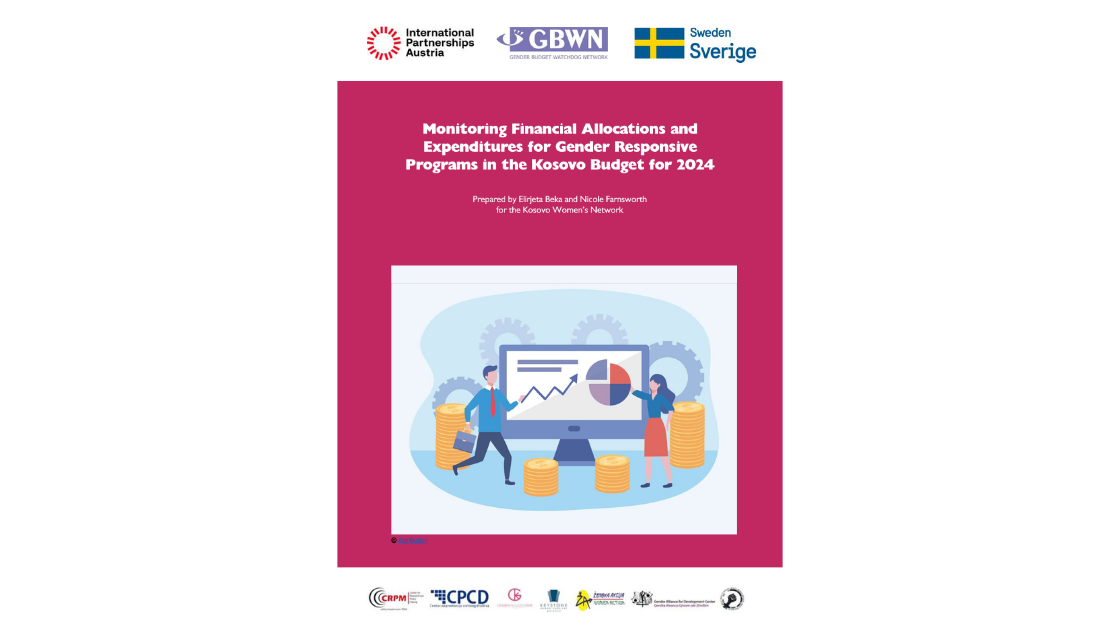
Today, KWN sent a letter with recommendations to Kosovo’s municipalities in the context of ongoing preparations for the 2026 budget. The recommendations are based on KWN’s research and focus on gender-responsive budgeting (GRB). That is, ensuring that public funds address the differing needs of women, men, boys, and girls, in line with Kosovo’s legal framework and international best practices. Implementing GRB strengthens transparency, accountability, and efficiency in government spending, while advancing gender equality. Read the full letter here.

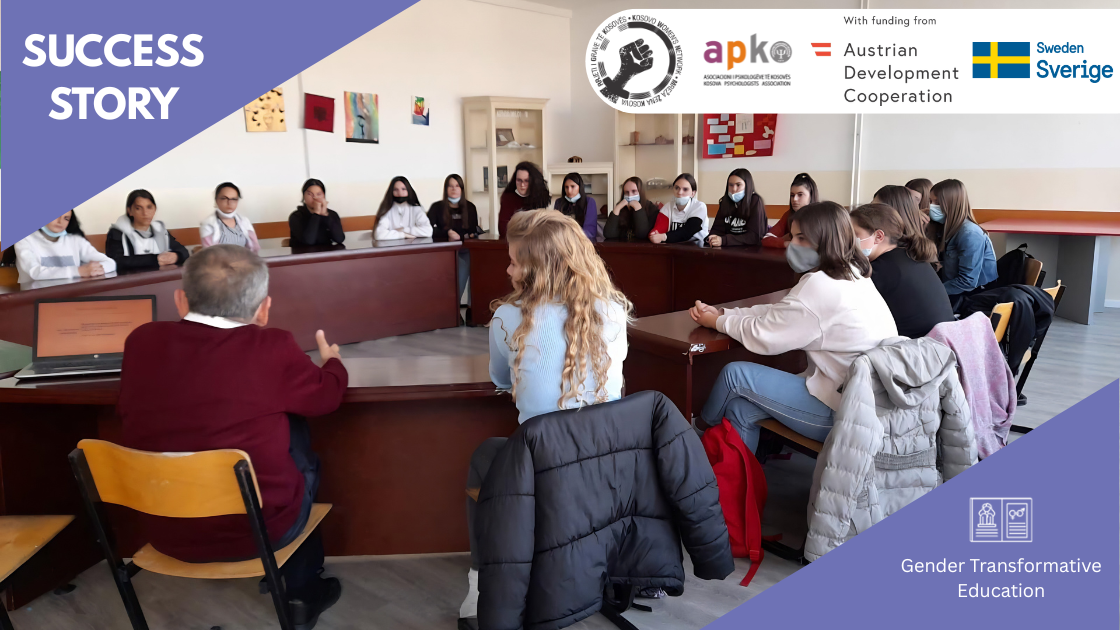
Laying the Groundwork: Gruaja Fermere’s Push for Sexual Education in Rahovec Schools

In Kosovo, sexual education remains insufficiently addressed, shaped by tradition and social norms. Within schools, the subject is covered only minimally: textbooks provide limited information that is neither comprehensive nor tailored to students’ age and development. Many young people hesitate to approach teachers and instead rely on social media for information about sexual and reproductive health.

The NGO Gruaja Fermere, based in the municipality of Rahovec, stepped in to fill this gap by empowering young people with the knowledge needed to safeguard their health and well-being. Believing that students deserve more than whispered rumours, the organisation sought to provide accurate, age-appropriate guidance.

Their initiative began with a cooperation agreement with the Municipal Directorate of Education. Six school principals, together with a psychologist and two sociologists, joined forces to review textbook shortcomings and submit a request for sexual education to be introduced as a subject in schools, taught at least once a week. Soon after, forty teachers from biology, civic education, language, arts, and physical education took part in a specialized training on quality, gender-sensitive teaching. They left not only with certificates but also with a new responsibility: to bring equality and respect into their daily classrooms.

The classrooms soon followed. Ten sessions across Rahovec schools reached 263 students, 140 girls and 123 boys aged 12 to 17. One hundred of them received focused guidance on accessing health services and understanding their rights. The sessions covered topics such as reproductive health, the role of family and community, sexually transmitted diseases, and unplanned pregnancy. For many students, it was the first time these topics connected directly to their own futures. Lecturers also encouraged students to promote these conversations and practices within their families and communities. Awareness began to shift into action as students carried healthier values back to their homes and peers.

The story of Gruaja Fermere shows that change begins when silence is broken. By combining teacher training, student engagement, and institutional cooperation, they laid the foundation for lasting progress. Teachers gained the confidence to integrate gender equality into their classrooms, students gained essential knowledge to protect their health and well-being, and school leaders came together to equip Rahovec students for a healthier, safer future.

Although the request to make sexual education a standalone subject was later rejected, further progress has followed since the initiative ended. Sexual education is still not a separate subject but has been integrated into Biology as a dedicated chapter, and teachers trained by Gruaja Fermere reportedly still use the materials they received to deliver lessons. Gruaja Fermere tells KWN that the need for sexual education to be more comprehensively addressed in schools – or, if not approved, to be organised outside of schools – has been raised by community members also within other projects. “Based on the situation on the ground, I think parents need to be made aware of the importance of advocating for the Ministry of Education to introduce sexual education as a school subject,” says Muradije Shehu, Gruaja Fermere’s Project Coordinator. “The teacher trainings clearly showed that children have a real need for this knowledge.”

Gruaja Fermere’s initiative “Sex education adapted to age and development” was carried out with support from the Kosovo Women’s Network via the Kosovo Women’s Fund, with funding from the Austrian Development Agency and the Swedish Development Agency, in the amount of €3,705, from October 2021 to January 2022. The initiative contributed directly to KWN’s Programme “Gender Transformative Education.”

KWN sends Budget Recommendations to the Ministry of Internal Affairs

Last week, KWN sent a letter with recommendations to the Ministry of Internal Affairs in the context of ongoing preparations for the 2026 budget. The recommendations are based on KWN’s research and focus on gender-responsive budgeting (GRB). That is, ensuring that public funds address the differing needs of women, men, boys, and girls, in line with Kosovo’s legal framework and international best practices. Implementing GRB strengthens transparency, accountability, and efficiency in government spending, while advancing gender equality. Read the full letter here.

Kosovars Becoming More Aware of Gender-Based Violence and Reporting Mechanisms

Throughout this year, the Kosovo Women’s Network (KWN), in collaboration with partner organizations, has been working to raise public awareness about the various forms of gender-based violence (GBV), including online violence.

This project is being implemented by KWN in partnership with the East West Management Institute, while the awareness campaigns are carried out by the following organizations: Organization of Persons with Muscular Dystrophy of Kosovo (OPDMK), Center for Inclusion of Women (ZEC), Artpolis, NRAEWOK, and Kosovo Law Institute (KLI). As part of these initiatives, various inclusive campaigns are being implemented across the country, aiming to inform and empower communities on how to recognize and address gender-based violence.

Through the “Door to Door” campaign, implemented by OPDMK, ZEC, and RrOGRAEK, a total of 1,637 individuals have been reached in the municipalities of Prizren, Suhareka, Peja, Mitrovica, North Mitrovica, Zvečan, Gračanica, and Novo Brdo, including the villages of Hasi, Vërnica, and Zhupa.

The campaign has also involved persons with disabilities, as well as members of the Roma, Ashkali, Egyptian, and Serbian communities, demonstrating a truly inclusive and diversity-sensitive approach.

Antigona Shestan, Executive Director of OPDMK, emphasized the importance of the campaign, stating: “Violence against persons with disabilities whether at home, in the community, or online should never be silenced. Every person who experiences violence should have the courage to report it.”

A woman from a rural area who participated in the campaign shared this touching message: “In rural areas, where silence often speaks louder than words, you have broken barriers and brought us support through your visit.”

The campaign is also accompanied by a powerful awareness video prepared by OPDMK, which highlights the importance of recognizing and reporting gender-based violence. Watch the video here.

KWN sends Budget Recommendations to the Ministry of Justice

Last week, KWN sent a letter with recommendations to the Ministry of Justice in the context of ongoing preparations for the 2026 budget. The recommendations are based on KWN’s research and focus on gender-responsive budgeting (GRB). That is, ensuring that public funds address the differing needs of women, men, boys, and girls, in line with Kosovo’s legal framework and international best practices. Implementing GRB strengthens transparency, accountability, and efficiency in government spending, while advancing gender equality. Read the full letter here.

KWN sends Budget Recommendations to the Prosecution Council

Yesterday, KWN sent a letter with recommendations to the Prosecution Council in the context of ongoing preparations for the 2026 budget. The recommendations are based on KWN’s research and focus on gender-responsive budgeting (GRB). That is, ensuring that public funds address the differing needs of women, men, boys, and girls, in line with Kosovo’s legal framework and international best practices. Implementing GRB strengthens transparency, accountability, and efficiency in government spending, while advancing gender equality. Read the full letter here.

KWN sends Budget Recommendations to the Ministry of Finance, Labour and Transfers

Today, KWN sent a letter with recommendations to the Ministry of Finance, Labour and Transfers in the context of ongoing preparations for the 2026 budget. The recommendations are based on KWN’s research and focus on gender-responsive budgeting (GRB). That is, ensuring that public funds address the differing needs of women, men, boys, and girls, in line with Kosovo’s legal framework and international best practices. Implementing GRB strengthens transparency, accountability, and efficiency in government spending, while advancing gender equality. Read the full letter here.

From Health Education to Lasting Support for Survivors of Sexual Violence

In Kosovo, the wounds of war remain vivid for many women who survived sexual violence. For years, these women have carried both the physical consequences and the mental weight of war trauma. Accessing health services has often been difficult, and emotional healing even more so, as stigma and isolation keep many from seeking the support they need.

The Centre for the Promotion of Women’s Rights (CPWR) in Drenas, a steadfast advocate for survivors, stepped in to make a difference. Their initiative was designed around the needs expressed by the women themselves, with a clear mission: to provide not just information, but practical support that would empower survivors to take care of their health and reclaim a sense of agency.

Building Confidence Through Care, Knowledge, and Connection

Throughout the initiative, 50 members of the Centre, all survivors of wartime sexual violence, took part in a programme that combined medical care, education, and psychosocial support. Gynecological check-ups ensured that each woman received essential medical attention, while informative lectures on breast and cervical cancer provided clear and accessible information about personal healthcare. Beyond gaining knowledge, participants built confidence to make informed decisions about their own bodies, noting that they had previously received very little information on these topics. Group psychosocial sessions paired with recreational activities offered an opportunity for women to connect with others who shared similar experiences. In a safe and understanding environment, they could express themselves, strengthen their mental well-being, and build new friendships.

From Individual Healing to Systemic Change

CPWR’s efforts did not stop with individual support. They recognized that lasting change required a healthcare system more responsive to women’s needs. While survivors were building confidence and knowledge, CPWR also engaged with doctors, health officials, and the Patients’ Council to ensure that women’s voices reached decision-makers. And change began to happen. For the first time, survivors had trusted representatives inside the system, reviewing complaints and making sure they were taken seriously. Health centres were reminded to keep complaint forms and boxes available, giving patients a real way to speak up. And when a simple mobile phone was donated to the Patients’ Council, along with a dedicated number provided by the municipality, women suddenly had a direct line to raise their concerns or seek help. “Our members have used it [the phone number] for appointments but also for reporting on the quality of health services,” says one of CPWR’s staff members.

Continuing the Journey: Solidarity, Wellbeing, and Empowerment

Since the project concluded, CPWR’s group sessions have evolved into a consistent safe space where survivors can come together. Today, CPWR hosts three support groups of 10 women each, who meet monthly at the Centre to take part in recreational activities such as painting, handicrafts, traditional cooking, artistic creations, and book reading. This network serves as a lasting source of solidarity, helping participants navigate both the lingering effects of trauma and the challenges of daily life, while also simply enjoying each other’s company.

Through CPWR, the women who took part in the initiative have also had the chance to visit the office of the Patients’ Council, which is located within the premises of the Family Medicine Centre in Drenas. They got to meet with Council members, who helped ensure that the women were prioritized in scheduling appointments for health services at the Family Medicine Centre. Dr. Sofie Dobra held a lecture on diabetes and blood-glucose monitoring, in cooperation with lab technicians Rrahime Binaku and Shukrije Mala. Women with elevated levels were able to have laboratory analyses and follow-up treatment at the Family Medicine Centre. These services are now offered on a monthly basis.

CPWR’s work went beyond addressing immediate health needs; it also fostered systemic change and created lasting pathways for resilience and mutual support. For survivors of sexual violence, this represents a move toward healing, dignity, and the realization that they are not alone. “Food, sleep, and health are key to wellbeing and a normal life. They are basic human rights, which should not be denied,” says one of CPWR’s staff members. “Women – especially those who have been marginalized, isolated, and without support – deserve to know where they can find the right support to secure these rights.”

CPWR’s initiative “Supporting Women Survivors of Sexual Violence through Health Education” was carried out with support from the Kosovo Women’s Network via the Kosovo Women’s Fund, with funding from the Austrian Development Agency and the Swedish Development Agency, in the amount of €9,930, from February to June 2024. The initiative contributed directly to KWN’s Programme “Improving Gender Equality through the Rule of Law” by raising the participating women’s awareness of their healthcare rights and supporting them in exercising those rights.

KWN sends Budget Recommendations to the Ministry of Education, Science, Technology and Innovation

Today, KWN sent a recommendation letter to the Ministry of Education, Science, Technology and Innovation in the context of ongoing preparations for the 2026 budget. Our recommendations focus on gender-responsive budgeting (GRB). That is, ensuring that public funds address the differing needs of women, men, boys, and girls, in line with Kosovo’s legal framework and international best practices. Implementing GRB strengthens transparency, accountability, and efficiency in government spending, while advancing gender equality. Drawing from KWN’s research, KWN provided to the Ministry of Education, Science, Technology and Innovation the following recommendations:

  • We strongly recommend that the Ministry of Education, Science, Technology and Innovation (MESTI) invest directly in and encourage municipalities to budget for establishing more affordable public childcare centres and kindergartens, particularly in rural areas. By setting concrete targets and budget allocations based on comprehensive needs assessments, municipalities can address high unemployment and inactivity rates. KWN has estimated that expanding childcare options can create approximately 9,899 new jobs, transforming unpaid care work into paid employment. This also will enable more women to enter the labour market and improve educational outcomes in line with the EU Barcelona Objectives. The Government has committed to these investments in the National Development Strategy, and now budget allocations must be made. While the Government has relied on international donations for improving childcare availability, we implore MESTI to allocate more such funds and to strongly encourage municipalities to do similarly. We hope for reduced reliance on external funding to ensure sufficient and sustainable budgetary resources for the future for this important national development priority.
  • We strongly encourage MESTI to include GRB in the Education Strategy and Action Plans, the annual education budget, and other early childhood education (ECE) and social assistance policies and legislation to improve the quality of ECE and promote learning that challenges harmful stereotypes. Please budget for implementing gender-responsive pedagogy and quality assurance, including indicators for assessing the implementation of curricula, the quality of services, and the beneficiaries of services for girls and boys, using KWN’s established methodology. Budget lines should allocate funding for quality assurance strategies, social schemes, recruitment strategies (particularly for men in ECE), community engagement activities, and training, including obligatory teacher training to ensure teachers can implement curricula that provide diverse girls and boys with equitable learning opportunities. Investing in quality education can ensure that budget allocations translate into meaningful gender equality outcomes, in line with the EU Gender Action Plan III, CEDAW, SDGs, and the EU Barcelona Objectives.
  • We also strongly encourage MESTI to publish the annex to your Ministry’s 2026 Budget, requested by the Ministry of Finance, Labour and Transfers and in line with SDG 5.c.1., explaining transparently how your 2026 budget will contribute to furthering gender equality and the related expenditures foreseen.

Read the full letter here.

External Evaluation of the Further Advancing Women’s Rights in Kosovo II Action Implemented by KWN

The Kosovo Women’s Network (KWN) invites qualified and experienced consulting firms or organizations to submit bids for an External Evaluation of the “Further Advancing Women’s Rights in Kosovo II” Action. This procurement is conducted in accordance with KWN’s procurement policies and applicable donor guidelines, ensuring a fair, transparent, and competitive process. Interested bidders are requested to review the full Instructions to Bidders and submit their proposals in line with the requirements outlined in the attached documents.