During KWN’s bimonthly meeting in Gjakova, Mirlinda Kusari-Purrini, Executive Director of SHE-ERA, informs KWN members about new opportunities from the Government of Kosova towards empowering women economically.

KWN Members Hold Meeting in Gjakova

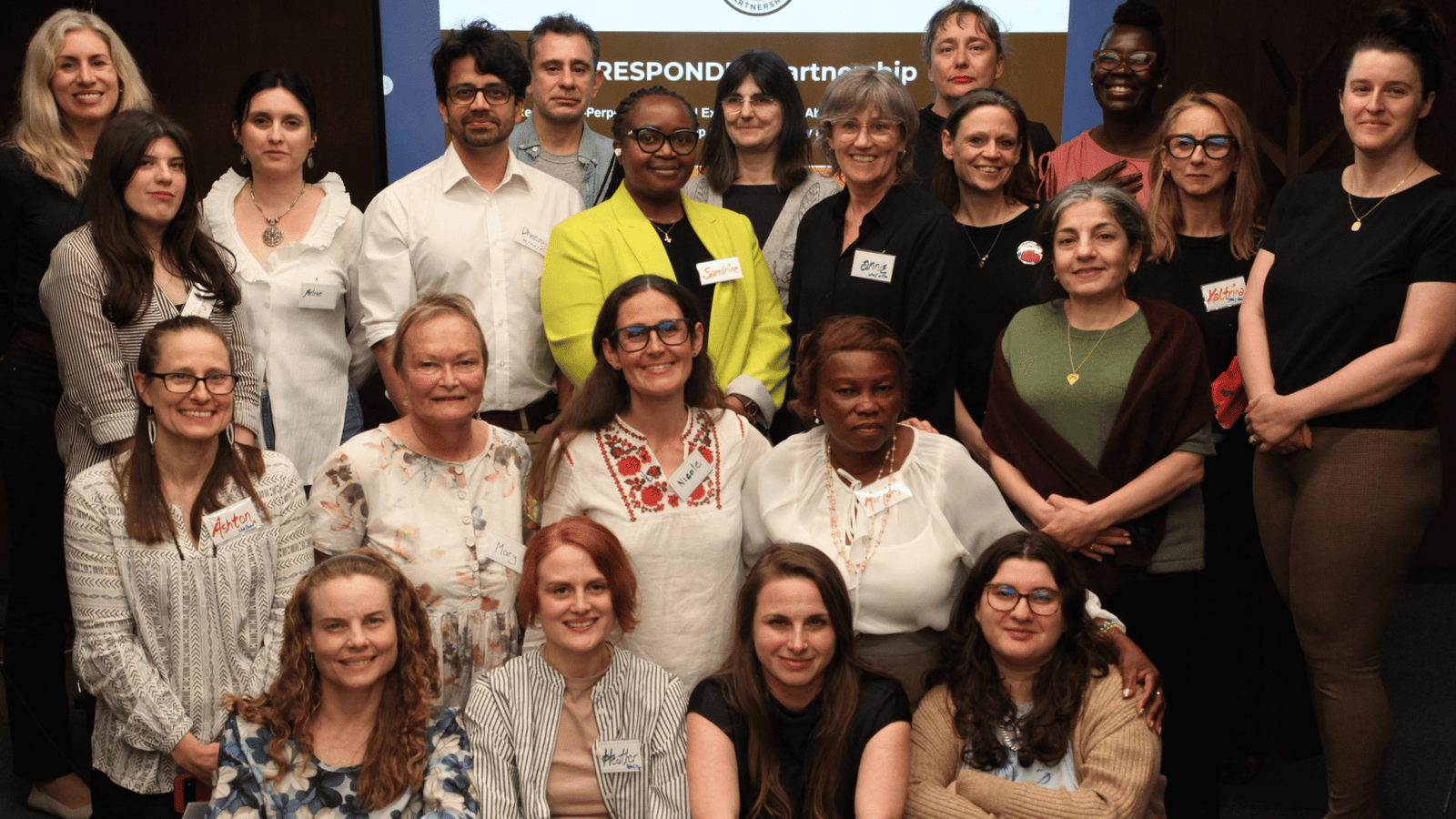
Approximately 60 people attended the KWN Bimonthly Meeting on 8 Apr. 2013 in Gjakova. Participants included KWN member organizations, board members and other interested persons.

Besa Shehu, Finance & Administrative Manager at KWN, opened the meeting, announcing the names of eight organizations awarded grants through the Kosova Women’s Fund (KWF). She also encouraged organizations that did not receive grants to apply again. The next grant round will open on 15 May 2013.
“NGOs will receive assistance and support from KWN staff in order to improve their applications,” she said. KWN continues organizing capacity building opportunities for its members, so that they can benefit not only from the Kosova Women’s Fund, but also from other funds.

Zana Rudi, Project Coordinator for KWN Members, presented the KWN Code of Conduct Monitoring Report and Capacity Development Plan for Members for 2013. The report resulted from interviews with 82 of KWN’s 100 member organizations. The report presents members’ strengths and areas where members could benefit from capacity development. Based on the findings, KWN plans to organize 12 trainings in 2013; two have been held so far. Since KWN’s budget is limited, KWN staff and supporters have volunteered their time to provide training for members. KWN also is preparing an individual report for each member, outlining their strengths and areas where they could further develop their capacities.

Then, Mirlinda Kusari-Purrini, Executive Director of KWN member organization SHE-ERA, informed participants about the National Platform for Women Entrepreneurs in the Republic of Kosovo.
“The draft platform is supported by Atifete Jahjaga, President of Kosova, who is willing to push it forward, and the group of women MPs in the Kosova parliament,” she said. “An informal organization will advocate for creating a suitable environment and supporting women entrepreneurs.”

She also informed participants about the Ministry of Trade and Industry’s plans to support small and medium sized enterprises and the Ministry of Agriculture, Forestry and Rural Development’s Rural Development Program. These are two ways that KWN members may be able to receive funds towards women’s economic empowerment.

Emine Berisha, a KWN and Alter Habitus researcher, provided information about the two organizations’ joint research “Where’s the Money for Women’s Rights: a Case Study for Kosova”, supported by the Association for Women’s Rights in Development (AWID). This research initiative will help identify funding trends related to supporting women’s organizations and women’s rights over the last decade in Kosova. Emine is interviewing KWN members, and all information provided by members will remain confidential.

KWN members then shared the following information:

o  Dardana Mehmeti from NGO Artpolis provided information about a festival being held on 27-30 May in Oda Theatre, where women
artists will present their work. The festival will focus on social aspects of life, particularly women’s and girls’ rights and the
challenges they face in Kosova and the region.

o  Veprore Shehu from NGO Medica Kosova said that 20 women and six staff members will visit Istanbul with support from the
Turkish Embassy.

Finally, Nertila Qarri, KWN Coordinator for Public Relations, emphasized that KWN members can send information about their activities to info@womensnetwork.org for inclusion in KWN’s monthly newsletter Kosovar Women’s Voice.

The next KWN members’ meeting will be held on 3 Jun. 2013.

Shoqata e të Shurdhërve në Prizren (Association of the Deaf in Prizren)

If gynaecological check-ups present problems for most Kosovar women, deaf women face additional challenges. They must overcome widespread negative stereotypes about women visiting gynaecologists, especially male doctors, as well as explain their health problems to gynaecologists using sign language. Even then, deaf women cannot understand gynaecologists’ diagnoses or instructions for treatment without assistance from an interpreter.

The Association of the Deaf in Prizren sought to address this challenge by involving sign language interpreters in accompanying deaf women to gynaecologists. Their initiative, supported by the Kosovo Women’s Fund (€1,312), assisted five women in leaving their homes independent of family members, some for the first time. Further, more than 25 young women learned techniques for overcoming the challenges they face in their everyday lives.

The gynaecological visits revealed that one deaf woman had health issues. Through this visit, she was able to identify the issue early on. Regular visits to the gynaecologist, with the Association’s assistance, enabled her to treat this issue and heal quickly.

Further, through this initiative, the Association advocated successfully for the Municipal Officer for Gender Equality and the Health Directorate to institutionalize sign language services. Soon after, the Municipality hired an interpreter who now provides interpretation services at the Municipal Assembly and within the Health Directorate twice per week.

However, reaching these achievements was not easy. During this initiative, women faced a series of challenges, including discrimination by male colleagues within their own Association. Therefore, an additional outcome of this initiative was that deaf women decided to found the Association of Deaf Women in Prizren in July 2013. The new Association aims to empower deaf women and attend to the unique challenges that they face because they are women.
“I wanted them to have more space, since this space wasn’t provided in the other NGO so far,” said Krenare Ajdini, an interpreter who supported women in founding the new Association.

Krenare found her beginnings as a women’s rights activist while working as a sign language interpreter during Kosovo Women’s Network meetings. She attended her first such meeting in 2012 as an interpreter for the Association of Deaf People. “During this meeting I learnt a lot of new information about NGOs and their work,” she said. “When I saw the possibilities that the network offers women, I decided to start a new NGO for deaf women.”

Krenare admits that creating a new organization is no easy task: compiling a statute, forming a board, and other administrative issues. However, “KWN staff were always there to help me with documents, procedures, and any other issue,” she said.
“So far, I am really satisfied with the interest and cooperation shown by our NGO members,” Krenare said. “Together we’re working on finding ways to fund our ideas. In this way we will be able to empower deaf women in our municipality.”

Qendra për Zhvllim Ekonomik të Grave në Shtërpce “Ikebana"(Centre for Economic Development of Women in Shtrpce “Ikebana”)

An interethnic group of women in Shtrpce always dreamed of forming an organization through which they could collect and market herbal teas. They aimed to prepare products with quality ingredients in an environmentally friendly manner. Some medicinal plants with which they wanted to work are well-known in the pharmaceutical industry. With support from the Kosovo Women’s Fund (€2,707) and Caritas Switzerland, they were able to realize their dream, opening their organization, “Ikebana”.

Establishing a new organization is no easy task. Ikebana members needed support in order to put in place systems, policies, and procedures for their organization to function independently. Kosovo Women’s Network staff members mentored them in developing these.

Then Ikebana purchased machines for drying and producing teas. They began work, learning from each other. Women also took part in trainings that equipped them with theoretical and practical information. They used their knowledge to begin collecting and producing teas in June. Although they began as a small group, with time their group has grown.
“We were constantly looking to find a way to start working, to show that we can work,” said Ankica Zivkovic, the Executive Director of Ikebana. “Now with funds from KWN, we are showing our potential. We are very thankful to the Kosovo Women’s Fund for this opportunity.”

Fondacioni për Edukim dhe Zhvillim (FEZH) (Foundation for Education and Development)

Many women in Novoberd spend most of their time at home, caring for children and doing housework. In the snowy winter months, they hunker in, spending their days and nights sewing and weaving. The Foundation for Education and Development inspired women to become active outside their homes whilst contributing to their families’ income.

The Foundation began by organizing training in products, marketing, and markets, supported by the Kosovo Women’s Fund (€2,600). They concentrated on reaching women heads of households and those dependent on state social assistance. In September, they assisted women in opening a kiosk and outdoor pavilion at a prime location, near the Novoberd Tourist Centre. From there, women could sell their homemade products to tourists visiting the Novoberd castle.
“This project is very important for us,” a woman said. “It is not only about the profit, but it made us active as well. I make homemade jams, teas, and handcrafts. Now I can sell them. People even started to call me and ask about my products.”

According to Vjollca Zeqiri, the Foundation’s Director, the initiative not only contributed to improving 10 women’s economic situation, it also supported women psychologically. “Now women can sell the products that they have made during the winter in the summer,” she said. “Regardless of when they make each product with dedication and love, every product will be sold.”

NGO Gruaja Hyjnore (Divine Women)

Several women are unemployed in Gjilan region. Without employment and income, some women struggle to participate in decision-making within their families, let alone in the public sphere. Many women also lack knowledge about their rights to inheritance and gender equality.
     
Knowing well the challenges that women face within their community, NGO Gruaja Hyjnore (Divine Women) set out to educate women about their rights, as well as support them in generating income towards their economic empowerment. Knowing their rights, coupled with greater economic independence could empower women’s improved participation in decision-making, they believed.
     
Although Gruaja Hyjnore had perated informally since 2005, they could not afford an office space.
Support from the Kosovo Women’s Fund (€2,420) enabled them to advocate successfully for the Municipality of Gjilan to provide an office
space free of charge for the organization’s activities.
Since May 2013, the Municipality of Gjilan has provided a free venue for the organization’s use. This cooperation with the Municipality has
enabled Gruaja Hyjnore to decrease its operational costs, contributing substantially to the organization’s sustainability.
“The Municipality of Gjilan is trying to pay a lot of attention to women’s rights and in terests, as we know that the role of women in society is indisputable,” said Omer Daku, Deputy Major of the Municipality of Gjilan. “We, as the Municipality, are trying to create more space for women to act and undertake more activities.”
     
Gruaja Hyjnore has used their new space to empower women economically. With support from the Kosovo Women’s Fund, they have held 10 workshops on gender equality, women’s rights to property inheritance, and advanced techniques in the art of handmade crafts for 40 women ages 25 to 40.
“The NGO’s activities have helped me, as a woman with no higher education, get out of my daily routine; meet other women; exchange experiences; attend trainings about new techniques for handmade products; receive certificates; showcase my work in different exhibitions; and, above all, feel more valuable,” said Alije Ajeti, a participant. “Another very important thing is that I’ve been able to sell my handmade crafts. In this way, I have supported my family economically. Now, even my husband’s support has grown stronger.”

Gruaja Hyjnore also has collaborated with the shelter in Gjilan by inviting women to attend their workshops. This provided the opportunity for women who have experienced violence to learn how to make hand crafts, which they can then sell. In addition, they found the lectures on property inheritance and gender equality very useful. They have requested that Gruaja Hyjnore continue organizing similar activities in the future.
     
In addition to gaining knowledge about their rights, through this initiative 36 women have sold their products at fairs. The four women from the women’s shelter earned approximately € 400 in total from the sale of their products. This initiative thus has contributed to empowering women, both economically and towards their enhanced participation in decision-making.


NGO Parajsa Jonë (Our Paradise)

Due to social constraints, many women in the villages of Lipjan Municipality have limited freedom of movement. Sylbije Sahiti, Executive Director of Parajsa Jone (Our Paradise) found a way to break through these constraints: organize trainings in horticulture, vegetable and fruit cultivation, pasteurizing food, and marketing products.

These topics rallied so much interest that more than 120 women ages eight to 55 attended the trainings. Women even offered to share their homes as training venues.
“I am very happy to share this space with women,” said Hanife, a participant who hosted a training in her garden. “It’s hard for women to leave their homes. This is a perfect excuse for them to get out of their daily routine.”

During trainings held this summer, Sylbije showed women how to plant seeds, using her leadership skills to motivate women. They could undertake initiatives to earn their own money and even start their own businesses, she said. “Do not be ashamed or afraid of sharing your ideas with others and making your dreams become a reality,” she told the women, who had gathered on plastic lawn chairs for a training in Krojmir village. “When I first started this initiative, I didn’t have support from my family. My husband didn’t think I could do it. However, today he has seen the success and he is very supportive. Now I can provide income for my family,” she said. “I believe that each of you has unique ideas, can become successful, and can earn money for yourself and your family.”

For this six-month initiative, Parajsa Jone received support from the Kosovo Women’s Fund (€2,656).

Members of Krusha e Vogel Women Farmers’ Association learn seeding and business techniques.

Shoqata e grave fermere "Krusha e Vogël" (The Association of Women Farmers “Krusha e Vogel”)

Krusha e Vogel is among the areas most affected by the 1999 war in Kosovo. Not only did almost every household lose several family members (especially men and boys), but they also lost their livelihoods when the town was burned to the ground.

Soon after the war, the Krusha e Vogel Women Farmers’ Association was established to support women, particularly heads of households, in developing their skills as farmers so that they could carve out new livelihoods. The Association has since expanded, involving women from several nearby villages, including Has, Randobrave, Pirana, and Serbica.

The Association is not a typical farmers association in that it has coupled capacity development opportunities for its members with psychosocial support. As of 2013, its 180 women association members already had developed skills in handcrafts, agriculture, and farming. Now they wanted to identify ways for better managing their work, so that they could become more economically empowered. This included furthering their knowledge in how to open and run small businesses.

With support from the Kosovo Women’s Fund (€2,390), the Association has been able to support its members in improving the quality of their products, towards enhancing their sales. For example, some Association members were having problems with their milk expiring prior to sale. Seasoned businesswomen Dile Prekpalaj, Executive Director of the Association, helped women farmers improve milk hygiene. As a result, 22 women were able to permanently increase the life of their milk and thus their income by approximately €160 per month, in total.

Twelve women specializing in handcrafts received practical advice for better managing and marketing their products, including skills towards business management. Eight of them went on to sell their products, making approximately €120.
Meanwhile, women members working in agriculture learned seeding techniques, as well as strategies for running a successful business.

A delegation of 19 women farmers travelled to Koretin village in Kamenica Municipality, where they learned from Skender Dervishi and Ibrahim Bunjaki, owners of the “Centre of Seedlings”.
“This visit supported the exchange of experiences and learning in the area of agriculture,” said a participant. “Experts explained how they run their business, which seedlings they cultivate, and details about the seeding process.” Women had the opportunity to learn concrete ways for better organizing the planting of seedlings, as well as to see new types of seedlings that they had never seen before.
“The trainings have been very important for us,” a member said. “And this visit was something very good and new. We had a fantastic time. We escaped from our daily routine and learnt a lot of new things.”

The experience was not only educational, but empowering. For some women, it was the first time that they had travelled outside their village.
Although the project ended in July, eight women plan to open their own businesses in the future, where they will continue using the knowledge that they gained through this initiative.

Qendra e Grave “Prehja” (Women’s Centre “Repose”)

Many women in Kosovo cannot afford to pay for healthcare or preventative screenings that may enable them to diagnose cancer early on, improving opportunities for treating it.
“Most women hide,” a woman said. “They think it’s a shame [to complain about illnesses] and that they must withstand pain instead. They feel bad telling their husbands that they are sick because they know that medical care will cost money, and their families do not have enough money.”

Therefore, with support from the Kosovo Women’s Fund (€2,160), Women’s Centre Prehja decided to teach rural women how to conduct self-exams towards early detection of breast cancer.
“Just last year we lost six women in our municipality to breast cancer,” said Jeton Rushit, Project Coordinator at Prehja. “They didn’t have good economic conditions to carry out regular medical examinations. Our project aimed to raise awareness among women to prevent breast cancer. We think that such initiatives have a vital role in making women aware of breast cancer, as well as enabling them to receive medical examinations free of charge.”

Prehja began by organizing lectures to raise awareness about breast cancer in four villages of Skenderaj in May 2013.
“It’s of vital importance that you have regular medical check-ups,” Dr. Maloku-Krasniqi told the 200-some women who took part in the lectures. “Only in this way can we take preventive steps and fight breast cancer,” she said.

Prehja plans to continue assisting women suffering from breast cancer by organizing self-support discussions, where women can speak with psychologists and receive advice on how to cope with cancer emotionally.

Women await their turn, visiting the gynaecologist free of charge.

NGO Lulebora

Many Roma, Ashkali, and Egyptian women are unaware of the potential consequences of not visiting the doctor for regular check-ups. Some women know the importance but cannot afford to visit the doctor, while others do not trust medical workers.

Knowing these issues from their prior work with Roma, Ashkali, and Egyptian women in Mitrovica, NGO Lulebora decided to organize lectures with gynaecologist Vjollca Thaqi, supported through the Kosovo Women’s Fund (€1,370). Three times per week she provided information relating to personal hygiene, contraception, and breast and uterine cancer. They also discussed the importance of visiting gynaecologists.

During the lecture, women actively engaged, asking questions.
“Most women did not even know what breast cancer was,” said Albulena Sinanaj, Lulebora’s Project Coordinator. “They only knew that it is a disease. With the help of the gynaecologist, they learned how to identify potential symptoms of breast cancer.”

Following lectures, Lulebora arranged for more than 75 women to visit a gynaecologist, many for the first time. The Municipal Officer for Gender Equality supported this initiative, requesting from the Directorate of Health that the public hospital provide free check-ups. The initiative also enabled the Officer for Gender Equality to fulfil its aim: ensuring improved access to healthcare for women in need.
“This project is very special for us,” said Drita Salihu, a participant. “There are so many women that cannot afford to go to the doctor. I am very thankful that Lulebora involved us and helps take care of us.”