Meetings with women regarding reproductive health in Gjilan

Today, representatives of the Directorate of Health and Social Welfare, directors of hospitals, doctors, sociologists, psychologists, health workers, representatives of NGOs dealing with health, civil society and citizens of the Municipality of Gjilan gathered to discuss the importance of the Center for Women’s Welfare located near the Gjilan Regional Hospital. 

This image has an empty alt attribute; its file name is IMG_4996-1024x683.jpg

Dr. Mevlyde Iliazi, gynecologist, presented the project and the results of the field visits, showing the statistics on current health condition of women and their concerns. 

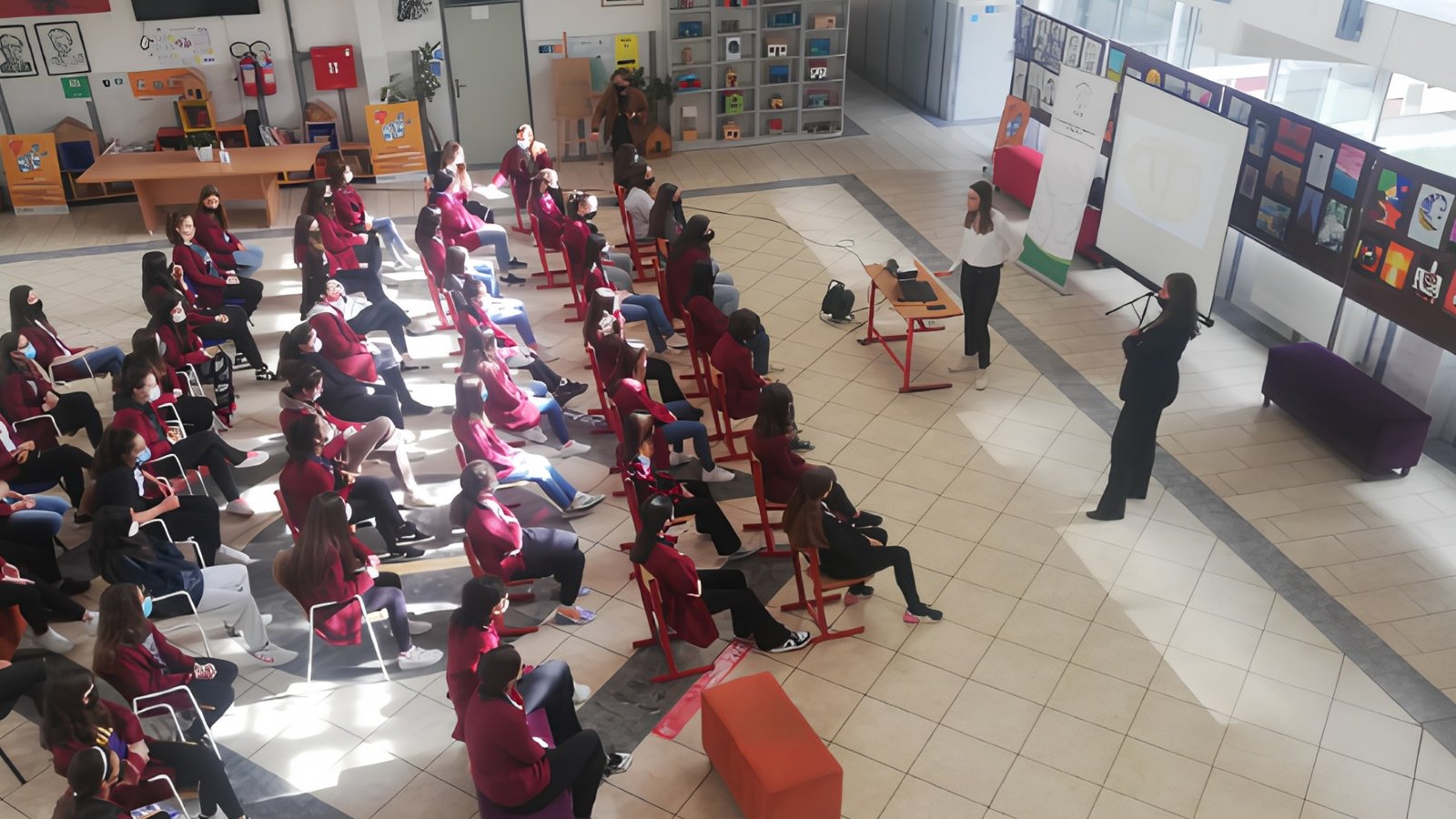
During 6 months of project implementation, Gruaja Hyjnore held informational meetings with relevant departments of the Municipality of Gjilan, information sessions with girls, mothers and pregnant women. They also held awareness-raising workshops in Gjilan, especially in the rural parts of the municipality of Gjilan, such as: Lladovo, Llashtica, Perlepnica, Malisheva, Velekinca, Ponesh, Zhegoc, Bresalc, Cernica, Vrapqiq, Zheger, Kmetoc. 

This image has an empty alt attribute; its file name is IMG_4930-1024x683.jpg

“We have held 8 workshops in order to raise the awareness of girls, women, and pregnant mothers about the importance of health care. We focused on gynecological care, prevention of STDs, awareness of menstrual disorders and other health issues in general, with a special focus on care for first-time pregnant women and new mothers, postpartum depression and tips for raising your first child.” said Qëndresa Hajdari, Project Coordinator. 

The member organization of the Kosovo Women’s Network, Gruaja Hyjnore held this meeting in the framework of the initiative “Awareness of girls and women about reproductive health” 

This initiative is supported by the Kosovo Women’s Fund (KWF) and is funded by UN Women. 

EKW Continues with Meetings with Women Entrepreneurs

EcoKosWomen EKW continues with meetings with women from the villages of Prugovc, Barilevë, Dabishevc, Bërnica, Slivovë and Keqekollë in order to develop criteria with the Municipality of Prishtina and the Directorate of Agriculture, to increase the support of women and girls in receiving grants.

This meeting was conducted on online platform, gathering together women farmers from different communities and Ms. Merita Tolaj, Senior Officer from the Directorate of Agriculture in the Municipality of Prishtina.

The participating women had the opportunity to address the difficulties they face.

“I’ve been repeatedly stating that the main problem in the villages of the Municipality of Prishtina is irrigation. After the workshop we had with EcoKos Women I took the initiative to address this issue to the local assembly members. The need for an irrigation system is essential for this region” said Havushe Bunjaku.

EKW organization together with Mrs. Merita Tolaj collects notes and recommendations from women participating in this meeting.

While on September 24, 2020, EKW in cooperation with the Municipality of Prishtina will hold a round table where the project findings and recommendations will be presented.

This initiative is supported by the Kosovo Women’s Fund (KWF), funded by the Austrian Development Agency (ADA) and co-financed by UNWomen.

KWN, EULEX Discuss about Gender-Based Violence

On September 18, EULEX Kosovo (Official) Head of Mission Lars-Gunnar Wigemark and Human Rights Officer Valentina Vitali visited Kosovo Women’s Network (KWN) office where they met with KWN Executive Director, Igballe Rogova and KWN Program Director and Lead Researcher, Nicole Farnsworth.

There they discussed key issues, such as opportunities for improving the inter-institutional response to gender-based violence in Kosovo; and the importance of meeting regularly and engaging with women’s rights activists and civil society, pertaining to EULEX’s work.

KWN representatives asked what EULEX is doing in order to follow up on prior training provided to police, prosecutors and judges for an appropriate approach to gender based violence cases.

“We also asked if there is anything that EULEX monitors can do with regard to following civil court cases to ensure that when a crime has been committed such as in a domestic violence relationship, the crime is proceeded to ex officio criminal proceedings and not only treated as a civil case for protection orders.” Farnsworth says.

Opportunities for collaboration between KWN and EULEX also were discussed.

“Do not encourage the perpetrators”, KWN Stands Against Short Sentences for Murderers of Women

Kosovo Women’s Network (KWN) has once again raised its voice against violence of women in Kosovo.

“Do not encourage the perpetrators”, “No more excuses”, “How many more times you want to kill us”, are some of the slogans that KWN staff held in their hands in the action organized today in front of the Prosecution in Prishtina. They wanted to raise their voice against violence and murder of women and against the short sentences that institutions are giving on murderers of women. They made sure to keep their physical distance while wearing masks and limiting the number of participants.

“KWN is holding a gathering limited to five participants to express outrage over the recent murders of women. Knowing that the decision is taken by the Court to punish the perpetrators of criminal offenses, we have gathered before the Prosecution to request that the qualification of acts of domestic violence or attempted murder be decided as they are, as this affects the decisions of Judge”, said Erza Kurti, Gender Based Violence Coordinator, KWN.

“We ask to file a complaint to the Court, that the case of Pjetër Ndrecaj returns on trial, because the reduction of his sentence is unacceptable”, added Kurti to the journalists.

“Life without Gender-Based Violence” remains one of KWN’s key programs. Every day we engage both in activism and through lobbying in institutions so that women and girls can live a life free from violence, including raising awareness and attention among officials and citizens, in tackling violence-based violence. including domestic violence, rape and sexual harassment.

Read HERE KWN’s response to the reduction of the sentence for Pjetër Ndrecaj.

HERE you can watch the live broadcast of this KWN action.

If you know someone who has experienced violence and has not received proper institutional treatment, please feel free to contact us.

Kvinna till Kvinna Foundation, KWN launch the Report ‘Where’s the Money for Women’s Rights’

During September, the Kvinna till Kvinna Foundation, KWN and other women’s rights groups launched the report Where’s the Money for Women’s Rights? in Albania, Serbia, Montenegro, Bosnia and Herzegovina and Kosovo. 

This report provides information about funding trends related to gender equality and financial support of women’s civil society organisations (WCSOs) in the Western Balkans (WB) to better understand WCSOs’ needs. 

The research was conducted in 2019 in six Western Balkan countries, by eight women’s organisations, led by the Kosovo Women’s Network (KWN), supported by Kvinna till Kvinna. It includes interviews with 71 funders and 241 diverse WCSOs. 

At the forefront in addressing the widespread gender inequalities that exist in WB countries are WCSOs. They are change-makers, advocates, service providers, researchers, teachers, and experts who have contributed significantly to several social, political, legal, economic, and individual level changes within their countries and beyond. WCSOs remain well-positioned to continue addressing pervasive gender inequalities in the WB and more broadly.  

For this work, WCSOs require resources. This report examines the funding available for their work.  So, the aims of this research were to provide information about funding trends related to gender equality and in support of women’s rights organizations in the Western Balkans from 2014 through 2019, and to better understand women’s rights organizations funding needs. 

Some of the key findings include:  

  • Most WCSOs (82%) have experienced periods in which they did not have enough resources, and 35% did not meet their planned budgets in 2018. 
  • 9% of the WCSOs interviewed never had received funding (22); they worked on a voluntary basis. Since 2014, 28% have lost support from a funder that historically supported them. 
  • Funding shortages have led WCSOs to delay payments, have staff work without pay, cut programmes, and close their doors. 
  • 31% have been in danger of closing their organisations due to lack of funds 
  • “A cocktail of modalities” that includes core support, project grants, and sub-granting for smaller WCSOs perhaps can contribute to meeting the needs of diverse WCSOs. 
  • Addressing gender-based violence received the most funds (27%), but it and several other areas remain underfunded. 

“We believe that the European Union (EU) in particular is well positioned to further gender equality in the Western Balkans. Governments have pledged in our countries to the EU policy agenda, which includes furthering gender equality,” said Nicole Farnsworth, KWN Program Director and Lead Researcher, while presenting the findings of the report. 

“What has been said is very loud and clear, and we need to listen to it very carefully. Obviously, funding is never enough.”  said Mr Ola Andersson, Embassy of Sweden in Belgrade, during the launch in Serbia.  

Commitments to furthering gender equality have been made by the European Union and the Gender Action Plan in the Women, Peace and Security agenda. Several funders also have made commitments to furthering gender equality in their work and through their strategies and policies.  

KWN Executive Director, Igballe Rogova praised the women’s rights organizations for joining voices together once again for bringing to the public this amazing report on trending funds of women’s rights organizations.  

“We all know that the changes that happened are because of women’s rights organisations. I am not talking this past ten years; I am talking in the last 30 years. In region, when we joined hands together in ’90, even in time of occupation. Women’s rights activists have been going through a lot of challenges. It was not easy and it took so much advocacy to bring the changes we have today”, said Rogova.  

This report was written by KWN in close cooperation with; The Albanian Women Empowerment Network, Autonomous Women’s Centre (Serbia), Centre of Women’s Rights (Bosnia and Herzegovina), Kosovo Women’s Network, National Network to End Violence against Women and Domestic Violence (North Macedonia), Rights for All (Bosnia and Herzegovina), Sandglass (Serbia), and Women’s Rights Centre (Montenegro). 

The report includes recommendations for funders and WCSOs towards addressing these challenges, which were discussed by all actors during the launching events.  

KWN Condemns the Reduction of the Sentence for Pjetër Ndrecaj

The Kosovo Women’s Network (KWN) is deeply concerned with today’s decision of the Basic Court of Gjakova to reduce the sentence for Pjetër Ndrecaj, for the brutal murder of his wife and daughter, in August 2018. 

The sentence of 24 and a half years in prison, imposed today after the retrial against Ndrecaj is in complete contradiction, except with the circumstances of the commission of the offense, but as well as with the general rules which provide for mitigation or aggravation of the sentence.

The criminal offense “Aggravated Murder” in the Ndrecaj case carries two legal qualifications; the murder of his wife, Valbona Ndrecaj, as well as the murder of their child (9-year-old daughter). For this criminal offense is stipulated a sentence of life imprisonment, in this case the circumstances of the commission of this offense, such as; the manner in which the murders were committed and the fact that the victims were unprotected should have had the effect of aggravating the sentence by imposing a life sentence on the defendant Ndrecaj.

We recall that the purpose of the sanction is to rehabilitate the perpetrator and create public awareness that those who commit such criminal acts will be punished. Reducing Ndrecaj’s sentence not that only cannot rehabilitate him, but in addition it will serve as a motive for others to commit similar acts.

We strongly believe that the Prosecution will file an appeal and that the Court of Appeals will change this decision and impose a maximum sentence for the defendant.

Justice keeps silence: Women keep experiencing violence

The Media continues to report countless cases of violence against women in  Kosovo. Some of these cases include murder with metal rod, murder with an axe, and murder with a gun by their husbands. 

According to recent media reports, a woman in Skenderaj was stabbed 10 times by her husband, in the chest, abdomen and other areas. The suspect was arrested, and only charged with “attempted murder”. 

What comes after this? How long for violence against women to stop being treated lightly? What justice awaits this woman? 

There will be no justice for Donjeta Pajazitaj, or Valbona Marku – Nrecaj and her daughter. There will be no justice for the late S.M who, in July of this year, was killed by her husband in Kamenica. 

Kosovo Women’s Network (KWN) expresses its deep resentment for the lenient charge of “attempted murder”, pledging at the same time that we will raise our voices to seek justice for this woman, and for any other woman who has been raped, injured and murdered. 

Since 2019, domestic violence is a criminal offense in the Criminal Code of the Republic of Kosovo, thanks to the efforts of several women’s organizations. Although all of these actions have been taken to criminalize domestic violence, KWN’s “From Words to Action?” research (2017) found that there was a major lack of implementation from institutions, like the Police, Prosecutors Office, and Courts for punishing cases of gender-based violence. 

Violence against women continues to be one of the least punished forms of violence. 

KWN will monitor the response of the institutions to this case and will use all legal opportunities to combat this in Kosovo. KWN will not stop until violence against women is punished to the highest extent of the law, and institutions begin taking it seriously. 

SHMAKS’ Advocacy Work on Institutional Support to Strengthen the Role of Midwives in Kosovo

On September 9, Magbule Elezi, President of the Kosovo Midwives Association (SHMAKS), member organization of Kosovo Women’s Network (KWN), met with the Minister of Health to discuss the importance of including the role and interests of Kosovo midwives in the Health Act.

SHMAKS has advocated for institutional support to strengthen the role of midwives in Kosovo in the past thanks to the support received from the Kosovo Women’s Fund (KWF).

“Promoting maternal and child health through strengthening the role of midwifery”, is the initiative of SHMAKS, which was implemented in order to increase awareness of the tireless work of midwives.

“Over 930 midwives in Kosovo do not enjoy a special status compared to other health professionals and their role is not defined at all levels of health services.” said Elezi.

“Strengthening the role of midwives in Kosovo and re-functionalizing maternity hospitals in Kosovo are our two ongoing requests to policy makers and the health committee in the Kosovo Parliament.” she added.

During this period of implementation of activities, SHMAKS drafted requests to address to the Ministry of Health to organize working group regarding the drafting of the profession, role, responsibilities and duties of midwife. SHMAKS also held meetings with women and girls in Kaçanik, Podujeva and Istog, with groups of 7-10 participants, in order to provide advice and information relevant to their health.

Photo copyright © Ministry of Health

‘Drugëza’ Successfully Completes the Initiative “Advancing Women’s Rights to Property and their Economic Empowerment”

On September 9 in Skenderaj, the NGO Drugëza, member organisation of Kosovo Women’s Network (KWN), hosted a roundtable within the initiative “Advancing women’s rights to property and their economic empowerment”. 

Representatives of local institutions and civil society of Skenderaj were present to discuss the economic empowerment of women and the impact of the COVID-19 pandemic on their welfare. Panelists at this roundtable were: Hana Zabeli, Executive Director of NGO “Drugëza”, Arben Veliu, Coordinator of Youth Center, Hyka Ymeri, Gender Equality Officer, Mirsad Gashi, European Integration Officer and Xhevat Dërvishi, Youth Officer. 

Zabeli talked about the achievements of the project as well as the statistics of women jobseekers who were reported to the employment office during the pandemic. She also discussed the facilities offered by the Municipality of Skenderaj for women in opening businesses and opportunities to benefit from grants and subventions. 

She announced that within the project, an awareness campaign was held, as well as 4 lectures with high school students in order to raise awareness of women’s rights to property and also as a strategy to spread the message to student’s families on the importance of respecting women’s rights. 

“During the lectures held at the Vocational School, Skenderaj, the participants were introduced to the legal framework on property rights and inheritance.” Zabeli said, adding that “the initiative is mainly aimed at raising the awareness of young people and advocating for changing attitudes towards women’s rights in terms of property, inheritance and the right to use for economic empowerment.” 

While, the Officer for Gender Equality, Hyka Ymeri shared the overview of the situation for domestic violence during this time. 

“Unfortunately, the pandemic not only affected women economically, but during this period the number of cases of domestic violence increased,” said Ymeri. 

The following recommendations were made at this roundtable, which will be addressed to municipal bodies: 

• The municipality should develop a plan that assists women with training in drafting a business plan; 

• The Office for Gender Equality to stimulate and support the empowerment of organizations dealing with women’s rights. 

This initiative is supported by the Kosovo Women’s Fund (KWF), and funded by UN Women. 

In addition to the organization Druze, beneficiaries of the 14th round of KWF are 19 other member organizations. You can read the full list HERE

KWN Holds Third Membership Meeting for 2020

Around 30 participants were part of KWN third membership meeting of this year that was held online through the ZOOM platform on September 7.   

The meeting was opened by KWN Executive Director, Igballe Rogova, who mentioned the need of wearing masks as a precautionary measure against the even greater spread of the COVID-19 virus.  

Rogova informed the participants that KWN would finally launch the report “Where is the money for women’s right?” which clearly identifies the need for more support for women’s groups. During this event, there will be speakers from Kosovo institutions and donors; the speaker from the UN will be Mrs. Ulrika Richardson as well as other donors who will explain why it is important to support women’s organizations. 

Further, she highlighted the importance of involving women and young women in peace and security processes. She mentioned that the findings of the research report Where Is My Seat at the Table will serve as a guide to further advocate for meaningful participation of women in decision making and at the negotiation table.

Vlora HotiUniten Women’s Association shared the information on signing the memorandum with Portal Pune:  

https://www.facebook.com/unitedwomensassociation/posts/1235780266769535?__tn__=-R

Venera Ismaili, Artpolis spoke about Artpolis activities during the pandemic and as well as FemART Festival which will take place in October this year. Click HERE for more.

Fatime GërxhaliuKosovo Rehabilitation Center for Torture Victims (KRCT) informed the participants about the activities of this organization and that during this time it has also provided psychotherapy services through online platforms. 

Violeta PiranaRenesansa informed that on September 25, 26 and 27 she will organize activities to celebrate breast cancer survivors, show solidarity with these people and remember those who have lost their battle with this disease.  

Hafize VeseliInitiative for Agricultural Development in Kosovo (IADK) informed that IADK has conducted a research in the Municipality of Vushtri and Lipjan regarding gender equality.  

Fikrije FeriziWomen’s Center ATO informed about the progress of the activities of the joint initiative with Rikota organization, supported by the Kosovo Women’s Fund (KWF).  

Valire Buza, Women’s Choir “Lira” shared information about the event regarding the 20th anniversary of the organization. Click HERE for more info on this.

Fatbardha SalihuOrganization of the Blind, shared information about signing a memorandum with the Municipality of Prishtina regarding urban traffic. 

Antigona Shestan and Resmije Rrahman, Organization of Persons with Muscular Dystrophy of Kosovo, shared information about the activities they carried out to mark the Dystrophy Week. See more regarding this event by clicking HERE.