“Drugëza” Educates High School Students about Property Rights for Women

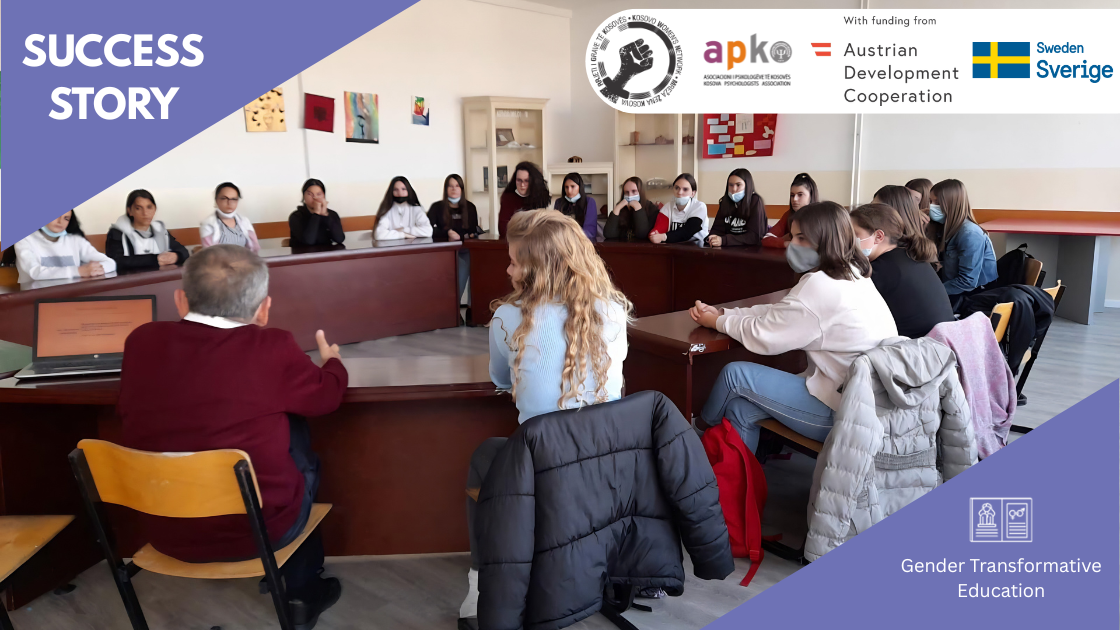
The non-governmental organization Drugëza, member organization of the Kosovo Women’s Network (KWN), as part of their initiative “Advancing women’s rights to property and their economic empowerment”, has organized lectures with high school students of Skenderaj Municipality. 

This was done in order to raise awareness on property rights for women, and also as a strategy to spread the message to student’s families on the importance of respecting women’s rights. 

Psychologist Antigona Beqiri held two lectures at the Skenderaj Vocational School on March 10, with a total of 46 students who were studying either construction or fashion design. 

Participants were introduced to the “Legal Framework on Property and Inheritance Rights”. 

Beqiri emphasized that the initiative aims to develop activities mainly with young people that advocate for, raise awareness about and change attitudes toward women’s rights. This initiative especially focused on property and inheritance, and women’s right to utilize this legal framework for the purpose of economic empowerment. 

These two lectures and this initiative are  supported by the Kosovo Women’s Fund (KWF) and funded by UNWomen. 

In addition to the NGO Drugëza, the beneficiaries of the 14th FGK Round are 19 other member organizations. You can read the full list HERE

Security and Gender Group Calls for Prevention of Domestic Violence amid the COVID-19 Pandemic

At this time of the global COVID-19 pandemic, home is supposed to be the safest place for everyone. However, for people experiencing gender-based violence including domestic violence, social distancing can mean being trapped inside with an abuser. Domestic violence is already a deadly epidemic, where one in three women worldwide experience physical or sexual violence, mostly from an intimate partner. Domestic violence tends to increase during crises, and the COVID-19 pandemic is showing such trends worldwide. In China, there has been a surge in domestic violence cases as millions of people have been under quarantine. Some police stations received as many as three times more reports of domestic violence in February compared to the previous year. Similar trends are seen in the USA where cases in some states have doubled since isolation measures became effective. Such trends are expected in Kosovo as well. While social distancing and self-quarantine are imposed to contain the virus, these may be manipulated to isolate victims from their families and social networks, as part of emotional and psychological violence and controlling behavior by the perpetrators, and may likely result in higher risks of domestic violence, primarily affecting women. Domestic violence is a crime, as stated in Article 248 of the Criminal Code of Kosovo. Domestic violence includes “physical, psychological, sexual or economic violence or mistreatment” of a family member against another family member. It is punishable by a fine and imprisonment. Therefore, the Security and Gender Group (SGG) encourages everyone who hears or suspects domestic violence to report it immediately to the police at: 192. It is our responsibility to report crimes when they occur, and also a civic duty to protect others.Additionally, SGG encourages persons seeking help or counselling related to domestic violence to call the Victim Advocates’ hotline: 0800 11 112. The number is free and operational 24/7, as well as confidential and anonymous. Amid the current crisis, safety, security and access to justice services may be disrupted. SGG calls on relevant actors to prioritize services for prevention and response to gender-based and domestic violence amid the COVID-19 pandemic, ensuring timely protection for those most in need and at risk of violence.Health workers who are part of outbreak response must have a gender sensitive response to disclosures of gender-based violence that could be associated with or exacerbated by the pandemic, in a compassionate and non-judgmental manner. First responders should know to whom they can make referrals for further care or bring into treatment centers to provide care on the spot. Additionally, the relevant authorities should collaborate closely to ensure appropriate testing of persons requiring shelter, towards safeguarding the health of already sheltered women and children. Now more than ever we need to look out for the most vulnerable in our society. We need to be extra aware and vigilant of possible cases of domestic violence. We need to work together to report such cases and to ensure timely access to assistance for persons suffering violence. The Security and Gender Group (SGG) is a multi-stakeholder group, chaired by UN Women. The following signatories are members of SGG and support this public statement: International organizations and Embassies: UN Women, UNFPA, UNHCR, UNICEF, UN-Habitat, EU Office/EUSR, OSCE, EULEX, IOM, UN Mission in Kosovo, and British Embassy in Kosovo. Women’s organizations and NGOs: Kosova Women’s Network, Kosovo Gender Studies Center, Kvinna till Kvinna, Kosova – Women 4 Women, NGO Zensko pravo(Women’s rights), KIPRED, INJECT, Youth Initiative for Human Rights – Kosovo YIHR. Kosovo Institutions:Agency for Gender Equality, Kosovo Police 

“Drugëza” Educates High School Students about Property Rights for Women

The non-governmental organization Drugëza, member organization of the Kosovo Women’s Network (KWN), as part of their initiative “Advancing women’s rights to property and their economic empowerment”, has organized lectures with high school students of Skenderaj Municipality. 

This was done in order to raise awareness on property rights for women, and also as a strategy to spread the message to student’s families on the importance of respecting women’s rights. 

Psychologist Antigona Beqiri held two lectures at the Skenderaj Vocational School on March 10, with a total of 46 students who were studying either construction or fashion design. 

Participants were introduced to the “Legal Framework on Property and Inheritance Rights”. 

Beqiri emphasized that the initiative aims to develop activities mainly with young people that advocate for, raise awareness about and change attitudes toward women’s rights. This initiative especially focused on property and inheritance, and women’s right to utilize this legal framework for the purpose of economic empowerment. 

These two lectures and this initiative are  supported by the Kosovo Women’s Fund (KWF) and funded by UNWomen. 

In addition to the NGO Drugëza, the beneficiaries of the 14th FGK Round are 19 other member organizations. You can read the full list HERE

KWN Welcomes the Adoption of the National Plan on Gender Equality 2020 – 2024

Kosovo Women’s Network (KWN) welcomes the adoption of the National Plan on Gender Equality 2020-2024. They hope it will serve as an additional incentive for the Kosovo institutions to ensure that gender equality becomes a staple part of their policies and practices.  

KWN has been one of the key stakeholders in the drafting process of the National Plan and works to ensure that it is based on the grounded analysis and recommendations from experts in the field.   

The goal is for gender equality, as a human right, to be placed throughout the National Plan, and be at the forefront of the transformative processes of all structures, institutions, policies, procedures, practices and governmental programs, agencies, civil society, private sector and the donor community.  

The three strategic pillars of this Plan are: Economic Empowerment and Social Welfare, Human Development, Roles and Gender Relations and Women’s rights, and Access to Justice and Security.  

KWN will continue to partner with the Agency for Gender Equality (AGE) during the implementation of the National Plan to promote and strengthen gender equality in Kosovo.  

“We March, we do not Celebrate” Finds Great Support, this Year’s International Women’s Day calls for Strengthening Gender Equality  

“Women don’t even rest on Sundays” was one of many slogans in the hands of activists who marched on Sunday March 8th for women and girls’ rights in Kosovo.

Zahir Pajaziti Square was a meeting point for the collective “We march, we do not celebrate” protest, which marked the fifth International Women’s Day, March 8.The Kosovo Women’s Network (KWN) once again joined this march that found support in both Mitrovica and Ferizaj as well.

In Prishtina, hundreds of citizens marched from “Zahir Pajaziti” Square, passing by Central Bank of Kosovo, the Municipality of Prishtina and then to the Government of Kosovo/Parliament.

With or without veil, I get the job done”, “Do not touch my inheritance!”, “I do not want flowers, I want a work contract”, were some of chanting slogans by the protestors.They urged citizens to mobilize together against injustice and exploitation at work in both public and private sector, against the oppressive patriarchal system, as well as against all forms of injustice exercised against women and girls.

Reminding that only 13.7% of women are employed in Kosovo, moreover, even when employed, they still have lower positions, are paid less for the same work compared to men, are exposed to sexual harassment, discrimination and dismissal, the march demands are as follows:

  • Social policies that promote gender equality and social justice;
  • Parental leave should be equal for both sexes and continue to be within the law of labour;
  • Control over the informal economy, where women and men have terrible working conditions;
  • Sexual harassment should be treated seriously;
  • Job security for all employees of all sectors;
  • Health insurance for all, regardless of whether we can afford to work without pay or not!
  • 40 hours of work per week, no additional work hours with no monetary charge!
  • Employees’ rights improvement by implementing collective work contracts in sectoral and national level;
  • Fair minimum wage for each citizen of the Republic of Kosovo;
  • Treating everyone with dignity regardless of gender, race, ethnicity, sexual orientation, class, language, ability, religion, age, place of residence and any other individual or social character identity.

KWN holds workshop on the Legal Framework for Gender-Based Discrimination in the Labour Market

On March 2, the Kosovo Women’s Network organized a workshop for future monitors of gender-based discrimination cases in the labour market.

This meeting discussed the legal framework regarding gender-based discrimination in the labour market and institutional mechanisms for reporting these cases.

In the first part of the workshop, Adelina Tërshani, KWN Project Coordinator, informed the participants on the main findings of the research conducted during 2019; which emphasized the lack of reporting of gender-based discrimination in the labour market.

“Fear of job loss, bureaucratic procedures, not knowing which institutions to turn to    are just some of the factors that have led to underreporting of cases of gender-based discrimination in the labour market. Therefore, we need to ensure proper support and monitoring of these cases so that citizens can report without fear”, Tërshani said.

In the second part of this workshop, Leonora Selmani from the Agency for Gender Equality (AGE) spoke about the general legal framework on gender-based discrimination in the workplace.

Afterward, participants were invited to do practical work related to dealing with concrete cases of gender discrimination in the workplace, using evidence from the latest the KWN report.

The organizations that took part in this workshop were recipients of grants awarded under this initiative, namely the Kosovo Law Institute (KLA) as well as Kosovar Gender Studies Centre (KGSC).

This workshop was funded by the European Union and co-funded by the Swedish International Development Cooperation Agency.

Women’s Contribution to the Police Discussion, Seeking Greater Involvement

On March 9, Kosovo Police (KP) and Kosovo Police Women’s Association (KPWA) opened a two-day conference on “The role Police Officers in Responding to Transnational Threats”.   

This conference, first of its kind organized in the region, gathered women police officers from 26 countries around the world such as the United States of America (USA), Canada, New Zealand, Bangladesh, Indonesia as well as countries in the region as part of International Association of Women Police (IAWP).   

 During the first day of the conference, four separate discussions were held with panels consisting of women and men in the field of security, relevant institutions, international organizations and civil society, which addressed the importance and contribution of women to peace and security.  

 Strengthening and promotion of women in security, challenges women and girls face to participate in this sector, difficulties in career advancement, understanding of biased police service and victims case management were the topics addressed during these discussions.   

Executive Director of the Kosovo Women’s Network (KWN), Igballe Rogova was part of the panel titled “Victim-Focused Approach to Police Proceedings/Case Management”.  

She congratulated the Police for this organization, which coincides with the anniversary of United Nations’ Resolution 1325 that addresses the contribution of women to conflict resolution and lasting peace.   

 “The legislation requires and has quite clearly defined cooperation with social work centres, victim advocates, psychologist, doctors, etc. Whereas, due to the insufficient conditions these institutions face and sometimes even officials’ lack of knowledge about trauma as well as their social values have often influenced this approach not to focus on the victim”, Rogova said.   

Ambassador Natalya Apostolova, Head of the EU Office in Kosovo, was part of the panel “Where we stand in support of the strengthening and promotion of women in the security sector” . She emphasized the fact that police service and engagement in the security sector is an equally appropriate job for both men and women.   

Further, former President of Kosovo, Atifete Jahjaga highly appreciated the organization of this conference and inter alia, she mentioned the challenges that women police officers face in a job that in our society is still considered a men’s job.   

There are still many challenges for women police officers that can be seen in every area, from the culture to society to the institutional culture. Jahjaga said.  

Other participants at the conference were: Minister of Internal Affairs, Agim Veliu, Director of Kosovo Police, Rashit Qelaj, Director of Human Trafficking Investigation Department, Fehmi Xhata, Judge Biljana Rexhiq, Member of the Assembly of Kosovo, Besa Ismaili, Director of Department for Security Public Safety, OSCE Mission in Kosovo, Edward Anderson, Colonel Zylfije Krasniqi, Head of Specialized Training Unit within Kosovo Police, and IAWP President, Deborah Friedl. 

Minister Veliu has highlighted the plans of this ministry, pledging to promote the increase in the number of women in law enforcement.   

Through this organization, the Kosovo Police in cooperation with Women’s Association expressed their commitment to further empower the role of women within this security institution.     

The Agency for Gender Equality and Government Pledge to Advance Gender Equality

To mark International Women’s Day, the Agency for Gender Equality (AGE) in cooperation with the Prime Minister of the Republic of Kosovo, Albin Kurti has launched the Amendment of the Legal Framework for Protection against Domestic Violence as well as presented the final draft of Kosovo Gender Equality program.

The Kosovo Women’s Network (KWN) was among the organizations present at the event.

Edi Gusia, the Chief Executive of AGE, noted that the National Program for Gender Equality (NPGE) was drafted through the active participation of working groups, representatives of institutions, civil society, partners, local and international organizations.

According to her, this comprehensive approach in drafting government policy aims to ensure that the process of achieving gender equality is at the heart of societal transformation.

Prime Minister Albin Kurti conceded that the situation of women in Kosovo society continues to be hard, both socially and economically.

“Today women are under-represented, under-employed, subjected to violence and social harassment and media objectification. Gender inequality is not only unfair but also costly. Women are an integral part of the economy, but they are not part of economic development as they are excluded from decision-making and labour market”, Kurti said.

Ministers also agreed with the chief executive; Albulena Haxhiu, Minister of Justice, Vlora Dumoshi, Minister of Culture, Youth and Sport, Rozeta Hajdari, Ministry of Economy, Labour, Trade and Industry, and Emilia Rexhepi, Minister of Administration and Local Government. All ministers jointly pledged greater efforts to achieve gender equality, promising cooperation of ministries in the areas they cover.

KWN has always highly appreciated the role of the AGE as an extremely important mechanism for monitoring the implementation of the Law on Gender Equality (LGE) in institutions.

In a meeting with Prime Minister Kurti, KWN emphasized the importance of continuing successful cooperation between KWN and AGE.

You can read more about this meeting with Kurti HERE. 

Successful Advocacy Initiatives of Lobby for Gender Equality in Kllokot

Since the establishment of the Lobby for Gender Equality (henceforth known as the Lobby), its members have consistently been working hard for and committed to achieving gender equality in Kosovo. 

Strengthening Women’s Participation in Politics and decision-making processes has always been of a special importance toward advancing women’s rights.  

Selvie Rexhepi, Deputy Mayor for Communities in the Municipality of Kllokot, claims that the Lobby helped in her journey to her current political position in the municipality. 

“The experience, advocacy, and courage of the women of the Lobby in facing challenges has helped me come this far, “she says. 

Women participants during the workshop in the right to inheritance “We are equal”

Rexhepi mentioned advocacy initiatives that the Kllokot Lobby has undertaken regarding the societal advancement of women and girls in Kosovo, regardless of their ethnicity. Currently, they are working on the right to inheritance, strengthening the cooperation with the Municipality of Kamenica, and activities for children with different abilities. 

“We have worked hard regarding the right to inheritance, yet this does not mean that we have achieved our goal, which is to raise awareness amongst all women [in the municipality] for their right to seek inheritance. They are equal to men, they need to be economically strong, to continue their life on their own and have an active voice. If we lack economic development, the problems are evident. For example, domestic violence, which unfortunately it is still present”, said Rexhepi. 

Albanian and Serbian Women during joint-meeting of Lobby in Kllokot and the Municipality of Kamenica

She has also appreciated the importance of Lobby’s regular meetings.  

“Lobby meetings have always provided information on the current situation of women’s rights. These are attended by national and international institutions, different MPs and intellectual figures. Above all, I am happy by the fact that it helps women’s organizations”, says Rexhepi, adding that her message for women is to keep fighting, despite the challenges. 

Children with disabilities celebrating the 28th of November

“Success has to do with how much change you can make in people’s lives. This is what the Lobby did for me,” Rexhepi said. 

During the Lobby meeting held back in November 2019, Rexhepi greeted participants with the poem “A true friend”, dedicated to the LOBBY– that has supported her through her political journey.  

      Click HERE to read this poem as well as learn more about this meeting. 

The Importance of Mental Health: KWN Offers Psychotherapy Sessions for its Staff

The current COVID-19 pandemic, has attracted attention to the importance of mental health care worldwide. 

Numerous studies have investigated the psychological consequences of self-isolation. Quarantined individuals have shown a marketed increase in stress, depression and anxiety, which can have long-term implications. 

Findings from a study show that 31% of quarantine sufferers showed signs of depression, while 29% of them had symptoms of post-traumatic stress disorder. 

However, people are still reluctant to seek help when it comes to dealing with mental health issues. 

Therefore, the discussion of mental health care needs our attention. 

Knowing the role that this plays in overall well-being and productivity, the Kosovo Women’s Network (KWN) has provided a number of free therapy sessions for its staff amidst self-isolation. 

Mimoza Gashi, a psychologist, talks about the importance of mental health during this time and the benefits of therapy sessions. 

“Everyone has their own way of facing and adapting to a new situation. However, insecurities, violations of freedom, isolation and loneliness are never good companions to the psycho-emotional well-being of an individual. Therefore, in addition to efforts to reestablish a normal routine, we must take into account the support and social understanding of people negatively affected by self-isolation and their mental health care,” said Gashi. 

KWN has always paid great attention to mental health of its staff, by providing group therapy sessions as well as private sessions for anyone who expressed interest, this in order to prevent work burnout.  

These therapy sessions were made possible thanks to the support gained by Austrian Development Agency (ADA) and UN Women.