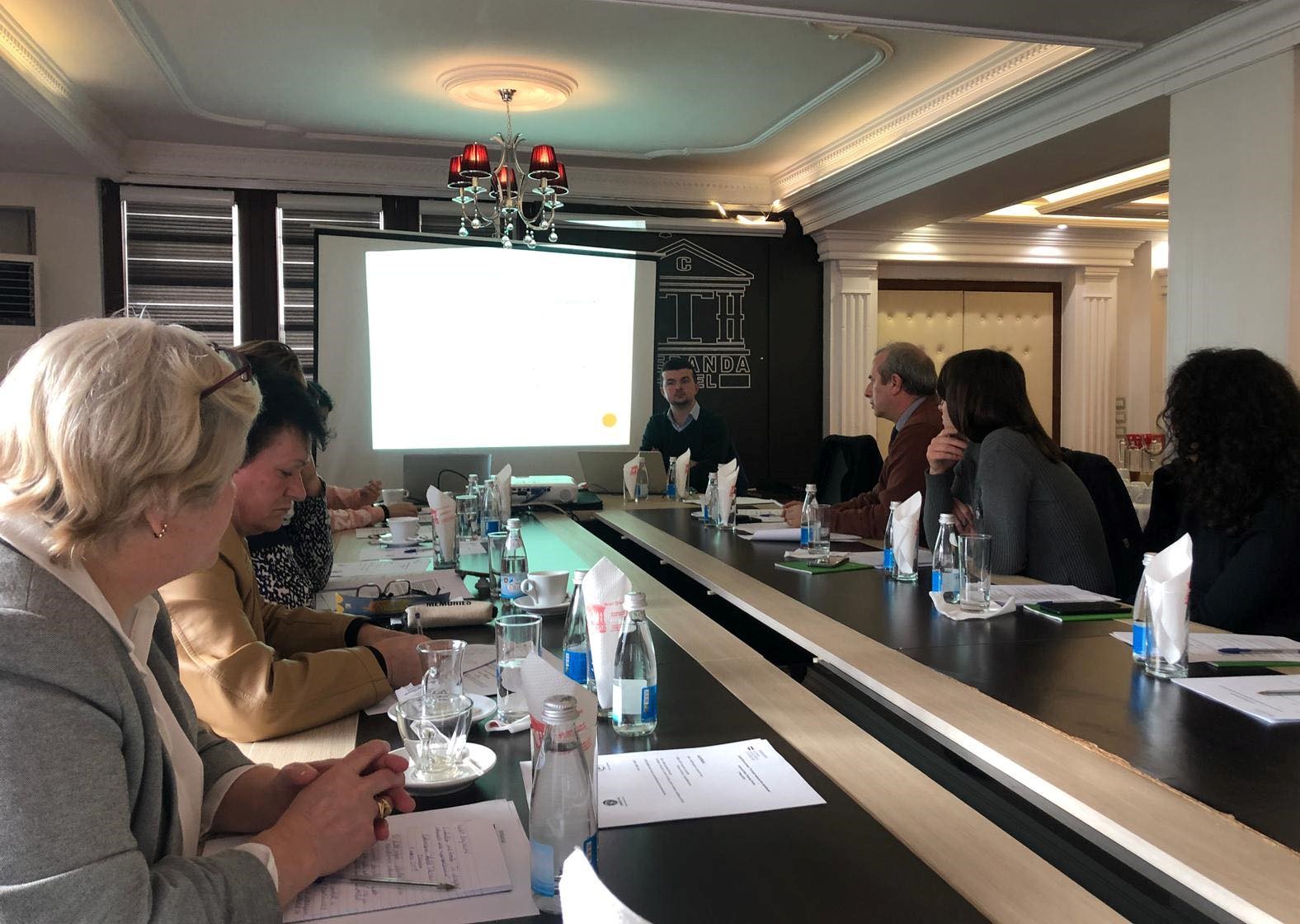
‘Contemporary Woman’ Challenges Society’s Stigma on Sexuality

Kosovar society still treats sexuality as a major taboo. Moreover, the education system reinforces the stigmatization of topics related to reproductive health, sex and virginity.

In order for this topic to not remain under shadow and to not be perceived and treated as a shameful one, “Contemporary Woman”, a Kosovo Women’s Network (KWN) member organization, implemented the initiative “Society’s Stigma on Sexuality”.

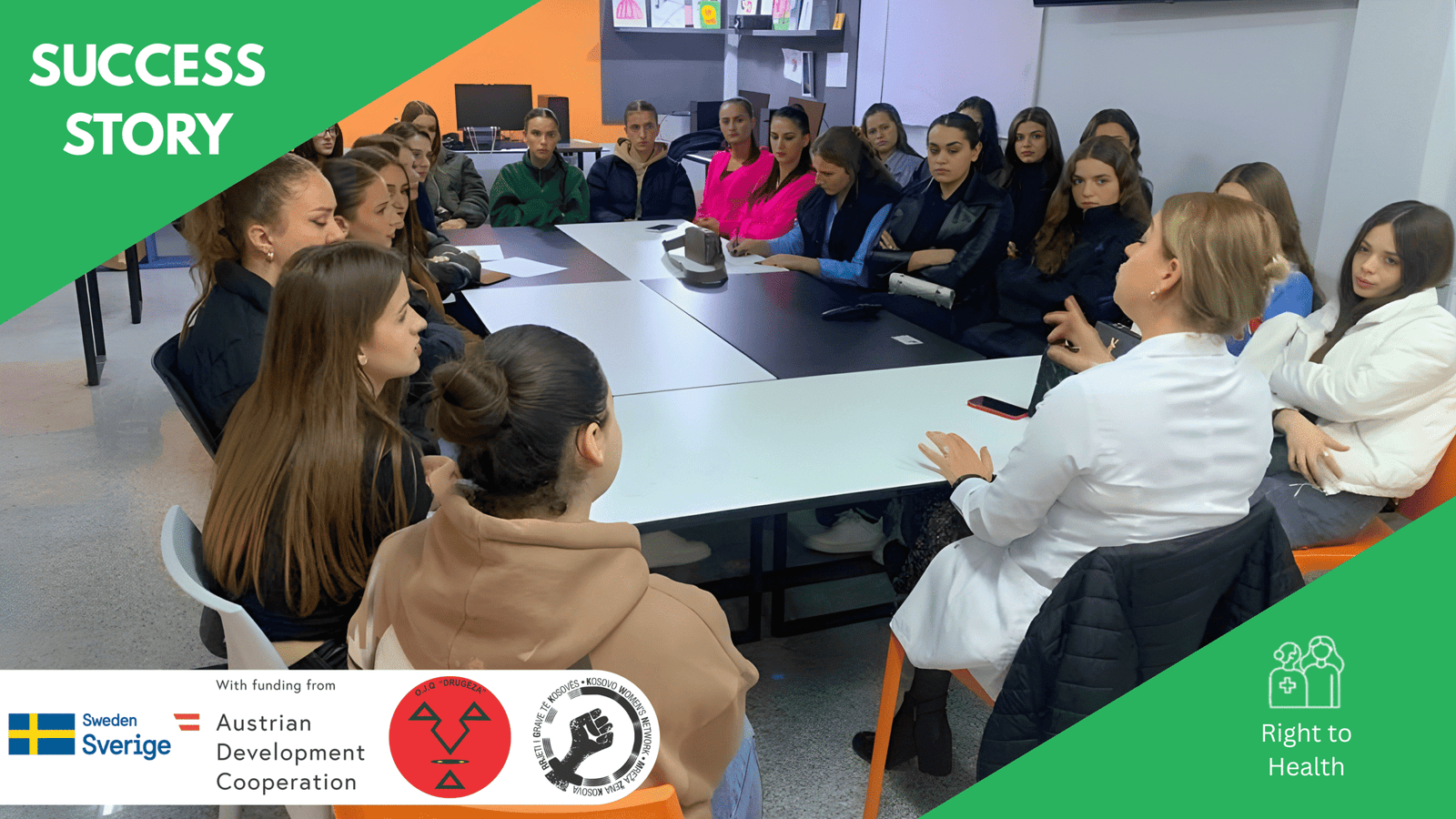
Presently a total of 59 beneficiaries of activities carried under this initiative (52 girls/women and 7 boys/men) have increased knowledge about sex, reproductive health, virginity, masturbation, sexual orientation and cyber-sex. (Also known as internet sex, cyber-sex describes a virtual sexual relationship, in which people exchange messages/images with sexual content).
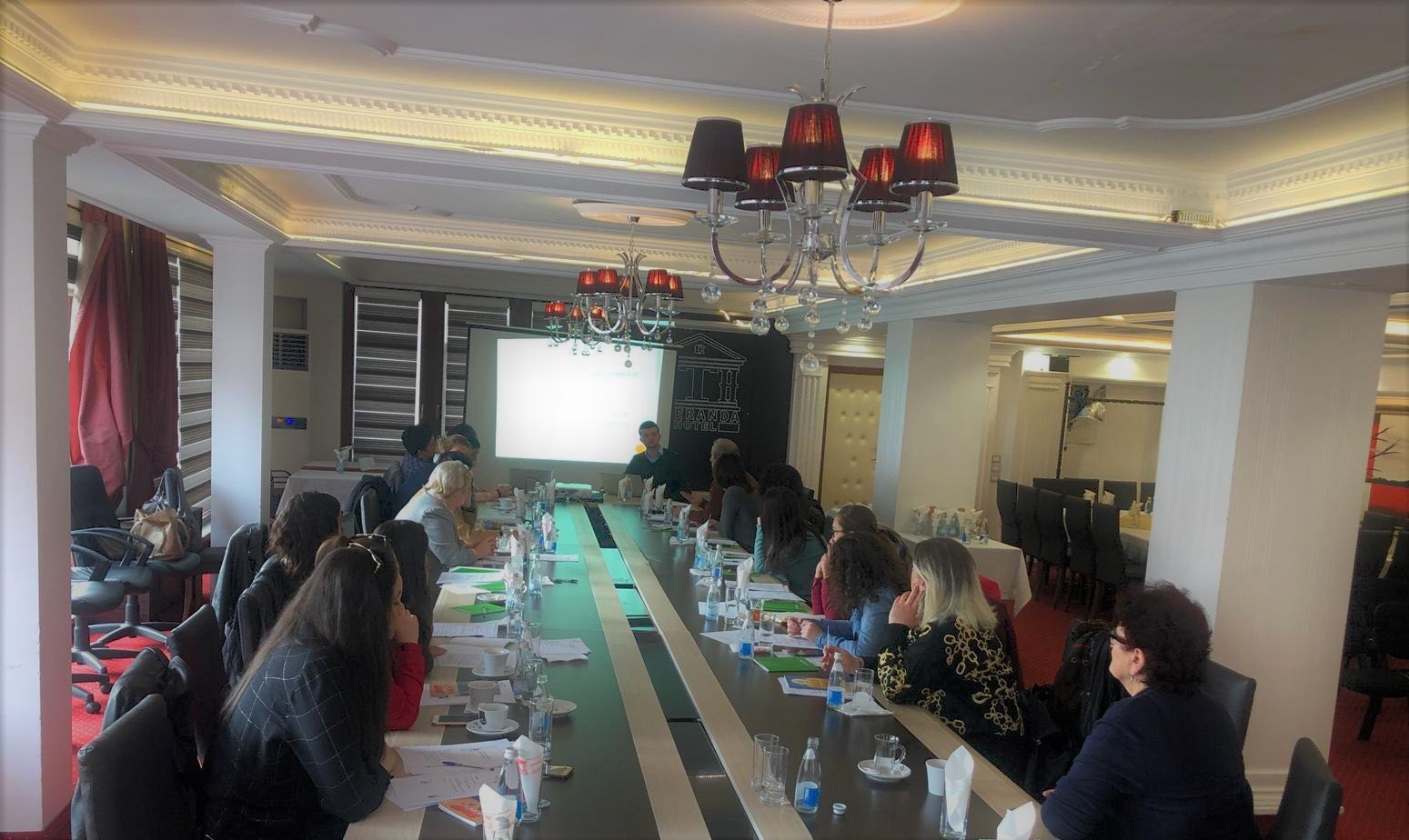
Workshops, discussions and publication of articles in media have significantly helped raise public awareness, especially among girls of Albanian, Roma and Ashkali communities from the Municipality of Prizren. They are now better prepared to realize their health care rights. This is an important area of KWN Strategy 2019-2022.

“I have never before talked to my family members about sex-related issues, but thanks to this initiative this topic is no longer taboo in my family”. This is how one of the participants of “Contemporary Women” , activities expressed herself.

“I am very happy for being part of this initiative, I am happy that for the first time I was able to communicate with other girls about a topic that is considered taboo in our society”, said another participant, economist Jona Gashi. “Interactive lectures have influenced me to raise awareness about sexual and reproductive health and sexual violence also”.

Institutional officials who were part of these activities expressed similar appreciation.

“I am pleased to have participated in this activity of your organization. Today’s information and discussion on the Law of Reproductive Health were very helpful to me, so in the future as an official in the Municipal Health Department I can push forward local policies aiming to improve citizens’ health care, respectively that of women”, emphasised Nexhip Berisha, an official from the Department of Health in Prizren. He made this comment during a discussion on Sexual and Reproductive Rights, in which the lecturer was Leotrim Gërmizaj, a lawyer.

Gërmizaj made a detailed presentation on the Law on Health. He also spoke about pornography, and the risks and threats posed by cyber-sex. Attendees emphasized that these phenomena are especially dangerous as in most cases the victims of pornography and cyber-sex are teenagers.

Thanks to this initiative and professional input, these topics, generally poorly addressed, are now summarized in the following recommendations, sent to the Ministry of Health and Health Department in the Prizren Municipality.

  • To raise awareness of the use of modern methods of contraception, through lectures to teenagers and people in rural areas. Health professionals should not hesitate to discuss contraception with potential users. Awareness raising could be done through non-formal education with students as well as through informative lectures.
  • Promotion through virtual channels: Regional Hospital of Prizren and Family Medicine Centre should update official websites, adding more information regarding reproductive and sexual health. Currently the web page has no material about this issue.
  • The protection of privacy: Regional Hospital of Prizren in coordination with the Ministry of Health should raise the awareness of health professionals about privacy and confidentiality surrounding contraceptive services, abortion and post-abortion care, and maternal care too. This Ministry should also establish a monitoring commission measuring the professionalism of health officials and punish offenders of privacy and confidentiality.
  • Amend articles 2, 5, 7 and 8 of Law No. 02 / l-76 Law on Reproductive Health. Replace the word “female” with “woman”, acknowledging that the term “female” is a scientific term referring to a member of a species capable of giving birth, whereas the term “woman” refers specially to human beings.

This initiative is supported by Kosovo Women’s Fund (KWF), financed by Austrian Development Agency (ADA).
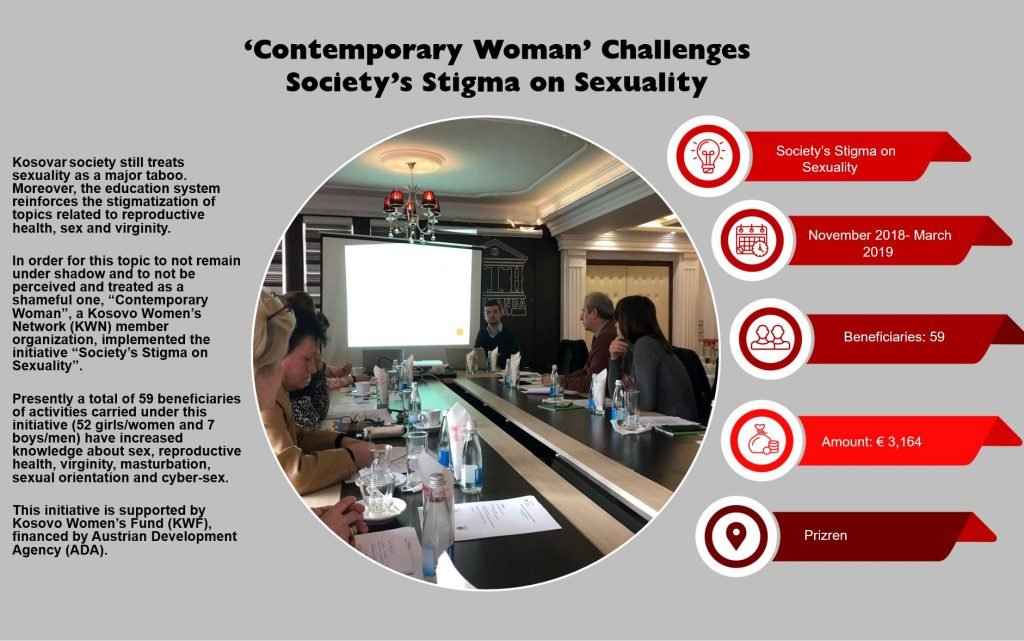
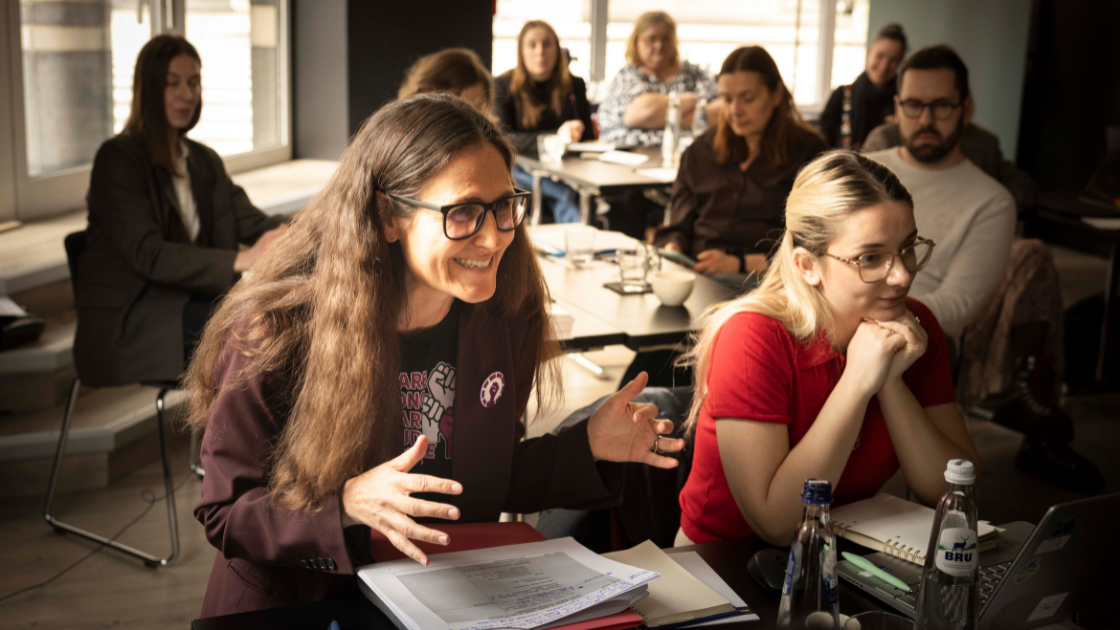
KWN Expresses Dissatisfaction with the Western Balkans Summit for not Addressing the Gender Equality

Download File

Kosovo Women’s Network (KWN), supported by Western Balkans WCSOs in the framework of the Regional Coalition for Gender Mainstreaming the EU Accession Process, addressed EU leaders yesterday with a letter expressing its deep dissatisfaction with the failure of the Western Balkans Summit to address crucial gender inequalities in the region.

Together with this coalition, KWN stressed its concern that the Zagreb Declaration, held early this month, concluded with only one vague reference to the gender equality. Its focus on the coronavirus crisis did not initiate any discussion regarding the worrying increase in gender-based violence in the WB or the preparedness of WB states to address this. It also failed to discuss a gender perspective in the reforms that WB partners should be making in the EU Accession process, nor did it assess how this pandemic impacts men and women differently.  The coalition further claimed that the lack of content-relevant discussion or conclusions related to gender equality gave the impression that EU is not giving adequate consideration to addressing the gender equality. Rather, they are treating it as nothing more than part of an accomplished exercise.

The coalition has demanded that gender equality, as a fundamental value of the EU, must be addressed within discussions at such summits, as it contributes to the EU commitments of furthering gender equality. The letter has further stressed that the EU address gender equity in the areas of health, education and social policy, as well as encourage gender responsive budgeting in the distribution of EU funds during the COVID-19 crisis.  

KWN and members of the coalition have concluded that the WB Summit missed the incorporation of a gender perspective and advancement of gender equality in the region. They concluded their letter with a number of recommendations for the EU representatives to be considered in future events: EU representatives following through on their commitments to advance gender equality; WB governments and leaders are encouraged to further gender equality as a fundamental value of the EU, when taking efforts towards EU Accession and in addressing the COVID-19 crisis by conducting ex-ante gender impact analysis; to consult gender equality mechanisms; to use gender responsive budgeting when distributing EU funds dedicated for the social and economic recovery of vulnerable groups;  to aassess the impact of measures fighting COVID-19 on gender equality; and to share best practices in fighting the socioeconomic impacts of the pandemic from a gender perspective.  

This letter was signed by:

Albanian Women’s Empowerment Network (Albania) (10 members)  

Association of Women Sandglass (Serbia)  

Foundation “United Women” Banja Luka (Bosnia and Herzegovina) 

Kosovo Women’s Network (Kosovo) (161 members) 

Reactor – Research in Action (North Macedonia) 

Rights for All (Bosnia and Herzegovina) 

Voice Against Violence Network (North Macedonia) (18 members) 

Women’s Rights Centre (Montenegro) 

Please click HERE to read the full letter.

KWN Expresses Condolences for the Death of Leze Qena

Letter of Condolences

Kosovo Women’s Network (KWN) today with great sorrow received the news of the death Kosovar icon actress, Leze Qena (1935-2020).

In 2015 KWN awarded Leze Qena for ‘Courage and deeds that have motivated and empowered girls and women in Kosovo’.

Leze Qena contributed toward promoting and advancing the position of Kosovar women, through her participation in many campaigns, with an emphasis in the region of Has. She was the queen of comedy, and as such will always be honoured and remembered.

We mourn the passing of such an incredible woman and are proud that along our path, we can take pride that our roads were accompanied bywith such a powerful woman as Leze Qena was and will always be.


Serbian women gather to create better conditions to develop women’s entrepreneurship in Kllokot

Women’s Association (UDZ Naš Dom), together with the non-governmental organization Women’s Center for Rural Development, held a motivational meeting on 28 February in the village of Mogillë, Kllokot Municipality. They met in order to finalize their Action Plan and to exchange ideas on the potential of female entrepreneurs. 

The women of this village, as part of the “Partnership for Development (developing a friendly environment for female entrepreneurship)” project, gathered to create mechanisms and to adopt tools in order to generate favorable conditions for the development of women’s entrepreneurship at the local level. 

Vesna Stajic, Director of UDZ Naš Dom, emphasized that promoting education, economic empowerment and the independence of women in the five municipalities of Central and Eastern Kosovo, such as Novobërdë, Gracanica, Ranilug, Klokot and Partesh, is the main goal of the initiative. 

During the meeting,  the needs of women in these villages were addressed, including urgent public transport. They intend to lobby for the solution to this problem in the Municipal Assembly and the Department of Public Services. 

Among other recommendations are the following: 

  • Advocacy for the implementation of Law no. 05 L-020 on Gender Equality (LGE) in all sectors, as well as providing equal opportunities for women and men 
  • Organizing a program that would empower women to own independent businesses 
  • Albanian language courses for minority women. 

This initiative is supported by the Kosovo Women’s Fund (KGF) and funded by the Austrian Development Agency (ADA). 

In addition to Udruzenje Zena Nas Dom and Women’s Centre for Rural Development, there are 17 other member organizations benefiting from the 13th round of KWF. You can read the full list HERE. 

Braille literacy training for the blind and visually impaired

On March 12, the Association of the Blind and Visually Impaired, as part of their initiative “Supporting the Blind and Visually Impaired for Leading an Independent Life”, organized a training on the Braille alphabet for those who had never attended any courses or training before. 

This meeting was held in Rahovec and brought together citizens from Rahovec and the villages of Gexhe, Xërxë, Ratkoc, Hoqë e Vogël andDejnë.  

Xhylferije Bytyqi lead the training and spoke about the lack of education for this category of people in Kosovo and highlighted the importance of such initiatives. 

“The blind, as a highly marginalized group in our society, are neglected in every sphere of life, especially when it comes to education.Knowing the difficulties that persist for the visiually impaired, such initiatives are more than necessary”, said Bytyqi. 

Goneta Mustafa, project coordinator, announced that a total of 20 training meetings will be held (specific amount of time) . She also announced that the association is in the process of collaborating with the Employment Center to create more employment opportunities for blind people who have the basic knowledge. 

This meeting and this initiative is supported by the Kosovo Women’s Fund (KWF), funded by the Austrian Development Agency (ADA) and co-funded by UNWomen. 

In addition to the Association of the Blind and Visually Impaired, the beneficiaries of the 14th FGK Round are 19 other member organizationsYou can read the full list HERE. 

EU, KWN Strong Allies in Promoting Gender Equality in Kosovo 

Photo Credits: Europe House Kosovo, Facebook

“Talking Women: One year of EU support to Gender Equality in Kosovo”, a new publication by the EU, was launched on March 9, during an event hosted by Ambassador Nataliya Apostolova, Head of European Union (EU) Office in Kosovo/EU Special Representative (EUSR), with remarks by the Kosovo Ombudsperson Hilmi Jashari, marking International Women’s Day. 

In January 2019, the EU launched a series of debates under the title: “EU Gender Talks: Because We Make a Difference. The 12 sessions included topics such as Women in Business, Gender and Youth, Gender in the Electoral Cycle, Women in Media, and Women and the Environment.  

In the publication’s introduction, it is stated that the EU in Kosovo remains a committed supporter and donor when it comes to women’s empowerment. Further, it is mentioned that Kosovo needs more women in high political positions, more women in decision-making bodies, in arts and sports, health, education and culture and all other spheres of life that require leadership.  

The publication also appreciates the Kosovo Women’s Network (KWNand its efforts towards achieving gender equality, women’s empowerment, and a more gender-equal society in all spheres.  

The publication draws attention to the fact that all EU staff in Kosovo were trained on Gender Equality from June 2018 to August 2019. In addition, specific training was provided for the management, as well as mentoring on how to mainstream gender in programs for different sectors. The main trainer was Nicole Farnsworth, Program Director and Lead Researcher at KWN, assisted by Lina Andeer, former EULEX Gender Adviser and later by Reyes Charle-Cuellar, EUSR Gender Adviser. The EU Office in Kosovo has contracted senior external gender expertise from KWN since 2015. 

This publication also acknowledges KWN’s work and efforts toward Strengthening Women’s Participation in Politics, a four-year initiative of KWN, supported by the EU Office in Kosovo:  

KWN is an umbrella organization, which is unique in Kosovo and in the Western Balkans. It brings together 158 member organizations and partners and has the mission to support, protect and promote the rights and interests of women and girls, regardless of their political and religious beliefs, age, education, sexual orientation or abilities. [] The EU and KWN will continue working in partnership to promote gender equality in Kosovo. 

Among other activities, KWN’s distribution of sub-grants to local level women’s rights organizations, and supporting a Coalition of women politicians that brings together present and future municipal representatives from all over the Kosovo, were appreciated.  

During the launching, Ambassador Apostolova said that EU Gender Talks have offered a platform, which made women’s voices heard.  

“In Kosovo also we are facing some difficulties regarding gender stereotypes. Nevertheless, we are having a momentum toward advancing gender equality and strengthening Kosovar women. We are witnessing a substantial increase of the appointment of women in decision-making positions,” she said. 

Ombudsperson Jashari spoke about the key impact of international supporters and Kosovar civil society organizations in making a progress in gender equality these last 20 years. Nevertheless, the need for further improvement to achieve gender equality was mentioned.  

The publication contains the main points from the aforementioned sessions. Its goal is to contribute to improving gender equality in Kosovo.  

Please click HERE to read a journal piece on this event (Available in Albanian only) 

Related articles:  

EU Election Observation Mission Report Mentions KWN’s Campaign 

New Action Seeks to Empower Women’s Participation in Politics 

KWN Appeals: Vote for More Women in Parliament 


KWN Holds Workshops on GRB, Organizations Welcome this Opportunity

Nine representatives from civil society organizations had the opportunity to be briefed and also to discuss gender concepts and practical methodology of integrating a Gender Responsive Budgeting (GRB), during a workshop hosted by Kosovo Women’s Network (KWN) on February 14.

During the first part of this workshop participants discussed gender concepts, the most common misconceptions about what GRB is, and the stages of GRB practice as well.

Nerina Guri, Researcher and Project Coordinator, KWN, talked about the legal framework in place, according to which GRB is mandatory for all budgetary organizations in Kosovo.

“According to Law on Gender Equality (LGE), all Kosovo institutions are obliged to involve the GRB in all areas, as a necessary tool toward guaranteeing the gender equality principle is being respected in the collection and reallocation of public resources.” Guri said.

Thanks to KWN previous experience on this field, different examples of conducting GRB, locally and nationally, were shared with the participants.

Whereas, the second part of the workshop consisted with participants practically exercising the integration of GRB and gender perspectives analysis of different economic categories, such as; salary and per diem, subsidies and transfers, capital spending and also in policies. Examples of practical work were based on KWN’s experience of integrating GRB into sectors such as; agriculture, environment, trade and industry, diaspora, education system and social welfare.

The participating organizations were selected during the open call for capacity building in GRB, as part of the ADA-funded regional initiative on overseeing budgets from a gender perspective.

As a result of this opportunity, a total of 11 organizations from Kosovo, along with other organizations from seven Western Balkan (WB) countries and Moldova, will participate in basic, advanced and public procurement workshops on GRB in Albania, Bosnia and Herzegovina and Serbia.

In addition to other things, these organizations also had the chance to be informed of the opportunity to apply for grants under this initiative, while at the same time they can use the knowledge gained to ensure that public resources are being used while respecting gender mainstreaming.

This meeting was supported by Austrian Development Agency (ADA).
For the Fifth Year “We march, we do not Celebrate” for Women’s Rights 

As in previous years, on 8 March, on International Women’s Day, Kosovo Women’s Network (KWN) joins the protesting march “We March, We Do not Celebrate”, which is being held for the fifth time.

On Sunday at 12:00 PM we will gather at Zahir Pajaziti Square to march for social justice and gender equality, for a fair separation of the private and public sphere, for a dignified life without sexism, gender-based oppression, social and economic injustice. By marching we deny and oppose all forms of injustice used against women.  

On the 8th of March We Unite, March, Resist and oppose this patriarchal system which is oppressive and unfair.  

In addition to Prishtina, this year a similar march will be held in Ferizaj and Mitrovica as well.  

*****
Below you can read about some activities that marked the 8th of March during the years in Kosovo: 

We March, We do not Celebrate: Women and Men Marched Again for Human Rights 

KWN member organizations and LGE mark March 8th   

***** 


A Gender-Responsive Approach to EU External Financing

Gender equality is a fundamental value of the European Union (EU).The EU has committed to furthering gender equality, including through its external financing. The EU Strategic Approach to Women, Peace and Security calls for gender analysis, gender mainstreaming of programs and gender sensitive evaluation in EU external action financing. The EU Gender Action Plan (GAP) II also calls for gender analysis to inform all programming, for gender mainstreaming programming and for evaluating achievements towards gender equality. However, as a Staff Working Document, GAP II is not legally binding and responsible parties have not taken it as seriously as an EU regulation.Therefore, gender has not been mainstreamed in programming as part of a standardized, institutionalized approach.


KWN Proposals for New Common Implementing Regulation_2019-12-03 (1)

Following Through on EU Commitments to Gender Equality

Gender equality is a fundamental value of the European Union (EU). In 2015, the European Commission (EC) adopted “Gender Equality and Women’s Empowerment: Transforming the Lives of Girls and Women through EU External Relations 2016-2020”, also known as the “Gender Action Plan II” (GAP II). This plan was developed based on lessons learned from the first EU gender action plan. It introduced several important measures related to “institutional cultural shift”, towards an improved EU approach in furthering gender equality in all EU external actions worldwide. It called for context-relevant actions to further gender equality, informed by gender analysis. Importantly, it also introduced mandatory annual reporting for the EU on GAP II progress.


KWN_Policy Brief_GAP III_2019-11 (1)