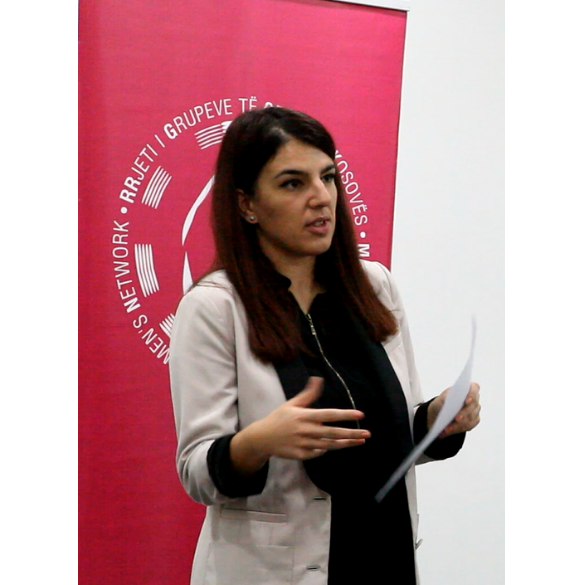
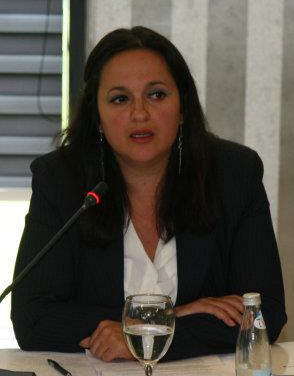
Ariana Qosaj Mustafa, recently elected KWN Board Chair, attends the KWN Annual Membership meeting.

KWN Elects New Board Chair

KWN held its first board meeting for 2013 on 15 Jan., during which board members elected the new KWN Board Chair: ArianaQosaj Mustafa. ElmazeGashi was elected Deputy Chair. They will serve two-year terms.

Board members also discussed installing membership fees for network members in order to support KWN’s numerous initiatives, members’ activities and services provided to members. The Board decided that KWN could start collecting membership fees in the amount of €20 per year.

After this, Nicole Farnsworth, KWN Program Manager, informed the board about recent changes made to the KWN Policy Manual as per the Kosovo Labor Law.

Board members also discussed the KWN Conflict of Interest Policy. They agreed that if KWN partners with organizations led by members of the Board or if other potential areas of conflict of interest arise (as defined by this policy), such issues must be discussed and approved by the Board. Based on this decision, Elmaze Gashi presented the project that Alter Habitus, an organization she leads, plans to undertake together with KWN. It involves research entitled “Where is the Money for Women’s Human Rights”. Since the research will contribute to the KWN Strategy, the Board decided that KWN and Alter Habitus could move forward with this collaboration.

Finally the Board discussed and agreed that KWN could open a new bank account for KWN’s sustainable, unrestricted fund. Towards KWN’s sustainability, the account will hold financial resources that are not already supported by donors. KWN will raise funds for this account through membership fees, fundraising events and individual donors (e.g., in the United States through the East-West Management Institute).

For more information, contact: info@womensnetwork.org.
Igballe Rogova, KWN Executive Director, shares information with network members.

Members Gather for Bimonthly Meeting

Approximately 75 people attended the KWN bimonthly meeting on 4 Feb. 2013. Participants included KWN member organizations, donors, board members and other supporters.

The meeting began with a greeting from the newly elected KWN Board Chair, ArianaQosaj Mustafa. “Thank you all for giving me the opportunity to contribute to the women’s movement,” she said. She thanked ElmazeGashi for her contribution as the prior Board Chair, from 2011 to 2012.
   
Then Aida Dërguti from the Vetëvendosje Movement shared information about Women’s Week, organized by the National Democratic Institute (NDI). Approximately 100 women representing political parties, institutions and NGOs attended. NDI also plans to organize a Women’s Leadership Academy in 2013; 30 participants will be selected to attend the Academy.
   
KWN Executive Director IgballeRogova thanked Kvinna till Kvinna (KtK) for their trust and support for KWN to establish the Kosovo Women’s Fund and for continuing their support in 2013. “I would also like to thank the KWN members who were awarded grants and brought successful results; and the KWN members who did not receive grants, but who understood,” she said. She emphasized that through the Kosovo Women’s Fund KWN “not only helps member organizations financially, but also offers training for them to build their capacities, based on their needs.”
   
KWN Project Coordinator AlbertinaBinaku provided detailed information about the Kosovo Women’s Fund’s planned grant rounds for 2013. “All members received support in project proposal writing through workshops, and this support will continue in 2013 so that they can write better projects,” she said.
   
KWN Public Relations Coordinator NertilaQarri then announced changes to the KWN website, which now includes a section with information about our members and the Kosovo Women’s Fund. She emphasized that KWN continues to use its Facebook Page,Facebook Group, and new website (www.womensnetwork.org) to share information about the women’s fund.
   
Since KWN and its members have established an annual tradition of organizing a protest marking 8 Mar., International Women’s Day, IgballeRogova opened a discussion on how to mark this day in 2013. Participants decided that the advocacy theme this year will be women’s access to quality healthcare, and that citizens will be invited to donate blood, assisting Kosovo’s weak healthcare system. This action will be held on 8 Mar. at 12:00 at Mother Teresa square in Prishtina.

Other information shared at the KWN bimonthly meeting included:

• KWN will organize a Gala Event involving famous actresses and singers where people will be invited to support KWN’s work. KWN
  member LIRA women’s choir will also perform.

• Through the Regional Women’s Court, a feminist approach to justice, women activists in Kosovo and the region continue to raise their
  voices, demanding justice for women raped during the war. As part of this regional initiative, an unofficial Women’s Court was established
  as a form of tribunal where women have space to tell their personal stories.

• The Kosovar Center for Fighting Breast Cancer JETA/VITA in Pristina continues to organize activities to raise awareness among women
  and institutions about this issue.

• Women’s Center Liria in cooperation with the Mayor of Gjilan and the Women’s Caucushas established a coordinating mechanism
  related to domestic violence. The group has started drafting a strategy to financially support the shelter in the Municipality of Gjilan, so that
  it will have a sustainable fund for providing services to domestic violence victims by 2014.

• The Women’s Initiative Association, in cooperation with the Mayor of Dragash and the Women’s Caucus, has establisheda mechanism
  against domestic violence in the Municipality of Dragash.

• The Association for Women with Disabilities Women for Womeninformed members that the Action Plan for Gender Equality has been
  approved in Prizren. They are forming a monitoring groupto follow its implementation.

• The Foundation for Development and Educationimplemented a project in the Municipality of Novoberdo in 2012, through which they
  opened a store where women work and sell their products, including handcrafts and jams. She requested that members with sewing
  machines that they are not using donate these for women in need.

• “ATO” in Vushtrri implemented two successful projects in 2012, one about education and the other about health, including reproductive
  health.

• “Hendifer”offers services for women. They work on a voluntary basis and have more than 1,600 members, as well as 45 volunteers.

• Kosova’s Alive Alliancesaid that their work in 2012concentrated on health education. They will continue this work in 2013. They also
  started a new initiative to improvehealth,called “Health Game”;a women’s group and children’s group have been formed.

  
KWN also informed members that they will need to begin paying a €20 annual membership fee. Beginning in 2013, KWN will only pay transportation costs for one person per organizationand only for organizations in poor financial conditions. This is because with 100 members, transportation costs have risen substantially and are difficult for KWN to continue to cover for all of its members. KWN requests members’ understanding in contributing to the network by helping to support these costs.

The next KWN members’ meeting will be held on 8 Apr. 2013. Members can send information about their activities to info@womensnetwork.orgfor inclusionin the KWN monthly newsletter, Kosovar Women’s Voice.
 

Women presented a manikin wearing traditional clothes to the office of theMayor of Prishtinaand the President of the Republic of Kosova.

Arta

Women worked expeditiously. Their fingers quickly moved in and out of the traditional clothes. They were busy preparing traditional garments for the Mayor of Prishtina, Isa Mustafa, and the President of the Republic of Kosovo, AtifeteJahjaga. The garments were donated together with a manikin wearing them with the hope that these political leaders would put women’s handmade products on display in their offices for visitors to see. Indeed, they were placed in the main hall of Prishtina Municipality.

The organization responsible, Arta in Prishtina, received support from the KWN Kosovo Women’s Fundfor this initiative. They trained women in traditional handcrafts, improved women’s economic situation and furthered women’s social integration.
“I am extremely gratefulfor the opportunity that has been offered,” said ValbonaDurmishi. She had earned money by making handcrafts, which empowered her economically.With the money she earned, she helped her family and educated her children.

“Working with the organization helped me receive my own income, and I do not have to depend economically on my husband or other family members,” saidHavaBytyqi, another Artamember. “Here I have the opportunity to spend time with my female friends and work. I didn’t have the chance to go to school when I was young, and this opportunity is a very good one for me to work and socialize with other women,”she continued.

According to HafijeQyqalla, Director of NGOArta, President Jahjaga and Mayor Mustafapromised to support women’s groups inpresenting theirhandmade goods in several Kosovo embassies worldwide, promoting Kosovo culture. “This will exhibit our national handcrafts and our tradition, and in the meantime empower economically our members,” she said. The events were promotedon public television, social media and newspapers.


Members of the Organization of People with Muscular Dystrophy discuss the issues they face and potential solutions.

Organizata e Personave me Distrofi Muskulare (The Organization of Persons with Muscular Dystrophy)

At a two-day workshop called “We have rights, too” 30 diverse people with disabilities discussed state services and challenges faced. Participants concluded that respect for their rights had improved slightly, but much work remained for their full integration into social life.
The Organization of Persons with Muscular Dystrophy organized the discussion, which resulted in three conclusions:

  • Law enforcement for people with disabilities, including campaigning for their rights and respecting the administrative regulation for their access to public institutions 
  • The right to education as a vital human right
  • Advocate to relevant ministries to support people with disabilities through the social assistance scheme

The workshop also provided a space for the participants, who were from different regions of Kosovo,to exchange experiences regarding thechallenges they face and how they access assistance.
“We were together there with people with different disabilities, coming from different municipalities, having seminars about the rights of this category of people, and different sport and entertainment activities,” said Resmije Rrahmani, a member and one of the founders of the organization.

The project, supported by the KWN Kosovo Women’s Fund, seeks is to improve the lives of people with disabilities, particularly those with muscular dystrophy through rehabilitation, recreational and sports activities, information and awareness-raising.

The initiative also enabled people with muscular dystrophy to meet other people facing similar issues.
“Through this project we had the opportunity to express our abilities, discuss, play together and have fun,” said Yllka Berisha, a member of the organization. “For example, I tried to play darts.It is normal that I had difficulties, but I had a lot of fun.It was a magical game for me.”

“There should be more activities like this so that we can attract people with disabilities who have problems and needs related to health, economic situation and education.We should use civil society as a tool to sensitize the public to the problems we face,” said Agron Kube, a member of the NGO.


Qendra për Mbrojtjen e Grave dhe Fëmijëve (The Center for Protection of Women and Children)

Survivors of sexual violence perpetrated during the 1999 war in Kosovo have yet to receive sufficient attention from Kosovo’s political leaders. The issue of sexual violence has not been raised in negotiations between Kosovo and Serbia. There has never been an official apology for the crimes committed against women, let alone a single court conviction or reparations.

By and large, society has ostracized and failed to support women who suffered this terrible crime. As a result, many women have attempted to continue with their lives without ever learning how to deal with their past psychologically. This often results in various untreated ills, including trauma, phobia, inhibited sexual desire and eating disorders, as well as untreated physical injuries. Identifying women who have suffered such crimes is crucial for providing them with much-needed assistance in developing coping mechanisms that will enable them to live their lives.

Thus, the Centre for Protection of Women and Children set out to identify women survivors of sexual violence in Drenas. Within only a couple months, they found 37 survivors, ages 25-50, in 13 villages of this region.
“We have helped women a lot,” said Kadire Tahiraj from the Center. “In one case, a woman survivor of sexual violence was identified for the first time, and the project helped her in her family relations, especially with her husband. … Her husband became aware of how important it is for him to support his wife.”

The Center has opened this previously taboo topic for greater discussion within some violence survivors’ families towards healing.
“This project has had a very positive impact and has broken the silence that covered this issue for many years,” one woman survivor said.“We feel much safer.”

Beyond identifying survivors and providing individual and family counseling, the organization brought survivors and supporters together to formulate eight demands on behalf of women survivors. A key demand was for all actors to respect the human rights of sexual violence survivors and their needs. They presented their demands to the President of KosovoAtifeteJahjaga who promised stronger institutional commitment and improved support.
“Now the other women and I are more tranquil,” another woman survivor said. “We have renewed belief that our future will be better.”


Women in Gjakova learn about their reproductive rights.

Shoqata për Edukim dhe Përkujdesje të Familjes (The Association for the Education and Care of the Family)

Women in Kosovo have insufficient information about reproductive health.Further, few women from rural areas visit the doctor unless they are sick. The Association for Education and Care of the Family in Gjakova began their initiative to address these two issues.The organization decided to increase awareness about healthcare, particularly preventative care, in three villages of Gjakova Municipality.

“I was in menopause, but I didn’t realize that I was five months pregnant,” a woman said. “I learned this only after the informative sessions that the project offered.”

In total, 91 girls and women of different ethnicities participated.

“Now they are aware of the importance of reproductive health, the process of planning a family and the importance of visiting the gynecologist regularly,” said Bahrije Deva, the organization’s director.

The initiative also installed a sense of voluntarism in the community.

“Even though the project ended, we have girls volunteering. They keep in touch with us and inform us about the needs of women in their communities. They also ask for help from us, as needed,” said Bahrije Deva.


Shoqata Iniciativa e Gruas (The Initiative of Women Association)

Women in Dragash have always struggled to see a doctor. The municipality rests high in the mountains of southern Kosovo, far from the nearest city of Prizren. Public transportation is limited and weather conditions often prevent travel. Dragash Municipality does not have any female doctors, and few people consider it acceptable for women to be examined by men.

Concerned for the well being of women in their area, the Women’s Initiative Association set out to raise awareness about the importance of routine check-ups, particularly toward early diagnosis of cancer.

“Women had the opportunity to meet a woman doctor, ask questions, speak openly, learn about cancer and understand the importance of detecting cancer early,” said Gjejron Lokaj, Coordinator of the Women’s Initiative Association.

“It was very needed in our village,” said Qesbana Pajaziti who participated in the meeting in Lubishte village. “We had significant knowledge about breast cancer, but now we are better informed.We are even able to perform self-exams to identify symptoms by ourselves.” This new knowledge will help women detect potential signs of cancer independently.

Further, 182 Albanian, Gorani and Bosnian women in eight isolated villages received free-of-charge health exams. An additional estimated 2,500 teachers, nurses, pupils and citizens also gained knowledge through the media camping on Radio Sharr and Radio Gora.

Women’s interest in the examinations was so high that the organization had to prioritize recipients. Women who had problematic medical histories or illness in their families received examinations first. Women not examined were advised to make the extra effort to visit a doctor, especially if they were over 40 years old.

“I enjoy the fact that women had this opportunity,especially when we know that in our community there are no women doctors,”Gjejron Lokaj said.


Members of “Ato” explain the project to KWN representatives.

Ato (They)

Women in Kosovo’s rural areas tend to lack information about their health in general and reproductive health specifically. Therefore Women’s Association Ato decided to organize a campaign for women’s health education.

Women in rural areas of Vushtrri Municipality, including the villages of Pantinë, Druar, Novolan, Oshllan and Dru i Madh, attended lectures about reproductive health, protection from unwanted pregnancy, child growth and domestic violence, including what to do in violent home situations.

“Women spoke freely about these topics and did not hesitate to ask questions,” said Hazbije Dibrani, a nurse at the Family Medicine Center in Vushtrri who led the training. “I also offered women the opportunity to visit me at work in case they ever need any help with such issues,” she said.

Altogether 94 women from three villages in Vushtrri Municipality gained health awareness through this initiative.

“The project has been very successful and women’s requests to continue with such trainings have been enormous,”said Fikrije Ferizi, the association’s Director.
 

A woman is tested for osteoporosis in Prishtina at Vita-Jeta.

Shoqata e Grave Penzioniste VITA-JETA (The pensioners’ association VITA-JETA)

Given the lack of knowledge about osteoporosis among the elderly in Kosovo, and the disease’s difficult to observe nature, Vita-Jeta (“Life”), an association of around 850 retired women, launched an information campaign about the disease. They organized a lecture about osteoporosis and provided free of charge medical exams for diagnosing the disease.

“Even though I was once a nurse, I never realized I was suffering from osteoporosis,” said Remzije Pireva, a Vita-Jeta member. “It was only through Vita-Jeta that I took the initiative to do the test for diagnosing it.”Since then she has followed the doctor’s orders and taken the recommended medicine.“Now I am feeling much better,” she said.

Remzije is among 243 retired women who have been tested for osteoporosis by Vita-Jeta. Through these free of charge tests, nearly one-third of the women learnt that they suffered from osteoporosis. Some have received treatment thanks to Vita-Jeta representatives who convinced a local pharmacy to provide free medication to retirees living in poor economic conditions.

“We are very keen to offer the same possibility to all members of our NGO,” said Ajshe Nuhiu who leads Vita-Jeta. Such free screening and medication can be crucial for elderly persons living in Kosovo, many of whom struggle to survive in dire economic conditions.
Vita-Jeta also assists its members with doctor-prescribed therapies. “Since they are members of our NGO and attend regular meetings at our NGO, it is easy for us to see if they are respecting the medical advice that they have received,” said Ajshe Nuhiu.

Despite Vita-Jeta’s accomplishments in only two months, 500 of the association’s elderly members are still knocking on their door, hoping that they too can receive this diagnostic test. Vita-Jeta awareness-raising efforts have successfully educated their members about the importance of the test.

Vita-Jeta representatives say that they will apply to the Kosovo Women’s Fund again so that they can build on this success and provide similar services to additional members. They also plan to seek funding from other possible sources, using their new fundraising skills, developed with support from the Kosovo Women’s Network staff.
 

Members of the Association of Blind People in Prizren learn to make qofte (Albanian - style hamburgers)

Shoqata e Verbërve dhe me të Pamur të Dobësuar (The Society for Blind People)

Yllka cannot wait for the opportunity to surprise her family with traditional meatballs on the table. She is blind, and thus few people in Kosovo expect her to cook, or do much of anything for that matter.

has taken the initiative to empower more blind women to become autonomous. Through their program “Let’s Learn to Cook”, Yllka and nine other blind women have learned to cook independently.

The organization, a branch of the national Association of Blind People, aims to protect the integrity and rights of blind people, further their education and help them integrate into Kosovo society.

“Of course it is harder for them to learn to cook, as they must learn based touch,” said Miradije Buçaj, the organization’s Director. “However, as a blind woman and a mother of two daughters, having prepared meals, cleaned the house, ironed and done all other house work, I can say it is not impossible for these women to achieve it.”

Beyond learning new skills, the project also brought women together and enabled them to create new friendships. For women who have extremely limited to no social life and lack support from their families, encouragement from new found friends facing similar issues offered hope.

“It is a challenge for us,” Yllka said. “But it helps us a lot, and it also gives us the opportunity to socialize with other blind women and girls.”

The women who participated in the project have committed to sharing what they have learned with other blind people.

“This project was a special pleasure and I benefited a lot from it,”said Valmira Berisha, another participant. “In our families they do not allow us to cook because we are blind. The experience of learning is extraordinary. I have learned to cook not only for myself, but for others as well. I have become independent.”