Gruaja Hyjnore raises awareness among Gjilan students about the importance of reporting harrasment

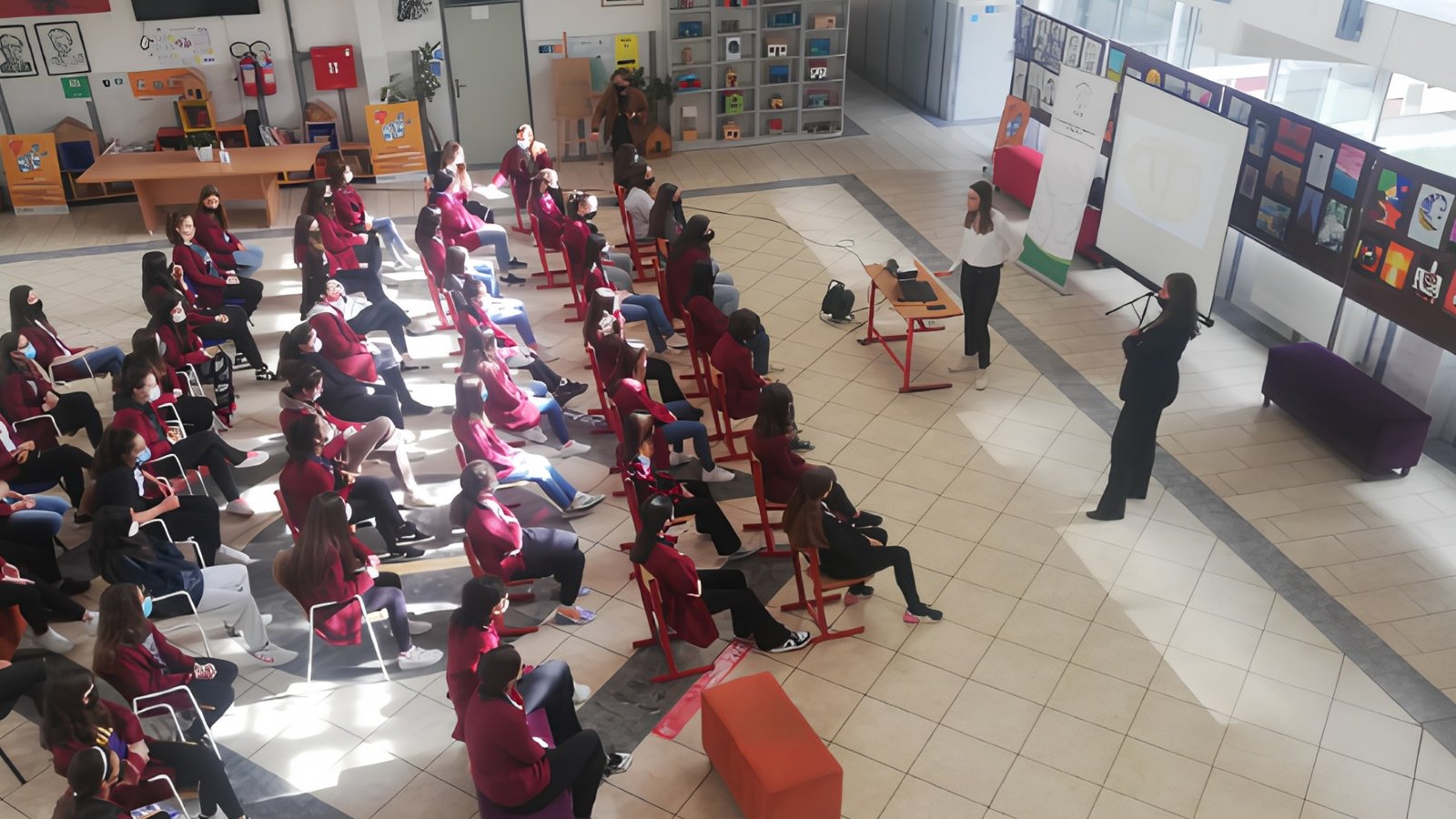
Gruaja Hyjnore, a member organization of Kosovo Women’s Network (KWN), has given lectures to the high school students in the Municipality of Gjilan on addressing and reporting harassment. As part of the initiative “Sexual education as a subject in primary and secondary schools” beneficiary of the 15th round of the Kosovo Women’s Fund (KWF).

During March, the Project Manager in this organization, Qëndresa Hajdari gave two lectures, one in the Primary and Lower-Secondary School “Rexhep Elmazi” in Gjilan and the other in Primary and Lower-Secondary School “Deshmoret e Kombit” in Lower Livoç of Gjilan. She informed the students on the importance of reporting, she also pointed out that within the framework there were planned also informative meetings with parents, knowing their important role in combating this phenomenon and raising awareness of children.

“Sexual harassment continues to be part of our daily lives. Starting from verbal harassment in the streets, the dignity of a girl or woman begins to be violated, and when we talk about rape, then we are talking about the most serious act that should be addressed immediately to the competent authorities and treated very seriously,” he said Hajdari among others.

This activity and this initiative are supported by the Austrian Development Agency (ADA), through the KWN initiative “Further Advancement of Women’s Rights in Kosovo II”, co-financed by the Swedish International Cooperation Agency and International Development (Sida), through the Swedish Embassy in Pristina.

Exhibition “Break the Silence: Ending Violence Behind Walls” Opens in Malisheva

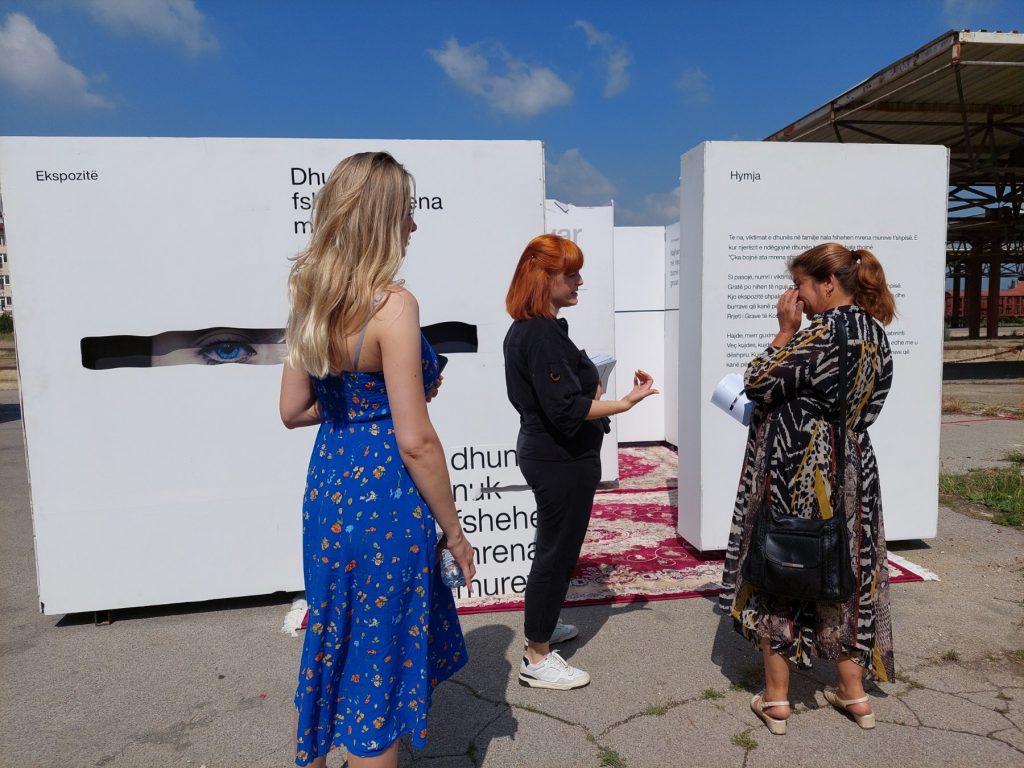
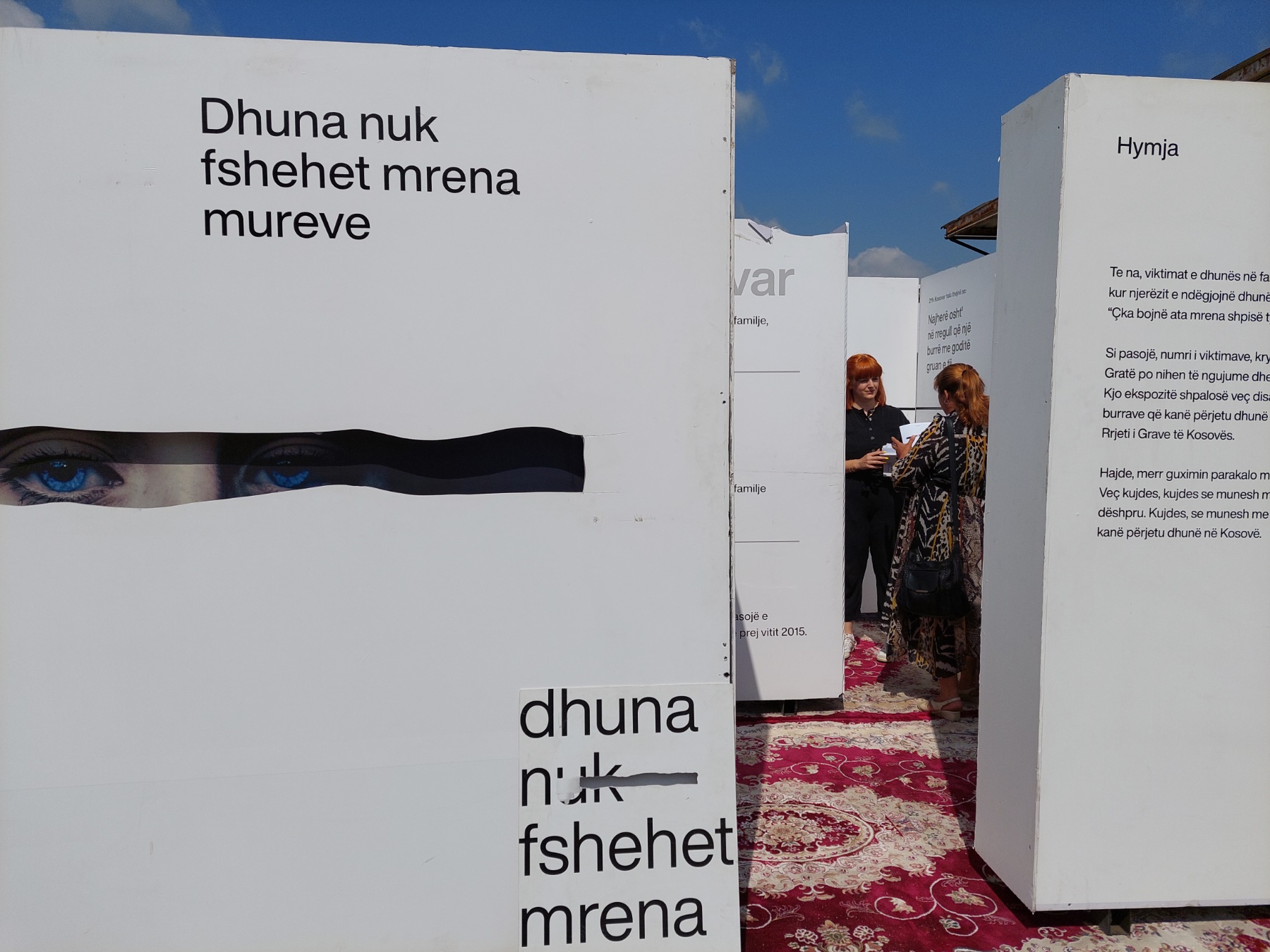
On Mau 6th, citizens of Malisheva had the opportunity to visit the exhibition “Break the Silence: Ending violence behind walls”, which first opened in Prishtina in June 2019, and since then, from time to time (due to quarantine caused by the COVID-19 virus) traveled in many other municipalities including Peja, Mitrovica , Gjilan, Ferizaj, Prizren, Drenas and Gjakova.

The exhibition brings a symbolic labyrinth that reveals some of the true stories of women and men who have experienced domestic violence, and aims to encourage citizens to break the silence and seek support from institutions in case of violence.

“The exhibition has continued this year, knowing that, unfortunately, there was an alarming rise in domestic violence cases. Violence against women must be condemned by each of us, without any compromise or justification”, said Besarta Breznica, Project Coordinator, KWN.
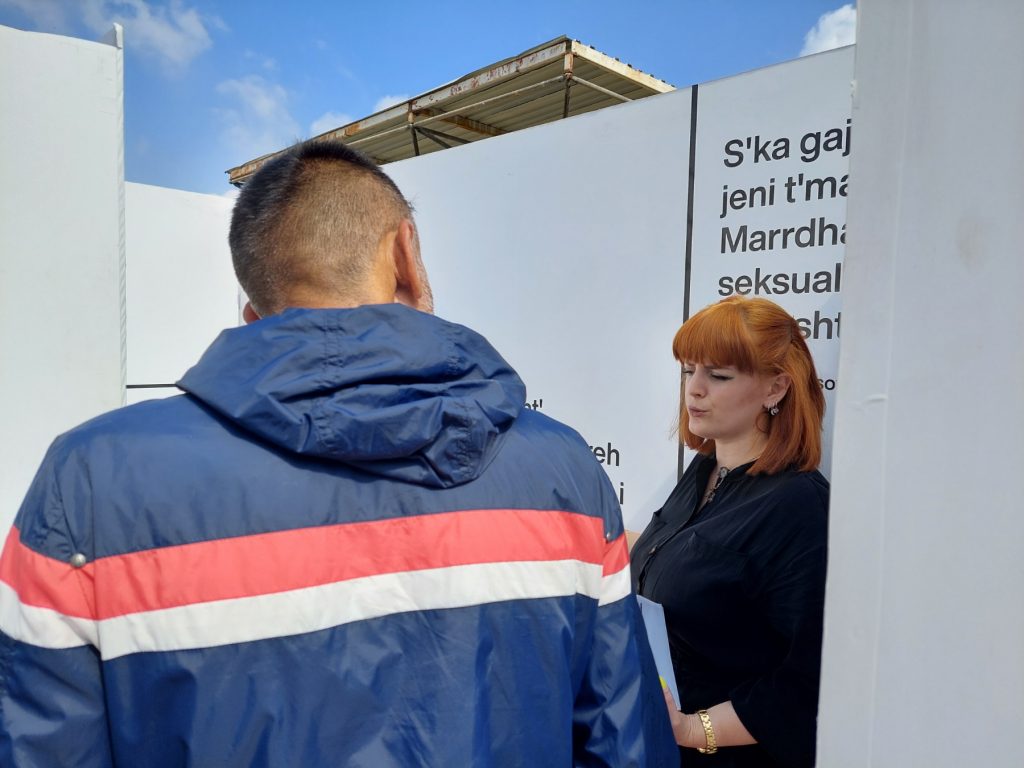
During the day, KWN staff, in addition to receiving interested citizens, also informed them about key institutions for reporting cases of violence against women, and the ways in which citizens can reach out to the institutions to conduct their rights.

This exhibition will continue in other municipalities of Kosovo, namely in Bresje of Fushë Kosovë, Viti and Ferizaj.

The exhibition was supported by the European Union (EU) through UN Women #EVAW and the Austrian Development Agency (ADA), and for its realization in the Municipality of Malisheva KWN cooperated with the member organization Women’s Association “Fatjona”.

KWN participated in EU Consultation with Civil society on IPA III

KWN had the pleasure of attending the EU consultation with civil society related to the Instrument for Pre-Accession (IPA) III on 28 April. Mr. Maragos, Head of Unit for Kosovo and Bosnia and Herzegovina in the European Commission’s Directorate-General for EU Neighbourhood & Enlargement, took part, emphasising the important role of civil society in engaging with the government and EU related to the EU Accession process. He welcomed civil society to “keep an eye” on forthcoming plans to engage international financial institutions (IFIs) in investing in the private sector with EU-funded guarantees.  

During its contribution, KWN stated that the EU and Government of Kosovo have improved in their consultations with civil society in recent years and have taken steps towards institutionalizing consultations with civil society, though invitations, agendas, conclusions, and follow-up can be shared more regularly and made publicly available by the EU and government. KWN also raised the following issues, based on its research:  

  • KWN recommended in its Policy Brief related to IPA III: the EU should make stronger policy commitments to and: ensure ex ante gender impact assessments inform all EU-funded actions; make gender-responsive budgeting obligatory as part of all funding, including direct Budget Support to the government; and regularly track and report on actual expenditures on gender equality and on women’s rights organisations (WCSOs) respectively. These are commitments in the EU Gender Action Plan (GAP) III as well as in line with Kosovo’s own commitments. 
  • The EU should continue supporting civil society to increase the engagement of diverse WCSOs, including at local levels, in the EU Accession process with continued use of diverse funding modalities, including sub-granting to support them in advocating their priorities and monitoring the government’s implementation of its commitments related to the EU Accession process at the local level. The EU should support a “funding ecosystem” as recommended in the regional report Where’s the Money for Women’s Rights? that includes long-term (rather than currently short-term) operational grants for CSOs that are key strategic partners of the EU, renewed on an annual basis based on performance; sub-granting to reach diverse, grassroots CSOs; and programmatic grants. Service contracts also can engage CSOs that are positioned to contribute their expertise.  
  • Via political dialogue, the EU should encourage the government to allocate sustainable financing for civil society, through modalities designed in close consultation with diverse CSOs, so that this funding is available in the future, is transparent, and based on needs.  

WAI Holds Information Sessions on Inheritance Rights with Women of the Minority Communities in Lipjan and Fushë Kosovë  

On April 20, the Women’s Alliance for Integration (WAI) held an information session with women from the Roma, Ashkali and Egyptian communities, from the villages of Magure and Medvec in the Municipality of Lipjan. 

In this meeting, it was discussed about the importance of economic empowerment of women and its impact on increasing the overall well-being of women. 

Qëndrim Gashi, representative of the Office for Free Legal Aid in the Municipality of Lipjan informed the participating women about their property and inheritance rights as well as the division of joint property. 

Gashi explained all the free services that this office offers, as well as the criteria that must be met to benefit from free legal aid services. Women were also informed about the benefits given to them in case of joint property registration. 

Whereas, on April 21, WAI continued the information sessions with the Roma, Ashkali and Egyptian communities in the Municipality of Fushë Kosovë. 

Abaz Xhigoli, Director of the Center for Social Work in this municipality informed women about their property and inheritance rights. 

Throughout these two activities, women discussed together the economic empowerment of women, as well as shared their experiences regarding processes related to inheritance or property rights. 

Both of these activities were realized thanks to the organizational support received from the 16th round of the Kosovo Women’s Fund (KWF), funded by the Sigrid Rausing Trust

NORMA Continues its Activities on Women’s Empowerment, Thanks to the KWF’s Core Support  

On April 20, the member organization of the Kosovo Women’s Network (KWN), Lawyers Association Norma, held a workshop with members of the Municipal Organization of Pensioners and Disabled Workers. 

A total of 19 women were widely informed about their rights under the law and opportunities to protect them, as well as to combat and prevent gender-based violence. 

Lecturer Ariana Qosaj-Mustafa, lawyer, informed the participants about the local and international legal framework. 

She shared some of the most important articles of the Law on Protection from Domestic Violence, with special emphasis on protection orders as well as on institutions where the victim should seek help in case of experiencing violence. 

This activity is realized thanks to the organizational support received from the 16th round of the Kosovo Women’s Fund (KWF), the Kosovo Women’s Network (KWN), with financial support from the Sigrid Rausing Trust

KWN Condemns Matoshi’s Discriminatory and Sexist Language

Through this press release, the Kosovo Women’s Network (KWN) calls once more against discriminatory, sexist and misogynistic language against women in politics and decision-making.

Most recently, Halil Matoshi, the political analyst, addressed the Minister of Education, Science and Technology and Innovation Arbërie Nagavci with discriminatory language in a televised debate on Kanal 10.

Matoshi’s language should be condemned overall, nonetheless on television, media and public debates. Women face discriminatory language by men just because they are women in decision-making positions. As such, these insults not only do not coincide with women’s work and achievements, they further erroneously reinforce the belief that women in politics are not sufficiently competent for the positions they hold.

This is not the first insult to a woman in politics. We recall that many public figures have approached with the same offensive, discriminatory, sexist and misogynistic language the many women we have in decision-making positions, whether national or local.

Women continue to be a constructive part of the political process in Kosovo, so KWN strongly condemns any attempt to devalue their political role through discriminatory, sexist and misogynistic acts, such as this one. Also, this practice radically challenges the achievement of an equal, inclusive society, as well as undermines the progressive aspirations of the Republic of Kosovo.

KWN Launches the Report “Gender-based Discrimination and Labour in Kosovo”

Pristina, 7 April 2022 – The Kosovo Women’s Network (KWN) in close cooperation with the European Union (EU), the Swedish Agency for International Development Cooperation (Sida), the Ombudsperson Institution and other important actors launched the second edition of the research report on gender-based discrimination and labour in Kosovo. The report is part of a KWN-led regional initiative to address gender-based discrimination in labour in six Western Balkan countries, funded by the EU and co-funded by Sweden/Sida. 

The report analyses and identifies shortcomings in the relevant legal framework, as per the EU gender equality acquis; the prevalence and nature of gender-based discrimination related to labour; the extent to which people have filed claims; and how institutions have treated such cases. It provides recommendations for each relevant actor.

Key findings, presented by two co-authors, Adelina Tërshani and David JJ Ryan, include:  

  • The legal and policy framework related to gender-based discrimination and labour in Kosovo seems rather comprehensive, particularly considering that much of the law is drafted in accordance with EU law. However, some overlap and unclarities require address. 
  • Most women and men survey respondents seemed aware that gender-based discrimination is illegal. While awareness seems to have increased since 2018, knowledge on where to report gender-based discrimination has remained low. While several knew that such discrimination should be reported to employers or the Labour Inspectorate, few knew of other institutions dealing with such cases.
  • The institutions responsible for addressing gender-based discrimination at work lacked data about its prevalence. However, evidence shows that gender-based discrimination exists, particularly in hiring, promotion, maternity leave and sexual harassment at work. 
  • While police and prosecutors seem generally knowledgeable about their responsibilities in addressing gender-based discrimination at work, few such criminal cases have been reported, so they lacked practical experience and case law.  
  • Courts still have little judicial practice, and few judges seemed knowledgeable regarding the relevant legal framework.
  • While labour inspectors tended to know about the Labour Law, they had few discrimination-related cases and did not seem to consider treating gender-based discrimination a priority; some reports existed of inspectors’ inappropriate treatment of cases.

Key recommendations include: 

  • The Labour Law, Law on Gender Equality and Law on Protection from Discrimination need amending to reduce overlap, clarify procedures and provide clearer sanctions for gender-based discrimination; 
  • The Labour Law needs to include maternity, paternity, parental and carers leave in line with the EU Directive for Work-Life Balance;
  • More labour inspectors are needed, particularly women, who are trained on recognising and addressing gender-based discrimination at work; and 
  • Inter-sectoral collaboration among relevant institutions and civil society is needed, including trade unions, in raising women and men’s awareness regarding what constitutes gender-based discrimination and how to report it; and supporting persons who have experienced such discrimination in seeking justice.  

Igballe Rogova, KWN Executive Director, said that KWN has been lobbying since 2016 to amend the Labour Law.

“Now, there is an urgent need; there are no more justification to delay the amendment of the Labour Law, because it is extremely important as the current law discriminates against all citizens, but especially women. It should be possible to increase the number of inspectors in the labour market,” Rogova said, also calling on all those who are discriminated against to report cases to the relevant actors.

AnnaCarin Platon, Head of the Political, Economic and European Integration, and Press and Information section at the EU Office in Kosovo said that the roots and causes of discrimination should be analysed. She also observed that there are still many inequalities between mothers and fathers in terms of childcare.

“I … am looking forward to our joint work in the future. The EU Office in Kosovo will remain committed to helping Kosovo to close the gender-based discrimination gap in labour,” Platon said.

The institutions present generally agreed with KWN’s recommendations and confirmed their commitment to implementing them. The Ombudsperson, Naim Qelaj, commended KWN for the report, as well as its research and comparative work, which provide more information for policy-making.

“Regarding gender-based discrimination, despite efforts and measures to advance the position of women, there is still discrimination in almost all areas. Challenges, obstacles and discrimination expressed in these areas became more apparent last year. In 2021, the Ombudsperson received 138 complaints for violations of rights at work. Women are more disadvantaged than men. Gender-based discrimination is present in both the public and private sector, and they are rarely reported due to the non-recognition of rights and lack of practical experience and case law,” he said.

Drinas Zeqiraj, Acting Head of the Division for Drafting and Harmonisation of Legislation at the Ministry of Finance, Labour and Transfers said that many of the recommendations have been addressed in the draft Labour Law, especially those related to the EU Work-Life Balance Directive.

“We are working on finalising the draft Labour Law. It is important to include social dialogue. The legislative plan is expected to be approved by the end of June 2022. It may be postponed for a while, but it is an urgent need to be finalised and proceed for adoption as soon as possible,” he said.

Agim Millaku, the acting head of the Labour Inspectorate, said he agrees with KWN’s findings.

“The Labour Inspectorate lacks capacities, both in terms of administrative organisation, but also the number of labour inspectors. I agree with the recommendations of the report and consider that the Labour Inspectorate should work harder so that treatment is equal for all citizens in terms of employment,” he said.

The KWN research invovled mixed methods, including review and analysis of the legal framework and different reports, an online survey and interviews. This second edition of the report covers the period since 2018, and thus serves as an update to the original research with the same title published in 2019.

The full report can be found HERE. For more information, please contact KWN at: info@womensnetwork.org or +381 (0) 38 245 850. 

Women’s Center “ATO” continues with lectures on reproductive health

The member organization of the Kosovo Women’s Network (KWN), Women’s Center “ATO”, has continued the implementation of the initiative “Reproductive health education”.

During January, February and March, this organization held lectures with students of three primary schools, “Enver Hadri” in Smrekonice, “Rilindja” in Maxhunaj and”Lumni Surdulli” in Samadrexh of Vushtrri. A total of 60 students participating in these lectures received information about reproductive health education, personal hygiene, menstrual cycle, unwanted pregnancies and sexually transmitted diseases and their prevention.

On March 30, the representatives of the center “ATO” met with the Director of Education in the Municipality of Vushtrri, Miradije Maloku, to discuss the importance of these lectures with young students and raising awareness regarding personal hygiene, menstrual cycle, reproductive health, etc.

This initiative, benefiting from the 15th round of the Kosovo Women’s Fund, is funded by the Austrian Development Agency and co-financed by the Swedish International Cooperation and Development This initiative is funded by the Austrian Development Agency and co-financed by the Swedish International Cooperation and Development Agency, through the Swedish Embassy in Prishtina, in the framework of KWN’s initiative “Further Advancement of Women’s Rights in Kosova II”.

The KVGK Continues to Advocate for Improving the Well-being of Blind Women and Girls

On March 30, representatives of the member organization of the Kosovo Women’s Network (KWN), the Kosovo Blind Women Committee (KGVK), held a meeting with the Third Deputy Prime Minister for Minority and Human Rights, Emilja Redzepi, to discuss topics that affect the well-being of blind and visually impaired women and girls in Kosovo. 

Throughout the meeting, the KVGK raised concerns about the lack of institutional support for this comunity. 

Among the KVGK recommendations for improving the conditions of blind and visually impaired women and girls are: 

  • The new draft law stipulates that blind women and girls should have students in education, upbringing and social inclusion, so as not to be discriminated twice on the basis of their abilities as well as on the basis of gender; 
  • Get involved in many law enforcement organizations that affect the interests of the blind and disadvantaged, in the group of women and their daughters; 
  • Speech and their escorts to be released from sites in urban and interurban traffic. 

Redzepi expressed readiness for cooperation regarding addressing these recommendations as well as continuous communication to increase the well-being of blind women and girls in Kosovo. 

This meeting is a continuation of the activities that the KVGK is undertaking thanks to the support received from the 16th round of the Kosovo Women’s Fund (KWF), which for the first time provided organizational support to member organizations, funded by the Sigrid Rausing Trust. . 

Capacity building for Labour Market: In Time Certifies Participants from Mitrovica and Lipjan 

In Time, member organization of the Kosovo Women’s Network (KWN), hold trainings on labour in Mitrovica and Lipjan municipalities. On March 30, the participants of these trainings got certified thanks to this initiative supported by the 16th round of the Kosovo Women’s Fund (FGK), with financial support from the Sigrid Rausing Trust

In Time will continue with similar trainings in other municipalities as well, next training will be held for the citizens of Prizren. 

Through these trainings, 10 participants from both municipalities received vocational training for online employment in the field of technology. These trainings targeted women and young participants. 

Moreover, thanks to these trainings, the participants were trained in digital marketing and databases, as well as the skills needed to enter the labour market, including soft skills. 

Another important skill that participants gained is using one of the most popular employment platforms in the global market today, UpWork. 

In Time is one of the eight beneficiary organizations of this round of KWF, which for the first time provided core support to KWN member organizations. 

For more about core support and what it involves, you can read HERE