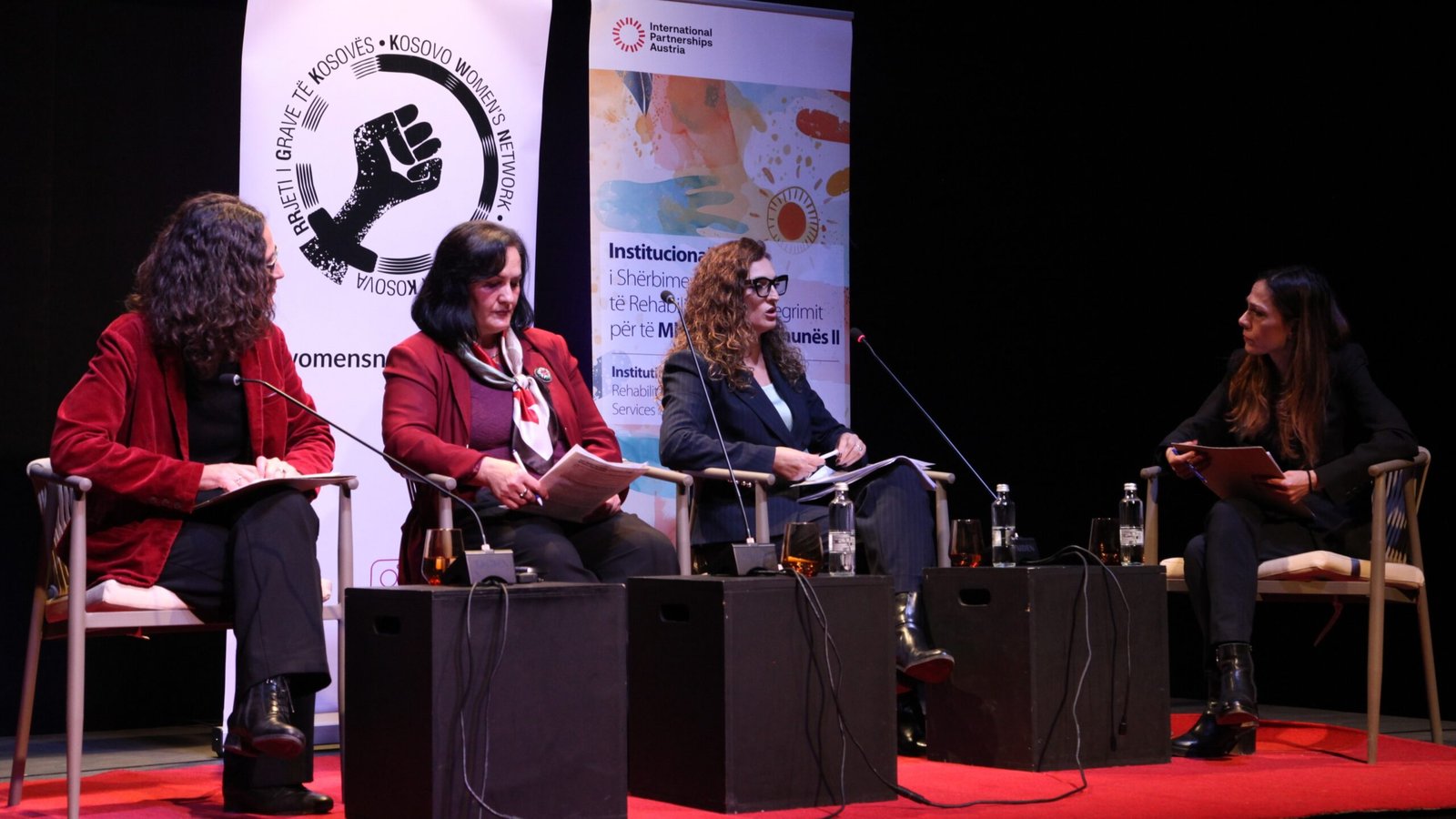
The Kosovo Women’s Network (KWN) today published the report “At What Cost? Costing Specialised Services for Addressing Gender-based Violence in Kosovo”, at the Cultural Station in Pristina. The report presents the actual costs of services needed to prevent and address gender-based violence, highlighting gaps in their planning and financing as well as the need for sustainable investments to ensure quality protection and support for victims and survivors.
Although Kosovo has increased funding for certain services, the current budget remains insufficient to meet actual needs. Specialised services require adequate, predictable and long-term funding to ensure that no survivor is left without the support they need.
During the presentation of the report, Nicole Farnsworth, Executive Director of KWN, emphasised that addressing gender-based violence requires changes not only in legislation and policies, but particularly in budgeting. Referring to the review process of the 2027 Draft Budget, she stressed the importance of assessing how public funds are allocated and which priorities these allocations reflect.
“The budget is not simply a technical document. It is our money, taxpayers’ money. And how that money is spent is a political issue”, said Farnsworth.
In this context, KWN has submitted its key recommendations for the 2027 Budget to the Assembly of Kosovo and Members of Parliament, calling for legal and strategic commitments to protection from gender-based violence to be translated into concrete budget allocations based on actual needs and costs. Key recommendations include:
- Two additional social workers in each of the 37 municipalities and four in Pristina, at a cost of €18,130 per municipality and €36,260 for Pristina in 2027.
- Increasing the budget for licensed organisations providing social and family services from €2.5 million to at least €5 million, including sustainable funding for shelters and other services.
The importance of investing in concrete services for survivors was emphasised also by Rita Glavitza, Head of Office of the Austrian Development Agency, Coordination Office in Kosovo. She stated that the responsibility to ensure support does not end with the adoption of laws, but must be accompanied by investments that respond to survivors’ needs.
“The question is not whether Kosovo can afford to invest in services for survivors of gender-based violence, but whether it can afford not to. Every budget reflects our priorities, and every survivor deserves concrete support, not just legal guarantees”, said Glavitza.
Meanwhile, KWN Board member Dr. Gjylieta Mushkolaj, referring to the killing of Arlinda Zekaj on 25 October, reminded participants that institutional shortcomings in protection from gender-based violence are not merely administrative or financial issues, but can have irreversible consequences for women’s lives.
“Behind the institutional shortcomings that KWN has repeatedly warned about through its research lie not only problems with the organisation, coordination or financing of services, but also human lives placed at risk when the state fails to fulfil its protection obligations. Therefore, the findings of this report should not be treated merely as recommendations for improving budgetary policies, but as a serious call for institutional action”, said Mushkolaj.
Gaps in the Financing and Provision of Specialised Services
The report’s findings identify several challenges that continue to hinder the provision of quality and sustainable services for survivors of gender-based violence.
First, current funding does not cover the actual needs of specialised services. Despite increased support for certain services, particularly shelters, funding and the establishment of other services remain insufficient.
Further, budget planning continues to be insufficiently based on actual needs and costs. Although gender-responsive budgeting is a legal obligation, its implementation in practice remains limited, and budget allocations often fail to reflect the actual costs of providing services.
Another challenge is the lack of financial sustainability. Without predictable and adequate funding, organisations and institutions providing services cannot guarantee the continuity and quality of support for survivors.
Moreover, several essential services envisaged under the Kosovo Standards have yet to become operational, including Rape Treatment Centres, Sexual Violence Referral Centres and the SOS Helpline.
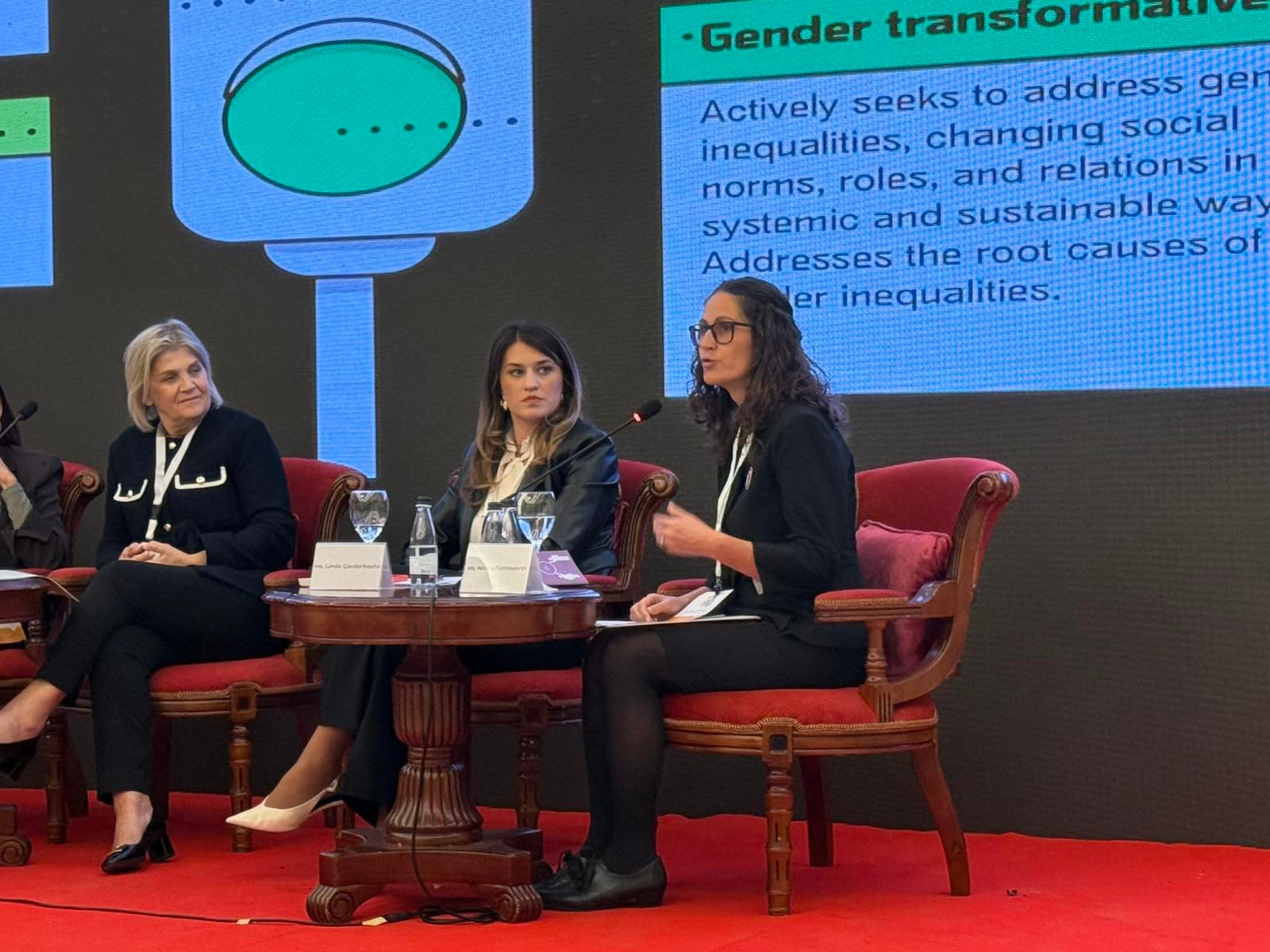
Following the presentation of the findings and recommendations by Era Kadriu, KWN researcher, the event continued with a panel discussion entitled “From Recommendations to Implementation – Who Pays for the Services Survivors Need?”, moderated by Adelina Berisha, Director of KWN’s Programme Addressing Gender-based Violence.
The discussion focused on institutional and financial responsibilities for implementing the report’s recommendations, as well as the need for coordination between institutions and civil society to ensure the essential services survivors need. During the event, representatives of the participating institutions expressed interest in the recommendations and their willingness to continue the dialogue on implementation.
In his opening remarks, Blerim Shabani, Director of the Department for Social and Family Service Policies at the Ministry of Labour, Family and Values of the Liberation War, announced that the Ministry is developing the first model of its kind in the region for determining the costs of services. He emphasised that, in cooperation with KWN, a methodology has been developed to determine the costs of residential services for survivors of gender-based violence.
“We thank KWN for preparing this assessment of the costs of services for survivors of gender-based violence, in line with the Department’s objective of standardising costs for all services, as we have also done in cooperation with UNICEF for services for children. KWN remains an important and valuable partner for us”, he said.
During the discussion, Fatime Lumi Qehaja expressed the Ministry of Finance’s willingness to engage in dialogue with civil society regarding upcoming amendments to public finance laws, with the aim of integrating a gender perspective and gender-responsive budgeting.
Furthermore, Nazmije Kajtazi expressed the Ministry of Health’s commitment to take steps towards establishing Sexual Violence Treatment Centres, as well as strengthening human resource capacities to address cases of gender-based violence in a sensitive and confidential manner.
Through its report, KWN aims to contribute to evidence-based budgetary decision-making and improve the planning and financing of specialised services in Kosovo. Its findings and recommendations underscore that effective protection for survivors requires more than legal commitments: it requires adequate and sustainable funding, as well as legal and institutional changes that guarantee access to the services they need.
KWN will continue its cooperation and advocacy with public institutions to improve the legal and budgetary framework, ensuring that services for survivors of gender-based violence are funded and provided in accordance with actual needs.
The full report, “At What Cost?”, is available here.