From 2 to 6 November 2026, the Kosovo Women’s Network (KWN), as part of the Gender Budget Watchdog Network (GBWN), participated in European Gender Equality Week in Brussels, Belgium. During the week, GBWN held a series of advocacy meetings with European Union (EU) institutions and UN Women. KWN was represented by Elirjeta Beka, Women’s Economic Empowerment and Gender Responsive Budgeting Officer.
The purpose of the visit was to advance gender equality and gender responsive budgeting (GRB) within the EU’s upcoming Multiannual Financial Framework (MFF), the EU enlargement process and the EU Growth Plan for the Western Balkans and Moldova.
Advocacy meetings with European Union institutions
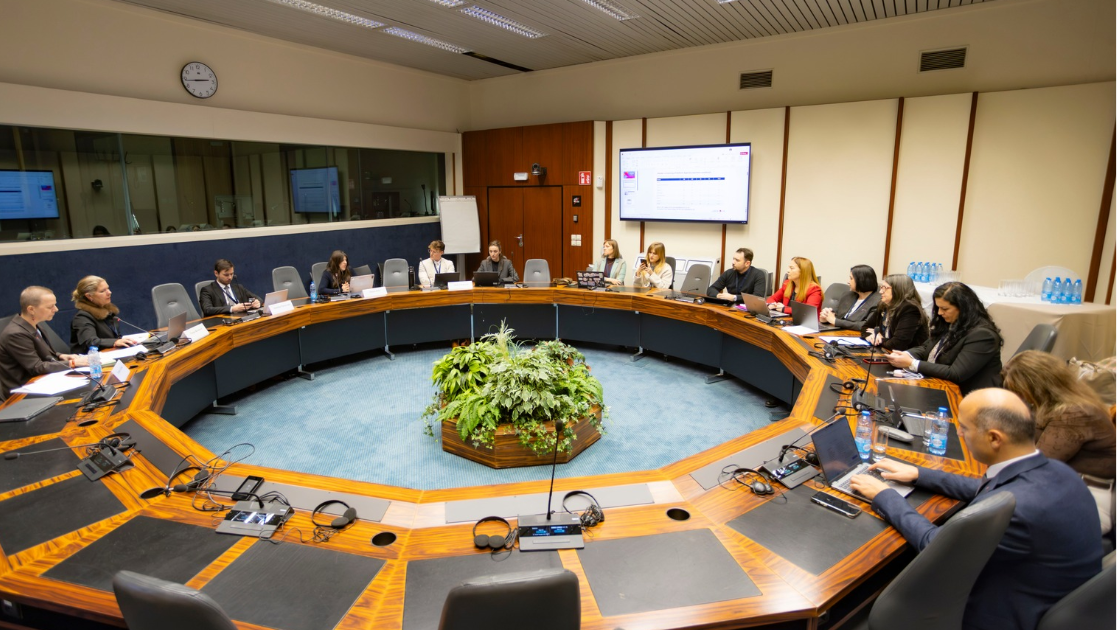
On 3 November, GBWN met with Rosalie Boonen and Symela Tsakiri from the European Commission’s Directorate-General for Enlargement and Eastern Neighbourhood (DG ENEST). The meeting focused on integrating a gender perspective into regional investments, climate finance and future civil society funding opportunities.
On 4 November, GBWN met with Eleanor Remo James from the European Parliament’s Directorate-General for Budgetary Affairs and Anna Dorottya Zsoldos from the Secretariat of the Committee on Budgetary Control (CONT). GBWN presented the challenges of integrating GRB into public financial management systems across the region, highlighting the need for budget transparency, monitoring of public spending and reporting on its impact on gender equality.
Kosovo at the International Conference on Gender Responsive Budgeting
On 5 November, KWN participated in the International Conference on Gender Responsive Budgeting, organised by UN Women and the Belgian Ministry of Foreign Affairs, in partnership with the European Commission and the Irish Presidency of the Council of the EU.
Diane Elson, an international GRB expert and the conference’s keynote speaker, highlighted the Municipality of Prishtina as an example of good practice in implementing gender responsive budgeting. She presented the municipality’s experience in supporting the economic empowerment of rural women through the establishment of mobile markets and the provision of spaces where women can sell their products. Elson also emphasised the important role of civil society in monitoring public budgets and holding government institutions accountable for fulfilling their gender equality commitments.
Edi Gusia, Executive Director of the Agency for Gender Equality, presented Kosovo’s experience in institutionalising GRB as a legal obligation, highlighting investments in supporting survivors of wartime sexual violence, shelters, scholarships in STEM fields, women’s economic empowerment and the energy transition.
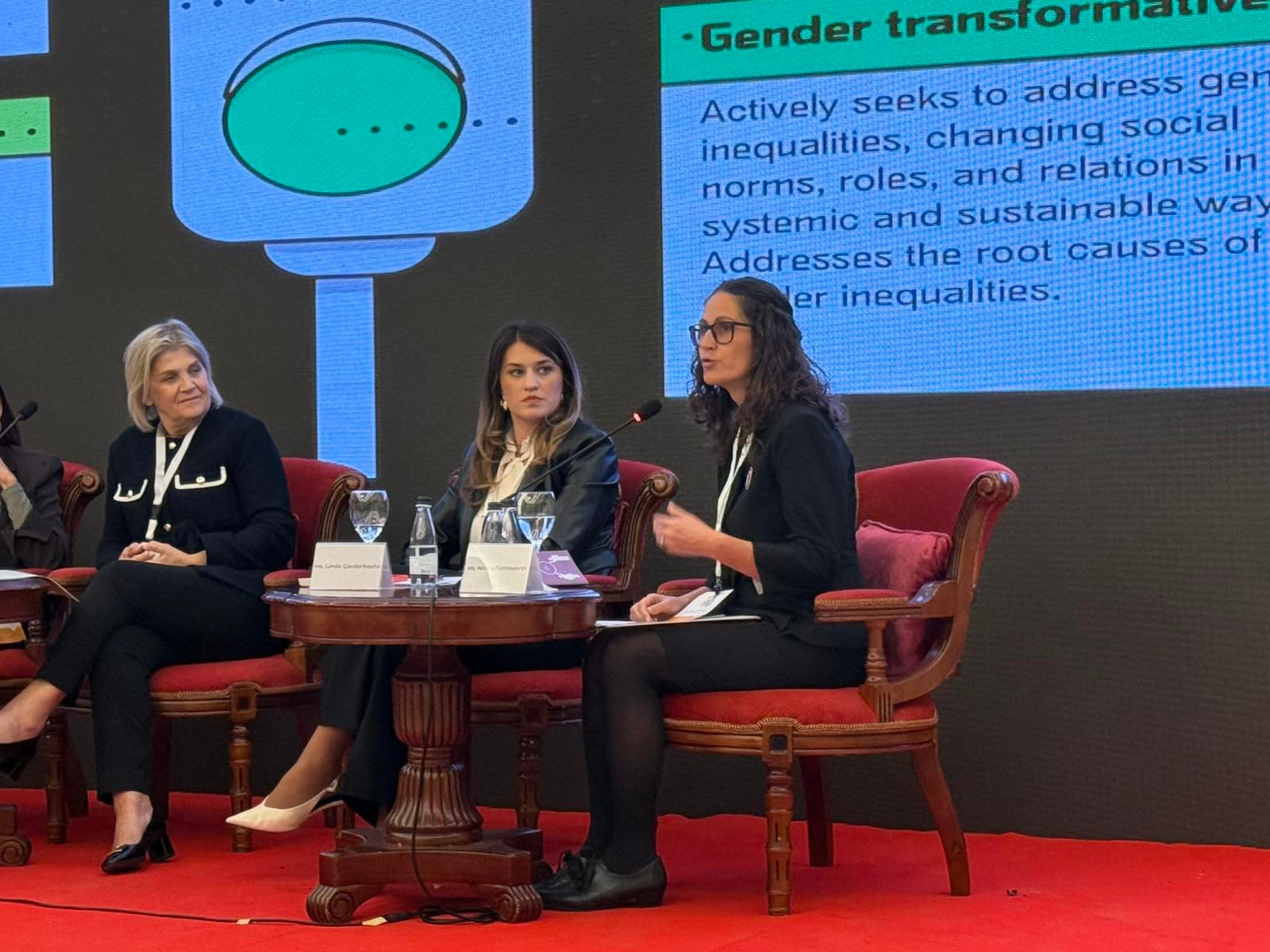
During the panel “Gender Responsive Budgeting in the Context of the Pre-Accession Process”, Elirjeta Beka presented GBWN’s regional analysis of the EU Growth Plan, conducted with the support of ADA and Sida. The analysis found that only 1% of the more than €7 billion planned under the Reform Agendas for the Western Balkans and Moldova is directly linked to gender equality, while 2% is indirectly linked.
Beka emphasised the need to integrate GRB into the Reform Agendas, establish measurable gender equality indicators, ensure transparency and accountability in the use of EU funds, publish annual gender budgeting statements and involve civil society in monitoring reforms.
Strengthening cooperation with UN Women
On 6 November, GBWN met with UN Women to discuss cooperation and joint advocacy for integrating gender equality into the EU’s MFF and Reform Agendas, as well as strengthening the role of civil society in monitoring public finances.
The visit contributed to strengthening cooperation with European institutions to advance gender responsive financing.